Refine search
Actions for selected content:
26063 results in Abstract analysis
Liouville theorems for the sub-linear Lane–Emden equation on the half space
- Part of
-
- Journal:
- Proceedings of the Royal Society of Edinburgh. Section A: Mathematics / Volume 156 / Issue 3 / June 2026
- Published online by Cambridge University Press:
- 18 November 2024, pp. 831-843
- Print publication:
- June 2026
-
- Article
- Export citation
-
In this article, we study the following Dirichlet problem to the sub-linear Lane–Emden equation
 \begin{equation*}\left\{\begin{array}{ll}-\Delta u=u^{p},\quad u(x)\geq0,\quad x\in\mathbb{R}^n_+, \\u(x)\equiv0,\quad x\in\partial\mathbb{R}^n_+,\end{array}\right.\end{equation*}
where $n\geq3$,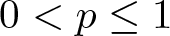 $0 \lt p\leq1$. By establishing an equivalent integral equation, we give a lower bound of the Kelvin transformation $\bar{u}$. Then, by constructing a new comparison function, we apply the maximum principle based on comparisons and the method of moving planes to obtain that u only depends on xn. Based on this, we prove the non-existence of non-negative solutions.


Travelling wave solutions and spreading speeds for a scalar age-structured equation with nonlocal diffusion
- Part of
-
- Journal:
- European Journal of Applied Mathematics / Volume 36 / Issue 4 / August 2025
- Published online by Cambridge University Press:
- 15 November 2024, pp. 856-878
-
- Article
-
- You have access
- Open access
- HTML
- Export citation
Centers of Artin groups defined on cones
- Part of
-
- Journal:
- Proceedings of the Edinburgh Mathematical Society / Volume 68 / Issue 1 / February 2025
- Published online by Cambridge University Press:
- 15 November 2024, pp. 44-50
-
- Article
- Export citation
Series expansion, higher-order monotonicity properties and inequalities for the modulus of the Grötzsch ring
- Part of
-
- Journal:
- Proceedings of the Edinburgh Mathematical Society / Volume 68 / Issue 1 / February 2025
- Published online by Cambridge University Press:
- 15 November 2024, pp. 16-43
-
- Article
- Export citation
-
For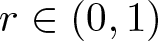 $r\in(0,1)$, let $\mu \left( r\right) $ be the modulus of the plane Grötzsch ring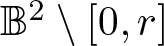 $\mathbb{B}^2\setminus[0,r]$, where $\mathbb{B}^2$ is the unit disk. In this paper, we prove that
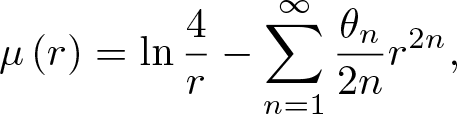 \begin{equation*}\mu \left( r\right) =\ln \frac{4}{r}-\sum_{n=1}^{\infty }\frac{\theta _{n}}{2n}r^{2n},\end{equation*}
with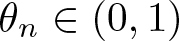 $\theta _{n}\in \left( 0,1\right)$. Employing this series expansion, we obtain several absolutely monotonic and (logarithmically) completely monotonic functions involving $\mu \left( r\right) $, which yields some new results and extend certain known ones. Moreover, we give an affirmative answer to the conjecture proposed by Alzer and Richards in H. Alzer and K. Richards, On the modulus of the Grötzsch ring, J. Math. Anal. Appl. 432(1): (2015), 134–141, DOI 10.1016/j.jmaa.2015.06.057. As applications, several new sharp bounds and functional inequalities for $\mu \left( r\right) $ are established.


QUASI-ERGODICITY OF COMPACT STRONG FELLER SEMIGROUPS ON $L^2$
$L^2$
- Part of
-
- Journal:
- Journal of the Institute of Mathematics of Jussieu / Volume 24 / Issue 2 / March 2025
- Published online by Cambridge University Press:
- 14 November 2024, pp. 541-584
- Print publication:
- March 2025
-
- Article
-
- You have access
- Open access
- HTML
- Export citation
-
We study the quasi-ergodicity of compact strong Feller semigroups $U_t$, $t> 0$, on $L^2(M,\mu )$; we assume that M is a locally compact Polish space equipped with a locally finite Borel measue $\mu $. The operators $U_t$ are ultracontractive and positivity preserving, but not necessarily self-adjoint or normal. We are mainly interested in those cases where the measure $\mu $ is infinite and the semigroup is not intrinsically ultracontractive. We relate quasi-ergodicity on $L^p(M,\mu )$ and uniqueness of the quasi-stationary measure with the finiteness of the heat content of the semigroup (for large values of t) and with the progressive uniform ground state domination property. The latter property is equivalent to a variant of quasi-ergodicity which progressively propagates in space as $t \uparrow \infty $; the propagation rate is determined by the decay of
  . We discuss several applications and illustrate our results with examples. This includes a complete description of quasi-ergodicity for a large class of semigroups corresponding to non-local Schrödinger operators with confining potentials.


 . We discuss several applications and illustrate our results with examples. This includes a complete description of quasi-ergodicity for a large class of semigroups corresponding to non-local Schrödinger operators with confining potentials.
Simplicity of non-associative skew Laurent polynomial rings
- Part of
-
- Journal:
- Proceedings of the Edinburgh Mathematical Society / Volume 68 / Issue 1 / February 2025
- Published online by Cambridge University Press:
- 13 November 2024, pp. 1-15
-
- Article
-
- You have access
- Open access
- HTML
- Export citation
Maximal operators along flat curves with one variable vector field
-
- Journal:
- Proceedings of the Edinburgh Mathematical Society / Volume 67 / Issue 4 / November 2024
- Published online by Cambridge University Press:
- 13 November 2024, pp. 1212-1228
-
- Article
- Export citation
-
We study a maximal average along a family of curves $\{(t,m(x_1)\gamma(t)):t\in [-r,r]\}$, where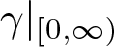 $\gamma|_{[0,\infty)}$ is a convex function and m is a measurable function. Under the assumption of the doubling property of $\gamma'$ and $1\leqslant m(x_1)\leqslant 2$, we prove the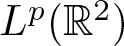 $L^p(\mathbb{R}^2)$ boundedness of the maximal average. As a corollary, we obtain the pointwise convergence of the average in r > 0 without any size assumption for a measurable m.

ARBITRARILY LARGE p-TORSION IN TATE-SHAFAREVICH GROUPS
- Part of
-
- Journal:
- Journal of the Institute of Mathematics of Jussieu / Volume 24 / Issue 2 / March 2025
- Published online by Cambridge University Press:
- 12 November 2024, pp. 481-502
- Print publication:
- March 2025
-
- Article
-
- You have access
- Open access
- HTML
- Export citation
-
We show that, for any prime p, there exist absolutely simple abelian varieties over $\mathbb {Q}$ with arbitrarily large p-torsion in their Tate-Shafarevich groups. To prove this, we construct explicit $\mu _p$-covers of Jacobians of curves of the form $y^p = x(x-1)(x-a)$ which violate the Hasse principle. In the appendix, Tom Fisher explains how to interpret our proof in terms of a Cassels-Tate pairing.


ON ODA’S PROBLEM AND SPECIAL LOCI
- Part of
-
- Journal:
- Journal of the Institute of Mathematics of Jussieu / Volume 24 / Issue 2 / March 2025
- Published online by Cambridge University Press:
- 12 November 2024, pp. 503-539
- Print publication:
- March 2025
-
- Article
- Export citation
Recent kernel methods for interacting particle systems: first numerical results
- Part of
-
- Journal:
- European Journal of Applied Mathematics / Volume 36 / Issue 2 / April 2025
- Published online by Cambridge University Press:
- 11 November 2024, pp. 464-489
-
- Article
-
- You have access
- Open access
- HTML
- Export citation
Hopf bifurcations for a delayed discrete single population patch model in advective environments
- Part of
-
- Journal:
- European Journal of Applied Mathematics / Volume 36 / Issue 4 / August 2025
- Published online by Cambridge University Press:
- 11 November 2024, pp. 705-737
-
- Article
-
- You have access
- Open access
- HTML
- Export citation
Second Hankel determinant of logarithmic coefficients of inverse strongly starlike functions
- Part of
-
- Journal:
- Proceedings of the Edinburgh Mathematical Society / Volume 67 / Issue 4 / November 2024
- Published online by Cambridge University Press:
- 08 November 2024, pp. 1196-1211
-
- Article
- Export citation
Expansion of the critical intensity for the random connection model
- Part of
-
- Journal:
- Combinatorics, Probability and Computing / Volume 34 / Issue 2 / March 2025
- Published online by Cambridge University Press:
- 08 November 2024, pp. 158-209
-
- Article
-
- You have access
- Open access
- HTML
- Export citation
Global stability for McKean–Vlasov equations on large networks
-
- Journal:
- European Journal of Applied Mathematics / Volume 37 / Issue 3 / June 2026
- Published online by Cambridge University Press:
- 08 November 2024, pp. 687-705
-
- Article
-
- You have access
- Open access
- HTML
- Export citation
The Theory of Countable Borel Equivalence Relations
-
- Published online:
- 07 November 2024
- Print publication:
- 21 November 2024

Probability Theory, An Analytic View
-
- Published online:
- 07 November 2024
- Print publication:
- 21 November 2024
A free boundary model for transport-induced neurite growth
- Part of
-
- Journal:
- European Journal of Applied Mathematics / Volume 36 / Issue 4 / August 2025
- Published online by Cambridge University Press:
- 07 November 2024, pp. 829-855
-
- Article
-
- You have access
- Open access
- HTML
- Export citation
REDUCED QUIVER QUANTUM TOROIDAL ALGEBRAS
- Part of
-
- Journal:
- Journal of the Institute of Mathematics of Jussieu / Volume 24 / Issue 2 / March 2025
- Published online by Cambridge University Press:
- 07 November 2024, pp. 341-369
- Print publication:
- March 2025
-
- Article
- Export citation
K-Theory and Representation Theory
-
- Published online:
- 06 November 2024
- Print publication:
- 28 November 2024
Teichmüller displacement theorem on Gromov hyperbolic spaces
- Part of
-
- Journal:
- Proceedings of the Edinburgh Mathematical Society / Volume 67 / Issue 4 / November 2024
- Published online by Cambridge University Press:
- 06 November 2024, pp. 1148-1166
-
- Article
- Export citation
-
Given a Gromov hyperbolic domain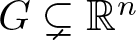 $G\subsetneq \mathbb{R}^n$ with uniformly perfect Gromov boundary, Zhou and Rasila recently proved that for all quasiconformal homeomorphisms $\psi\colon G\to G$ with identity value on the Gromov boundary, the quasihyperbolic displacement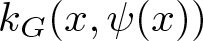 $k_G(x,\psi(x))$ for all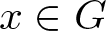 $x\in G$ is bounded above. In this paper, we generalize this result and establish Teichmüller displacement theorem for quasi-isometries of Gromov hyperbolic spaces in a quantitative way. As applications, we obtain its connections to bilipschitz extensions of certain Gromov hyperbolic spaces.
