Refine listing
Actions for selected content:
21 results in 13Exx
Locally compact modules over abelian groups and compactly generated metabelian groups
- Part of
-
- Journal:
- Compositio Mathematica / Volume 161 / Issue 6 / June 2025
- Published online by Cambridge University Press:
- 27 August 2025, pp. 1250-1283
- Print publication:
- June 2025
-
- Article
- Export citation
A tensor restriction theorem over finite fields
- Part of
-
- Journal:
- Compositio Mathematica / Volume 161 / Issue 5 / May 2025
- Published online by Cambridge University Press:
- 29 August 2025, pp. 1021-1053
- Print publication:
- May 2025
-
- Article
-
- You have access
- Open access
- HTML
- Export citation
Topological Noetherianity of the infinite half-spin representations
- Part of
-
- Journal:
- Forum of Mathematics, Sigma / Volume 13 / 2025
- Published online by Cambridge University Press:
- 21 April 2025, e75
-
- Article
-
- You have access
- Open access
- HTML
- Export citation
On split quasi-hereditary covers and Ringel duality
- Part of
-
- Journal:
- Forum of Mathematics, Sigma / Volume 12 / 2024
- Published online by Cambridge University Press:
- 02 December 2024, e105
-
- Article
-
- You have access
- Open access
- HTML
- Export citation
-
In this paper, we develop two new homological invariants called relative dominant dimension with respect to a module and relative codominant dimension with respect to a module. Among the applications are precise connections between Ringel duality, split quasi-hereditary covers and double centralizer properties, constructions of split quasi-hereditary covers of quotients of Iwahori-Hecke algebras using Ringel duality of q-Schur algebras and a new proof for Ringel self-duality of the blocks of the Bernstein-Gelfand-Gelfand category $\mathcal {O}$. These homological invariants are studied over Noetherian algebras which are finitely generated and projective as a module over the ground ring. They are shown to behave nicely under change of rings techniques.

Classification of multiplication modules over multiplication rings with finitely many minimal primes
- Part of
-
- Journal:
- Glasgow Mathematical Journal / Volume 67 / Issue 1 / January 2025
- Published online by Cambridge University Press:
- 03 October 2024, pp. 67-71
-
- Article
- Export citation
A characterisation of atomicity
- Part of
-
- Journal:
- Mathematical Proceedings of the Cambridge Philosophical Society / Volume 175 / Issue 2 / September 2023
- Published online by Cambridge University Press:
- 24 April 2023, pp. 459-465
- Print publication:
- September 2023
-
- Article
- Export citation
Classifying spaces for étale algebras with generators
- Part of
-
- Journal:
- Canadian Journal of Mathematics / Volume 73 / Issue 3 / June 2021
- Published online by Cambridge University Press:
- 30 March 2020, pp. 854-874
- Print publication:
- June 2021
-
- Article
- Export citation
-
We construct a scheme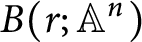 $B(r; {\mathbb {A}}^n)$ such that a map $X \to B(r; {\mathbb {A}}^n)$ corresponds to a degree-n étale algebra on X equipped with r generating global sections. We then show that when $n=2$, i.e., in the quadratic étale case, the singular cohomology of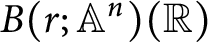 $B(r; {\mathbb {A}}^n)({\mathbb {R}})$ can be used to reconstruct a famous example of S. Chase and to extend its application to showing that there is a smooth affine $r-1$-dimensional ${\mathbb {R}}$-variety on which there are étale algebras ${\mathcal {A}}_n$ of arbitrary degrees n that cannot be generated by fewer than r elements. This shows that in the étale algebra case, a bound established by U. First and Z. Reichstein in [6] is sharp.


FROM TOPOLOGIES OF A SET TO SUBRINGS OF ITS POWER SET
- Part of
-
- Journal:
- Bulletin of the Australian Mathematical Society / Volume 102 / Issue 1 / August 2020
- Published online by Cambridge University Press:
- 20 February 2020, pp. 15-20
- Print publication:
- August 2020
-
- Article
-
- You have access
- Export citation
-
Let $X$ be a nonempty set and ${\mathcal{P}}(X)$ the power set of $X$. The aim of this paper is to identify the unital subrings of ${\mathcal{P}}(X)$ and to compute its cardinality when it is finite. It is proved that any topology $\unicode[STIX]{x1D70F}$ on $X$ such that $\unicode[STIX]{x1D70F}=\unicode[STIX]{x1D70F}^{c}$, where $\unicode[STIX]{x1D70F}^{c}=\{U^{c}\mid U\in \unicode[STIX]{x1D70F}\}$, is a unital subring of ${\mathcal{P}}(X)$. It is also shown that $X$ is finite if and only if any unital subring of ${\mathcal{P}}(X)$ is a topology $\unicode[STIX]{x1D70F}$ on $X$ such that $\unicode[STIX]{x1D70F}=\unicode[STIX]{x1D70F}^{c}$ if and only if the set of unital subrings of ${\mathcal{P}}(X)$ is finite. As a consequence, if $X$ is finite with cardinality $n\geq 2$, then the number of unital subrings of ${\mathcal{P}}(X)$ is equal to the $n$th Bell number and the supremum of the lengths of chains of unital subalgebras of ${\mathcal{P}}(X)$ is equal to $n-1$.


Poincaré duality and resonance varieties
- Part of
-
- Journal:
- Proceedings of the Royal Society of Edinburgh. Section A: Mathematics / Volume 150 / Issue 6 / December 2020
- Published online by Cambridge University Press:
- 13 September 2019, pp. 3001-3027
- Print publication:
- December 2020
-
- Article
- Export citation
-
We explore the constraints imposed by Poincaré duality on the resonance varieties of a graded algebra. For a three-dimensional Poincaré duality algebra A, we obtain a fairly precise geometric description of the resonance varieties ${\cal R}^i_k(A)$.

On Special Fiber Rings of Modules
- Part of
-
- Journal:
- Canadian Journal of Mathematics / Volume 72 / Issue 1 / February 2020
- Published online by Cambridge University Press:
- 09 January 2019, pp. 225-242
- Print publication:
- February 2020
-
- Article
-
- You have access
- Export citation
-
We prove results concerning the multiplicity as well as the Cohen–Macaulay and Gorenstein properties of the special fiber ring $\mathscr{F}(E)$ of a finitely generated $R$-module $E\subsetneq R^{e}$ over a Noetherian local ring $R$ with infinite residue field. Assuming that $R$ is Cohen–Macaulay of dimension 1 and that $E$ has finite colength in $R^{e}$, our main result establishes an asymptotic length formula for the multiplicity of $\mathscr{F}(E)$, which, in addition to being of independent interest, allows us to derive a Cohen–Macaulayness criterion and to detect a curious relation to the Buchsbaum–Rim multiplicity of $E$ in this setting. Further, we provide a Gorensteinness characterization for $\mathscr{F}(E)$ in the more general situation where $R$ is Cohen–Macaulay of arbitrary dimension and $E$ is not necessarily of finite colength, and we notice a constraint in terms of the second analytic deviation of the module $E$ if its reduction number is at least three.


ON THE ASSOCIATED PRIMES OF LOCAL COHOMOLOGY
- Part of
-
- Journal:
- Nagoya Mathematical Journal / Volume 237 / March 2020
- Published online by Cambridge University Press:
- 05 February 2018, pp. 1-9
-
- Article
-
- You have access
- HTML
- Export citation
-
Let $R$ be a commutative Noetherian ring of prime characteristic $p$. In this paper, we give a short proof using filter regular sequences that the set of associated prime ideals of $H_{I}^{t}(R)$ is finite for any ideal $I$ and for any $t\geqslant 0$ when $R$ has finite $F$-representation type or finite singular locus. This extends a previous result by Takagi–Takahashi and gives affirmative answers for a problem of Huneke in many new classes of rings in positive characteristic. We also give a criterion about the singularities of $R$ (in any characteristic) to guarantee that the set $\operatorname{Ass}H_{I}^{2}(R)$ is always finite.


WHEN IS THE INTEGRAL CLOSURE COMPARABLE TO ALL INTERMEDIATE RINGS
- Part of
-
- Journal:
- Bulletin of the Australian Mathematical Society / Volume 95 / Issue 1 / February 2017
- Published online by Cambridge University Press:
- 19 October 2016, pp. 14-21
- Print publication:
- February 2017
-
- Article
-
- You have access
- Export citation
-
Let $R\subset S$ be an extension of integral domains, with $R^{\ast }$ the integral closure of $R$ in $S$ . We study the set of intermediate rings between $R$ and $S$ . We establish several necessary and sufficient conditions for which every ring contained between $R$ and $S$ compares with $R^{\ast }$ under inclusion. This answers a key question that figured in the work of Gilmer and Heinzer [‘Intersections of quotient rings of an integral domain’, J. Math. Kyoto Univ.7 (1967), 133–150].


LOCAL COHOMOLOGY OF MULTI-REES ALGEBRAS, JOINT REDUCTION NUMBERS AND PRODUCT OF COMPLETE IDEALS
- Part of
-
- Journal:
- Nagoya Mathematical Journal / Volume 228 / December 2017
- Published online by Cambridge University Press:
- 18 October 2016, pp. 1-20
-
- Article
-
- You have access
- HTML
- Export citation
ON THE SUBSTITUTION THEOREM FOR RINGS OF SEMIALGEBRAIC FUNCTIONS
- Part of
-
- Journal:
- Journal of the Institute of Mathematics of Jussieu / Volume 14 / Issue 4 / October 2015
- Published online by Cambridge University Press:
- 01 July 2014, pp. 857-894
- Print publication:
- October 2015
-
- Article
- Export citation
-
Let $R\subset F$ be an extension of real closed fields, and let ${\mathcal{S}}(M,R)$ be the ring of (continuous) semialgebraic functions on a semialgebraic set $M\subset R^{n}$. We prove that every $R$-homomorphism ${\it\varphi}:{\mathcal{S}}(M,R)\rightarrow F$ is essentially the evaluation homomorphism at a certain point $p\in F^{n}$ adjacent to the extended semialgebraic set $M_{F}$. This type of result is commonly known in real algebra as a substitution lemma. In the case when $M$ is locally closed, the results are neat, while the non-locally closed case requires a more subtle approach and some constructions (weak continuous extension theorem, appropriate immersion of semialgebraic sets) that have interest of their own. We consider the same problem for the ring of bounded (continuous) semialgebraic functions, getting results of a different nature.


Spaces with Noetherian cohomology
- Part of
-
- Journal:
- Proceedings of the Edinburgh Mathematical Society / Volume 56 / Issue 1 / February 2013
- Published online by Cambridge University Press:
- 05 December 2012, pp. 13-25
-
- Article
-
- You have access
- Export citation
ON THE REGULAR DIGRAPH OF IDEALS OF COMMUTATIVE RINGS
- Part of
-
- Journal:
- Bulletin of the Australian Mathematical Society / Volume 88 / Issue 2 / October 2013
- Published online by Cambridge University Press:
- 16 October 2012, pp. 177-189
- Print publication:
- October 2013
-
- Article
-
- You have access
- Export citation
-
Let $R$ be a commutative ring. The regular digraph of ideals of $R$, denoted by $\Gamma (R)$, is a digraph whose vertex set is the set of all nontrivial ideals of $R$ and, for every two distinct vertices $I$ and $J$, there is an arc from $I$ to $J$ whenever $I$ contains a nonzero divisor on $J$. In this paper, we study the connectedness of $\Gamma (R)$. We also completely characterise the diameter of this graph and determine the number of edges in $\Gamma (R)$, whenever $R$ is a finite direct product of fields. Among other things, we prove that $R$ has a finite number of ideals if and only if $\mathrm {N}_{\Gamma (R)}(I)$ is finite, for all vertices $I$ in $\Gamma (R)$, where $\mathrm {N}_{\Gamma (R)}(I)$ is the set of all adjacent vertices to $I$ in $\Gamma (R)$.


LOCAL-GLOBAL PRINCIPLE FOR THE FINITENESS AND ARTINIANNESS OF GENERALISED LOCAL COHOMOLOGY MODULES
- Part of
-
- Journal:
- Bulletin of the Australian Mathematical Society / Volume 87 / Issue 3 / June 2013
- Published online by Cambridge University Press:
- 20 August 2012, pp. 480-492
- Print publication:
- June 2013
-
- Article
-
- You have access
- Export citation
-
Let $\mathcal S$ be a Serre subcategory of the category of $R$-modules, where $R$ is a commutative Noetherian ring. Let $\mathfrak a$ and $\mathfrak b$ be ideals of $R$ and let $M$ and $N$ be finite $R$-modules. We prove that if $N$ and $H^i_{\mathfrak a}(M,N)$ belong to $\mathcal S$ for all $i\lt n$ and if $n\leq \mathrm {f}$- $\mathrm {grad}({\mathfrak a},{\mathfrak b},N )$, then $\mathrm {Hom}_{R}(R/{\mathfrak b},H^n_{{\mathfrak a}}(M,N))\in \mathcal S$. We deduce that if either $H^i_{\mathfrak a}(M,N)$ is finite or $\mathrm {Supp}\,H^i_{\mathfrak a}(M,N)$ is finite for all $i\lt n$, then $\mathrm {Ass}\,H^n_{\mathfrak a}(M,N)$ is finite. Next we give an affirmative answer, in certain cases, to the following question. If, for each prime ideal ${\mathfrak {p}}$ of $R$, there exists an integer $n_{\mathfrak {p}}$ such that $\mathfrak b^{n_{\mathfrak {p}}} H^i_{\mathfrak a R_{\mathfrak {p}}}({M_{\mathfrak {p}}},{N_{\mathfrak {p}}})=0$ for every $i$ less than a fixed integer $t$, then does there exist an integer $n$ such that $\mathfrak b^nH^i_{\mathfrak a}(M,N)=0$ for all $i\lt t$? A formulation of this question is referred to as the local-global principle for the annihilation of generalised local cohomology modules. Finally, we prove that there are local-global principles for the finiteness and Artinianness of generalised local cohomology modules.


About directed unions of Artinian subrings of a Von Neumann regular ring
- Part of
-
- Journal:
- Journal of the Australian Mathematical Society / Volume 79 / Issue 3 / December 2005
- Published online by Cambridge University Press:
- 09 April 2009, pp. 297-304
-
- Article
-
- You have access
- Export citation
STRONGLY IRREDUCIBLE IDEALS
- Part of
-
- Journal:
- Journal of the Australian Mathematical Society / Volume 84 / Issue 2 / April 2008
- Published online by Cambridge University Press:
- 01 April 2008, pp. 145-154
-
- Article
-
- You have access
- Export citation
-
A proper ideal I of a ring R is said to be strongly irreducible if for each pair of ideals A and B of R,
 implies that either
  or
or  . In this paper we study strongly irreducible ideals in different rings. The relations between strongly irreducible ideals of a ring and strongly irreducible ideals of localizations of the ring are also studied. Furthermore, a topology similar to the Zariski topology related to strongly irreducible ideals is introduced. This topology has the Zariski topology defined by prime ideals as one of its subspace topologies.
 implies that either
  or
or  . In this paper we study strongly irreducible ideals in different rings. The relations between strongly irreducible ideals of a ring and strongly irreducible ideals of localizations of the ring are also studied. Furthermore, a topology similar to the Zariski topology related to strongly irreducible ideals is introduced. This topology has the Zariski topology defined by prime ideals as one of its subspace topologies.
On some intermediate rings
- Part of
-
- Journal:
- Mathematika / Volume 39 / Issue 1 / June 1992
- Published online by Cambridge University Press:
- 26 February 2010, pp. 62-66
- Print publication:
- June 1992
-
- Article
- Export citation
