Refine search
Actions for selected content:
9084 results in Discrete Mathematics, Information Theory and Coding
A spanning bandwidth theorem in random graphs
- Part of
-
- Journal:
- Combinatorics, Probability and Computing / Volume 31 / Issue 4 / July 2022
- Published online by Cambridge University Press:
- 13 December 2021, pp. 598-628
-
- Article
- Export citation
-
The bandwidth theorem of Böttcher, Schacht and Taraz states that any n-vertex graph G with minimum degree $\big(\tfrac{k-1}{k}+o(1)\big)n$ contains all n-vertex k-colourable graphs H with bounded maximum degree and bandwidth o(n). Recently, a subset of the authors proved a random graph analogue of this statement: for $p\gg \big(\tfrac{\log n}{n}\big)^{1/\Delta}$ a.a.s. each spanning subgraph G of G(n,p) with minimum degree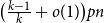 $\big(\tfrac{k-1}{k}+o(1)\big)pn$ contains all n-vertex k-colourable graphs H with maximum degree $\Delta$, bandwidth o(n), and at least $C p^{-2}$ vertices not contained in any triangle. This restriction on vertices in triangles is necessary, but limiting. In this paper, we consider how it can be avoided. A special case of our main result is that, under the same conditions, if additionally all vertex neighbourhoods in G contain many copies of $K_\Delta$ then we can drop the restriction on H that $Cp^{-2}$ vertices should not be in triangles.


A blurred view of Van der Waerden type theorems
- Part of
-
- Journal:
- Combinatorics, Probability and Computing / Volume 31 / Issue 4 / July 2022
- Published online by Cambridge University Press:
- 26 November 2021, pp. 684-701
-
- Article
- Export citation
-
Let $\mathrm{AP}_k=\{a,a+d,\ldots,a+(k-1)d\}$ be an arithmetic progression. For $\varepsilon>0$ we call a set $\mathrm{AP}_k(\varepsilon)=\{x_0,\ldots,x_{k-1}\}$ an $\varepsilon$-approximate arithmetic progression if for some a and d, $|x_i-(a+id)|<\varepsilon d$ holds for all $i\in\{0,1\ldots,k-1\}$. Complementing earlier results of Dumitrescu (2011, J. Comput. Geom. 2(1) 16–29), in this paper we study numerical aspects of Van der Waerden, Szemerédi and Furstenberg–Katznelson like results in which arithmetic progressions and their higher dimensional extensions are replaced by their $\varepsilon$-approximation.


On the smallest singular value of symmetric random matrices
- Part of
-
- Journal:
- Combinatorics, Probability and Computing / Volume 31 / Issue 4 / July 2022
- Published online by Cambridge University Press:
- 05 November 2021, pp. 662-683
-
- Article
- Export citation
-
We show that for an $n\times n$ random symmetric matrix $A_n$, whose entries on and above the diagonal are independent copies of a sub-Gaussian random variable $\xi$ with mean 0 and variance 1, This improves a result of Vershynin, who obtained such a bound with
 \begin{equation*}\mathbb{P}[s_n(A_n) \le \epsilon/\sqrt{n}] \le O_{\xi}(\epsilon^{1/8} + \exp(\!-\Omega_{\xi}(n^{1/2}))) \quad \text{for all } \epsilon \ge 0.\end{equation*} $n^{1/2}$ replaced by $n^{c}$ for a small constant c, and $1/8$ replaced by $(1/8) - \eta$ (with implicit constants also depending on $\eta > 0$). Furthermore, when $\xi$ is a Rademacher random variable, we prove that The special case
 \begin{equation*}\mathbb{P}[s_n(A_n) \le \epsilon/\sqrt{n}] \le O(\epsilon^{1/8} + \exp(\!-\Omega((\!\log{n})^{1/4}n^{1/2}))) \quad \text{for all } \epsilon \ge 0.\end{equation*} $\epsilon = 0$ improves a recent result of Campos, Mattos, Morris, and Morrison, which showed that $\mathbb{P}[s_n(A_n) = 0] \le O(\exp(\!-\Omega(n^{1/2}))).$ Notably, in a departure from the previous two best bounds on the probability of singularity of symmetric matrices, which had relied on somewhat specialized and involved combinatorial techniques, our methods fall squarely within the broad geometric framework pioneered by Rudelson and Vershynin, and suggest the possibility of a principled geometric approach to the study of the singular spectrum of symmetric random matrices. The main innovations in our work are new notions of arithmetic structure – the Median Regularized Least Common Denominator (MRLCD) and the Median Threshold, which are natural refinements of the Regularized Least Common Denominator (RLCD)introduced by Vershynin, and should be more generally useful in contexts where one needs to combine anticoncentration information of different parts of a vector.


Extending the Tutte and Bollobás–Riordan polynomials to rank 3 weakly coloured stranded graphs
- Part of
-
- Journal:
- Combinatorics, Probability and Computing / Volume 31 / Issue 3 / May 2022
- Published online by Cambridge University Press:
- 25 October 2021, pp. 507-549
-
- Article
- Export citation

Game Theory Basics
-
- Published online:
- 22 October 2021
- Print publication:
- 19 August 2021
-
- Textbook
- Export citation
Asymptotics for the number of standard tableaux of skew shape and for weighted lozenge tilings
- Part of
-
- Journal:
- Combinatorics, Probability and Computing / Volume 31 / Issue 4 / July 2022
- Published online by Cambridge University Press:
- 18 October 2021, pp. 550-573
-
- Article
- Export citation
-
We prove and generalise a conjecture in [MPP4] about the asymptotics of $\frac{1}{\sqrt{n!}} f^{\lambda/\mu}$, where $f^{\lambda/\mu}$ is the number of standard Young tableaux of skew shape $\lambda/\mu$ which have stable limit shape under the $1/\sqrt{n}$ scaling. The proof is based on the variational principle on the partition function of certain weighted lozenge tilings.


On bucket increasing trees, clustered increasing trees and increasing diamonds
- Part of
-
- Journal:
- Combinatorics, Probability and Computing / Volume 31 / Issue 4 / July 2022
- Published online by Cambridge University Press:
- 13 October 2021, pp. 629-661
-
- Article
- Export citation
-
In this work we analyse bucket increasing tree families. We introduce two simple stochastic growth processes, generating random bucket increasing trees of size n, complementing the earlier result of Mahmoud and Smythe (1995, Theoret. Comput. Sci. 144 221–249.) for bucket recursive trees. On the combinatorial side, we define multilabelled generalisations of the tree families d-ary increasing trees and generalised plane-oriented recursive trees. Additionally, we introduce a clustering process for ordinary increasing trees and relate it to bucket increasing trees. We discuss in detail the bucket size two and present a bijection between such bucket increasing tree families and certain families of graphs called increasing diamonds, providing an explanation for phenomena observed by Bodini et al. (2016, Lect. Notes Comput. Sci. 9644 207–219.). Concerning structural properties of bucket increasing trees, we analyse the tree parameter $K_n$. It counts the initial bucket size of the node containing label n in a tree of size n and is closely related to the distribution of node types. Additionally, we analyse the parameters descendants of label j and degree of the bucket containing label j, providing distributional decompositions, complementing and extending earlier results (Kuba and Panholzer (2010), Theoret. Comput. Sci. 411(34–36) 3255–3273.).

The critical window in random digraphs
- Part of
-
- Journal:
- Combinatorics, Probability and Computing / Volume 31 / Issue 3 / May 2022
- Published online by Cambridge University Press:
- 08 October 2021, pp. 411-429
-
- Article
- Export citation
-
We consider the component structure of the random digraph D(n,p) inside the critical window $p = n^{-1} + \lambda n^{-4/3}$. We show that the largest component $\mathcal{C}_1$ has size of order $n^{1/3}$ in this range. In particular we give explicit bounds on the tail probabilities of $|\mathcal{C}_1|n^{-1/3}$.


New dualities from old: generating geometric, Petrie, and Wilson dualities and trialities of ribbon graphs
- Part of
-
- Journal:
- Combinatorics, Probability and Computing / Volume 31 / Issue 4 / July 2022
- Published online by Cambridge University Press:
- 07 October 2021, pp. 574-597
-
- Article
- Export citation
Expansion for the critical point of site percolation: the first three terms
- Part of
-
- Journal:
- Combinatorics, Probability and Computing / Volume 31 / Issue 3 / May 2022
- Published online by Cambridge University Press:
- 28 September 2021, pp. 430-454
-
- Article
-
- You have access
- Open access
- HTML
- Export citation
On deficiency problems for graphs
- Part of
-
- Journal:
- Combinatorics, Probability and Computing / Volume 31 / Issue 3 / May 2022
- Published online by Cambridge University Press:
- 27 September 2021, pp. 478-488
-
- Article
- Export citation
-
Motivated by analogous questions in the setting of Steiner triple systems and Latin squares, Nenadov, Sudakov and Wagner [Completion and deficiency problems, Journal of Combinatorial Theory Series B, 2020] recently introduced the notion of graph deficiency. Given a global spanning property $\mathcal P$ and a graph $G$, the deficiency $\text{def}(G)$ of the graph $G$ with respect to the property $\mathcal P$ is the smallest non-negative integer t such that the join $G*K_t$ has property $\mathcal P$. In particular, Nenadov, Sudakov and Wagner raised the question of determining how many edges an n-vertex graph $G$ needs to ensure $G*K_t$ contains a $K_r$-factor (for any fixed $r\geq 3$). In this paper, we resolve their problem fully. We also give an analogous result that forces $G*K_t$ to contain any fixed bipartite $(n+t)$-vertex graph of bounded degree and small bandwidth.


Strong complete minors in digraphs
- Part of
-
- Journal:
- Combinatorics, Probability and Computing / Volume 31 / Issue 3 / May 2022
- Published online by Cambridge University Press:
- 24 September 2021, pp. 489-506
-
- Article
- Export citation
-
Kostochka and Thomason independently showed that any graph with average degree $\Omega(r\sqrt{\log r})$ contains a $K_r$ minor. In particular, any graph with chromatic number $\Omega(r\sqrt{\log r})$ contains a $K_r$ minor, a partial result towards Hadwiger’s famous conjecture. In this paper, we investigate analogues of these results in the directed setting. There are several ways to define a minor in a digraph. One natural way is as follows. A strong $\overrightarrow{K}_{\!\!r}$ minor is a digraph whose vertex set is partitioned into r parts such that each part induces a strongly connected subdigraph, and there is at least one edge in each direction between any two distinct parts. We investigate bounds on the dichromatic number and minimum out-degree of a digraph that force the existence of strong $\overrightarrow{K}_{\!\!r}$ minors as subdigraphs. In particular, we show that any tournament with dichromatic number at least 2r contains a strong $\overrightarrow{K}_{\!\!r}$ minor, and any tournament with minimum out-degree $\Omega(r\sqrt{\log r})$ also contains a strong $\overrightarrow{K}_{\!\!r}$ minor. The latter result is tight up to the implied constant and may be viewed as a strong-minor analogue to the classical result of Kostochka and Thomason. Lastly, we show that there is no function $f\;:\;\mathbb{N} \rightarrow \mathbb{N}$ such that any digraph with minimum out-degree at least f(r) contains a strong $\overrightarrow{K}_{\!\!r}$ minor, but such a function exists when considering dichromatic number.


Frontmatter
-
- Book:
- Deep Learning on Graphs
- Published online:
- 02 September 2021
- Print publication:
- 23 September 2021, pp i-iv
-
- Chapter
- Export citation
7 - Scalable Graph Neural Networks
- from Part II - Methods
-
- Book:
- Deep Learning on Graphs
- Published online:
- 02 September 2021
- Print publication:
- 23 September 2021, pp 162-175
-
- Chapter
- Export citation
11 - Graph Neural Networks in Computer Vision
- from Part III - Applications
-
- Book:
- Deep Learning on Graphs
- Published online:
- 02 September 2021
- Print publication:
- 23 September 2021, pp 222-235
-
- Chapter
- Export citation
3 - Foundations of Deep Learning
- from Part I - Foundations
-
- Book:
- Deep Learning on Graphs
- Published online:
- 02 September 2021
- Print publication:
- 23 September 2021, pp 43-72
-
- Chapter
- Export citation
5 - Graph Neural Networks
- from Part II - Methods
-
- Book:
- Deep Learning on Graphs
- Published online:
- 02 September 2021
- Print publication:
- 23 September 2021, pp 107-137
-
- Chapter
- Export citation
8 - Graph Neural Networks for Complex Graphs
- from Part II - Methods
-
- Book:
- Deep Learning on Graphs
- Published online:
- 02 September 2021
- Print publication:
- 23 September 2021, pp 176-187
-
- Chapter
- Export citation
Preface
-
- Book:
- Deep Learning on Graphs
- Published online:
- 02 September 2021
- Print publication:
- 23 September 2021, pp xiii-xvi
-
- Chapter
- Export citation
12 - Graph Neural Networks in Data Mining
- from Part III - Applications
-
- Book:
- Deep Learning on Graphs
- Published online:
- 02 September 2021
- Print publication:
- 23 September 2021, pp 236-251
-
- Chapter
- Export citation
