Refine listing
Actions for selected content:
43 results in 17Axx
Symmetric Hom–Leibniz algebras
- Part of
-
- Journal:
- Glasgow Mathematical Journal , First View
- Published online by Cambridge University Press:
- 29 September 2025, pp. 1-24
-
- Article
- Export citation
-
This paper focuses on quadratic Hom–Leibniz algebras, defined as (left or right) Hom–Leibniz algebras equipped with symmetric, non-degenerate, and invariant bilinear forms. In particular, we demonstrate that every quadratic regular Hom–Leibniz algebra is symmetric, meaning that it is simultaneously a left and a right Hom–Leibniz algebra. We provide characterizations of symmetric (resp. quadratic) Hom–Leibniz algebras. We also investigate the $\mathrm{T}^*$-extensions of Hom–Leibniz algebras, establishing their compatibility with solvability and nilpotency. We study the equivalence of such extensions and provide the necessary and sufficient conditions for a nilpotent quadratic Hom–Leibniz algebra to be isometric to a $\mathrm{T}^*$-extension. Furthermore, through the procedure of double extension, which is a central extension followed by a generalized semi-direct product, we get an inductive description of all quadratic regular Hom–Leibniz algebras, allowing us to reduce their study to that of quadratic regular Hom–Lie algebras. Finally, we construct several non-trivial examples of symmetric (resp. quadratic) Hom–Leibniz algebras.


Corrigendum: “On the representability of actions of Leibniz algebras and Poisson algebras”
- Part of
-
- Journal:
- Proceedings of the Edinburgh Mathematical Society / Volume 68 / Issue 4 / November 2025
- Published online by Cambridge University Press:
- 11 September 2025, pp. 1419-1420
-
- Article
-
- You have access
- HTML
- Export citation
A bialgebra theory of Gel’fand-Dorfman algebras with applications to Lie conformal bialgebras
- Part of
-
- Journal:
- Canadian Journal of Mathematics , First View
- Published online by Cambridge University Press:
- 11 July 2025, pp. 1-33
-
- Article
- Export citation
-
Gel’fand–Dorfman algebras (GD algebras) give a natural construction of Lie conformal algebras and are in turn characterized by this construction. In this article, we define the Gel’fand–Dorfman bialgebra (GD bialgebra) and enrich the above construction to a construction of Lie conformal bialgebras by GD bialgebras. As a special case, Novikov bialgebras yield Lie conformal bialgebras. We further introduce the notion of the Gel’fand–Dorfman Yang–Baxter equation (GDYBE), whose skew-symmetric solutions produce GD bialgebras. Moreover, the notions of $\mathcal {O}$-operators on GD algebras and pre-Gel’fand–Dorfman algebras (pre-GD algebras) are introduced to provide skew-symmetric solutions of the GDYBE. The relationships between these notions for GD algebras and the corresponding ones for Lie conformal algebras are given. In particular, there is a natural construction of Lie conformal bialgebras from pre-GD algebras. Finally, GD bialgebras are characterized by certain matched pairs and Manin triples of GD algebras.
 $\mathbf {5 \times 5}$-graded Lie algebras, cubic norm structures and quadrangular algebras
- Part of
-
- Journal:
- Forum of Mathematics, Sigma / Volume 13 / 2025
- Published online by Cambridge University Press:
- 22 May 2025, e88
-
- Article
-
- You have access
- Open access
- HTML
- Export citation
-
We study simple Lie algebras generated by extremal elements, over arbitrary fields of arbitrary characteristic. We show the following: (1) If the extremal geometry contains lines, then the Lie algebra admits a $5 \times 5$-grading that can be parametrized by a cubic norm structure; (2) If there exists a field extension of degree at most $2$ such that the extremal geometry over that field extension contains lines, and in addition, there exist symplectic pairs of extremal elements, then the Lie algebra admits a $5 \times 5$-grading that can be parametrized by a quadrangular algebra.
One of our key tools is a new definition of exponential maps that makes sense even over fields of characteristic $2$ and $3$, which ought to be interesting in its own right.
Not only was Jacques Tits a constant source of inspiration through his work, he also had a direct personal influence, notably through his threat to speak evil of our work if it did not include the characteristic 2 case.
—The Book of Involutions [KMRT98, p. xv]


Stable homology of Lie algebras of derivations and homotopy invariants of wheeled operads
- Part of
-
- Journal:
- Compositio Mathematica / Volume 161 / Issue 4 / April 2025
- Published online by Cambridge University Press:
- 13 August 2025, pp. 756-799
- Print publication:
- April 2025
-
- Article
- Export citation
-
We prove a theorem that computes, for any augmented operad $\mathcal{O}$, the stable homology of the Lie algebra of derivations of the free algebra $\mathcal{O}(V)$ with twisted bivariant coefficients (here stabilization occurs as $\dim(V)\to\infty$) out of the homology of the wheeled bar construction of $\mathcal{O}$; this can further be used to prove uniform mixed representation stability for the homology of the positive part of that Lie algebra with constant coefficients. This result generalizes both the Loday–Quillen–Tsygan theorem on the homology of the Lie algebra of infinite matrices and the Fuchs stability theorem for the homology of the Lie algebra of vector fields. We also prove analogous theorems for the Lie algebras of derivations with constant and zero divergence, in which case one has to consider the wheeled bar construction of the wheeled completion of $\mathcal{O}$. Similarly to how cyclic homology of an algebra A may be viewed as an additive version of the algebraic K-theory of A, our results hint at the additive K-theoretic nature of the wheeled bar construction.


Simplicity of non-associative skew Laurent polynomial rings
- Part of
-
- Journal:
- Proceedings of the Edinburgh Mathematical Society / Volume 68 / Issue 1 / February 2025
- Published online by Cambridge University Press:
- 13 November 2024, pp. 1-15
-
- Article
-
- You have access
- Open access
- HTML
- Export citation
On the representability of actions of Leibniz algebras and Poisson algebras
- Part of
-
- Journal:
- Proceedings of the Edinburgh Mathematical Society / Volume 66 / Issue 4 / November 2023
- Published online by Cambridge University Press:
- 22 November 2023, pp. 998-1021
-
- Article
- Export citation
On free subalgebras of varieties
- Part of
-
- Journal:
- Proceedings of the Edinburgh Mathematical Society / Volume 65 / Issue 1 / February 2022
- Published online by Cambridge University Press:
- 22 November 2021, pp. 89-101
-
- Article
- Export citation
Wick polynomials in noncommutative probability: a group-theoretical approach
- Part of
-
- Journal:
- Canadian Journal of Mathematics / Volume 74 / Issue 6 / December 2022
- Published online by Cambridge University Press:
- 25 August 2021, pp. 1673-1699
- Print publication:
- December 2022
-
- Article
- Export citation
Algebras with representable representations
- Part of
-
- Journal:
- Proceedings of the Edinburgh Mathematical Society / Volume 64 / Issue 3 / August 2021
- Published online by Cambridge University Press:
- 24 June 2021, pp. 555-573
-
- Article
-
- You have access
- Open access
- HTML
- Export citation
-
Just like group actions are represented by group automorphisms, Lie algebra actions are represented by derivations: up to isomorphism, a split extension of a Lie algebra $B$
 by a Lie algebra $X$
 corresponds to a Lie algebra morphism $B\to {\mathit {Der}}(X)$
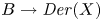 from $B$
 to the Lie algebra ${\mathit {Der}}(X)$
 of derivations on $X$
 . In this article, we study the question whether the concept of a derivation can be extended to other types of non-associative algebras over a field ${\mathbb {K}}$
 , in such a way that these generalized derivations characterize the ${\mathbb {K}}$
 -algebra actions. We prove that the answer is no, as soon as the field ${\mathbb {K}}$
 is infinite. In fact, we prove a stronger result: already the representability of all abelian actions – which are usually called representations or Beck modules – suffices for this to be true. Thus, we characterize the variety of Lie algebras over an infinite field of characteristic different from $2$
 as the only variety of non-associative algebras which is a non-abelian category with representable representations. This emphasizes the unique role played by the Lie algebra of linear endomorphisms $\mathfrak {gl}(V)$
 as a representing object for the representations on a vector space $V$
 .
.


Bohr theorems for slice regular functions over octonions
- Part of
-
- Journal:
- Proceedings of the Royal Society of Edinburgh. Section A: Mathematics / Volume 151 / Issue 5 / October 2021
- Published online by Cambridge University Press:
- 21 October 2020, pp. 1595-1610
- Print publication:
- October 2021
-
- Article
- Export citation
-
In this paper, we mainly investigate two versions of the Bohr theorem for slice regular functions over the largest alternative division algebras of octonions $\mathbb {O}$. To this end, we establish the coefficient estimates for self-maps of the unit ball of $\mathbb {O}$ and the Carathéodory class in this setting. As a further application of the coefficient estimate, the 1/2-covering theorem is also proven for slice regular functions with convex image.


POTENTIAL ALGEBRAS WITH FEW GENERATORS
- Part of
-
- Journal:
- Glasgow Mathematical Journal / Volume 62 / Issue S1 / December 2020
- Published online by Cambridge University Press:
- 01 July 2020, pp. S28-S76
- Print publication:
- December 2020
-
- Article
-
- You have access
- Export citation
ON BASE RADICAL THEORY IN FINITE SETTINGS
- Part of
-
- Journal:
- Bulletin of the Australian Mathematical Society / Volume 101 / Issue 3 / June 2020
- Published online by Cambridge University Press:
- 13 March 2020, pp. 510-511
- Print publication:
- June 2020
-
- Article
-
- You have access
- Export citation
HOW A NONASSOCIATIVE ALGEBRA REFLECTS THE PROPERTIES OF A SKEW POLYNOMIAL
- Part of
-
- Journal:
- Glasgow Mathematical Journal / Volume 63 / Issue 1 / January 2021
- Published online by Cambridge University Press:
- 26 November 2019, pp. 6-26
- Print publication:
- January 2021
-
- Article
- Export citation
OPERADIC APPROACH TO COHOMOLOGY OF ASSOCIATIVE TRIPLE AND N-TUPLE SYSTEMS
- Part of
-
- Journal:
- Glasgow Mathematical Journal / Volume 62 / Issue S1 / December 2020
- Published online by Cambridge University Press:
- 14 November 2019, pp. S128-S141
- Print publication:
- December 2020
-
- Article
-
- You have access
- Export citation
α-TYPE CHEVALLEY–EILENBERG COHOMOLOGY OF HOM-LIE ALGEBRAS AND BIALGEBRAS
- Part of
-
- Journal:
- Glasgow Mathematical Journal / Volume 62 / Issue S1 / December 2020
- Published online by Cambridge University Press:
- 03 July 2019, pp. S108-S127
- Print publication:
- December 2020
-
- Article
-
- You have access
- Export citation
DIVIDED POWER ALGEBRAS OVER AN OPERAD
- Part of
-
- Journal:
- Glasgow Mathematical Journal / Volume 62 / Issue 3 / September 2020
- Published online by Cambridge University Press:
- 27 May 2019, pp. 477-517
- Print publication:
- September 2020
-
- Article
-
- You have access
- Export citation
ON REPRESENTATIONS OF SYMMETRIC LEIBNIZ ALGEBRAS
- Part of
-
- Journal:
- Glasgow Mathematical Journal / Volume 62 / Issue S1 / December 2020
- Published online by Cambridge University Press:
- 23 May 2019, pp. S99-S107
- Print publication:
- December 2020
-
- Article
-
- You have access
- Export citation
CODES, S-STRUCTURES, AND EXCEPTIONAL LIE ALGEBRAS
- Part of
-
- Journal:
- Glasgow Mathematical Journal / Volume 62 / Issue S1 / December 2020
- Published online by Cambridge University Press:
- 07 May 2019, pp. S14-S27
- Print publication:
- December 2020
-
- Article
-
- You have access
- Export citation
-
The exceptional simple Lie algebras of types E7 and E8 are endowed with optimal $\mathsf{SL}_2^n$-structures, and are thus described in terms of the corresponding coordinate algebras. These are nonassociative algebras which much resemble the so-called code algebras.

Division algebras of slice functions
- Part of
-
- Journal:
- Proceedings of the Royal Society of Edinburgh. Section A: Mathematics / Volume 150 / Issue 4 / August 2020
- Published online by Cambridge University Press:
- 15 March 2019, pp. 2055-2082
- Print publication:
- August 2020
-
- Article
- Export citation
