To save content items to your account,
please confirm that you agree to abide by our usage policies.
If this is the first time you use this feature, you will be asked to authorise Cambridge Core to connect with your account.
Find out more about saving content to .
To save content items to your Kindle, first ensure no-reply@cambridge.org
is added to your Approved Personal Document E-mail List under your Personal Document Settings
on the Manage Your Content and Devices page of your Amazon account. Then enter the ‘name’ part
of your Kindle email address below.
Find out more about saving to your Kindle.
Note you can select to save to either the @free.kindle.com or @kindle.com variations.
‘@free.kindle.com’ emails are free but can only be saved to your device when it is connected to wi-fi.
‘@kindle.com’ emails can be delivered even when you are not connected to wi-fi, but note that service fees apply.
A literary language in transnational circulation for over a hundred years; a Gospel radio program; home studios in the bustling city; disc recordings sold at farmers’ markets; gospel songs shared on social media; a night-long song-signing daibbit performance in a church gathering; the inscription of ddoqmuq mutgguat singing on the ethnic heritage list—on the southwestern Chinese border, the Lisu hanleixsu have encountered all these sound technologies in their Christian practice of aurality. Most of the acoustic dimensions of early conversion were presented to the converts as written or printed forms, in which the Fraser script served as both a force that constituted the Christian vision of modernity and a medium for constructing knowledge about it. Deriving from American media evangelism, the radio as an emerging Christian medium introduced recorded sound to the separated hanleixsu for the first time, producing a different kind of church space and an audible technique for the new listening community. The home studio, with limited financial, technical, and material support, provided a vital link to the Lisu media practitioners who dedicated themselves to gospel music and media production for transnational circulation and listening. The disc recording— once prevalent for its affordability, durability, and reproducibility—provided the local community members with the opportunity to create and consume their own music for vernacular uses. The disciplining work on the public exhibition of Christian culture in the case of the Lisu peasant choir turned a usable Christian vocal technique into a legible sound object. Faith is (re) made or restrained through the aural as defined by relationality and renewability, which, I argue, is the essential part of the broader Lisu pursuit of Christian belonging.
Despite the seeming clarity of the Gospel message conveyed through each of the foregoing mediums, there have been many twists in the Lisu Christian process of striving after faith, twists that this book has attempted to describe. Lisu radio producers of GBM started to work for evangelical outreach, but later determined to make more Lisu music videos and films for nonradio use. In the Lisu transnational recording industry, the rapidly emerging media specialists based in Myanmar and Chiang Mai became stars, yet their fame arose not from any form of superiority but from their roles as advocates for community members.
To one convention held in the Christmas of 1968 on the Myanmar-Indian border:
Each village came with its own choir, which had been practicing special songs for the occasion. Each group had an opportunity to sing in one or more of the seven services held during the convention… . This great service, with hundreds of joyful voices harmonizing in old hymns like “What a Friend We Have in Jesus” and “Amazing Grace,” was a true feast to God—a feast of music.
—E. Morse 1974, 180
Individual activities were hard to comprehend in the lively and bustling context of a Lisu village. From a Christian standpoint, the strongest practices were those that could be done together, that expressed the communal life of the Body of Christ: gathering together to practice line dancing, attending church, singing in four-part harmony, and participating in intercessory prayer meetings.
—Arrington 2020, 147
May 25, 2014—The new chapel of Nongchang Church, Lushui County
I am sitting at the back row in order to have a better view of the congregation seated in front of me. I expect a lengthier time at today's Sunday noon service, as it will be combined with the dedication ceremony of the new church building (hinshir ddutbair). I know it because students of the Nujiang Christian training center have been rehearsing two dance performances for this special occasion. Although the ceremony is organized by and for the host Nongchang Church, churches in close proximity and from afar are invited to celebrate together the growth of the local faith community. Every seat (around three-hundred capacity) in the chapel is occupied and still a large crowd of several hundred others is standing on three sides of this open space, all looking onto the central podium. After congratulatory speeches, a short sermon, and an enthusiastic church fundraiser—the collec-tion box is passed around and people just throw money into the box—the presider announces the beginning of the praise time (xelgget rriq).
The presider has received piles of paper strips, indicating that several dozen performances have been lined up for the next couple of hours. Participants from the invited churches are welcome to perform as many songs as possible. I often recognize the familiar melodies of mostly Burmese origin that I have heard in other mass gatherings or through recordings.
[James O.] Fraser gathered them [the Lisu] together and explained more fully what it meant to “turn to God from idols.” He had learned that anything short of the complete destruction of all implements used in spirit worship did not count as making room for Christ in heart and home. That was the dividing line; once it was crossed, faith could take possession in a real way. Families had to destroy all traces of demon worship, even pulling down the spirit shelf in the little shrine perched above them on the mountainside.
—Taylor [1964] 1975, 193
The value of proper feeding, sleeping hours, fresh air and cleanliness were pointed out, every single one of those items being an entirely new idea to them [Lisu] … During these talks together Ma-ma definitely aimed at what St. Paul termed “the transformation of your minds” and the casting out of heathen thoughts and attitudes often unconsciously retained.1
—I. Kuhn 1951, 77
Conversion does not seem to be a most obvious place to start the investigation of Lisu Christian striving by aurality. I could have begun with something more relevant to vocal cultivation and hearing—for instance, the practice of radio circuit listening discussed in chapter 2. And yet, I begin with conversion—a seemingly ineffable experience of deliberately working to change one's faith—because it is more than just one among many milestones in the history of Lisu Christianity. I am interested in conversion particularly for the ways it illuminates some central concerns of this book about Christian striving and belonging in terms of materiality, mobility, and (re)mediation. From this perspective, the study of Lisu conversion can be most useful by placing at the center of examination—rather than the cause or consequence of conversion—the kind of qualitative experience one undergoes in order to mold oneself into “an ideal Christian” in terms of broader semiotic ideologies about faith and conversion (Keane 2003).
Missionary records from the early twentieth century show that Protestant missionaries working among the Lisu generally understood conversion as both a one-time turning point and a continuous process of (re)confirmation.
This glossary is divided into four sections: personal names; genres, instruments, and musical terms; terms pertaining to Lisu Christianity; and other important terms. It is arranged according to the alphabetical order of Lisu Pinyin. Except for personal names, each term is given in Lisu Pinyin and the Fraser script, with brief English translation.
Despite the evidence of the benefits of improvisation in instrumental teaching, research indicates that many piano teachers do not include it in their lessons. The purpose of this study was to investigate the influences on piano teachers’ pedagogy to determine what factors impacted the teaching of improvisation. A total of 117 UK-based piano teachers participated in the survey. The data obtained indicates that an understanding of how to teach improvisation is a significant influence on teachers’ pedagogy. The conclusion argues that there is a need for piano teachers to have greater access to instrumental teaching courses to encourage them to reflect on their teaching practice.
During the nineteenth century, many heard the afterlife before they could see it. These clairaudient forays took place in the context of spiritualism, a religious movement that facilitated communication between the living and the dead. Although the senses were important to spiritualism, sound was especially crucial for developing cosmologies of the afterlife. Sound can have powerful affective effects, especially in the realm of religion. In the case of spiritualism, however, notions of sound are complicated because of the inclusion of clairaudient and acousmatic sounds. This article analyzes spiritualist soundscapes in terms of acoustemologies, using personal narratives and instructional materials to demonstrate how spiritualists developed a sense of space through sound. Not only does my analysis demonstrate the importance of sound to these spiritual communities, but it also shows that spiritualist conceptions of sound require a special understanding of the nature of sound.
This exploratory study describes the design and implementation of a sound-based intervention in the initial training of specialist music teachers at a Spanish university. It aimed to create spaces geared towards more creative and contemporary approaches to musical learning in order to gauge the perceptions of trainee teachers regarding this kind of approach. The intervention (45 h of class time) was based on the creation of electroacoustic compositions following the SBM (Sound Based Music) approach using digital tools (Aglaya Play, AP). Qualitative process data were collected through self-reports, individual memories, and nine focus groups. The results suggest that the implementation of new intervention models that take into account the development of future teachers’ creativity with activities focused on exploration, experimentation, and creation with sound can generate new opportunities to enrich their teaching identities.
My role as a university-based, general classroom music teacher educator in England has become unclear, exacerbated by policies that have undermined the field of classroom music in schools and the role of universities in teacher education. Using self-critical inquiry enacted as critically reflexive autoethnography, I interrogated my professional practice to rethink my pedagogic identity. Theoretical perspectives, drawn from Bernstein and Bourdieu, were used to chart my shifting identity. This paper introduces a theorised model to illustrate a range of pedagogic identities for Key Stage 3 (KS3) general classroom music teacher education.
Scholars explore from many fresh angles the interweavings of two of the richest strands of human culture - music and esotericism - with examples from the medieval period to the modern age.
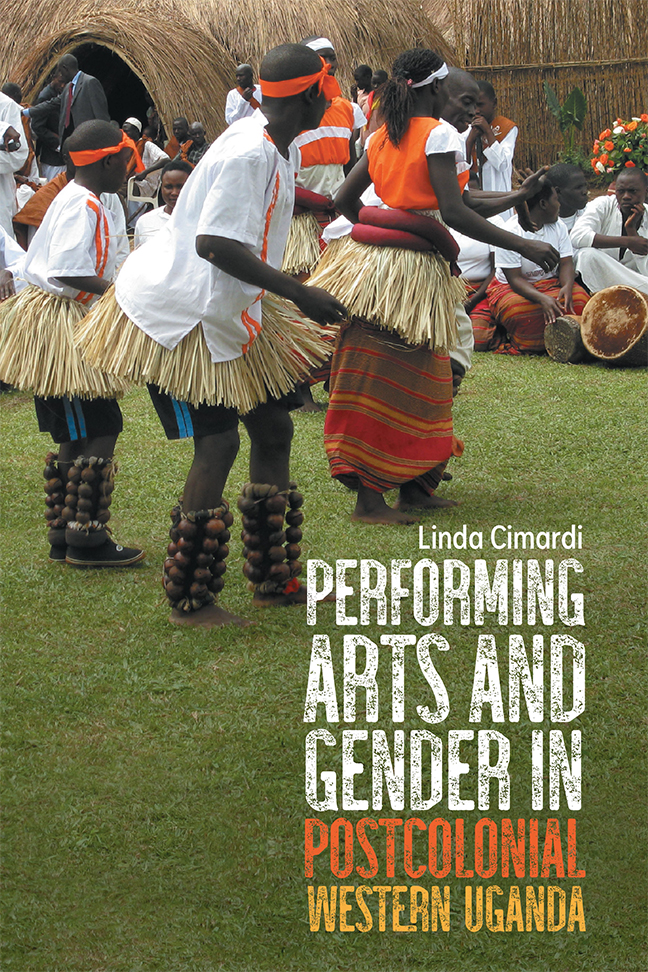
Focusing on 'runyege', the main traditional performance genre of the Banyoro and Batooro people, this book explores the entanglement of traditional music, dance, and theater with gender and postcolonialism in Western Uganda.
The first biography of the composer Gérard Grisey shows how the artist's sensuality and rigor came together to form the musical genre known as spectralism.
This book examines Ian McEwan's ability to discern in his writing sentiments that easily resonate with musicians, explores the value of music in exhibiting McEwan's views on the world, and presents his perspective on religion's role within society.
This study aims to increase understanding of the values and outcomes of teacher action research in conservatoire education. Teacher action research has been found to stimulate both professional development and improvement of teaching practice. A multiple-case study design was employed to examine teachers’ activities and their perceptions of the value of action research. Findings from the cross-case analysis include teachers’ perceptions of action research as a way to stimulate the advancement of both their teaching practice and their professional development. Constructive collaborations and self-reflections related to teacher action research were found to reinforce their learning and teaching.