To save content items to your account,
please confirm that you agree to abide by our usage policies.
If this is the first time you use this feature, you will be asked to authorise Cambridge Core to connect with your account.
Find out more about saving content to .
To save content items to your Kindle, first ensure no-reply@cambridge.org
is added to your Approved Personal Document E-mail List under your Personal Document Settings
on the Manage Your Content and Devices page of your Amazon account. Then enter the ‘name’ part
of your Kindle email address below.
Find out more about saving to your Kindle.
Note you can select to save to either the @free.kindle.com or @kindle.com variations.
‘@free.kindle.com’ emails are free but can only be saved to your device when it is connected to wi-fi.
‘@kindle.com’ emails can be delivered even when you are not connected to wi-fi, but note that service fees apply.
Music teacher identity is constructed at the intersection between musician and teacher. This study investigated the meaning of music-making among Korean novice music teachers and its role in constructing music teacher identity. Five music teachers participated in this study, and I used two data collection methods, reflective journaling and individual interviews. The results showed that while playing their instruments outside the classroom, several music teachers understood the importance of music in their lives, which was essential in constructing music teacher identities. In addition, playing outside the classroom allowed these participants to demonstrate their musical abilities to students, parents and other teachers and gain credibility as music teachers. However, other participants did not appear to recognise the importance of the intersection between music-making outside the classroom and teaching, which was an obstacle to music-making. Music-making inside the classroom was an important pedagogical tool to teach low-level students effectively. Importantly, regardless of their level of music-making inside the classroom, novice music teachers commonly viewed professional playing skills with primary and secondary instruments as important for teaching.
This article examines the relationship between notation and improvisation and the ways in which notational representation and prescription are extended by para-notation in the work and practice of the improvisers Sarah Brand and Moss Freed and in the work of ethnomusicologist Floris Schuiling, in particular through his research into the Dutch collective, the Instant Composers Pool (ICP). Sarah Brand analyses her own improvisation transcriptions using concepts derived from music therapy to help sharpen awareness for future improvisation. Moss Freed's Micromotives features his own variant of conduction, developed through reflexive and cyclic processes of notation, rehearsals and discussion. Floris Schuiling's ethnomusicological research into the ICP reveals how notation can be used to generate creative challenges, not only for the members of the collective but for musicians in general. A series of interviews reveals that these musicians use notation to render processes visible and to build and develop communities and cultures.
This article is an anthropological exploration of the role of dance in tourism-led entrepreneurship and tourism-led mobilities in Cuba. Based on ethnographic research and employing an autoethnographic lens, the article examines the imaginaries and gendered performances of Cubanness that play out in touristic settings as part of dance trips organized on the island for international tourists. Women are the main target audience for these dance programs, which oftentimes reveal the reproduction of racial stereotypes that contributed to the growing popularity of Cuba as a tourist destination. Dance teachers come to establish a broad spectrum of relations that are influenced by inequalities of resources and unequal access to mobility, since it is the (usually) white European and North American dancing tourists who take up space as central dancing figures, co-creating the cultural script that fetishizes Cuban Black bodies, especially in settings such as salsa schools or popular dance venues.
Ananya Dance Theatre generates a framework for “contemporary dance” as choreography which enacts its solidarity with the land of Native peoples. Artistic director Ananya Chatterjea mobilizes her contemporary aesthetic, “Yorchhā,” through the company's alliance with Indigenous peoples’ worldviews on land and water protection, especially through their relations with Dakota and Anishinaabe persons. Dance analysis of the pieces “Moreechika: Season of Mirage” (2012), “Shaatranga: Women Weaving Worlds” (2018), and “Shyamali: Sprouting Words” (2017) shapes contemporary dance through its engagement with Native persons’ caretaking labor for the environment and the position of these relations in the choreography. A practice of humility emerges as the cornerstone of solidarity in contemporary dance due to the necessity for longstanding Native invitation and engagement, Indigenous narratives and embodiment in the dance pieces, and lessons learned from the pitfalls in intersecting techniques such as Ananya Dance Theatre's with Native people's lifeways and knowledges.
Seaton Snook was a thriving community of fishermen, blacksmiths, teachers, seacoalers, labourers and musicians on the coast of County Durham, UK. After 1968, however, government records and newspaper reports referring to the town cease and there are, apparently, no former residents still living. This article outlines the creation of What Happened to Seaton Snook?, an internet-based archive of sounds and music from the area, its residents and its workers, devised to try and form a picture of the town and what happened there. Among the nearly 100 artefacts in this ethnomusicological study are pieces for piano and harpsichord, pedagogic works, folk tunes for voice and Northumbrian smallpipes, brass band music, Krautrock, psychedelic rock and works for magnetic tape. There are biographies and photographs of people key to the history of the town, and interviews with experts in matters pertaining to the artefacts. The archive also seeks to examine the economic and cultural neglect of the North East of England and the importance of the stories we tell around the music we make.
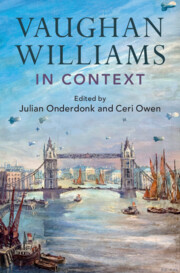
Challenging residual doubts about Vaughan Williams's role and significance within twentieth-century music and culture, this book places and explores his life and music in their broad musical, cultural, social, and political contexts. Chapters by scholars from a range of disciplines re-evaluate the composer's life and career within a world marked by both rapid change and refigured traditions. Building on scholarship that has established Vaughan Williams as aesthetically and politically progressive, the book furthers a revisionist perspective by broadening understandings of the nature of his responses to the twentieth century. This portrait of a modern composer emerges not merely by focusing on under-represented interests and pursuits, but also by contextualizing those activities that have been misrepresented as conservative or backward-looking.
Sociologist and dance practitioner Christophe Apprill provides a solid historical overview of tango dance. He then explores gender relations and roles in tango by examining tango stereotypes in relation to tango dance, while opening new perspectives on contemporary dimensions of globalized tango scenes.
On the Waterfront (1954) offers a particularly interesting case study of both film and music in the 1950s. Elia Kazan’s iconic depiction of waterfront corruption in Hoboken, New Jersey is revered for its neorealist cinematic techniques, masterclass in method acting, and concern for the collective plight of blue-collar longshoremen, but is perhaps best remembered as a classic story of one man’s tragic fall and ultimate redemption through the love of a woman. Concerned that the film lacked sufficient ‘star power’ for success at the box office, independent film producer Sam Spiegel eventually convinced Leonard Bernstein to compose what would be his first and only film score. This chapter argues that Bernstein’s music interacts with the film’s narrative in a way that is not only remarkable for one’s first score, but also represents an important contribution to 1950s cinema, employing textures and influencing composers who are still with us today.