Refine search
Actions for selected content:
238502 results in Physics and Astronomy
Adaptive particle refinement for compressible smoothed particle hydrodynamics
-
- Journal:
- Publications of the Astronomical Society of Australia / Volume 42 / 2025
- Published online by Cambridge University Press:
- 27 January 2025, e016
-
- Article
-
- You have access
- Open access
- HTML
- Export citation
-
We introduce adaptive particle refinement for compressible smoothed particle hydrodynamics (SPH). SPH calculations have the natural advantage that resolution follows mass, but this is not always optimal. Our implementation allows the user to specify local regions of the simulation that can be more highly resolved. We test our implementation on practical applications including a circumbinary disc, a planet embedded in a disc, and a flyby. By comparing with equivalent globally high-resolution calculations, we show that our method is accurate and fast, with errors in the mass accreted onto sinks of less than 9% and speed ups of 1.07–6.62 $\times$ for the examples shown. Our method is adaptable and easily extendable, for example, with multiple refinement regions or derefinement.

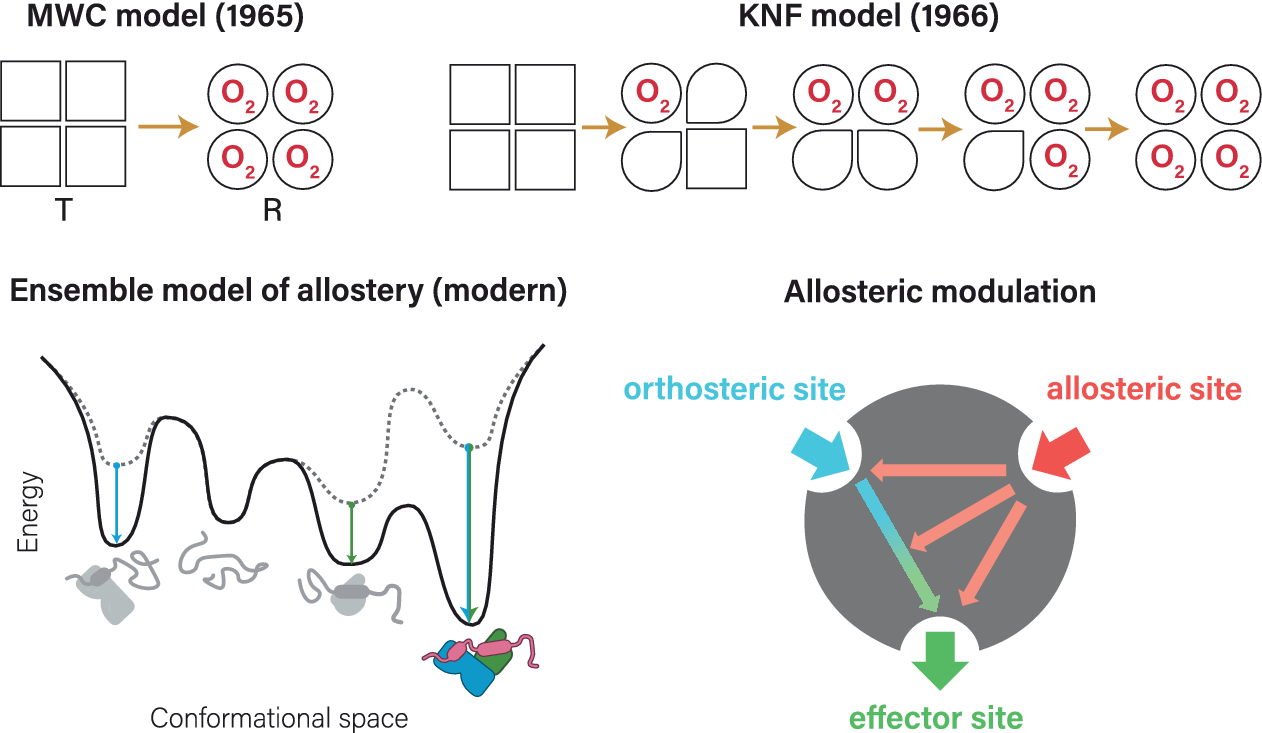
Allostery
-
- Journal:
- Quarterly Reviews of Biophysics / Volume 58 / 2025
- Published online by Cambridge University Press:
- 24 January 2025, e5
-
- Article
-
- You have access
- Open access
- HTML
- Export citation

Attenuation of shear-layer instabilities in steady and pulsatile axisymmetric shear-thinning flows
-
- Journal:
- Journal of Fluid Mechanics / Volume 1003 / 25 January 2025
- Published online by Cambridge University Press:
- 24 January 2025, A30
-
- Article
-
- You have access
- Open access
- HTML
- Export citation
-
The current study characterizes the attenuation of instabilities in steady and unsteady shear layers by investigating shear-thinning flows downstream of a confined axisymmetric sudden expansion. Flow fields were captured using particle image velocimetry. Tested fluids exhibited approximate power-law indices of 1, 0.81, 0.61 and 0.47 and measurements were performed at mean throat-based Reynolds numbers of ${Re_m} = 4800$ and 14 400. Unsteady flows were tested at a Strouhal number and amplitude-to-mean velocity ratio of $St = 0.15$ and $\lambda = 0.95$, respectively. For unsteady shear layers, shear-layer roll-up regardless of shear-thinning strength was evidenced by collapse of average circulation over time. For steady shear layers, consistent shear-layer behaviour regardless of shear-thinning strength was evidenced by similar shear-layer trajectories and by growth rates in vorticity thickness. However, vorticity fields of the unsteady and steady shear layers, standard deviations of shear-layer trajectory, thickness of steady shear layers and Reynolds shear-stress spectra of the steady shear layers reveal an attenuation of shear-layer instabilities not captured by Reynolds number. Specifically, shear-layer instabilities exhibit increased diffusion with increasing shear-thinning strength and, in the case of steady shear layers, shear-thinning strength is shown to promote shear-layer stabilization. Also, evidenced by vorticity fields and through Reynolds shear-stress spectra, instabilities frequently coalesce into large rollers, a result that would suggest the presence of an inverse eddy cascade. The behaviour of shear-thinning fluids is shown to stabilize shear layers through attenuating shear-layer instabilities, complementing observations from previous studies showing how shear-thinning fluids promote turbulence in the dominant flow direction.


WALLABY Pilot Survey: kNN identification of perturbed galaxies through H 1 morphometrics
-
- Journal:
- Publications of the Astronomical Society of Australia / Volume 42 / 2025
- Published online by Cambridge University Press:
- 24 January 2025, e028
-
- Article
-
- You have access
- Open access
- HTML
- Export citation
-
Galaxy morphology in stellar light can be described by a series of ‘non-parametric’ or ‘morphometric’ parameters, such as concentration-asymmetry-smoothness, Gini, $M_{20}$, and Sérsic fit. These parameters can be applied to column density maps of atomic hydrogen (H 1). The H 1 distribution is susceptible to perturbations by environmental effects, for example, intergalactic medium pressure and tidal interactions. Therefore, H 1 morphology can potentially identify galaxies undergoing ram-pressure stripping or tidal interactions. We explore three fields in the WALLABY Pilot H 1 survey and identify perturbed galaxies based on a k-nearest neighbour (kNN) algorithm using an H 1 morphometric feature space. For training, we used labelled galaxies in the combined NGC 4808 and NGC 4636 fields with six H 1 morphometrics to train and test a kNN classifier. The kNN classification is proficient in classifying perturbed galaxies with all metrics – accuracy, precision, and recall – at 70–80%. By using the kNN method to identify perturbed galaxies in the deployment field, the NGC 5044 mosaic, we find that in most regards, the scaling relations of perturbed and unperturbed galaxies have similar distribution in the scaling relations of stellar mass versus star formation rate and the Baryonic Tully–Fisher relation, but the H 1 and stellar mass relation flatter than of the unperturbed galaxies. Our results for NGC 5044 provide a prediction for future studies on the fraction of galaxies undergoing interaction in this catalogue and to build a training sample to classify such galaxies in the full WALLABY survey.

More Local Volume dwarf galaxy candidates
-
- Journal:
- Publications of the Astronomical Society of Australia / Volume 42 / 2025
- Published online by Cambridge University Press:
- 24 January 2025, e026
-
- Article
-
- You have access
- Open access
- HTML
- Export citation
-
We present the results of searching for new dwarf galaxies in the Local Volume. We found 40 satellite candidates in the double-virial-radius regions of 20 Milky Way-like and Large Magellanic Cloud (LMC)-like galaxies in the southern sky using DESI Legacy Imaging Surveys, 10 of which were known but not clearly associated with the Local Volume previously. Among the 40 satellite candidates, 8 are supposed members of the NGC 6744 group and 13 are located in the vicinity of the Sombrero galaxy. Based on seven companions to the giant spiral galaxy NGC 6744 with measured radial velocities, we estimate that the total mass of the group is $M_T = (1.88\pm0.71)\times 10^{12}\,\mathrm{M}_{\odot}$ and the total mass-to-K-luminosity ratio $M_T/L_K = (16.1\pm6.0) \mathrm{M}_{\odot}/\mathrm{L}_{\odot}$. We reproduce a distribution of 68 early- and late-type galaxies in the Local Volume situated around the Sombrero, noting their strong morphological segregation and also the presence of a foreground diffuse association of dwarf galaxies at 8 degrees to SE from the Sombrero.

Large-eddy simulations of the noise control of supersonic rectangular jets with bevelled nozzles
-
- Journal:
- Journal of Fluid Mechanics / Volume 1003 / 25 January 2025
- Published online by Cambridge University Press:
- 24 January 2025, A32
-
- Article
- Export citation
-
The bevelled nozzle is a promising noise control approach and has been tested to suppress the noise levels in supersonic circular jets, but not in rectangular jets so far. In this study, implicit large-eddy simulations are performed to analyse the noise control of supersonic rectangular jets with single- and double-bevelled nozzles. Three nozzle pressure ratios ( $NPR = 2.3$, 3.0 and 5.0) are considered to form two over-expanded cold jets and one under-expanded cold jet, exhausted from a baseline convergent–divergent rectangular nozzle with an aspect ratio of 2.0. Results show that, with the increase of $NPR$, the oscillation of the jet plume is switched from a symmetrical mode to a flapping mode (preferential in the minor-axis plane), then to a helical mode, together with a reduction of the screech frequency. The amplitude of the screech tone is the strongest in the flapping jet, and the turbulent mixing noise is the most prominent in the helically oscillating jet. The single-bevelled nozzle induces asymmetric shock-cell structures and deflects the jet plumes, and the double-bevelled nozzle primarily enables the enhancement of the shear-layer mixing and shortens the lengths of the jet potential cores. With the bevelled nozzles, the gross thrusts of the baseline nozzle are increased by $0.05 \sim 7.38$ %. Details on the characteristics of far-field noise in the jets with/without the bevel cuts and their noise control mechanisms are discussed using the Ffowcs Williams–Hawkings acoustic analogy, dynamic mode decomposition and spatio-temporal Fourier transformation. Results suggest that the noise control has a close relationship with the destruction of well-organized coherent structures and the suppression of upstream-propagating guided-jet modes, which interrupt the feedback mechanism accounting for the generation of screech tones in the supersonic rectangular jets.


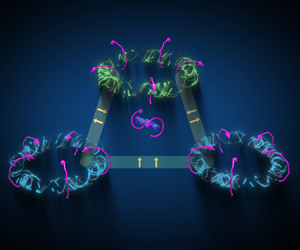
The role of double‐layer vortex rings with the local swirl in the rapid transition to turbulent flows in Richtmyer–Meshkov instability with reshock
-
- Journal:
- Journal of Fluid Mechanics / Volume 1003 / 25 January 2025
- Published online by Cambridge University Press:
- 24 January 2025, A36
-
- Article
-
- You have access
- Open access
- HTML
- Export citation

Scaling analysis of the swirling wake of a porous disc: application to wind turbines
-
- Journal:
- Journal of Fluid Mechanics / Volume 1003 / 25 January 2025
- Published online by Cambridge University Press:
- 24 January 2025, A34
-
- Article
- Export citation
A 5.32 mJ and 47.5 kW cavity-dumped Pr3+:LiYF4 pulsed laser at 639 nm
-
- Journal:
- High Power Laser Science and Engineering / Volume 13 / 2025
- Published online by Cambridge University Press:
- 24 January 2025, e18
-
- Article
-
- You have access
- Open access
- HTML
- Export citation
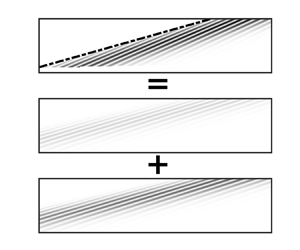
A resolvent-based perspective on the generation of Mach wave radiation from compressible boundary layers
-
- Journal:
- Journal of Fluid Mechanics / Volume 1003 / 25 January 2025
- Published online by Cambridge University Press:
- 24 January 2025, A31
-
- Article
-
- You have access
- Open access
- HTML
- Export citation

LES combustion model for premixed turbulent hydrogen flames with thermodiffusive instabilities: a priori and a posteriori analysis
-
- Journal:
- Journal of Fluid Mechanics / Volume 1003 / 25 January 2025
- Published online by Cambridge University Press:
- 24 January 2025, A33
-
- Article
-
- You have access
- Open access
- HTML
- Export citation
The commensal real-time ASKAP fast transient incoherent-sum survey
-
- Journal:
- Publications of the Astronomical Society of Australia / Volume 42 / 2025
- Published online by Cambridge University Press:
- 24 January 2025, e036
-
- Article
-
- You have access
- Open access
- HTML
- Export citation
-
With wide-field phased array feed technology, the Australian Square Kilometre Array Pathfinder (ASKAP) is ideally suited to search for seemingly rare radio transient sources that are difficult to discover previous-generation narrow-field telescopes. The Commensal Real-time ASKAP Fast Transient (CRAFT) Survey Science Project has developed instrumentation to continuously search for fast radio transients (duration $\lesssim$ 1 s) with ASKAP, with a particular focus on finding and localising fast radio bursts (FRBs). Since 2018, the CRAFT survey has been searching for FRBs and other fast transients by incoherently adding the intensities received by individual ASKAP antennas, and then correcting for the impact of frequency dispersion on these short-duration signals in the resultant incoherent sum (ICS) in real time. This low-latency detection enables the triggering of voltage buffers, which facilitates the localisation of the transient source and the study of spectro-polarimetric properties at high time resolution. Here we report the sample of 43 FRBs discovered in this CRAFT/ICS survey to date. This includes 22 FRBs that had not previously been reported: 16 FRBs localised by ASKAP to $\lesssim 1$ arcsec and 6 FRBs localised to $\sim 10$ arcmin. Of the new arcsecond-localised FRBs, we have identified and characterised host galaxies (and measured redshifts) for 11. The median of all 30 measured host redshifts from the survey to date is $z=0.23$. We summarise results from the searches, in particular those contributing to our understanding of the burst progenitors and emission mechanisms, and on the use of bursts as probes of intervening media. We conclude by foreshadowing future FRB surveys with ASKAP using a coherent detection system that is currently being commissioned. This will increase the burst detection rate by a factor of approximately ten and also the distance to which ASKAP can localise FRBs.


Topology of shallow-water waves on a rotating sphere
-
- Journal:
- Journal of Fluid Mechanics / Volume 1003 / 25 January 2025
- Published online by Cambridge University Press:
- 24 January 2025, A35
-
- Article
- Export citation
-
Topological properties of the spectrum of shallow-water waves on a rotating spherical body are established. Particular attention is paid to spectral flow, i.e. the modes whose frequencies transit between the Rossby and inertia–gravity wavebands as the zonal wavenumber is varied. Organising the modes according to the number of zeros of their meridional velocity, we conclude that the net number of modes transiting between the shallow-water wavebands on the sphere is null, in contrast to the Matsuno spectrum. This difference can be explained by a miscount of zeros under the $\beta$-plane approximation. We corroborate this result with the analysis of Delplace et al. (Science, vol. 358, 2017, pp. 1075–1077) by showing that the curved metric discloses a pair of degeneracy points in the Weyl symbol of the wave operator, non-existent under the $\beta$-plane approximation, each of them bearing a Chern number of $-1$.
$-1$.


On the importance of flux-driven turbulence regime to address tokamak plasma edge dynamics
- Part of
-
- Journal:
- Journal of Plasma Physics / Volume 91 / Issue 1 / February 2025
- Published online by Cambridge University Press:
- 24 January 2025, E26
-
- Article
-
- You have access
- Open access
- HTML
- Export citation
-
Turbulence self-organization is studied in the flux-driven regime by means of the reduced model Tokam1D. Derived in the electrostatic and isothermal limit but keeping finite electron and ion temperatures, it features two instabilities that are suspected to dominate turbulent transport at the edge of L-mode tokamak plasmas: interchange (a reduced version of the resistive ballooning modes) and collisional drift waves, governed respectively by an effective gravity parameter $g$
 and the adiabaticity parameter $C$
 . The usual properties of these two instabilities are recovered in the linear regime. The nonlinear study focuses on the self-organization of collisional drift-wave turbulence at $g=0$
 . It is found that the energy stored in zonal flows (ZFs) decreases smoothly at small $C$
 due to the reduction of both electric and diamagnetic stresses. Conversely to gradient-driven simulations, no sharp collapse is observed due to the self-consistent evolution of the equilibrium density profile. The ZFs are found to structure into staircases at small and large $C$
 . These structures exhibit a rich variety of dynamics but are found to be robust to large perturbations. Their nucleation is found to be critically governed by the phase dynamics. Finally, the staircase structures are lost in the gradient-driven regime, when the system is prevented from storing turbulent energy into the equilibrium density (pressure) profile.


High-power microsecond ultraviolet burst-mode pulse laser with a rectangular envelope and GHz-adjustable intra-burst pulses
-
- Journal:
- High Power Laser Science and Engineering / Volume 13 / 2025
- Published online by Cambridge University Press:
- 24 January 2025, e23
-
- Article
-
- You have access
- Open access
- HTML
- Export citation
Preface
-
- Book:
- Quantum Hall Effect
- Published online:
- 31 August 2024
- Print publication:
- 23 January 2025, pp xiii-xvi
-
- Chapter
- Export citation
Index
-
- Book:
- Quantum Hall Effect
- Published online:
- 31 August 2024
- Print publication:
- 23 January 2025, pp 217-222
-
- Chapter
- Export citation
2. - Symmetry and Topology
-
- Book:
- Quantum Hall Effect
- Published online:
- 31 August 2024
- Print publication:
- 23 January 2025, pp 31-50
-
- Chapter
- Export citation
Frontmatter
-
- Book:
- Fractionalization of Particles in Physics
- Published online:
- 09 January 2025
- Print publication:
- 23 January 2025, pp i-iv
-
- Chapter
- Export citation
7 - Fractionalization in Quantum Wires
-
- Book:
- Fractionalization of Particles in Physics
- Published online:
- 09 January 2025
- Print publication:
- 23 January 2025, pp 516-744
-
- Chapter
- Export citation
