Refine search
Actions for selected content:
238502 results in Physics and Astronomy
7 - Orbits
-
- Book:
- Celestial and Stellar Dynamics
- Published online:
- 16 January 2025
- Print publication:
- 30 January 2025, pp 138-156
-
- Chapter
- Export citation
3 - Three Icons of Star Travel
-
- Book:
- Starbound
- Published online:
- 12 December 2024
- Print publication:
- 30 January 2025, pp 36-57
-
- Chapter
- Export citation
Reflection-driven turbulence in the super-Alfvénic solar wind
- Part of
-
- Journal:
- Journal of Plasma Physics / Volume 91 / Issue 1 / February 2025
- Published online by Cambridge University Press:
- 30 January 2025, E29
-
- Article
-
- You have access
- Open access
- HTML
- Export citation
-
In magnetized, stratified environments such as the Sun's corona and solar wind, Alfvénic fluctuations ‘reflect’ from background gradients, enabling nonlinear interactions that allow their energy to dissipate into heat. This process, termed ‘reflection-driven turbulence’, likely plays a key role in coronal heating and solar-wind acceleration, explaining a range of detailed observational correlations and constraints. Building on previous works focused on the inner heliosphere, here we study the basic physics of reflection-driven turbulence using reduced magnetohydrodynamics in an expanding box – the simplest model that can capture local turbulent plasma dynamics in the super-Alfvénic solar wind. Although idealized, our high-resolution simulations and simple theory reveal a rich phenomenology that is consistent with a diverse range of observations. Outwards-propagating fluctuations, which initially have high imbalance (high cross-helicity), decay nonlinearly to heat the plasma, becoming more balanced and magnetically dominated. Despite the high imbalance, the turbulence is strong because Elsässer collisions are suppressed by reflection, leading to ‘anomalous coherence’ between the two Elsässer fields. This coherence, together with linear effects, causes the growth of ‘anastrophy’ (squared magnetic potential) as the turbulence decays, forcing the energy to rush to larger scales and forming a ‘$1/f$
 -range’ energy spectrum in the process. Eventually, expansion overcomes the nonlinear and Alfvénic physics, forming isolated, magnetically dominated ‘Alfvén vortices’ with minimal nonlinear dissipation. These results can plausibly explain the observed radial and wind-speed dependence of turbulence imbalance (cross-helicity), residual energy, fluctuation amplitudes, plasma heating and fluctuation spectra, as well as making a variety of testable predictions for future observations.

8 - The Fate of the Crew
-
- Book:
- Starbound
- Published online:
- 12 December 2024
- Print publication:
- 30 January 2025, pp 143-163
-
- Chapter
- Export citation
5 - Exoplanetary Systems
-
- Book:
- Celestial and Stellar Dynamics
- Published online:
- 16 January 2025
- Print publication:
- 30 January 2025, pp 81-102
-
- Chapter
- Export citation
Preface
-
- Book:
- Celestial and Stellar Dynamics
- Published online:
- 16 January 2025
- Print publication:
- 30 January 2025, pp xi-xii
-
- Chapter
- Export citation
Ultrasound-induced dense granular flows: a two-time scale modelling
-
- Journal:
- Journal of Fluid Mechanics / Volume 1004 / 10 February 2025
- Published online by Cambridge University Press:
- 30 January 2025, A10
-
- Article
- Export citation
-
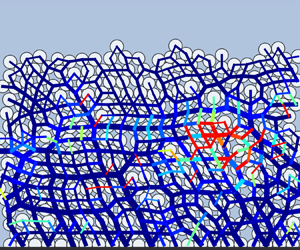
Understanding the mechanisms behind the remote triggering of landslides by seismic waves at micro-strain amplitude is essential for quantifying seismic hazards. Granular materials provide a relevant model system to investigate landslides within the unjamming transition framework, from solid to liquid states. Furthermore, recent laboratory experiments have revealed that ultrasound-induced granular avalanches can be related to a reduction in the interparticle friction through shear acoustic lubrication of the contacts. However, investigating slip at the scale of grain contacts within an optically opaque granular medium remains a challenging issue. Here, we propose an original coupling model and numerically investigate two-dimensional dense granular flows triggered by basal acoustic waves. We model the triggering dynamics at two separated time scales – one for grain motion (milliseconds) and the other for ultrasound (10 ${\rm \mu} {\rm s}$) – relying on the computation of vibrational modes with a discrete element method through the reduction of the local friction. We show that ultrasound predominantly propagates through the strong-force chains, while the ultrasound-induced decrease of interparticle friction occurs in the weak contact forces perpendicular to the strong-force chains. This interparticle friction reduction initiates local rearrangements at the grain scale that eventually lead to a continuous flow through a percolation process at the macroscopic scale – with a delay depending on the proximity to the failure. Consistent with experiments, we show that ultrasound-induced flow appears more uniform in space than pure gravity-driven flow, indicating the role of an effective temperature by ultrasonic vibration.

Manifestation of screech modes in non-axisymmetric jets
-
- Journal:
- Journal of Fluid Mechanics / Volume 1004 / 10 February 2025
- Published online by Cambridge University Press:
- 30 January 2025, A7
-
- Article
-
- You have access
- Open access
- HTML
- Export citation
-
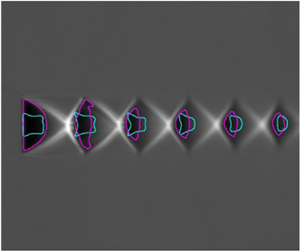
This study identifies two previously unrecognised screech modes in non-axisymmetric jets. Spectral proper orthogonal decomposition (SPOD) of ultra-high-speed schlieren images reveals a bi-axial flapping mode in a rectangular jet and a quasi-helical mode in an elliptical jet. To educe the complex three-dimensional structure of these new modes, SPOD is performed on datasets from different viewing perspectives, produced by rotating the nozzle with respect to the schlieren path to an azimuthal angle $\theta$. The bi-axial flapping mode is strongly antisymmetric from any perspective. However, the SPOD eigenvalue at the screech frequency ( $\lambda _s$) varies with $\theta$ and the axial distance of the SPOD domain from the nozzle lip. This mode most closely resembles a flapping mode in the minor-axis plane close to the nozzle lip and a wagging mode in the major-axis plane further downstream. This transition from flapping to wagging at the same frequency correlates with the axis switching defined by the shock-cell structure in the mean flow. The quasi-helical mode in the elliptical jet is characterised by an antisymmetric structure present in the SPOD spatial modes whose eigenvalue $\lambda _s$ is insensitive to both $\theta$ and the axial domain. These findings indicate that the spatial evolution of the mean flow in non-axisymmetric jets may allow them to support a range of additional screech modes that differ significantly from those supported by the original three-dimensional shape of the jet.


Appendix - Constants and Units
-
- Book:
- Celestial and Stellar Dynamics
- Published online:
- 16 January 2025
- Print publication:
- 30 January 2025, pp 220-221
-
- Chapter
- Export citation
Dedication
-
- Book:
- Celestial and Stellar Dynamics
- Published online:
- 16 January 2025
- Print publication:
- 30 January 2025, pp v-vi
-
- Chapter
- Export citation
Worst-case performance for real-time systems
-
- Journal:
- Research Directions: Cyber-Physical Systems / Volume 3 / 2025
- Published online by Cambridge University Press:
- 30 January 2025, e2
-
- Article
-
- You have access
- Open access
- HTML
- Export citation
Bibliography
-
- Book:
- Starbound
- Published online:
- 12 December 2024
- Print publication:
- 30 January 2025, pp 223-232
-
- Chapter
- Export citation
1 - Origins of the Dream
-
- Book:
- Starbound
- Published online:
- 12 December 2024
- Print publication:
- 30 January 2025, pp 1-17
-
- Chapter
- Export citation
2 - The 100 Year Starship
-
- Book:
- Starbound
- Published online:
- 12 December 2024
- Print publication:
- 30 January 2025, pp 18-35
-
- Chapter
- Export citation
6 - Many-Body Systems
-
- Book:
- Celestial and Stellar Dynamics
- Published online:
- 16 January 2025
- Print publication:
- 30 January 2025, pp 103-137
-
- Chapter
- Export citation
Laminar flow over I-shaped dual-step cylinders
-
- Journal:
- Journal of Fluid Mechanics / Volume 1004 / 10 February 2025
- Published online by Cambridge University Press:
- 30 January 2025, A9
-
- Article
-
- You have access
- Open access
- HTML
- Export citation
-
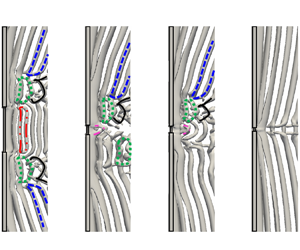
The three-dimensional flow field past an I-shaped dual-step cylinder has been obtained by numerical integration of the Navier–Stokes equations at Reynolds number ( $Re_D$) 150. The I-shaped cylinder consisted of two large-diameter (D) cylinders with a small-diameter (d) cylinder in between. With a view to exploring the vortex dynamics and structural loads, simulations were performed for eight different lengths $l$ of the small cylinder, varied from $l/D=10$ to 0.2 for a fixed diameter ratio $D/d=2$. When the length of the small cylinder is sufficiently large, the wake behind the I-shaped cylinder is similar to the wake behind the single-step cylinder (Tian et al., J. Fluid Mech., vol. 891, 2020, A24). As the small cylinder length decreases, the enhanced interactions between the two steps make the present wake deviate from the wake of the single-step cylinder, leading to four different wake modes distinguished by different combinations of vortex cells. The physical formation mechanisms were analysed in terms of the vortex dynamics. Besides the wake flow, the streamwise vortices around the I-shaped step cylinder were also investigated. A pair of edge vortices and a junction vortex were identified for $l/D \geq ~1$. When the gap between the two steps becomes too small, $l/D \leq ~0.2$, the junction vortex disappears, and only a pair of edge vortices exists. Varying the distance between the two steps strongly affects the structural loads (drag and lift) along the I-shaped cylinder. The dependence of the loads on $l/D$ was readily explained by the different wake modes.


Dedication
-
- Book:
- Starbound
- Published online:
- 12 December 2024
- Print publication:
- 30 January 2025, pp v-vi
-
- Chapter
- Export citation
Contents
-
- Book:
- Starbound
- Published online:
- 12 December 2024
- Print publication:
- 30 January 2025, pp vii-viii
-
- Chapter
- Export citation
The role of viscosity on drop impact forces on non-wetting surfaces
- Part of
-
- Journal:
- Journal of Fluid Mechanics / Volume 1004 / 10 February 2025
- Published online by Cambridge University Press:
- 30 January 2025, A6
-
- Article
-
- You have access
- Open access
- HTML
- Export citation
-
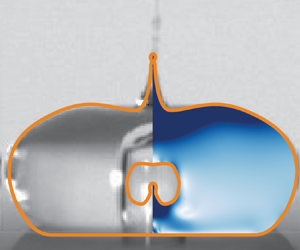
A liquid drop impacting a rigid substrate undergoes deformation and spreading due to normal reaction forces, which are counteracted by surface tension. On a non-wetting substrate, the drop subsequently retracts and takes off. Our recent work (Zhang et al., Phys. Rev. Lett., vol. 129, 2022, 104501) revealed two peaks in the temporal evolution of the normal force $F(t)$ – one at impact and another at jump-off. The second peak coincides with a Worthington jet formation, which vanishes at high viscosities due to increased viscous dissipation affecting flow focusing. In this article, using experiments, direct numerical simulations and scaling arguments, we characterize both the peak amplitude $F_1$ at impact and the one at takeoff ( $F_2$) and elucidate their dependency on the control parameters: the Weber number $We$ (dimensionless impact kinetic energy) and the Ohnesorge number $Oh$ (dimensionless viscosity). The first peak amplitude $F_1$ and the time $t_1$ to reach it depend on inertial time scales for low viscosity liquids, remaining nearly constant for viscosities up to 100 times that of water. For high viscosity liquids, we balance the rate of change in kinetic energy with viscous dissipation to obtain new scaling laws: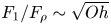 $F_1/F_\rho \sim \sqrt {Oh}$ and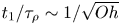 $t_1/\tau _\rho \sim 1/\sqrt {Oh}$, where $F_\rho$ and $\tau _\rho$ are the inertial force and time scales, respectively, which are consistent with our data. The time $t_2$ at which the amplitude $F_2$ appears is set by the inertiocapillary time scale $\tau _\gamma$, independent of both the viscosity and the impact velocity of the drop. However, these properties dictate the magnitude of this amplitude.


1 - Newtonian Dynamics
-
- Book:
- Celestial and Stellar Dynamics
- Published online:
- 16 January 2025
- Print publication:
- 30 January 2025, pp 1-16
-
- Chapter
- Export citation
