Refine search
Actions for selected content:
238502 results in Physics and Astronomy
Energy flux decomposition in magnetohydrodynamic turbulence
- Part of
-
- Journal:
- Journal of Plasma Physics / Volume 91 / Issue 1 / February 2025
- Published online by Cambridge University Press:
- 09 January 2025, E11
-
- Article
-
- You have access
- Open access
- HTML
- Export citation

On wave-driven propulsion – CORRIGENDUM
-
- Journal:
- Journal of Fluid Mechanics / Volume 1002 / 10 January 2025
- Published online by Cambridge University Press:
- 09 January 2025, E1
-
- Article
-
- You have access
- Open access
- HTML
- Export citation

A statistically stationary minimal flow unit for self-similar Rayleigh–Taylor turbulence in the mode-coupling limit
-
- Journal:
- Journal of Fluid Mechanics / Volume 1002 / 10 January 2025
- Published online by Cambridge University Press:
- 09 January 2025, A19
-
- Article
- Export citation
Low-frequency turnover star-forming galaxies I: Radio continuum observations and global properties
-
- Journal:
- Publications of the Astronomical Society of Australia / Volume 42 / 2025
- Published online by Cambridge University Press:
- 09 January 2025, e002
-
- Article
-
- You have access
- Open access
- HTML
- Export citation
-
There is growing evidence that the broadband radio spectral energy distributions (SEDs) of star-forming galaxies (SFGs) contain a wealth of complex physics. In this paper we aim to determine the physical emission and loss processes causing radio SED curvature and steepening to see what observed global astrophysical properties, if any, are correlated with radio SED complexity. To do this, we have acquired radio continuum data between 70 MHz and 17 GHz for a sample of 19 southern local ( $z \lt 0.04$) SFGs. Of this sample 11 are selected to contain low-frequency ( $ \lt $300 MHz) turnovers (LFTOs) in their SEDs and eight are control galaxies with similar global properties. We model the radio SEDs for our sample using a Bayesian framework whereby radio emission (synchrotron and free-free) and absorption or loss processes are included modularly. We find that without the inclusion of higher frequency data ( $ \gt $17 GHz) single synchrotron power-law based models are always preferred for our sample; however, additional processes including free-free absorption (FFA) and synchrotron losses are often required to accurately model radio SED complexity in SFGs. The fitted synchrotron spectral indices range from $-0.45$ to $-1.07$ and are strongly anticorrelated with stellar mass suggesting that synchrotron losses are the dominant mechanism acting to steepen the spectral index in larger/more massive nearby SFGs. We find that LFTOs in the radio SED are independent from the inclination of SFGs; however, higher inclination galaxies tend to have steeper fitted spectral indices indicating losses to diffusion of cosmic ray electrons into the galactic halo. Four of five of the merging systems in our SFG sample have elevated specific star formation rates and flatter fitted spectral indices with unconstrained LFTOs. Lastly, we find no significant separation in global properties between SFGs with or without modelled LFTOs. Overall these results suggest that LFTOs are likely caused by a combination of FFA and ionisation losses in individual recent starburst regions with specific orientations and interstellar medium properties that, when averaged over the entire galaxy, do not correlate with global astrophysical properties.


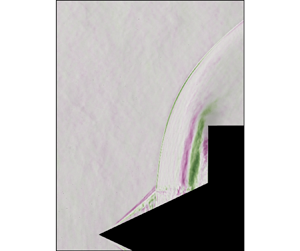
Intrinsic phase-based proper orthogonal decomposition (IPhaB POD): a method for physically interpretable modes in near-periodic systems
-
- Journal:
- Journal of Fluid Mechanics / Volume 1002 / 10 January 2025
- Published online by Cambridge University Press:
- 09 January 2025, A18
-
- Article
-
- You have access
- Open access
- HTML
- Export citation

Unsteady flow field behind levitated short-finite circular cylinder with angle of attack
-
- Journal:
- Journal of Fluid Mechanics / Volume 1002 / 10 January 2025
- Published online by Cambridge University Press:
- 09 January 2025, A47
-
- Article
- Export citation
-
Flow field in the near wake of a short-finite circular cylinder at $L/D=1.0$ with an angle of attack between 0 $^\circ$–15 $^\circ$, where the transition from the non-reattaching flow to the reattaching flow appears, is investigated in wind tunnel tests with a supportless condition. Stereo particle image velocimetry measurements were applied to the experiments at the Reynolds number of $3.46\times 10^4$, and velocity fields in the near wake were obtained. The data was mainly analysed using spectral proper orthogonal decomposition. Characteristic large-scale wake structures of recirculation bubble pumping and large-scale vortex shedding were identified in the near wake of the cylinder regardless of the angle of attack. The phase difference of expansion and contraction of the recirculation flow appears in the recirculation bubble pumping at $\alpha \neq 0^\circ$. On the other hand, the eigenfunctions of velocity fluctuations at the vortex shedding frequency show a similar spatial pattern regardless of $\alpha$. Frequency analyses of wake position calculated from the reconstructed velocity field clarified that peak frequency is different between two in-plane directions when $\alpha \neq 0^\circ$. In addition, three vortex shedding patterns (anticlockwise/clockwise circular and flapping) are identified not only at $\alpha =0^\circ$ but also $\alpha \neq 0^\circ$. The feature of wake position in the radial direction for each pattern is observed regardless of the angle of attack. The relationship between the recirculation bubble pumping and the wake position in the radial direction is apparent in the non-reattaching flow but is weaker with $\alpha$ in the reattaching flow.


Supernova remnant candidates identified using MWA Galactic Plane Monitoring over $285^{\circ} \lt l \lt 70^{\circ}$ and $|b| \lt 16^{\circ}$
-
- Journal:
- Publications of the Astronomical Society of Australia / Volume 42 / 2025
- Published online by Cambridge University Press:
- 09 January 2025, e021
-
- Article
-
- You have access
- Open access
- HTML
- Export citation
-
Observations of Galactic supernova remnants (SNRs) are crucial to understanding supernova explosion mechanisms and their impact on our Galaxy’s evolution. SNRs are usually identified by searching for extended, circular structures in all-sky surveys. However, the resolution and sensitivity of any given survey results in selection biases related to the brightness and angular scale of a subset of the total SNR population. As a result, we have only identified 1/3 of the expected number of SNRs in our Galaxy. We used data collected by the Murchison Widefield Array (MWA) to perform a visual search for SNR candidates over $ 285^{\circ} \lt l \lt 70^{\circ}$ and $|b| \lt 16^{\circ}$. We then used the Widefield Infrared Survey Explorer to eliminate likely Hii regions from our SNR candidate sample. By exploiting the resolution and sensitivity of MWA data, we have successfully detected 10 new candidates using our proposed method. In addition, our method has also enabled us to detect and verify 10 previously known but unconfirmed candidates. The 20 SNR candidates described in the paper will increase the known SNR population in the Galaxy by 7%.


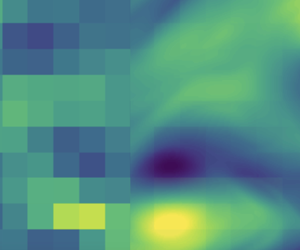
Super-resolution of turbulence with dynamics in the loss
-
- Journal:
- Journal of Fluid Mechanics / Volume 1002 / 10 January 2025
- Published online by Cambridge University Press:
- 09 January 2025, R3
-
- Article
-
- You have access
- Open access
- HTML
- Export citation
Free electron laser in the magnetically dominated regime: simulations with the ONEDFEL code
-
- Journal:
- Journal of Plasma Physics / Volume 91 / Issue 1 / February 2025
- Published online by Cambridge University Press:
- 09 January 2025, E10
-
- Article
-
- You have access
- Open access
- HTML
- Export citation
-
Using the ONEDFEL code we perform free electron laser simulations in the astrophysically important guide-field dominated regime. For wigglers’ (Alfvén waves) wavelengths of tens of kilometres and beam Lorentz factor ${\sim }10^3$
 , the resulting coherently emitted waves are in the centimetre range. Our simulations show a growth of the wave intensity over fourteen orders of magnitude, over the astrophysically relevant scale of approximately a few kilometres. The signal grows from noise (unseeded). The resulting spectrum shows fine spectral substructures, reminiscent of those observed in fast radio bursts.

Collisionless conduction in a high-beta plasma: a collision operator for whistler turbulence
- Part of
-
- Journal:
- Journal of Plasma Physics / Volume 91 / Issue 1 / February 2025
- Published online by Cambridge University Press:
- 09 January 2025, E20
-
- Article
-
- You have access
- Open access
- HTML
- Export citation
-
The regulation of electron heat transport in high-$\beta$
 , weakly collisional, magnetized plasma is investigated. A temperature gradient oriented along a mean magnetic field can induce a kinetic heat-flux-driven whistler instability (HWI), which back-reacts on the transport by scattering electrons and impeding their flow. Previous analytical and numerical studies have shown that the heat flux for the saturated HWI scales as $\beta _e^{-1}$
 . These numerical studies, however, had limited scale separation and consequently large fluctuation amplitudes, which calls into question their relevance at astrophysical scales. To this end, we perform a series of particle-in-cell simulations of the HWI across a range of $\beta _e$
 and temperature-gradient length scales under two different physical set-ups. The saturated heat flux in all of our simulations follows the expected $\beta _e^{-1}$
 scaling, supporting the robustness of the result. We also use our simulation results to develop and implement several methods to construct an effective collision operator for whistler turbulence. The results point to an issue with the standard quasi-linear explanation of HWI saturation, which is analogous to the well-known $90^{\circ }$
 scattering problem in the cosmic-ray community. Despite this limitation, the methods developed here can serve as a blueprint for future work seeking to characterize the effective collisionality caused by kinetic instabilities.


Enhanced ion heating using a TWA antenna in DEMO-like plasmas
- Part of
-
- Journal:
- Journal of Plasma Physics / Volume 91 / Issue 1 / February 2025
- Published online by Cambridge University Press:
- 09 January 2025, E13
-
- Article
-
- You have access
- Open access
- HTML
- Export citation
A family of quasi-axisymmetric stellarators with varied rotational transform
- Part of
-
- Journal:
- Journal of Plasma Physics / Volume 91 / Issue 1 / February 2025
- Published online by Cambridge University Press:
- 09 January 2025, E18
-
- Article
-
- You have access
- Open access
- HTML
- Export citation
-
We apply a continuation method to recently optimized stellarator equilibria with excellent quasi-axisymmetry to generate new equilibria with a wide range of rotational transform profiles. Using these equilibria, we investigate how the rotational transform affects fast-particle confinement, the maximum coil–plasma distance, the maximum growth rate in linear gyrokinetic ion-temperature gradient simulations and the ion heat flux in corresponding nonlinear simulations. We find values of two-term quasi-symmetry error comparable to or lower than those of the similar Landreman–Paul (Phys. Rev. Lett., vol. 128, 2022, 035001) configuration for values of the mean rotational transform $\bar {\iota }$
 between $0.12$
 and $0.75$
 . The fast-particle confinement improves with $\bar {\iota }$
 until $\bar {\iota } = 0.73$
 , at which point the degradation in quasi-symmetry outweighs the benefits of further increasing $\bar {\iota }$
 . The required coil–plasma distance only varies by about ${\pm }10\,\%$
 for the configurations under consideration, and is between $2.8$
 and $3.3\ \mathrm {m}$
 when the configuration is scaled up to reactor size (minor radius $a=1.7\ \mathrm {m}$
 and volume-averaged magnetic field strength of $5.86\ \mathrm {T}$
 ). The maximum growth rate from linear gyrokinetic simulations increases with $\bar {\iota }$
 , but also shifts towards higher $k_y$
 values. The maximum linear growth rate is sensitive to the choice of flux tube at rational $\bar {\iota }$
 , but this can be compensated for by taking the maximum over several flux tubes. The corresponding ion heat fluxes from nonlinear simulations display a non-monotonic relation to $\bar {\iota }$
 . Sufficiently large positive shear is destabilizing. This is reflected in both linear growth rates and nonlinear heat fluxes.


Thermal stress-induced depolarization compensation in wide-bandwidth, high-energy, high-repetition-rate multi-slab laser amplifiers
-
- Journal:
- High Power Laser Science and Engineering / Volume 13 / 2025
- Published online by Cambridge University Press:
- 09 January 2025, e10
-
- Article
-
- You have access
- Open access
- HTML
- Export citation
Investigation on the short-period eclipsing Am binary V404 Aur and GWGem
-
- Journal:
- Publications of the Astronomical Society of Australia / Volume 42 / 2025
- Published online by Cambridge University Press:
- 09 January 2025, e006
-
- Article
-
- You have access
- Open access
- HTML
- Export citation
-
The multi-colour complete light curves and low-resolution spectra of two short period eclipsing Am binaries V404 Aur and GW Gem are presented. The stellar atmospheric parameters of the primary stars were derived through the spectra fitting. The observed and TESS-based light curves of them were analysed by using the Wilson-Devinney code. The photometric solutions suggest that both V404 Aur and GW Gem are semi-detached systems with the secondary component filling its critical Roche Lobe, while the former should be a marginal contact binary. The $O-C$ analysis found that the period of V404 Aur is decreasing at a rate of $dP/dt=-1.06(\pm0.01)\times 10^{-7}\,\mathrm{d}\,\mathrm{ yr}^{-1}$, while the period of GW Gem is increasing at $dP/dt=+2.41(\pm0.01)\times 10^{-8} \mathrm{d}\,\mathrm{yr}^{-1}$. The period decrease of V404 Aur may mainly be caused by the combined effects of the angular momentum loss (AML) via an enhanced stellar wind of the more evolved secondary star and mass transfer between two components. The period increase of GW Gem supports the mass transfer from the secondary to the primary. Both targets may be in the broken contact stage predicted by the thermal relaxation oscillations theory and will eventually evolve to the contact stage. We have collected about 54 well-known eclipsing Am binaries with absolute parameters from the literature. The relations of these parameters are summarised. There are some components that have a higher degree of evolution. The majority of their hydrogen shell may have been stripped away and the stellar internal layer exposed. The accretion processes from such evolved components may be very important for the formation of Am peculiarity in binaries.


Dynamics of solitary waves on a ferrofluid jet: the Hamiltonian framework
-
- Journal:
- Journal of Fluid Mechanics / Volume 1002 / 10 January 2025
- Published online by Cambridge University Press:
- 09 January 2025, A23
-
- Article
-
- You have access
- Open access
- HTML
- Export citation
Observations of the Vela pulsar with a low-cost, 2.4m radio telescope at Woodchester Observatory
-
- Journal:
- Publications of the Astronomical Society of Australia / Volume 42 / 2025
- Published online by Cambridge University Press:
- 09 January 2025, e007
-
- Article
-
- You have access
- Open access
- HTML
- Export citation
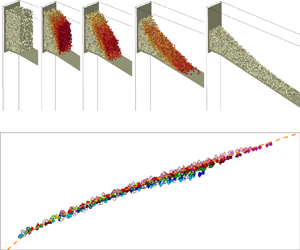
Run-out scaling of granular column collapses on inclined planes
-
- Journal:
- Journal of Fluid Mechanics / Volume 1002 / 10 January 2025
- Published online by Cambridge University Press:
- 09 January 2025, A50
-
- Article
- Export citation
-
Granular column collapse is a simple but important problem to the granular material community, due to its links to dynamics of natural hazards, such as landslides and pyroclastic flows, and many industrial situations, as well as its potential of analysing transient and non-local rheology of granular flows. This article proposes a new dimensionless number to describe the run-out behaviour of granular columns on inclined planes based on both previous experimental data and dimensional analysis. With the assistance of the sphero-polyhedral discrete element method (DEM), we simulate inclined granular column collapses with different initial aspect ratios, particle contact properties and initial solid fractions on inclined planes with different inclination angles ( $2.5^{\circ }\unicode{x2013}20.0^{\circ }$) to verify the proposed dimensional analysis. Detailed analyses are further provided for better understanding of the influence of different initial conditions and boundary conditions, and to help unify the description of the run-out scaling of systems with different inclination angles. This work determines the similarity and unity between granular column collapses on inclined planes and those on horizontal planes, and helps investigate the transient rheological behaviour of granular flows, which has direct relevance to various natural and engineering systems.

Comparison of fast, hybrid imaging architectures for multi-scale, hierarchical aperture arrays
-
- Journal:
- Publications of the Astronomical Society of Australia / Volume 42 / 2025
- Published online by Cambridge University Press:
- 08 January 2025, e001
-
- Article
-
- You have access
- Open access
- HTML
- Export citation
All-fiber delivery of 100 W single-frequency laser through 100 m anti-resonant hollow-core fiber without stimulated Brillouin scattering
-
- Journal:
- High Power Laser Science and Engineering / Volume 12 / 2024
- Published online by Cambridge University Press:
- 08 January 2025, e99
-
- Article
-
- You have access
- Open access
- HTML
- Export citation
C/O ratios in self-gravitating protoplanetary discs with dust evolution
-
- Journal:
- Publications of the Astronomical Society of Australia / Volume 42 / 2025
- Published online by Cambridge University Press:
- 08 January 2025, e004
-
- Article
-
- You have access
- Open access
- HTML
- Export citation
-
Elemental abundances, particularly the C/O ratio, are seen as a way to connect the composition of planetary atmospheres with planet formation scenario and the disc chemical environment. We model the chemical composition of gas and ices in a self-gravitating disc on timescales of 0.5 Myr since its formation to study the evolution of C/O ratio due to dust dynamics and growth and phase transitions of the volatile species. We use the thin-disc hydrodynamic code FEOSAD, which includes disc self-gravity, thermal balance, dust evolution, and turbulent diffusion, and treats dust as a dynamically different and evolving component interacting with the gas. It also describes freeze-out, sublimation, and advection of four most abundant volatile species: H $_2$O, CO $_2$, CH $_4$, and CO. We demonstrate the effect of gas and dust substructures such as spirals and rings on the distribution of volatiles and C/O ratios, including the formation of multiple snowlines of one species, and point out the anticorrelation between dust-to-gas ratio and total C/O ratio emerging due to the contribution of oxygen-rich ice mantles. We identify time and spatial locations where two distinct trigger mechanisms for planet formation are operating and differentiate them by C/O ratio range: wide range of the C/O ratios of $0-1.4$ for streaming instability, and a much narrower range $0.3-0.6$ for gravitational instability (with the initial value of 0.34). This conclusion is corroborated by observations, showing that transiting exoplanets, which possibly experienced migration through a variety of disc conditions, have significantly larger spread of C/O in comparison with directly imaged exoplanets likely formed in gravitationally unstable outer disk regions. We show that the ice-phase $\textrm{C/O}\approx$0.2–0.3 between the CO, CO $_2$, and CH $_4$ snowlines corresponds to the composition of the Solar system comets, that represent primordial planetesimals.


