Refine search
Actions for selected content:
238502 results in Physics and Astronomy
Symplectic particle-in-cell methods for hybrid plasma models with Boltzmann electrons and space-charge effects
-
- Journal:
- Journal of Plasma Physics / Volume 91 / Issue 1 / February 2025
- Published online by Cambridge University Press:
- 15 January 2025, E22
-
- Article
-
- You have access
- Open access
- HTML
- Export citation
An investigation of the emittance of escaping fast electron beams from planar and nanowire targets
-
- Journal:
- High Power Laser Science and Engineering / Volume 13 / 2025
- Published online by Cambridge University Press:
- 15 January 2025, e14
-
- Article
-
- You have access
- Open access
- HTML
- Export citation
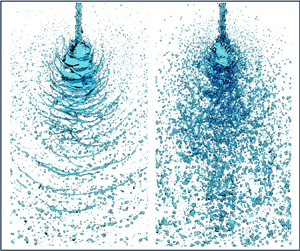
Turbulent atomisation of impinging jets under rising backpressure
-
- Journal:
- Journal of Fluid Mechanics / Volume 1003 / 25 January 2025
- Published online by Cambridge University Press:
- 14 January 2025, A15
-
- Article
- Export citation

Clustering of buoyant tracer in quasi-geostrophic coherent structures
-
- Journal:
- Journal of Fluid Mechanics / Volume 1003 / 25 January 2025
- Published online by Cambridge University Press:
- 14 January 2025, A16
-
- Article
-
- You have access
- Open access
- HTML
- Export citation
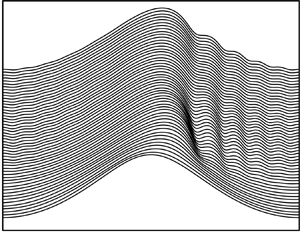
Time-dependent nonlinear gravity–capillary surface waves with viscous dissipation and wind forcing
-
- Journal:
- Journal of Fluid Mechanics / Volume 1003 / 25 January 2025
- Published online by Cambridge University Press:
- 14 January 2025, A13
-
- Article
-
- You have access
- Open access
- HTML
- Export citation
Thermal-lens-free active-mirror ytterbium-doped yttrium aluminum garnet amplifier
-
- Journal:
- High Power Laser Science and Engineering / Volume 13 / 2025
- Published online by Cambridge University Press:
- 14 January 2025, e20
-
- Article
-
- You have access
- Open access
- HTML
- Export citation
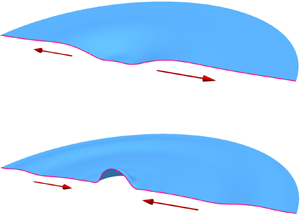
Focussing of concentric free-surface waves
-
- Journal:
- Journal of Fluid Mechanics / Volume 1003 / 25 January 2025
- Published online by Cambridge University Press:
- 14 January 2025, A14
-
- Article
-
- You have access
- Open access
- HTML
- Export citation
Molecular mechanisms of the GABA type A receptor function
-
- Journal:
- Quarterly Reviews of Biophysics / Volume 58 / 2025
- Published online by Cambridge University Press:
- 14 January 2025, e3
-
- Article
- Export citation
Viroporins: discovery, methods of study, and mechanisms of host-membrane permeabilization
-
- Journal:
- Quarterly Reviews of Biophysics / Volume 58 / 2025
- Published online by Cambridge University Press:
- 14 January 2025, e1
-
- Article
-
- You have access
- Open access
- HTML
- Export citation
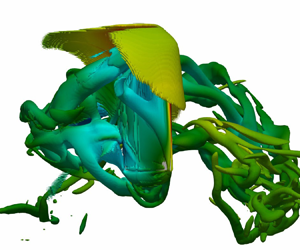
A scaling law for the lift of a bio-inspired wing hovering in low-density compressible flows
-
- Journal:
- Journal of Fluid Mechanics / Volume 1003 / 25 January 2025
- Published online by Cambridge University Press:
- 13 January 2025, A10
-
- Article
- Export citation
-
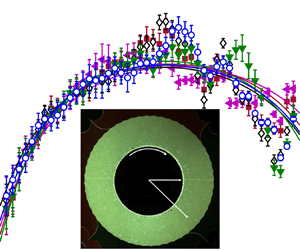
Aircraft with bio-inspired flapping wings that are operated in low-density atmospheric environments encounter unique challenges associated with the low density. The low density results in the requirement of high operating velocities of aircraft to generate sufficient lift resulting in significant compressibility effects. Here, we perform numerical simulations to investigate the compressibility effects on the lift generation of a bio-inspired wing during hovering flight using an immersed boundary method. The aim of this study is to develop a scaling law to understand how the lift is influenced by the Reynolds and Mach numbers, and the associated flow physics. Our simulations have identified a critical Mach number of approximately $0.6$ defined by the average wing-tip velocity. When the Mach number is lower than 0.6, compressibility does not have significant effects on the lift or flow fields, while when the Mach number is greater than $0.6$, the lift coefficient decreases linearly with increasing Mach number, due to the drastic change in the pressure on the wing surface caused by unsteady shock waves. Moreover, the decay rate is dependent on the Reynolds number and the angle of attack. Based on these observations, we propose a scaling law for the lift of a hovering flapping wing by considering compressible and viscous effects, with the scaled lift showing excellent collapse.


Dilatancy and its coupling to the kinematics in sheared granular media
-
- Journal:
- Journal of Fluid Mechanics / Volume 1003 / 25 January 2025
- Published online by Cambridge University Press:
- 13 January 2025, A11
-
- Article
-
- You have access
- Open access
- HTML
- Export citation
Serendipitous detection of an intense X-ray flare in the weak-line T Tauri star KM Ori with SRG/eROSITA
-
- Journal:
- Publications of the Astronomical Society of Australia / Volume 42 / 2025
- Published online by Cambridge University Press:
- 13 January 2025, e009
-
- Article
-
- You have access
- Open access
- HTML
- Export citation
-
Weak-line T Tauri stars (WTTS) exhibit X-ray flares, likely resulting from magnetic reconnection that heats the stellar plasma to very high temperatures. These flares are difficult to identify through targeted observations. Here, we report the serendipitous detection of the brightest X-ray flaring state of the WTTS KM Ori in the eROSITA DR1 survey. Observations from SRG/eROSITA, Chandra X-ray Observatory, and XMM-Newton are analysed to assess the X-ray properties of KM Ori, thereby establishing its flaring state at the eROSITA epoch. The long-term (1999–2020) X-ray light curve generated for the Chandra observations confirmed that eROSITA captured the source at its highest X-ray flaring state recorded to date. Multi-instrument observations support the X-ray flaring state of the source, with time-averaged X-ray luminosity ( $L_\mathrm{0.2-5\ keV}$) reaching $\sim 1.9\times10^{32}\mathrm{{erg\ s^{-1}}}$ at the eROSITA epoch, marking it the brightest and possibly the longest flare observed so far. Such intense X-ray flares have been detected only in a few WTTS. The X-ray spectral analysis unveils the presence of multiple thermal plasma components at all epochs. The notably high luminosity ( $L_\mathrm{0.5-8\ keV}\sim10^{32}\ \mathrm{erg\ s}^{-1}$), energy ( $E_\mathrm{ 0.5-8\ keV}\sim10^{37}$ erg), and the elevated emission measures of the thermal components in the eROSITA epoch indicate a superflare/megaflare state of KM Ori. Additionally, the H $\alpha$ line equivalent width of $\sim$ $-5$ Å from our optical spectral analysis, combined with the lack of infrared excess in the spectral energy distribution, were used to re-confirm the WTTS (thin disc/disc-less) classification of the source. The long-duration flare of KM Ori observed by eROSITA indicates the possibility of a slow-rise top-flat flare. The detection demonstrates the potential of eROSITA to uncover such rare, transient events, thereby providing new insights into the X-ray activity of WTTS.


Application of quadruple Beltrami state on Saturnian dusty plasma
-
- Journal:
- Journal of Plasma Physics / Volume 91 / Issue 1 / February 2025
- Published online by Cambridge University Press:
- 13 January 2025, E23
-
- Article
-
- You have access
- Open access
- HTML
- Export citation
Energy thickness in turbulent boundary layer flows
-
- Journal:
- Journal of Fluid Mechanics / Volume 1003 / 25 January 2025
- Published online by Cambridge University Press:
- 13 January 2025, A7
-
- Article
- Export citation
-
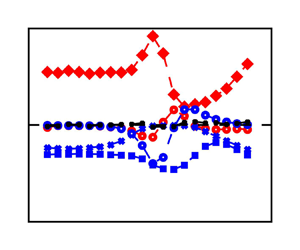
In this study, we investigate the properties of energy thickness $\delta _3$ in turbulent boundary layer (TBL) flows, a parameter derived solely from the mean streamwise velocity ( $U$) profile. Through an analysis of the energy integral equation for zero pressure gradient TBLs, we establish a close relationship between turbulent kinetic energy (TKE) production and $\delta _3$, offering a practical method to estimate TKE production, which is particularly useful in physical experiments where direct measurements are challenging. The significance of $\delta _3$ becomes even more pronounced in TBLs under pressure gradient. Through extensive analysis of numerical and experimental data, we show that the ratio between $\delta _3$ and the momentum thickness $\delta _2$ is a promising criterion for predicting flow separation. Moreover, we derive a new energy integral equation for TBLs under arbitrary pressure gradients, and provide approximations for TKE productions terms by $R_{uv}\,\partial U/\partial y$ and $R_{uu}\,\partial U/\partial x$, and dissipation term by the mean shear. Here, $x, y$ represent the streamwise and wall-normal directions, respectively, and $R_{uu}$ and $R_{uv}$ are the Reynolds normal and shear stresses. The accuracy and robustness of the new energy integral equation and the approximation equations are validated using direct numerical simulations data. Our results show that the TKE production by $R_{uv}\,\partial U/\partial y$ and the overall productions consistently remain positive, reflecting a continuous conversion of mean kinetic energy into TKE across all TBLs. However, under strong favourable pressure gradients, TKE production by $R_{uu}\,\partial U/\partial x$ becomes negative, indicating a reverse energy transfer from TKE to mean kinetic energy.


Predicting burst events in a forced two-dimensional flow: a wavelet-based analysis
-
- Journal:
- Journal of Fluid Mechanics / Volume 1003 / 25 January 2025
- Published online by Cambridge University Press:
- 13 January 2025, A5
-
- Article
-
- You have access
- Open access
- HTML
- Export citation
The Three Hundred project: The relationship between the shock and splashback radii of simulated galaxy clusters
-
- Journal:
- Publications of the Astronomical Society of Australia / Volume 42 / 2025
- Published online by Cambridge University Press:
- 13 January 2025, e008
-
- Article
-
- You have access
- Open access
- HTML
- Export citation
-
Observations of the intracluster medium (ICM) in the outskirts of galaxy clusters reveal shocks associated with gas accretion from the cosmic web. Previous work based on non-radiative cosmological hydrodynamical simulations have defined the shock radius, $r_{\text{shock}}$, using the ICM entropy, $K \propto T/{n_\mathrm{e}}^{2/3}$, where T and $n_{\text{e}}$ are the ICM temperature and electron density, respectively; the $r_{\text{shock}}$ is identified with either the radius at which K is a maximum or at which its logarithmic slope is a minimum. We investigate the relationship between $r_{\text{shock}}$, which is driven by gravitational hydrodynamics and shocks, and the splashback radius, $r_{\text{splash}}$, which is driven by the gravitational dynamics of cluster stars and dark matter and is measured from their mass profile. Using 324 clusters from The Three Hundred project of cosmological galaxy formation simulations, we quantify statistically how $r_{\text{shock}}$ relates to $r_{\text{splash}}$. Depending on our definition, we find that the median $r_{\text{shock}} \simeq 1.38 r_{\text{splash}} (2.58 R_{200})$ when K reaches its maximum and $r_{\text{shock}} \simeq 1.91 r_{\text{splash}} (3.54 R_{200})$ when its logarithmic slope is a minimum; the best-fit linear relation increases as $r_{\text{shock}} \propto 0.65 r_{\text{splash}}$. We find that $r_{\text{shock}}/R_{200}$ and $r_{\text{splash}}/R_{200}$ anti-correlate with virial mass, $M_{200}$, and recent mass accretion history, and $r_{\text{shock}}/r_{\text{splash}}$ tends to be larger for clusters with higher recent accretion rates. We discuss prospects for measuring $r_{\text{shock}}$ observationally and how the relationship between $r_{\text{shock}}$ and $r_{\text{splash}}$ can be used to improve constraints from radio, X-ray, and thermal Sunyaev-Zeldovich surveys that target the interface between the cosmic web and clusters.


Three-dimensional stability of natural convection flows in inclined square enclosures
-
- Journal:
- Journal of Fluid Mechanics / Volume 1003 / 25 January 2025
- Published online by Cambridge University Press:
- 13 January 2025, A8
-
- Article
-
- You have access
- Open access
- HTML
- Export citation
-
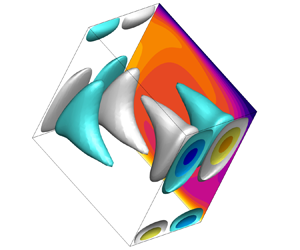
The three-dimensional stability of two-dimensional natural convection flows in a heated, square enclosure inclined to the horizontal is investigated numerically. First, the computational procedure is validated by comparison of base flow solutions to results reported in literature across a range of inclinations. A bi-global linear stability analysis is then conducted to investigate the stability of these two-dimensional base flows to infinitesimal three-dimensional perturbations, and the effect that buoyancy forces (defined by a buoyancy number $R_N$) and enclosure inclination $\theta$ have on these stability characteristics. The flow is first observed to become three-dimensionally unstable at buoyancy number $R_N = 213.8$ when $\theta$ is $180^\circ$; this increases to $R_N = 2.54 \times 10^4$ at inclination $\theta =58^\circ$. It is found that the two-dimensional base flow is more unstable to three-dimensional perturbations with the critical $R_N$ corresponding to three-dimensional instability being significantly lower than its two-dimensional counterpart across all considered inclinations except $83^\circ \leq \theta \leq 88^\circ$, where the most unstable mode is a two-dimensional oscillatory mode that develops in the boundary layers along the conducting walls. Eight different leading three-dimensional instability modes are identified, with inclinations $58^\circ \leq \theta < 88^\circ$ transitioning through an oscillatory mode, and inclinations $88^\circ \leq \theta \leq 180^\circ$ transitioning through a stationary mode. The characteristics of the primary instability modes corresponding to inclinations $88^\circ \leq \theta \leq 179^\circ$ indicate the presence of a Taylor–Görtler instability.


Life and death of Yfh1: how cool is cold denaturation
-
- Journal:
- Quarterly Reviews of Biophysics / Volume 58 / 2025
- Published online by Cambridge University Press:
- 13 January 2025, e2
-
- Article
-
- You have access
- Open access
- HTML
- Export citation
Fracturing behaviour of a shear-thinning fluid in a lubricated Hele-Shaw cell
-
- Journal:
- Journal of Fluid Mechanics / Volume 1003 / 25 January 2025
- Published online by Cambridge University Press:
- 13 January 2025, A6
-
- Article
-
- You have access
- Open access
- HTML
- Export citation
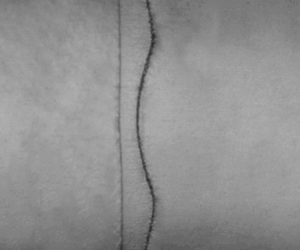
Manipulation of Richtmyer–Meshkov instability on a heavy–light interface via successive shocks
-
- Journal:
- Journal of Fluid Mechanics / Volume 1003 / 25 January 2025
- Published online by Cambridge University Press:
- 13 January 2025, A9
-
- Article
- Export citation
