Refine search
Actions for selected content:
238152 results in Physics and Astronomy
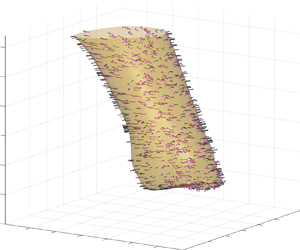
Interplay between advective, diffusive and active barriers in (rotating) Rayleigh–Bénard flow
-
- Journal:
- Journal of Fluid Mechanics / Volume 969 / 25 August 2023
- Published online by Cambridge University Press:
- 22 August 2023, A27
-
- Article
-
- You have access
- Open access
- HTML
- Export citation
The Mopra Southern Galactic Plane CO Survey – data release 4– complete survey
-
- Journal:
- Publications of the Astronomical Society of Australia / Volume 40 / 2023
- Published online by Cambridge University Press:
- 22 August 2023, e047
-
- Article
-
- You have access
- Open access
- HTML
- Export citation
-
We present observations of the Mopra carbon monoxide (CO) survey of the Southern Galactic Plane, covering Galactic longitudes spanning $l = 250^{\circ}$ ( $-110^{\circ}$) to $l = 355^{\circ}$ ( $-5^{\circ}$), with a latitudinal coverage of at least $|b|<1^\circ$, totalling an area of $>$210 deg $^{2}$. These data have been taken at 0.6 arcmin spatial resolution and 0.1 km s $^{-1}$ spectral resolution, providing an unprecedented view of the molecular gas clouds of the Southern Galactic Plane in the 109–115 GHz $J = 1-0$ transitions of $^{12}$CO, $^{13}$CO, C $^{18}$O, and C $^{17}$O.


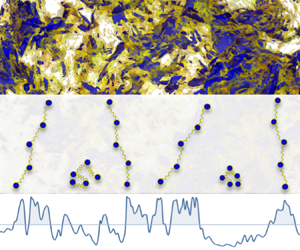
Polymers in turbulence: stretching statistics and the role of extreme strain rate fluctuations
-
- Journal:
- Journal of Fluid Mechanics / Volume 969 / 25 August 2023
- Published online by Cambridge University Press:
- 22 August 2023, A24
-
- Article
-
- You have access
- Open access
- HTML
- Export citation
-
Polymers in a turbulent flow are stretched out by the fluctuating velocity gradient and exhibit a broad distribution of extensions $R$; the stationary probability density function (p.d.f.) of $R$ has a power-law tail with an exponent that increases with the Weissenberg number $\mathit {Wi}$, a non-dimensional measure of polymer elasticity. This study addresses the following questions. (i) What is the role of the non-Gaussian statistics of the turbulent velocity gradient on polymer stretching? (ii) How does the p.d.f. of $R$ evolve to its asymptotic stationary form? Our analysis is based on simulations of the dynamics of finitely extensible bead–spring dumbbells and chains, in the extremely dilute limit, that are transported in a homogeneous and isotropic turbulent flow, as well as in a Gaussian random flow. We show that while the turbulent flow is more effective at stretching small- $\mathit {Wi}$ stiff polymers, the Gaussian flow is more effective for high- $\mathit {Wi}$ polymers. This suggests that high- $\mathit {Wi}$ polymers (with large relaxation times) are stretched primarily by the cumulative effect of moderate strain rate events, rather than by short-lived extreme-valued strain rates. Next, we show that, beginning from a distribution of coiled polymers, the p.d.f. of $R$ exhibits two distinct regimes of evolution. At low to moderate $\mathit {Wi}$, the p.d.f. quickly develops a power-law tail with an exponent that evolves in time and approaches its stationary value exponentially. At high $\mathit {Wi}$, the rapid stretching of polymers first produces a peak in the p.d.f. near their maximum extension; a power law with a constant exponent then emerges and expands its range towards smaller $R$. The time scales of equilibration, measured as a function of $\mathit {Wi}$, point to a critical slowing down at the coil–stretch transition. Importantly, these results show no qualitative change when chains in a turbulent flow are replaced by dumbbells in a Gaussian flow, thereby supporting the use of the latter for reduced-order modelling.


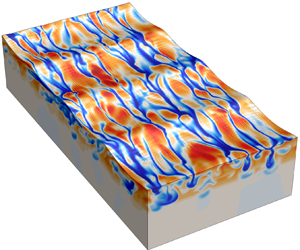
A numerical study on Langmuir circulations and coherent vortical structures beneath surface waves
-
- Journal:
- Journal of Fluid Mechanics / Volume 969 / 25 August 2023
- Published online by Cambridge University Press:
- 22 August 2023, A30
-
- Article
-
- You have access
- Open access
- HTML
- Export citation
Microscopic scales of linear tearing modes: a tutorial on boundary layer theory for magnetic reconnection – CORRIGENDUM
-
- Journal:
- Journal of Plasma Physics / Volume 89 / Issue 4 / August 2023
- Published online by Cambridge University Press:
- 21 August 2023, 945890402
-
- Article
-
- You have access
- Open access
- HTML
- Export citation
Statistical analysis of kicked black holes from TNG300 simulation
-
- Journal:
- Publications of the Astronomical Society of Australia / Volume 40 / 2023
- Published online by Cambridge University Press:
- 18 August 2023, e045
-
- Article
-
- You have access
- Open access
- HTML
- Export citation
-
Asymmetric emission of gravitational waves during mergers of black holes (BHs) produces a recoil kick, which can set a newly formed BH on a bound orbit around the centre of its host galaxy, or even completely eject it. To study this population of recoiling BHs we extract properties of galaxies with merging BHs from Illustris TNG300 simulation and then employ both analytical and numerical techniques to model unresolved process of BH recoil. This comparative analysis between analytical and numerical models shows that, on cosmological scales, numerically modelled recoiling BHs have a higher escape probability and predict a greater number of offset active galactic nuclei (AGN). BH escaped probability $>$40% is expected in 25 $\%$ of merger remnants in numerical models, compared to 8 $\%$ in analytical models. At the same time, the predicted number of offset AGN at separations ${>}5$ kpc changes from 58 $\%$ for numerical models to 3 $\%$ for analytical models. Since BH ejections in major merger remnants occur in non-virialised systems, static analytical models cannot provide an accurate description. Thus we argue that numerical models should be used to estimate the expected number density of escaped BHs and offset AGN.


Data Modeling for the Sciences
- Applications, Basics, Computations
-
- Published online:
- 17 August 2023
- Print publication:
- 31 August 2023
8 - Funding ALMA
-
- Book:
- The ALMA Telescope
- Published online:
- 03 August 2023
- Print publication:
- 17 August 2023, pp 141-153
-
- Chapter
-
- You have access
- Open access
- HTML
- Export citation
Preface
-
- Book:
- Theory of Liquids
- Published online:
- 01 September 2023
- Print publication:
- 17 August 2023, pp xi-xvi
-
- Chapter
- Export citation
10 - Liquid Energy and Heat Capacity in the Liquid Theory Based on Collective Excitations
-
- Book:
- Theory of Liquids
- Published online:
- 01 September 2023
- Print publication:
- 17 August 2023, pp 97-113
-
- Chapter
- Export citation
3 - The Millimeter Array
-
- Book:
- The ALMA Telescope
- Published online:
- 03 August 2023
- Print publication:
- 17 August 2023, pp 22-42
-
- Chapter
-
- You have access
- Open access
- HTML
- Export citation
Glossary
-
- Book:
- The ALMA Telescope
- Published online:
- 03 August 2023
- Print publication:
- 17 August 2023, pp 246-250
-
- Chapter
-
- You have access
- Open access
- HTML
- Export citation
17 - A Short Note on Theory
-
- Book:
- Theory of Liquids
- Published online:
- 01 September 2023
- Print publication:
- 17 August 2023, pp 185-187
-
- Chapter
- Export citation
19 - Evolution of Excitations in Strongly Coupled Systems
-
- Book:
- Theory of Liquids
- Published online:
- 01 September 2023
- Print publication:
- 17 August 2023, pp 194-196
-
- Chapter
- Export citation
Non-locality of ion reflection at the shock front: dependence on the shock angle
-
- Journal:
- Journal of Plasma Physics / Volume 89 / Issue 4 / August 2023
- Published online by Cambridge University Press:
- 17 August 2023, 905890416
-
- Article
-
- You have access
- Open access
- HTML
- Export citation
Epigraph
-
- Book:
- The ALMA Telescope
- Published online:
- 03 August 2023
- Print publication:
- 17 August 2023, pp vi-vi
-
- Chapter
-
- You have access
- Open access
- HTML
- Export citation
Appendix C - Lessons Learned
-
- Book:
- The ALMA Telescope
- Published online:
- 03 August 2023
- Print publication:
- 17 August 2023, pp 240-245
-
- Chapter
-
- You have access
- Open access
- HTML
- Export citation
14 - The Supercritical State
-
- Book:
- Theory of Liquids
- Published online:
- 01 September 2023
- Print publication:
- 17 August 2023, pp 133-151
-
- Chapter
- Export citation
5 - First-Principles Description of Liquids: Exponential Complexity
-
- Book:
- Theory of Liquids
- Published online:
- 01 September 2023
- Print publication:
- 17 August 2023, pp 35-38
-
- Chapter
- Export citation
Copyright page
-
- Book:
- The ALMA Telescope
- Published online:
- 03 August 2023
- Print publication:
- 17 August 2023, pp iv-iv
-
- Chapter
-
- You have access
- Open access
- HTML
- Export citation
