To save content items to your account,
please confirm that you agree to abide by our usage policies.
If this is the first time you use this feature, you will be asked to authorise Cambridge Core to connect with your account.
Find out more about saving content to .
To save content items to your Kindle, first ensure no-reply@cambridge.org
is added to your Approved Personal Document E-mail List under your Personal Document Settings
on the Manage Your Content and Devices page of your Amazon account. Then enter the ‘name’ part
of your Kindle email address below.
Find out more about saving to your Kindle.
Note you can select to save to either the @free.kindle.com or @kindle.com variations.
‘@free.kindle.com’ emails are free but can only be saved to your device when it is connected to wi-fi.
‘@kindle.com’ emails can be delivered even when you are not connected to wi-fi, but note that service fees apply.
In the context of increasing ethnic and racial diversity in the United States, we summarize research on parenting among African American, Latinx, White, and Chinese parents in three domains: academic socialization, cultural socialization, and teaching about discrimination. Academic socialization, intended to support children’s and adolescents’ educational success, reflects a goal that is widely shared among adults in the U.S., although there are ethnic-racial differences in how such socialization is manifest due to cultural and contextual variations across groups. Cultural socialization reflects many ethnic-racial minority parents’ desire for their children and adolescents to remain connected to their heritage and to retain the cultural values of their group. Teaching about discrimination reflects many ethnic-racial minority parents’ awareness of their groups’ social position in the U.S. and their anticipation of or reaction to their children’s discrimination experiences. We also describe interventions aimed at supporting the parenting tasks that ethnic-racial minority parents encounter.
This chapter discusses parental emotion socialization (ES), or the ways in which parents teach children about the experience, expression, and regulation of emotions. The foundational theories of ES suggest that socialization can occur through a variety of mechanisms that vary with children’s age. Parents’ practices can broadly be either supportive or unsupportive. Methods for measuring and categorizing parents’ ES practices include questionnaires, naturalistic observation, and real-time discussion techniques. Research on ES involving these methods has revealed that supportive versus unsupportive practices are linked to differential effects on children’s emotion regulation skills, physiological self-regulation, psychological adjustment, and neural networks underlying emotion processing and regulation. In this chapter, we review the current findings on ES across infancy and early childhood, middle childhood, and adolescence and young adulthood. These findings are contextualized by the discussion of research on the roles of fathers and culture in the ES process. Further, interventions focused on improving ES and emotion regulation in the parent-child relationship are highlighted. The chapter concludes with recommendations for future investigations of ES and relevant policy implications.
The quality of the caregiving environment is one of the most impactful elements on youth’s development, with evidence suggesting these experiences are embedded at the neural level. This chapter reviews empirical research characterizing relations between parenting and child and adolescent brain development with respect to a full continuum of maladaptive to adaptive parenting behavior. We consider evidence directly linking parental factors on neural indices of development, as well as growing evidence characterizing individual differences in neurobiological susceptibility to the caregiving environment. We conclude with a discussion of future directions for this research.
The child welfare system is primarily designed to serve children who have been maltreated, a form of parenting that is arguably the most deleterious that children can experience. The latest national data indicate that there were 618,000 children in the U.S. Who were maltreated in 2020, at a rate of 8.4 per thousand children (Administration for Children and Families, 2020). Beyond being direct victims of child abuse and neglect, they may experience a multitude of environmental risks, including poverty, parental mental illness, parental substance use, and family and community violence (Hecht & Hansen, 2001; McKenzie et al., 2011). These contextual risks lead to a variety of adverse outcomes for maltreated children that span developmental domains (Jonson-Reid et al., 2012; Jones Harden et al., 2016; Toth & Manly, 2019). The features of the parenting that maltreated children experience may exacerbate or compensate for these contextual risks, and influence their short- and long-term developmental trajectories.
In this chapter, we begin with the definition of culture and a discussion of theoretical frameworks for understanding the influences of culture on parenting. We discuss the meta-analysis studies examining the links of parenting styles and child outcomes across culture groups. We then provide a qualitative review of selected empirical studies on parenting in four cultural contexts: (1) low- to middle-income countries of sub-Saharan Africa, (2) Southeast Asian countries, (3) refugee families from sub-Saharan Africa and Southeast Asia, and (4) refugee and immigrant families in Western destination countries. These four cultural contexts were selected because: (1) parenting practices in these cultural contexts have been understudied, despite the strong need for research-based interventions to prevent/reduce risks and promote resilience in children living in those communities; and (2) the unique sociocultural characteristics or processes of these contexts create several new directions for parenting research. Implications of the research findings for policy and intervention are also discussed. We conclude the chapter with a summary of new themes in the research on culture and parenting.
In 2019, migration due to humanitarian crises has reached an unprecedented high with more than 272 million people not residing in their homes. As around 50 percent of recent refugees and immigrants worldwide were underaged, adverse experiences linked to migration hit them during critical periods of youth development. Strong families can provide resources to protect youth development amid seeking refuge and immigration. Specifically, effective parenting behavior was found to buffer the negative impact of adversity. In response to the increasing numbers of migrants and refugees worldwide, several receiving countries have modified their refugee policies, with consequences for the post-migration living circumstances of refugee and immigrant families. The purpose of this chapter is to discuss the impact of selected refugee policy domains (right to asylum, detention, family unification) on parenting behavior. We focus on the United States and Germany as the two Western countries with the largest populations of immigrants and refugees based on their population sizes. Although to different extents, both countries restricted their refugee policies since immigration has started to increase in 2015. Mechanisms through which refugee policies affect parenting include parent-child separation, hardship, access barriers to support services, experiences of community violence and demanding asylum policies. Apart from specific regulations for unaccompanied minors in Germany, children’s needs for positive development are left widely unattended in the current refugee policies of both countries. Interdisciplinary research needs to empirically substantiate cascading effects from refugee policies to family- and individual-level processes such as parenting and child development. A better understanding of these links can contribute to support immigrant and refugee families upon arrival, reduce emerging disparities and promote pluralistic societies of tomorrow.
Employment and earnings are the cornerstone of economic well-being for families worldwide, with the responsibilities of parenting occurring alongside paid work. For this reason, as well as for early educational enrichment, children spend a fair amount of time under the care and supervision of nonparental providers or in settings other than their home environment while caregivers work. This chapter focuses on families with young children age 0-5 and considers the context of work and employment for parents, the role of child care and early education as supports for working parents, and the theoretical and empirical linkages between parents’ work contexts and parenting. Many employment circumstances, such as unpredictable work schedules, work during nonstandard hours, and temporary work arrangements, make the combination of work and parent roles more difficult, while other characteristics, such as flexible work schedules, can support parents in fulfilling their dual roles. Early care and education can provide crucial support for parents’ work but is not always affordable or available during parents’ work hours. The chapter concludes with a discussion of U.S.-based public policies that can support work, earnings, and child care and thus promote economic security and stability for families and parenting.
Alzheimer’s disease (AD) is highly comorbid with idiopathic normal pressure hydrocephalus (iNPH) and may diminish the benefits of shunting; however, findings in this area are mixed. We examined postoperative outcomes, with emphases on cognition and utilization of novel scoring procedures to enhance sensitivity.
Methods:
Using participant data from an iNPH outcome study at Butler Hospital, a mixed effect model examined main and interaction effects of time since surgery (baseline, 3 months, 12 months, and 24–60 months) and AD comorbidity (20 iNPH and 11 iNPH+AD) on activities of daily living (ADLs) and iNPH symptoms. Regression modeling explored whether baseline variables predicted improvements 3 months postoperatively.
Results:
There were no group differences in gait, incontinence, and global cognition over time, and neither group showed changes in ADLs. Cognitive differences were observed postoperatively; iNPH patients showed stable improvements in working memory (p = 0.012) and response inhibition (p = 0.010), while iNPH + AD patients failed to maintain initial gains. Regarding predicting postoperative outcomes, baseline AD biomarkers did not predict shunt response at 3 months; however, older age at surgery predicted poorer cognitive outcomes (p = 0.04), and presurgical Repeatable Battery for the Assessment of Neuropsychological Status (RBANS) (p = 0.035) and Mini-Mental Status Examination (MMSE) scores (p = 0.009) predicted improvements incontinence.
Conclusion:
iNPH + AD may be linked with greater declines in aspects of executive functioning postoperatively relative to iNPH alone. While baseline AD pathology may not prognosticate shunt response, younger age appears linked with postsurgical cognitive improvement, and utilizing both brief and comprehensive cognitive measures may help predict improved incontinence. These results illustrate the potential benefits of surgery and inform postoperative expectations for those with iNPH + AD.
While Psychology research in general has been criticized for oversampling from WEIRD (Western, Educated, Industrialized, Rich, Democratic) populations, Psycholinguistics has a problem with conducting a large amount of research on a relatively small number of languages. Yet even within WEIRD environments, the experiences of speakers of Minority, Indigenous, Non-standard(ized), and Dialect (MIND) varieties are not always captured alongside their use of a more prestigious standard language.
This position piece will provide a case study of one such variety: Scots, a Germanic variety spoken in Scotland, which is often considered “bad English.” However, its speakers display cognitive characteristics of bilingualism despite often regarding themselves as monolingual due to sociolinguistic factors. Such factors include social prestige and language ideology, as well as linguistic distance. In doing so, this paper introduces a new acronym encouraging researchers to MIND their language – by developing more inclusive ways of capturing the linguistic experiences of MIND speakers, to move away from binary distinctions of “bilingual” and “monolingual,” and to recognize that not all varieties are afforded the status of language, nor do many multilinguals consider themselves as anything other than monolingual.
Bringing together artistic and scientific modes of inquiry, Witness statements and the technologies of memory examines the impact that digital technologies have on the substance of truth and historical facts. Hosted as part of Heba Y. Amin and Anthony Downey's online symposium, which was held in conjunction with Amin's exhibition When I see the future, I close my eyes, Chapter I (curated by Downey for the Mosaic Rooms in 2020), the panel discussed the legacies of colonial power and command, regimes of memory, and the ex post facto constitution of evidence from online archives. Drawing upon the diverse backgrounds and experiences of the panellists, which included Helene Kazan (Oxford Brookes University), Naeem Mohaiemen (Columbia University), and Susan Schuppli (Goldsmiths, University of London), Heba Y. Amin (Staatliche Akademie der Bildenden Künste Stuttgart), and Anthony Downey (Birmingham City University), Witness statements and the technologies of memory sought to more fully understand the impact of digital archives on historical records and evidence-gathering. Against the backdrop of indiscriminate expurgations of online material, we observe how the evidentiary potential of digital archives is compromised by the commercial imperatives of social media networks, censorship, and state surveillance. Among the many questions that arise here, the extent to which personal recollections are often presented as virtual artefacts of memory – a technology of recall or a mnemo-technics in its own right – remains central to the debate about the future of memory in our post-digital age.
In the past decades, behavioral economics has credibly identified numerous decision-making biases leading people to make choices they would not have made if better informed about the long-term consequences of their actions. This has given rise to a new reason for government interventions: internalities. In contrast to traditional reasons for government intervention, such as redistribution and externalities, overcoming internalities often involves the use of paternalistic policies. We investigate theoretically and empirically the formation of attitudes toward paternalistic policies. Theoretically, we focus on the role of self-interest and distinguish between self-interest as construed for the rational decision-maker, self-interest when self-control problems are present, and self-interest when procedural or expressive elements, such as autonomy, matter. Empirically, we employ two novel data sets: a Danish survey on political opinion combined with administrative data on actual behavior and a large-scale cross-country survey to analyze attitudes toward paternalistic policies in the health and financial domains. We show that targets of paternalism are more opposed to paternalism than non-targets both in Denmark and across nine Western democracies and rely on our theoretical priors to explore mechanisms that can explain these attitudes.
Sentences that have more than one possible meaning are said to be syntactically ambiguous (SA). Because the correct interpretation of these sentences can be unclear, resolving SA sentences can be cognitively demanding for children, particularly with regards to inhibitory control (IC). In this study we provide three lines of evidence supporting the importance of IC in SA resolution. First, we show that children with higher IC resolve more SA sentences correctly. Second, we show that SA resolution is worse on tasks that place higher demands on IC, even for children with high IC. Third, we show that children with higher IC make different types of SA errors than children with lower IC. This study expands understanding of the cognitive skills underlying language and suggests a need to consider task demands on IC when developing educational curriculums.
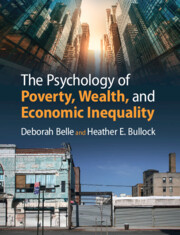
Economic inequality is a defining issue of our time, with a handful of individuals in the United States today owning more wealth than half the population in the country. What are the psychological consequences of living in a profoundly unequal society? This comprehensive textbook is among the first to examine poverty, wealth, and economic inequality from a psychological perspective. Written by two leading scholars in the field, it provides an intersectional analysis of the impact of economic inequality on cognitive, emotional, interpersonal, intergroup, physiological, and health outcomes. Students are introduced to the diverse methods used to study poverty, wealth, and economic inequality and the strengths and weaknesses of various approaches, while the text focuses on solutions at the individual, community, and national levels to restore optimism and encourage action. Chapter features include exercises and reflection questions that help students think critically about the implications of research findings for their own lives.
Religion, more than sexuality, cast psychoanalysis in controversy and onto the world stage even as it threatened to dismantle the psychoanalytic collective. In the founding years of the first psychoanalytic periodicals, relational dynamics shaped the psychoanalytic corpus on religion. The psychoanalytic pioneers developed their ideas in tandem even if in protest to one another. Religion is a topic worthy of engagement, not least because the symbolized terrain in the history of religion was so often deployed as a vehicle for motivating, disciplining, or editing out a member of the psychoanalytic community in publication. This book offers an interdisciplinary approach to religion and psychology, including a compelling denouement that reveals new narratives about longstanding rumours in the early history of the psychoanalytic movement. Above all, this volume demonstrates that the first generation of psychoanalysts succeeded in writing themselves into the history of religious thought and sacralizing the origins of psychoanalysis.
Expressing Left-Right relations is challenging for speaking-children. Yet, this challenge was absent for signing-children, possibly due to iconicity in the visual-spatial modality of expression. We investigate whether there is also a modality advantage when speaking-children’s co-speech gestures are considered. Eight-year-old child and adult hearing monolingual Turkish speakers and deaf signers of Turkish-Sign-Language described pictures of objects in various spatial relations. Descriptions were coded for informativeness in speech, sign, and speech-gesture combinations for encoding Left-Right relations. The use of co-speech gestures increased the informativeness of speakers’ spatial expressions compared to speech-only. This pattern was more prominent for children than adults. However, signing-adults and children were more informative than child and adult speakers even when co-speech gestures were considered. Thus, both speaking- and signing-children benefit from iconic expressions in visual modality. Finally, in each modality, children were less informative than adults, pointing to the challenge of this spatial domain in development.