We partner with a secure submission system to handle manuscript submissions.
Please note:
You will need an account for the submission system, which is separate to your Cambridge Core account. For login and submission support, please visit the
submission and support pages.
Please review this journal's author instructions, particularly the
preparing your materials
page, before submitting your manuscript.
Click Proceed to submission system to continue to our partner's website.
To save this undefined to your undefined account, please select one or more formats and confirm that you agree to abide by our usage policies. If this is the first time you used this feature, you will be asked to authorise Cambridge Core to connect with your undefined account.
Find out more about saving content to .
To send this article to your Kindle, first ensure no-reply@cambridge.org is added to your Approved Personal Document E-mail List under your Personal Document Settings on the Manage Your Content and Devices page of your Amazon account. Then enter the ‘name’ part of your Kindle email address below. Find out more about sending to your Kindle.
Find out more about saving to your Kindle.
Note you can select to save to either the @free.kindle.com or @kindle.com variations. ‘@free.kindle.com’ emails are free but can only be saved to your device when it is connected to wi-fi. ‘@kindle.com’ emails can be delivered even when you are not connected to wi-fi, but note that service fees apply.
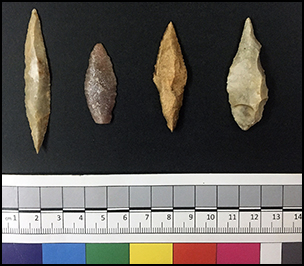
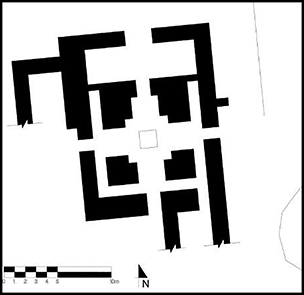
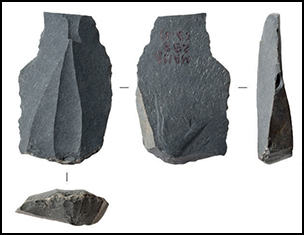
Excavations at the Pre-Pottery Neolithic B ritual site of Naḥal Roded 110 in the Southern Negev, Israel, have revealed evidence—unique to this region—for on-site flint knapping and abundant raptor remains.
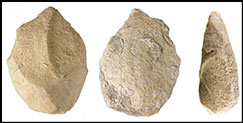
Artefacts in quartzite have been found in a unique topographical location on the highest terrace of the Rhône Valley in France. These discoveries offer new opportunities for dating early European occupations.
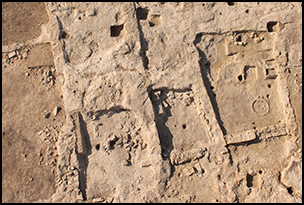
The study of abandonment processes is key to analysing the formation of social identities and the way that these identities are reinforced and maintained through social practices and rituals. Here, preliminary data from Middle Bronze Age Erimi, Cyprus, shed light on abandonment dynamics.
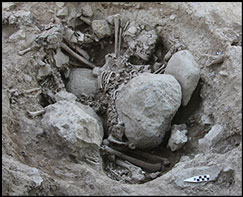
The discovery of a burial pit at Uğurlu on the Aegean island of Gökçeada, in which bodies were deposited one on top of another, raises questions about whether this apparently careless discarding of the dead was local burial custom or a ceremonial ritual.
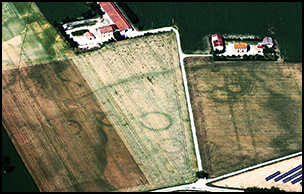
The Mapping Adriatic Landscape Project focuses on the systematic employment of non-invasive investigative techniques across the valleys of the Rivers Cesano, Nevola and Misa, in northern Marche, Italy. The Project aims to understand the dynamics of settlement and processes of urbanisation in the area.
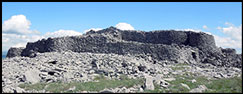
In 2017, archaeological survey recorded more than 160 Late Bronze–Iron Age cyclopean fortification complexes in the historical Javakheti region, Georgia. The author relates different types of cyclopean complexes mentioned in Urartian written sources to the sites found in Javakheti.
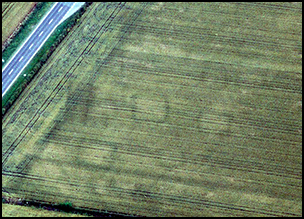
In the bicentenary year of its excavation, remote sensing has revealed, for the first time, the full extent of this iconic type-site Iron Age cemetery and its landscape context in East Yorkshire. A total of 23ha was surveyed, revealing new insights concerning the burial ground and damage through modern farming.
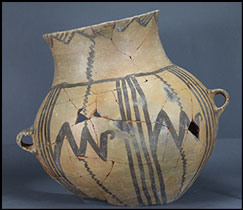
Settlement in Neolithic South-eastern Europe has traditionally been divided into tell sites and flat sites. The results of rescue excavations at Kyparissi challenge a strict dichotomy.
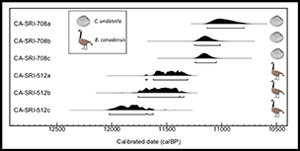
Human use of estuarine shellfish and other coastal marsh resources began on California's Santa Rosa Island at least 11 800–11 100 years ago. Productive estuaries in California and elsewhere in the Americas were present by the Late Pleistocene, providing shellfish, waterfowl, fish and seaweeds that attracted some of the First Americans.
In 2013, archaeological survey at the Bam World Heritage site of the eastern part of Kerman Province in Iran discovered the remains of a previously undocumented Sassanid fire temple.
Well-stratified Middle Palaeolithic assemblages are extremely rare in Mongolia. Initially investigated between the 1960s and 1990s, three major Middle Palaeolithic sites in the Orkhon Valley of central Mongolia yielded a large quantity of data and generated many research questions that still await answers. Re-investigation of these sites has uncovered chronostratigraphic and cultural sequences that may shed new light on human dispersal routes.
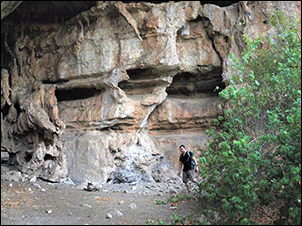
Archaeological reconnaissance and test excavation conducted in south-central Ethiopia reveal the region's rich Stone Age and Holocene archaeology. Ongoing lithic, faunal and dating analyses aim to understand chronological and behavioural contexts of prioritised rockshelters as part of a newly launched project. Speleothems in some of the caves promise high-resolution palaeoclimatic reconstruction.
Recent archaeological survey in south-western Cappadocia reveals Middle Chalcolithic expansion into the highlands, where there is no known evidence of earlier permanent settlement.