We partner with a secure submission system to handle manuscript submissions.
Please note:
You will need an account for the submission system, which is separate to your Cambridge Core account. For login and submission support, please visit the
submission and support pages.
Please review this journal's author instructions, particularly the
preparing your materials
page, before submitting your manuscript.
Click Proceed to submission system to continue to our partner's website.
To save this undefined to your undefined account, please select one or more formats and confirm that you agree to abide by our usage policies. If this is the first time you used this feature, you will be asked to authorise Cambridge Core to connect with your undefined account.
Find out more about saving content to .
To send this article to your Kindle, first ensure no-reply@cambridge.org is added to your Approved Personal Document E-mail List under your Personal Document Settings on the Manage Your Content and Devices page of your Amazon account. Then enter the ‘name’ part of your Kindle email address below. Find out more about sending to your Kindle.
Find out more about saving to your Kindle.
Note you can select to save to either the @free.kindle.com or @kindle.com variations. ‘@free.kindle.com’ emails are free but can only be saved to your device when it is connected to wi-fi. ‘@kindle.com’ emails can be delivered even when you are not connected to wi-fi, but note that service fees apply.
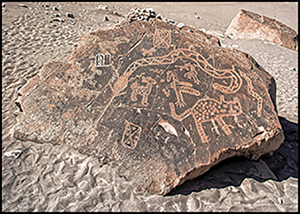
Detailed documentation of thousands of petroglyphs and recent excavations conducted at the site of Toro Muerto in Peru reveal new information about the symbolic spatial organisation and ritual functions of the largest pre-Columbian rock art complex.
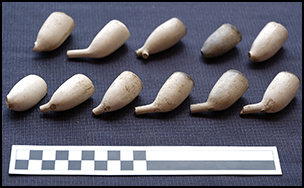
In 2017, Hurricane Maria exposed a colonial-era settlement at LaSoye on the Caribbean island of Dominica. Evidence suggests that this was a seventeenth- to eighteenth-century Dutch trading factory built over an earlier Kalinago settlement, and a place of early interaction between Indigenous peoples and Europeans.
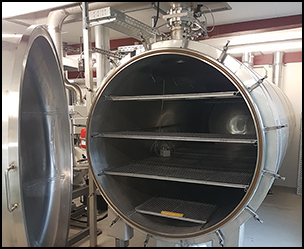
The authors introduce an ongoing project that explores a solution for the long-term preservation of proxies in archaeological and geological sediment cores to protect unique palaeoenvironmental data. To prevent alterations of organic properties and/or fungal growth, the sediment cores are vacuum freeze-dried, allowing long-term storage at 55 per cent relative humidity (RH).
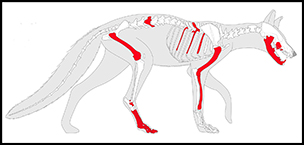
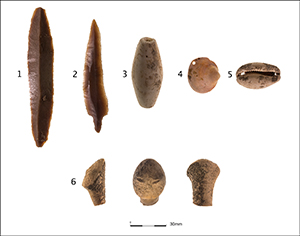
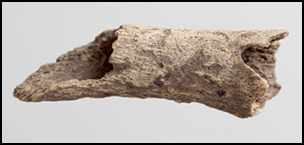
The recent discovery of a Late/Final Pre-Pottery Neolithic B burial of an adult and two children associated with fox bones at the site of Motza, Israel, demonstrates the broader socio-cultural perspective, and possibly continued animistic world views, of Neolithic foragers at the onset of the agricultural revolution.
The small, Middle Pre-Pottery Neolithic B site (tenth millennium cal BP) of Nahal Yarmuth 38 in central Israel consists of a unique series of rectilinear structures with plastered floors, beneath which multiple interments were found. The nature of the finds combined with existing knowledge of burial customs of this period make Nahal Yarmuth 38 an ideal site for investigating designated burial sites in the Middle Pre-Pottery Neolithic B.
This project aims to reconstruct the settlement patterns and palaeoenvironment of the Sąspów Valley in the Polish Jura by combining unpublished archaeological fieldwork with results of recent excavations at 13 cave sites.
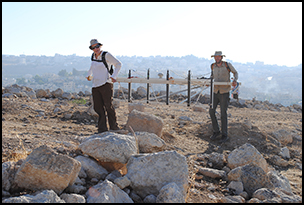
This article presents data obtained in the first geophysical survey undertaken in the Decapolis city of Gerasa (Jerash) in northern modern Jordan, and reflects on the value of openly sharing data in the academic community.