Contents
Original Article
Non-dense orbits on homogeneous spaces and applications to geometry and number theory
- Part of:
-
- Published online by Cambridge University Press:
- 18 March 2021, pp. 1327-1372
-
- Article
- Export citation
-
Let G be a Lie group, let $\Gamma \subset G$ be a discrete subgroup, let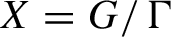 $X=G/\Gamma $ and let f be an affine map from X to itself. We give conditions on a submanifold Z of X that guarantee that the set of points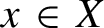 $x\in X$ with f-trajectories avoiding Z is hyperplane absolute winning (a property which implies full Hausdorff dimension and is stable under countable intersections). A similar result is proved for one-parameter actions on X. This has applications in constructing exceptional geodesics on locally symmetric spaces and in non-density of the set of values of certain functions at integer points.
KMS states on the crossed product $C^*$-algebra of a homeomorphism
- Part of:
-
- Published online by Cambridge University Press:
- 15 February 2021, pp. 1373-1414
-
- Article
- Export citation
-
Let $\phi :X\to X$ be a homeomorphism of a compact metric space X. For any continuous function $F:X\to \mathbb {R}$ there is a one-parameter group $\alpha ^{F}$ of automorphisms (or a flow) on the crossed product $C^*$-algebra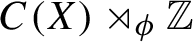 $C(X)\rtimes _{\phi }\mathbb {Z}$ defined such that $\alpha ^{F}_{t}(fU)=fUe^{-itF}$ when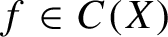 $f \in C(X)$ and U is the canonical unitary in the construction of the crossed product. In this paper we study the Kubo--Martin--Schwinger (KMS) states for these flows by developing an intimate relation to the ergodic theory of non-singular transformations and show that the structure of KMS states can be very rich and complicated. Our results are complete concerning the set of possible inverse temperatures; in particular, we show that when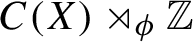 $C(X) \rtimes _{\phi } \mathbb Z$ is simple this set is either $\{0\}$ or the whole line $\mathbb R$.


Generic non-singular Poisson suspension is of type III1
- Part of:
-
- Published online by Cambridge University Press:
- 05 March 2021, pp. 1415-1445
-
- Article
- Export citation
-
It is shown that for a dense $G_\delta $-subset of the subgroup of non-singular transformations (of a standard infinite $\sigma $-finite measure space) whose Poisson suspensions are non-singular, the corresponding Poisson suspensions are ergodic and of Krieger’s type III1.


Prime number theorem for regular Toeplitz subshifts
- Part of:
-
- Published online by Cambridge University Press:
- 15 February 2021, pp. 1446-1473
-
- Article
- Export citation
On Ruelle’s property
- Part of:
-
- Published online by Cambridge University Press:
- 02 February 2021, pp. 1474-1486
-
- Article
- Export citation
On subshifts with slow forbidden word growth
- Part of:
-
- Published online by Cambridge University Press:
- 12 January 2021, pp. 1487-1516
-
- Article
-
- You have access
- Open access
- Export citation
-
In this work, we treat subshifts, defined in terms of an alphabet $\mathcal {A}$ and (usually infinite) forbidden list $\mathcal {F}$, where the number of n-letter words in $\mathcal {F}$ has ‘slow growth rate’ in n. We show that such subshifts are well behaved in several ways; for instance, they are boundedly supermultiplicative in the sense of Baker and Ghenciu [Dynamical properties of S-gap shifts and other shift spaces. J. Math. Anal. Appl. 430(2) (2015), 633–647] and they have unique measures of maximal entropy with the K-property and which satisfy Gibbs bounds on large (measure-theoretically) sets. The main tool in our proofs is a more general result, which states that bounded supermultiplicativity and a sort of measure-theoretic specification property together imply uniqueness of the measure of maximum entropy and our Gibbs bounds. We also show that some well-known classes of subshifts can be treated by our results, including the symbolic codings of $x \mapsto \alpha + \beta x$ (the so-called $\alpha $- $\beta $ shifts of Hofbauer [Maximal measures for simple piecewise monotonic transformations. Z. Wahrsch. verw. Geb. 52(3) (1980), 289–300]) and the bounded density subshifts of Stanley [Bounded density shifts. Ergod. Th. & Dynam. Sys. 33(6) (2013), 1891–1928].


Non-existence of sublinear diffusion for a class of torus homeomorphisms
- Part of:
-
- Published online by Cambridge University Press:
- 18 January 2021, pp. 1517-1547
-
- Article
- Export citation
Kakutani equivalence for products of some special flows over rotations
- Part of:
-
- Published online by Cambridge University Press:
- 28 January 2021, pp. 1548-1575
-
- Article
- Export citation
-
We study Kakutani equivalence for products of some special flows over rotations with roof function smooth except a singularity at $0\in \mathbb {T}$. We estimate the Kakutani invariant for products of these flows with different powers of singularities and rotations from a full measure set. As a corollary, we obtain a countable family of pairwise non-Kakutani equivalent products of special flows over rotations.

Entropies and volume growth of unstable manifolds
- Part of:
-
- Published online by Cambridge University Press:
- 04 February 2021, pp. 1576-1590
-
- Article
- Export citation
-
Let f be a $C^2$ diffeomorphism on a compact manifold. Ledrappier and Young introduced entropies along unstable foliations for an ergodic measure $\mu $. We relate those entropies to covering numbers in order to give a new upper bound on the metric entropy of $\mu $ in terms of Lyapunov exponents and topological entropy or volume growth of sub-manifolds. We also discuss extensions to the $C^{1+\alpha },\,\alpha>0$, case.


Front Cover (OFC, IFC) and matter
ETS volume 42 issue 4 Cover and Front matter
-
- Published online by Cambridge University Press:
- 07 March 2022, pp. f1-f2
-
- Article
-
- You have access
- Export citation
Back Cover (OBC, IBC) and matter
ETS volume 42 issue 4 Cover and Back matter
-
- Published online by Cambridge University Press:
- 07 March 2022, pp. b1-b2
-
- Article
-
- You have access
- Export citation