
Contents
Research Article
FOUR-MANIFOLDS WITH POSITIVE CURVATURE
- Part of:
-
- Published online by Cambridge University Press:
- 06 April 2020, pp. 245-257
-
- Article
-
- You have access
- Export citation
-
In this note, we prove that a four-dimensional compact oriented half-conformally flat Riemannian manifold M4 is topologically $\mathbb{S}^{4}$ or $\mathbb{C}\mathbb{P}^{2}$, provided that the sectional curvatures all lie in the interval $\left[ {{{3\sqrt {3 - 5} } \over 4}, 1} \right]$ In addition, we use the notion of biorthogonal (sectional) curvature to obtain a pinching condition which guarantees that a four-dimensional compact manifold is homeomorphic to a connected sum of copies of the complex projective plane or the 4-sphere.


ANNIHILATOR-STABILITY AND TWO QUESTIONS OF NICHOLSON
- Part of:
-
- Published online by Cambridge University Press:
- 07 April 2020, pp. 258-265
-
- Article
-
- You have access
- Export citation
-
An element a in a ring R is left annihilator-stable (or left AS) if, whenever $Ra+{\rm l}(b)=R$ with $b\in R$, $a-u\in {\rm l}(b)$ for a unit u in R, and the ring R is a left AS ring if each of its elements is left AS. In this paper, we show that the left AS elements in a ring form a multiplicatively closed set, giving an affirmative answer to a question of Nicholson [J. Pure Appl. Alg. 221 (2017), 2557–2572.]. This result is used to obtain a necessary and sufficient condition for a formal triangular matrix ring to be left AS. As an application, we provide examples of left AS rings R over which the triangular matrix rings ${\mathbb T}_n(R)$ are not left AS for all $n\ge 2$. These examples give a negative answer to another question of Nicholson [J. Pure Appl. Alg. 221 (2017), 2557–2572.] whether R/J(R) being left AS implies that R is left AS.


BGG CATEGORY FOR THE QUANTUM SCHRÖDINGER ALGEBRA
- Part of:
-
- Published online by Cambridge University Press:
- 20 April 2020, pp. 266-279
-
- Article
-
- You have access
- Export citation
-
In 1996, a q-deformation of the universal enveloping algebra of the Schrödinger Lie algebra was introduced in Dobrev et al. [J. Phys. A 29 (1996) 5909–5918.]. This algebra is called the quantum Schrödinger algebra. In this paper, we study the Bernstein-Gelfand-Gelfand (BGG) category $\mathcal{O}$ for the quantum Schrödinger algebra $U_q(\mathfrak{s})$, where q is a nonzero complex number which is not a root of unity. If the central charge $\dot z\neq 0$, using the module $B_{\dot z}$ over the quantum Weyl algebra $H_q$, we show that there is an equivalence between the full subcategory $\mathcal{O}[\dot Z]$ consisting of modules with the central charge $\dot z$ and the BGG category $\mathcal{O}^{(\mathfrak{sl}_2)}$ for the quantum group $U_q(\mathfrak{sl}_2)$. In the case that $\dot z = 0$, we study the subcategory $\mathcal{A}$ consisting of finite dimensional $U_q(\mathfrak{s})$-modules of type 1 with zero action of Z. We directly construct an equivalence functor from $\mathcal{A}$ to the category of finite dimensional representations of an infinite quiver with some quadratic relations. As a corollary, we show that the category of finite dimensional $U_q(\mathfrak{s})$-modules is wild.


HERMITIANS IN MATRIX ALGEBRAS WITH OPERATOR NORM
- Part of:
-
- Published online by Cambridge University Press:
- 27 April 2020, pp. 280-290
-
- Article
-
- You have access
- Export citation
-
We investigate the real space H of Hermitian matrices in $M_n(\mathbb{C})$ with respect to norms on $\mathbb{C}^n$. For absolute norms, the general form of Hermitian matrices was essentially established by Schneider and Turner [Schneider and Turner, Linear and Multilinear Algebra (1973), 9–31]. Here, we offer a much shorter proof. For non-absolute norms, we begin an investigation of H by means of a series of examples, with particular reference to dimension and commutativity.


PRIMITIVE RECURSIVE DECIDABILITY FOR THE RING OF INTEGERS OF THE COMPOSITUM OF ALL SYMMETRIC EXTENSIONS OF ℚ
- Part of:
-
- Published online by Cambridge University Press:
- 08 May 2020, pp. 291-296
-
- Article
-
- You have access
- Export citation
ISOTOPY AND HOMEOMORPHISM OF CLOSED SURFACE BRAIDS
- Part of:
-
- Published online by Cambridge University Press:
- 15 May 2020, pp. 297-306
-
- Article
-
- You have access
- Export citation
DETECTING STEINER AND LINEAR ISOMETRIES OPERADS
- Part of:
-
- Published online by Cambridge University Press:
- 19 May 2020, pp. 307-342
-
- Article
-
- You have access
- Open access
- Export citation
DISTAL ACTIONS OF AUTOMORPHISMS OF NILPOTENT GROUPS G ON SUBG AND APPLICATIONS TO LATTICES IN LIE GROUPS
- Part of:
-
- Published online by Cambridge University Press:
- 23 June 2020, pp. 343-362
-
- Article
-
- You have access
- Export citation
-
For a locally compact group G, we study the distality of the action of automorphisms T of G on SubG, the compact space of closed subgroups of G endowed with the Chabauty topology. For a certain class of discrete groups G, we show that T acts distally on SubG if and only if Tn is the identity map for some $n\in\mathbb N$. As an application, we get that for a T-invariant lattice Γ in a simply connected nilpotent Lie group G, T acts distally on SubG if and only if it acts distally on SubΓ. This also holds for any closed T-invariant co-compact subgroup Γ in G. For a lattice Γ in a simply connected solvable Lie group, we study conditions under which its automorphisms act distally on SubΓ. We construct an example highlighting the difference between the behaviour of automorphisms on a lattice in a solvable Lie group and that in a nilpotent Lie group. We also characterise automorphisms of a lattice Γ in a connected semisimple Lie group which act distally on SubΓ. For torsion-free compactly generated nilpotent (metrisable) groups G, we obtain the following characterisation: T acts distally on SubG if and only if T is contained in a compact subgroup of Aut(G). Using these results, we characterise the class of such groups G which act distally on SubG. We also show that any compactly generated distal group G is Lie projective.

NONHYPERELLIPTIC FIBRATIONS OF GENUS 4 WITH NONSURJECTIVE MULTIPLICATION MAP
- Part of:
-
- Published online by Cambridge University Press:
- 15 June 2020, pp. 363-377
-
- Article
-
- You have access
- Export citation
A FAST ALGORITHM FOR CALCULATING S-INVARIANTS
- Part of:
-
- Published online by Cambridge University Press:
- 29 June 2020, pp. 378-399
-
- Article
-
- You have access
- Export citation
CYCLIC BRANCHED COVERINGS OF BRIESKORN SPHERES BOUNDING ACYCLIC 4-MANIFOLDS
- Part of:
-
- Published online by Cambridge University Press:
- 03 July 2020, pp. 400-413
-
- Article
-
- You have access
- Export citation
CLOSED IDEALS AND LIE IDEALS OF MINIMAL TENSOR PRODUCT OF CERTAIN C*-ALGEBRAS
- Part of:
-
- Published online by Cambridge University Press:
- 03 July 2020, pp. 414-425
-
- Article
-
- You have access
- Export citation
DUALIZING INVOLUTIONS ON THE METAPLECTIC GL(2) à la TUPAN
- Part of:
-
- Published online by Cambridge University Press:
- 10 July 2020, pp. 426-437
-
- Article
-
- You have access
- Export citation
-
Let F be a non-Archimedean local field of characteristic zero. Let G = GL(2, F) and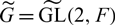 $3\widetildeG = \widetilde{GL}(2,F)$ be the metaplectic group. Let τ be the standard involution on G. A well-known theorem of Gelfand and Kazhdan says that the standard involution takes any irreducible admissible representation of G to its contragredient. In such a case, we say that τ is a dualizing involution. In this paper, we make some modifications and adapt a topological argument of Tupan to the metaplectic group $\widetildeG$ and give an elementary proof that any lift of the standard involution to $\widetildeG$; is also a dualizing involution.

THE CASIMIR NUMBER AND THE DETERMINANT OF A FUSION CATEGORY
- Part of:
-
- Published online by Cambridge University Press:
- 04 August 2020, pp. 438-450
-
- Article
-
- You have access
- Export citation
-
Let $\mathcal{C}$ be a fusion category over an algebraically closed field $\mathbb{k}$ of arbitrary characteristic. Two numerical invariants of $\mathcal{C}$, that is, the Casimir number and the determinant of $\mathcal{C}$ are considered in this paper. These two numbers are both positive integers and admit the property that the Grothendieck algebra $(\mathcal{C})\otimes_{\mathbb{Z}}K$ over any field K is semisimple if and only if any of these numbers is not zero in K. This shows that these two numbers have the same prime factors. If moreover $\mathcal{C}$ is pivotal, it gives a numerical criterion that $\mathcal{C}$ is nondegenerate if and only if any of these numbers is not zero in $\mathbb{k}$. For the case that $\mathcal{C}$ is a spherical fusion category over the field $\mathbb{C}$ of complex numbers, these two numbers and the Frobenius–Schur exponent of $\mathcal{C}$ share the same prime factors. This may be thought of as another version of the Cauchy theorem for spherical fusion categories.


AN INVARIANT OF LEGENDRIAN AND TRANSVERSE LINKS FROM OPEN BOOK DECOMPOSITIONS OF CONTACT 3-MANIFOLDS
- Part of:
-
- Published online by Cambridge University Press:
- 04 August 2020, pp. 451-483
-
- Article
-
- You have access
- Export citation
-
We introduce a generalization of the Lisca–Ozsváth–Stipsicz–Szabó Legendrian invariant ${\mathfrak L}$ to links in every rational homology sphere, using the collapsed version of link Floer homology. We represent a Legendrian link L in a contact 3-manifold ${(M,\xi)}$ with a diagram D, given by an open book decomposition of ${(M,\xi)}$ adapted to L, and we construct a chain complex ${cCFL^-(D)}$ with a special cycle in it denoted by ${\mathfrak L(D)}$. Then, given two diagrams ${D_1}$ and ${D_2}$ which represent Legendrian isotopic links, we prove that there is a map between the corresponding chain complexes that induces an isomorphism in homology and sends ${\mathfrak L(D_1)}$ into ${\mathfrak L(D_2)}$. Moreover, a connected sum formula is also proved and we use it to give some applications about non-loose Legendrian links; that are links such that the restriction of ${\xi}$ on their complement is tight.


REDUCTIONS OF POINTS ON ALGEBRAIC GROUPS, II
- Part of:
-
- Published online by Cambridge University Press:
- 28 July 2020, pp. 484-502
-
- Article
-
- You have access
- Open access
- Export citation
-
Let A be the product of an abelian variety and a torus over a number field K, and let
 $$m \ge 2$$ be a square-free integer. If $\alpha \in A(K)$ is a point of infinite order, we consider the set of primes $\mathfrak p$ of K such that the reduction $(\alpha \bmod \mathfrak p)$ is well defined and has order coprime to m. This set admits a natural density, which we are able to express as a finite sum of products of $\ell$ -adic integrals, where $\ell$ varies in the set of prime divisors of m. We deduce that the density is a rational number, whose denominator is bounded (up to powers of m) in a very strong sense. This extends the results of the paper Reductions of points on algebraic groups by Davide Lombardo and the second author, where the case m prime is established.


Front Cover (OFC, IFC) and matter
GMJ volume 63 issue 2 Cover and Front matter
-
- Published online by Cambridge University Press:
- 15 April 2021, pp. f1-f2
-
- Article
-
- You have access
- Export citation
Back Cover (IBC, OBC) and matter
GMJ volume 63 issue 2 Cover and Back matter
-
- Published online by Cambridge University Press:
- 15 April 2021, pp. b1-b3
-
- Article
-
- You have access
- Export citation