Contents
Research Article
The roles of nonlinear diffusion, haptotaxis and ECM remodelling in determining the global solvability of a cancer invasion model
- Part of:
-
- Published online by Cambridge University Press:
- 13 September 2024, pp. 655-686
-
- Article
- Export citation
-
In this paper, we consider the following PDE-ODE system modelling cancer invasion with slow diffusion and ECM remodelling,
\[ \begin{cases} u_t=\Delta u^m-\chi\nabla\cdot(u\nabla v)-\xi\nabla\cdot(u\nabla\omega)+\mu u(1-u-\omega), \\ v_t=\Delta v+u-v, \\ \omega_t={-}v\omega+\eta \omega(1-u-\omega). \end{cases} \]For the special case $\eta =0$
 , fruitful results have been achieved since Tao and Winkler's work in 2011. However, there is no any progress for the general case $\eta >0$
 in the past ten years. In this paper, we analysed some commonly used research methods when $\eta =0$
 , and found that these methods are completely unsuitable for situations where $\eta >0$
 . By introducing some new forms of functionals, we reconstruct the relationship between the haptotactic term and the nonlinear diffusion term, and ultimately prove the global existence of weak solutions. This result improves and perfects a series of works previously presented in the literature.


Duality pairs, phantom maps, and definability in triangulated categories
- Part of:
-
- Published online by Cambridge University Press:
- 13 September 2024, pp. 687-732
-
- Article
-
- You have access
- Open access
- HTML
- Export citation
The structure of finite groups whose elements outside a normal subgroup have prime power orders
- Part of:
-
- Published online by Cambridge University Press:
- 18 September 2024, pp. 733-752
-
- Article
- Export citation
-
The structure of groups in which every element has prime power order (CP-groups) is extensively studied. We first investigate the properties of group $G$
 such that each element of $G\setminus N$
 has prime power order. It is proved that $N$
 is solvable or every non-solvable chief factor $H/K$
 of $G$
 satisfying $H\leq N$
 is isomorphic to $PSL_2(3^f)$
 with $f$
 a 2-power. This partially answers the question proposed by Lewis in 2023, asking whether $G\cong M_{10}$
 ? Furthermore, we prove that if each element $x\in G\backslash N$
 has prime power order and ${\bf C}_G(x)$
 is maximal in $G$
 , then $N$
 is solvable. Relying on this, we give the structure of group $G$
 with normal subgroup $N$
 such that ${\bf C}_G(x)$
 is maximal in $G$
 for any element $x\in G\setminus N$
 . Finally, we investigate the structure of a normal subgroup $N$
 when the centralizer ${\bf C}_G(x)$
 is maximal in $G$
 for any element $x\in N\setminus {\bf Z}(N)$
 , which is a generalization of results of Zhao, Chen, and Guo in 2020, investigating a special case that $N=G$
 for our main result. We also provide a new proof for Zhao, Chen, and Guo's results above.


On a supersonic-sonic patch arising from the two-dimensional Riemann problem of the compressible Euler equations
- Part of:
-
- Published online by Cambridge University Press:
- 18 September 2024, pp. 753-792
-
- Article
- Export citation
A unified characterization of convolution coefficients in nonlocal differential equations
- Part of:
-
- Published online by Cambridge University Press:
- 18 September 2024, pp. 793-811
-
- Article
- Export citation
-
In loving memory of my beloved miniature dachshund Maddie (16 March 2002 – 16 March 2020). We consider nonlocal differential equations with convolution coefficients of the form
\[{-}M\Big(\big(a*(g\circ |u|)\big)(1)\Big)u''(t)=\lambda f\big(t,u(t)\big),\quad t\in(0,1), \]in the case in which $g$
 can satisfy very generalized growth conditions; in addition, $M$
 is allowed to be both sign-changing and vanishing. Existence of at least one positive solution to this equation equipped with boundary data is considered. We demonstrate that the nonlocal coefficient $M$
 allows the forcing term $f$
 to be free of almost all assumptions other than continuity.


Maximal noncompactness of limiting Sobolev embeddings
- Part of:
-
- Published online by Cambridge University Press:
- 18 November 2024, pp. 812-830
-
- Article
- Export citation
Liouville theorems for the sub-linear Lane–Emden equation on the half space
- Part of:
-
- Published online by Cambridge University Press:
- 18 November 2024, pp. 831-843
-
- Article
- Export citation
-
In this article, we study the following Dirichlet problem to the sub-linear Lane–Emden equation
 \begin{equation*}\left\{\begin{array}{ll}-\Delta u=u^{p},\quad u(x)\geq0,\quad x\in\mathbb{R}^n_+, \\u(x)\equiv0,\quad x\in\partial\mathbb{R}^n_+,\end{array}\right.\end{equation*}
where $n\geq3$,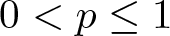 $0 \lt p\leq1$. By establishing an equivalent integral equation, we give a lower bound of the Kelvin transformation $\bar{u}$. Then, by constructing a new comparison function, we apply the maximum principle based on comparisons and the method of moving planes to obtain that u only depends on xn. Based on this, we prove the non-existence of non-negative solutions.


The socle of subshift algebras, with applications to subshift conjugacy
- Part of:
-
- Published online by Cambridge University Press:
- 18 November 2024, pp. 844-869
-
- Article
- Export citation
Principal bundle structure of the space of metric measure spaces
- Part of:
-
- Published online by Cambridge University Press:
- 18 November 2024, pp. 870-900
-
- Article
- Export citation
-
We study the topological structure of the space $\mathcal{X}$ of isomorphism classes of metric measure spaces equipped with the box or concentration topologies. We consider the scale-change action of the multiplicative group ${\mathbb{R}}_+$ of positive real numbers on $\mathcal{X}$, which has a one-point metric measure space, say $*$, as only one fixed-point. We prove that the ${\mathbb{R}}_+$-action on $\mathcal{X}_* := \mathcal{X} \setminus \{*\}$ admits the structure of non-trivial and locally trivial principal ${\mathbb{R}}_+$-bundle over the quotient space. Our bundle ${\mathbb{R}}_+ \to \mathcal{X}_* \to \mathcal{X}_*/{\mathbb{R}}_+$ is a curious example of a non-trivial principal fibre bundle with contractible fibre. A similar statement is obtained for the pyramidal compactification of $\mathcal{X}$, where we completely determine the structure of the fixed-point set of the ${\mathbb{R}}_+$-action on the compactification.


CYT and SKT manifolds with parallel Bismut torsion
- Part of:
-
- Published online by Cambridge University Press:
- 18 November 2024, pp. 901-926
-
- Article
-
- You have access
- Open access
- HTML
- Export citation
General study on limit cycle bifurcation near a double eight figure loop
- Part of:
-
- Published online by Cambridge University Press:
- 18 November 2024, pp. 927-943
-
- Article
- Export citation
-
In this article, we explore the bifurcation problem of limit cycles near the double eight figure loop (compound cycle with a 2-polycycle connecting two homoclinic loops). A general theory is established to find the lower bound of the maximal number of limit cycles (isolated periodic orbits) near the double eight figure loop. The Liénard system, a well-known nonlinear dynamical model, appears in a natural way in physics, chemistry, engineering, and so on, where periodic phenomena play a relevant role. As an application, we investigate an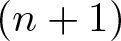 $(n+1)$th-order generalized Liénard system and prove the system has at least $7[\frac{n}{6}]+2[\frac{r}{2}]-[\frac{r}{4}]$ limit cycles near the double eight figure loop for any $n\geq5$ and $r=\rm mod(n,6)$, and their distribution is also gained.

Additive energies of subsets of discrete cubes
-
- Published online by Cambridge University Press:
- 18 November 2024, pp. 944-965
-
- Article
-
- You have access
- Open access
- HTML
- Export citation
-
For a positive integer $n \geq 2$, define tn to be the smallest number such that the additive energy E(A) of any subset $A \subset \{0,1,\cdots,n-1\}^d$ and any d is at most $|A|^{t_n}$. Trivially, we have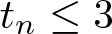 $t_n \leq 3$ and
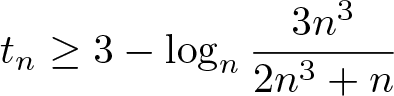 \begin{equation*} t_n \geq 3 - \log_n\frac{3n^3}{2n^3+n} \end{equation*}
by considering $A = \{0,1,\cdots,n-1\}^d$. In this note, we investigate the behaviour of tn for large n and obtain the following non-trivial bounds:
 \begin{equation*} 3 - (1+o_{n\rightarrow\infty}(1)) \log_n \frac{3\sqrt{3}}{4} \leq t_n \leq 3 - \log_n(1+c), \end{equation*}
where c > 0 is an absolute constant.


Arithmetic Ramsey theory over the primes
- Part of:
-
- Published online by Cambridge University Press:
- 20 November 2024, pp. 966-1012
-
- Article
-
- You have access
- Open access
- HTML
- Export citation
-
We study density and partition properties of polynomial equations in prime variables. We consider equations of the form $a_1h(x_1) + \cdots + a_sh(x_s)=b$, where the ai and b are fixed coefficients and h is an arbitrary integer polynomial of degree d. We establish that the natural necessary conditions for this equation to have a monochromatic non-constant solution with respect to any finite colouring of the prime numbers are also sufficient when the equation has at least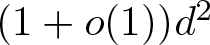 $(1+o(1))d^2$ variables. We similarly characterize when such equations admit solutions over any set of primes with positive relative upper density. In both cases, we obtain lower bounds for the number of monochromatic or dense solutions in primes that are of the correct order of magnitude. Our main new ingredient is a uniform lower bound on the cardinality of a prime polynomial Bohr set.
On K-stability of blow-ups of weighted projective planes
- Part of:
-
- Published online by Cambridge University Press:
- 29 August 2025, pp. 1013-1029
-
- Article
- Export citation
-
We study the K-stability of blow-ups of the weighted projective plane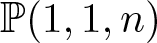 ${\mathbb P}(1,1,n)$, where n is a positive integer.
