
Contents
Article
Equivariant cohomology of torus orbifolds
- Part of:
-
- Published online by Cambridge University Press:
- 20 November 2020, pp. 299-328
-
- Article
- Export citation
Some local maximum principles along Ricci flows
- Part of:
-
- Published online by Cambridge University Press:
- 04 November 2020, pp. 329-348
-
- Article
- Export citation
-
In this work, we obtain a local maximum principle along the Ricci flow $g(t)$ under the condition that $\mathrm {Ric}(g(t))\le {\alpha } t^{-1}$ for $t>0$ for some constant ${\alpha }>0$. As an application, we will prove that under this condition, various kinds of curvatures will still be nonnegative for $t>0$, provided they are non-negative initially. These extend the corresponding known results for Ricci flows on compact manifolds or on complete noncompact manifolds with bounded curvature. By combining the above maximum principle with the Dirichlet heat kernel estimates, we also give a more direct proof of Hochard’s [15] localized version of a maximum principle by Bamler et al. [1] on the lower bound of different kinds of curvatures along the Ricci flows for $t>0$.


Shortest paths in arbitrary plane domains
- Part of:
-
- Published online by Cambridge University Press:
- 09 November 2020, pp. 349-367
-
- Article
- Export citation
-
Let $\Omega $ be a connected open set in the plane and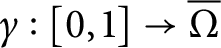 $\gamma : [0,1] \to \overline {\Omega }$ a path such that $\gamma ((0,1)) \subset \Omega $. We show that the path $\gamma $ can be “pulled tight” to a unique shortest path which is homotopic to $\gamma $, via a homotopy h with endpoints fixed whose intermediate paths $h_t$, for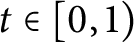 $t \in [0,1)$, satisfy $h_t((0,1)) \subset \Omega $. We prove this result even in the case when there is no path of finite Euclidean length homotopic to $\gamma $ under such a homotopy. For this purpose, we offer three other natural, equivalent notions of a “shortest” path. This work generalizes previous results for simply connected domains with simple closed curve boundaries.


Further inequalities and properties of p-inner parallel bodies
- Part of:
-
- Published online by Cambridge University Press:
- 09 November 2020, pp. 368-380
-
- Article
- Export citation
-
A. R. Martínez Fernández obtained upper bounds for quermassintegrals of the p-inner parallel bodies: an extension of the classical inner parallel body to the $L_p$-Brunn-Minkowski theory. In this paper, we establish (sharp) upper and lower bounds for quermassintegrals of p-inner parallel bodies. Moreover, the sufficient and necessary conditions of the equality case for the main inequality are obtained, which characterize the so-called tangential bodies.

A proof of the linear Arithmetic Fundamental Lemma for $ \operatorname {{\mathrm {GL}}}_4$
- Part of:
-
- Published online by Cambridge University Press:
- 23 November 2020, pp. 381-427
-
- Article
- Export citation
-
Let $K/F$ be an unramified quadratic extension of a non-Archimedean local field. In a previous work [1], we proved a formula for the intersection number on Lubin–Tate spaces. The main result of this article is an algorithm for computation of this formula in certain special cases. As an application, we prove the linear Arithmetic Fundamental Lemma for $ \operatorname {{\mathrm {GL}}}_4$ with the unit element in the spherical Hecke Algebra.


Optimal approximants and orthogonal polynomials in several variables
- Part of:
-
- Published online by Cambridge University Press:
- 26 November 2020, pp. 428-456
-
- Article
-
- You have access
- Open access
- Export citation
Derivatives of symplectic eigenvalues and a Lidskii type theorem
- Part of:
-
- Published online by Cambridge University Press:
- 02 December 2020, pp. 457-485
-
- Article
-
- You have access
- Export citation
-
Associated with every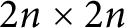 $2n\times 2n$ real positive definite matrix $A,$ there exist n positive numbers called the symplectic eigenvalues of $A,$ and a basis of $\mathbb {R}^{2n}$ called the symplectic eigenbasis of A corresponding to these numbers. In this paper, we discuss differentiability and analyticity of the symplectic eigenvalues and corresponding symplectic eigenbasis and compute their derivatives. We then derive an analogue of Lidskii’s theorem for symplectic eigenvalues as an application.


On a conjecture of Chen and Yui: Resultants and discriminants
- Part of:
-
- Published online by Cambridge University Press:
- 14 December 2020, pp. 486-526
-
- Article
- Export citation
-
In [5], Chen and Yui conjectured that Gross–Zagier type formulas may also exist for Thompson series. In this work, we verify Chen and Yui’s conjecture for the cases for Thompson series $j_{p}(\tau )$ for $\Gamma _{0}(p)$ for p prime, and equivalently establish formulas for the prime decomposition of the resultants of two ring class polynomials associated to $j_{p}(\tau )$ and imaginary quadratic fields and the prime decomposition of the discriminant of a ring class polynomial associated to $j_{p}(\tau )$ and an imaginary quadratic field. Our method for tackling Chen and Yui’s conjecture on resultants can be used to give a different proof to a recent result of Yang and Yin. In addition, as an implication, we verify a conjecture recently raised by Yang, Yin, and Yu.


Torsions and intersection forms of 4-manifolds from trisection diagrams
- Part of:
-
- Published online by Cambridge University Press:
- 14 December 2020, pp. 527-549
-
- Article
- Export citation
-
Gay and Kirby introduced trisections, which describe any closed, oriented, smooth 4-manifold X as a union of three 4-dimensional handlebodies. A trisection is encoded in a diagram, namely three collections of curves in a closed oriented surface $\Sigma $, guiding the gluing of the handlebodies. Any morphism $\varphi $ from $\pi _1(X)$ to a finitely generated free abelian group induces a morphism on $\pi _1(\Sigma )$. We express the twisted homology and Reidemeister torsion of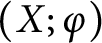 $(X;\varphi )$ in terms of the first homology of $(\Sigma ;\varphi )$ and the three subspaces generated by the collections of curves. We also express the intersection form of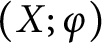 $(X;\varphi )$ in terms of the intersection form of $(\Sigma ;\varphi )$.


Rank conditions for finite group actions on 4-manifolds
- Part of:
-
- Published online by Cambridge University Press:
- 18 January 2021, pp. 550-572
-
- Article
- Export citation
-
Let M be a closed, connected, orientable topological $4$-manifold, and G be a finite group acting topologically and locally linearly on M. In this paper, we investigate the spectral sequence for the Borel cohomology $H^*_G(M)$ and establish new bounds on the rank of G for homologically trivial actions with discrete singular set.

Holomorphic SCFTs with small index
- Part of:
-
- Published online by Cambridge University Press:
- 18 January 2021, pp. 573-601
-
- Article
- Export citation
-
We observe that every self-dual ternary code determines a holomorphic $\mathcal N=1$ superconformal field theory. This provides ternary constructions of some well-known holomorphic $\mathcal N=1$ superconformal field theories (SCFTs), including Duncan’s “supermoonshine” model and the fermionic “beauty and the beast” model of Dixon, Ginsparg, and Harvey. Along the way, we clarify some issues related to orbifolds of fermionic holomorphic CFTs. We give a simple coding-theoretic description of the supersymmetric index and conjecture that for every self-dual ternary code this index is divisible by $24$; we are able to prove this conjecture except in the case when the code has length $12$ mod $24$. Lastly, we discuss a conjecture of Stolz and Teichner relating $\mathcal N=1$ SCFTs with Topological Modular Forms. This conjecture implies constraints on the supersymmetric indexes of arbitrary holomorphic SCFTs, and suggests (but does not require) that there should be, for each k, a holomorphic $\mathcal N=1$ SCFT of central charge $12k$ and index $24/\gcd (k,24)$. We give ternary code constructions of SCFTs realizing this suggestion for $k\leq 5$.


Erratum
Erratum: A certain structure of Artin groups and the isomorphism conjecture
-
- Published online by Cambridge University Press:
- 11 December 2020, p. 602
-
- Article
-
- You have access
- Export citation
Corrigendum
Corrigendum: On an Enriques surface associated with a quartic Hessian surface
- Part of:
-
- Published online by Cambridge University Press:
- 10 December 2020, pp. 603-605
-
- Article
-
- You have access
- Export citation
Front Cover (OFC, IFC) and matter
CJM volume 74 issue 2 Cover and Front matter
-
- Published online by Cambridge University Press:
- 22 April 2022, pp. f1-f3
-
- Article
-
- You have access
- Export citation
Back Cover (OBC, IBC) and matter
CJM volume 74 issue 2 Cover and Back matter
-
- Published online by Cambridge University Press:
- 22 April 2022, pp. b1-b2
-
- Article
-
- You have access
- Export citation