Contents
Application Paper
A machine learning approach using autoencoders to perform quality control on meteorological data
-
- Published online by Cambridge University Press:
- 26 January 2026, e1
-
- Article
-
- You have access
- Open access
- HTML
- Export citation
Methods Paper
Actively inferring methane sources with drones
- Part of:
-
- Published online by Cambridge University Press:
- 28 January 2026, e2
-
- Article
-
- You have access
- Open access
- HTML
- Export citation
Application Paper
Which meteorological parameters influence extreme wind speed in a wind farm? A heterogeneous Granger causality approach
-
- Published online by Cambridge University Press:
- 09 February 2026, e3
-
- Article
-
- You have access
- Open access
- HTML
- Export citation
Utilization of artificial intelligence and thermal cameras in material analysis for hot-summer Mediterranean climates
-
- Published online by Cambridge University Press:
- 16 February 2026, e4
-
- Article
-
- You have access
- Open access
- HTML
- Export citation
Corrigendum
MoTiF: a self-supervised model for multi-source forecasting with application to tropical cyclones – CORRIGENDUM
-
- Published online by Cambridge University Press:
- 19 February 2026, e5
-
- Article
-
- You have access
- Open access
- HTML
- Export citation
Application Paper
Skillful subseasonal Indian Ocean marine heatwave forecasts using a neural network
- Part of:
-
- Published online by Cambridge University Press:
- 24 February 2026, e6
-
- Article
-
- You have access
- Open access
- HTML
- Export citation
Combined effects of site and model parameterization for soil respiration components in a Canadian wildfire chronosequence
-
- Published online by Cambridge University Press:
- 30 March 2026, e7
-
- Article
-
- You have access
- Open access
- HTML
- Export citation
-
Forest fires alter soil organic carbon and suppress soil respiration for decades following disturbance. However, uncertainties in model parameterization and sensitivity hinder robust predictions of autotrophic and heterotrophic soil respiration responses. We addressed this challenge using a novel dataset from a fire chronosequence in the Yukon and Northwest Territories of Canada. The dataset included field measurements of total soil respiration at four sites with varying time since fire, supplemented by field measurements of soil temperature at two depths, remote sensing data on aboveground productivity, and soil moisture at two depths. We evaluated a suite of soil respiration models, ranging from exponential $ {Q}_{10} $ formulations to heterotrophic respiration models using Michaelis–Menten kinetics. To estimate parameters efficiently, we (1) derived algebraic expressions for soil respiration components assuming quasi-steady state dynamics and (2) applied a Markov Chain Monte Carlo (MCMC) approach for parameter estimation. The resulting parameter estimates revealed which parameters were well-constrained and where uncertainty remained. Modeled respiration agreed with established empirical relationships and highlighted two key findings: (1) all chronosequence sites favored models that explicitly included microbial carbon as a distinct pool, and (2) parameters related to aboveground litter inputs were better constrained than those for root turnover. These results held regardless of soil depth or the form of the autotrophic respiration moisture response. These findings indicate that direct field measurements of litterfall rates would reduce model uncertainty, and that targeted sampling during seasonal transitions (e.g., freeze–thaw periods) would provide critical constraints on microbial activity when respiration dynamics are most variable.

Methods Paper
Detecting unique wind field features in hurricane Sandy from topological data maps
- Part of:
-
- Published online by Cambridge University Press:
- 06 April 2026, e8
-
- Article
-
- You have access
- Open access
- HTML
- Export citation
Application Paper
Data-driven discovery of meteotsunami patterns from sparse observations
- Part of:
-
- Published online by Cambridge University Press:
- 06 April 2026, e9
-
- Article
-
- You have access
- Open access
- HTML
- Export citation
Position Paper
How reliable are retrieval-augmented and standard ChatGPT models to support flood susceptibility mapping?
-
- Published online by Cambridge University Press:
- 21 April 2026, e10
-
- Article
-
- You have access
- Open access
- HTML
- Export citation
Application Paper
Assessing the risk of future Dunkelflaute events for Germany using generative deep learning
-
- Published online by Cambridge University Press:
- 12 May 2026, e11
-
- Article
-
- You have access
- Open access
- HTML
- Export citation
Correcting dry/wet classification bias in precipitation downscaling via generative adversarial networks
-
- Published online by Cambridge University Press:
- 28 May 2026, e12
-
- Article
-
- You have access
- Open access
- HTML
- Export citation
-
Accurately downscaling precipitation from coarse to high spatial resolutions remains a critical challenge in climate and hydrometeorological modeling. A key limitation is the frequent misclassification of dry and wet regions, which compromises the realism and reliability of high-resolution outputs. To address this, we propose a deep learning-based downscaling framework that explicitly models dry/wet classification by transforming low-resolution 6×6 precipitation inputs into high-resolution 60 × 60 binary classification fields. We evaluate two architectures, a convolutional encoder-decoder and a conditional Wasserstein generative adversarial network (WGAN), utilizing three training strategies: (1) using binary wet/dry inputs, (2) using precipitation intensity inputs, and (3) using precipitation intensity inputs and adding physical constraints. Models are trained and validated on both synthetically generated precipitation fields and real radar-estimated hourly precipitation data over the contiguous United States. Performance is assessed using metrics including the overall probability of zero ( $ {\mathrm{P}}_0 $) and spatial autocorrelations. Results show that incorporating intensity information improves dry/wet classification, while adding physical constraints further enhances accuracy, generalization, and physical consistency, especially for WGAN models. The convolutional encoder-decoder produces smoother outputs with stable performance regarding marginal statistics, whereas the WGAN generates sharper boundaries and more realistic dry/wet fields, improving on the spatial dependence structure. Furthermore, we demonstrate that the derived dry/wet classification fields can be used as binary masks to bias correct downscaled precipitation fields, enhancing both statistical fidelity and spatial realism. These findings highlight the value of a physically informed bias-correction strategy for improving the spatial realism of high-resolution precipitation fields from coarse-scale inputs.

Methods Paper
Precipitation nowcasting of satellite data using physically aligned neural networks
- Part of:
-
- Published online by Cambridge University Press:
- 26 June 2026, e13
-
- Article
-
- You have access
- Open access
- HTML
- Export citation
Application Paper
Calibrated conformal prediction intervals for microphysical process rates
- Part of:
-
- Published online by Cambridge University Press:
- 02 July 2026, e14
-
- Article
-
- You have access
- Open access
- HTML
- Export citation
Explainable machine learning highlights the role of diffuse radiation in ecosystem carbon uptake of boreal forest
-
- Published online by Cambridge University Press:
- 06 July 2026, e15
-
- Article
-
- You have access
- Open access
- HTML
- Export citation
-
Boreal forests play a critical role in the global carbon cycle as they are one of the largest terrestrial carbon sinks globally. In this study, we employ explainable machine learning (ML) techniques to investigate the influence of environmental and vegetation variables on net ecosystem exchange (NEE), focusing specifically on the effects of diffuse radiation. We utilize a sub-hourly resolution data set including satellite and in-situ observations from three boreal or hemiboreal forest research stations across the latitudes 58–68° N to capture latitudinal variability in forest carbon uptake. Using SHAP (Shapley Additive Explanations) values, we identify key drivers influencing NEE and quantify their importance across various ML model architectures. Photosynthetically active radiation (PAR), diffuse radiation, normalized difference vegetation index, and soil temperature were identified as the variables having the largest explanatory power for NEE across the ML models. ML models using only these variables result in $ {R}^2\approx 0.8 $
 and RMSE$ \approx 2.3 $ $ \mu \mathrm{mol}\;{\mathrm{m}}^{-2}\hskip0.1em {\mathrm{s}}^{-1} $
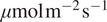 . Further analysis of SHAP values indicates that higher diffuse radiation (DiffPAR) is associated with more negative NEE (stronger carbon sink). SHAP analysis highlights this effect much more clearly than raw DiffPAR measurements, because it accounts for interactions with other environmental factors. This suggests that the diffuse radiation effect emerges from interactions between DiffPAR and co-varying environmental factors (such as cloudiness and total PAR). Cases identified by SHAP ($ \mathrm{DiffPAR}\ \mathrm{SHAP}<-2 $
 ) have a median NEE $ 1.55\mu \mathrm{mol},{\mathrm{m}}^{-2},{\mathrm{s}}^{-1} $
 more negative than cases with raw $ \mathrm{DiffPAR}\ge 400 $
 . When applied to ML models, SHAP uncovers nonlinear, context-dependent interactions between diffuse radiation and other drivers of NEE without assuming a priori relationships.


One stone three birds: Three-dimensional implicit neural network for compression and continuous representation of multi-altitude climate data
- Part of:
-
- Published online by Cambridge University Press:
- 08 July 2026, e16
-
- Article
-
- You have access
- Open access
- HTML
- Export citation
Methods Paper
Emulating non-differentiable metrics via knowledge-guided learning: Introducing the Minkowski image loss
- Part of:
-
- Published online by Cambridge University Press:
- 09 July 2026, e17
-
- Article
-
- You have access
- Open access
- HTML
- Export citation
Application Paper
Convolutional neural network for the prediction of Sargassum seaweed beachings in Guadeloupe
- Part of:
-
- Published online by Cambridge University Press:
- 14 July 2026, e18
-
- Article
-
- You have access
- Open access
- HTML
- Export citation
Data Paper
SynopticBench: evaluating vision-language models on generating weather forecast discussions of the future
- Part of:
-
- Published online by Cambridge University Press:
- 14 July 2026, e19
-
- Article
-
- You have access
- Open access
- HTML
- Export citation
Methods Paper
A generative likelihood framework for high-resolution climate model evaluation
- Part of:
-
- Published online by Cambridge University Press:
- 14 July 2026, e20
-
- Article
-
- You have access
- Open access
- HTML
- Export citation