To save content items to your account,
please confirm that you agree to abide by our usage policies.
If this is the first time you use this feature, you will be asked to authorise Cambridge Core to connect with your account.
Find out more about saving content to .
To save content items to your Kindle, first ensure no-reply@cambridge.org
is added to your Approved Personal Document E-mail List under your Personal Document Settings
on the Manage Your Content and Devices page of your Amazon account. Then enter the ‘name’ part
of your Kindle email address below.
Find out more about saving to your Kindle.
Note you can select to save to either the @free.kindle.com or @kindle.com variations.
‘@free.kindle.com’ emails are free but can only be saved to your device when it is connected to wi-fi.
‘@kindle.com’ emails can be delivered even when you are not connected to wi-fi, but note that service fees apply.
This study investigates the influence of surface wave characteristics, specifically wave steepness and directional spreading, on intermittency in deep-water gravity wave turbulence through long-term numerical simulations of three-dimensional potential fully nonlinear periodic gravity waves. We conducted this investigation by estimating the scaling exponent of the surface elevation under different sea state conditions. With our numerical methods, we were able to evaluate the scaling exponents of the structure-function up to 12th order. The observed increased intermittency in directionally narrower sea states and in higher steepness conditions aligns with known effects of quasi-resonant wave–wave interactions and wave breaking. Comparative analyses reveal that both the conventional She–Leveque model and the multifractal models, also used to represent intermittency in wave turbulence of a different nature, exhibit a strong correlation in this study. This observation underscores the universality of intermittency phenomena within wave turbulence.
This chapter studies global histories that consider aspects of the material world. It exposes the – often tacit – assumptions that guide these global material histories and holds them up for careful inspection. Its particular interest is in the grounds on which global material historians associate matter and material culture with a specific scale, context or level of observation: with world-making, the global scale and ‘connectivity’, but also with the concrete, the ‘micro’ and the intimate. In that context, the chapter discusses a wide range of themes, from the risk of fetishising material things – as in, reverencing them for properties, including ‘global’ ones, merely projected onto them – to the inevitability of canvassing some forms of materiality on a global scale: the pollution of air, for instance, or, for the post–Cold War era, the issue of resource shortages. The chapter argues that, like any form of historical writing, global material histories are under the influence of their practitioners’ own times’ socioreligious texture, global imaginary and discursive habits; mindful of the telos and conceptions that pervade their work, they will be better prepared to see the world of matter and material culture in all its changeability, elusiveness and polysemy.
This final chapter compares the country findings and brings together the conceptual and empirical insights presented. It also aims to answer the questions presented in the introductory chapter: What are the security implications of energy transitions? What elements of positive and negative security can be found? How should energy security and security of supply be redefined in the context of the energy transition? Is there a hidden side to policymaking in the energy–security nexus? It first discusses the interplay between energy, security, and defense policies, followed by securitization and politicization. Subsequently, focus is placed on the security implications of energy transitions, and on negative and positive security. The chapter ends by summarizing the key technological, actor-based, and institutional aspects of the country cases, perceptions of Russia as a landscape pressure, and final conclusions.
During his regular Thursday visits to the Sufi tomb of the saint Shah Chokha, Ram Singh, a schoolteacher of the Baniya caste from the town of Punahana, never forgot to donate money to Tablighi Jamaat volunteers. He believed that visiting a Sufi dargāh and providing funds for Islamic education and mosque renovation were acts of service to God. Ram Singh lived close to the Laldas temple in Punahana (Figure 5.1). He or a member of his family visited the temple daily, either in the morning or evening. Ram Singh openly regarded Laldas as a Muslim, saying, hamāre bābā musalmān the par hamen unki pahcān se koi lenā denā nahī (our saint was Muslim, but we do not have any problem with his identity).
In 2015, the new temple of Laldas was built on the premises of an Arya Samaj school. The school building also served as a regional centre for the Arya Samaj. An open courtyard was located in front of the temple. Visitors arrived daily and waited in the courtyard while the Brahmin head priest, made the required arrangements for Laldas's morning and evening prayers. Most of the devotees were shopkeepers in the nearby central market in Punahana and came to the temple for quick prayers to the saint. This market was dominated by Hindus, particularly the Baniyas who owned shops for selling items of daily use. On the outer circle of this market, which separated Punahana from Nakanpur (a very old Meo village that is today part of the Punahana town municipality), there were shops for selling garments, mobiles, and vegetable and fruits, among other items. These shops were predominantly owned by Muslims.
The town was also home to considerable populations of Hindu ‘low castes’ such as Valmikis, Jatavs, Sainis (Malis), Nais and Punjabi immigrants from Pakistan. The everyday dynamics of social life in this town were significantly influenced by the presence of these communities. The demographic numbers of Hindus and Muslims were almost nearly the same, but the region had a Muslim majority. Hindus and Muslims interacted with one another, but there was a sense of insecurity among the Hindus, especially the Baniyas, due to the Muslim majority in the area. Hindu caste communities built strong networks with right-wing organisations such as the RSS, the Bajrang Dal and the Arya Samaj in response to their minority status, anticipating potential conflicts in the future.
The depression, obstructive sleep apnea and cognitive impairment (DOC) screen assesses three post-stroke comorbidities, but additional information may be gained from the time to complete the screen. Cognitive screening completion time is rarely used as an outcome measure.
Objective:
To assess DOC screen completion time as a predictor of cognitive impairment in stroke/transient ischemic attack clinics.
Methods:
Consecutive English-speaking stroke prevention clinic patients consented to undergo screening and neuropsychological testing (n = 437). DOC screen scores and times were compared to scores on the NINDS-CSC battery using multiple linear regression (controlling for age, sex, education and stroke severity) and receiver operating characteristic (ROC) curve analysis.
Results:
Completion time for the DOC screen was 3.8 ± 1.3 minutes. After accounting for covariates, the completion time was a significant predictor of the speed of processing (p = 0.002, 95% CI: −0.016 to −0.004), verbal fluency (p < 0.001, CI: −0.012 to −0.006) and executive function (p = 0.004, CI: −0.006 to −0.001), but not memory. Completion time above 5.5 minutes was associated with a high likelihood of impairment on executive and speed of processing tasks (likelihood ratios 3.9–5.2).
Conclusions:
DOC screen completion time is easy to collect in routine care. People needing over 5.5 minutes to be screened likely have deficits in executive functioning and speed of processing – areas commonly impaired, but challenging to screen for, after stroke. DOC screen time provides a simple, feasible approach to assess these under-identified cognitive impairments.
Large-scale atmospheric circulation patterns, so-called weather regimes, modulate the occurrence of extreme events such as heatwaves or extreme precipitation. In their role as mediators between long-range teleconnections and local impacts, weather regimes have demonstrated potential in improving long-term climate projections as well as sub-seasonal to seasonal forecasts. However, existing methods for identifying weather regimes are not specifically designed to capture the relevant physical processes responsible for variations in the impact variable in question. This paper introduces a novel probabilistic machine learning method, RMM-VAE, for identifying weather regimes targeted to a local-scale impact variable. Based on a variational autoencoder architecture, the method combines non-linear dimensionality reduction with a prediction task and probabilistic clustering in one coherent architecture. The new method is applied to identify circulation patterns over the Mediterranean region targeted to precipitation over Morocco and compared to three existing approaches: two established linear methods and another machine-learning approach. The RMM-VAE method identifies regimes that are more predictive of the target variable compared to the two linear methods, both in terms of terciles and extremes in precipitation, while also improving the reconstruction of the input space. Further, the regimes identified by the RMM-VAE method are also more robust and persistent compared to the alternative machine learning method. The results demonstrate the potential benefit of the new method for use in various climate applications such as sub-seasonal forecasting, and illustrate the trade-offs involved in targeted clustering.
Factors which impact bilingual language development can often interact with different language features. The current study teases apart the impact of internal and external factors (chronological age, length of exposure, L2 richness, L2 use at home, maternal education and maternal L2 proficiency) across linguistic domains and features (vocabulary, morphology and syntax). Participants were 40 Arabic-speaking sequential bilinguals acquiring English (5;7-12;2, M = 8;4). Length of exposure predicted vocabulary and morphology, while chronological age predicted syntax. L2 richness also predicted vocabulary and syntax, although the impact on syntax was selective across structures. This split between syntax on the one hand, and vocabulary and morphology on the other, reflects the more embedded properties of the former; this contrasts with vocabulary and morphology, where transfer from the L1 and L2 may be more strongly dependent on the availability of shared forms across languages. Further implications are considered for sequential bilinguals in education contexts.
In the context of the ongoing biodiversity crisis, understanding forest ecosystems, their tree species composition, and especially the successional stages of their development is crucial. They collectively shape the biodiversity within forests and thereby influence the ecosystem services that forests provide, yet this information is not readily available on a large scale. Remote sensing techniques offer promising solutions for obtaining area-wide information on tree species composition and their successional stages. While optical data are often freely available in appropriate quality over large scales, obtaining light detection and ranging (LiDAR) data, which provide valuable information about forest structure, is more challenging. LiDAR data are mostly acquired by public authorities across several years and therefore heterogeneous in quality. This study aims to assess if heterogeneous LiDAR data can support area-wide modeling of forest successional stages at the tree species group level. Different combinations of spectral satellite data (Sentinel-2) and heterogeneous airborne LiDAR data, collected by the federal government of Rhineland-Palatinate, Germany, were utilized to model up to three different successional stages of seven tree species groups. When incorporating heterogeneous LiDAR data into random forest models with spatial variable selection and spatial cross-validation, significant accuracy improvements of up to 0.23 were observed. This study shows the potential of not dismissing initially seemingly unusable heterogeneous LiDAR data for ecological studies. We advocate for a thorough examination to determine its usefulness for model enhancement. A practical application of this approach is demonstrated, in the context of mapping successional stages of tree species groups at a regional level.
Big questions sometimes present themselves in small form. The grand themes of Sri Lanka's contemporary history – its quagmire of nationalist politics, the hampered solution of provincial devolution and the incessant friction between constitutional, administrative and political realities – became manifest in the minutiae of a marginal bureaucratic problem when I was in Colombo in October 2019. For just a moment, all the central concerns of this book were folded into a discussion between a civil servant and a constitutional lawyer about a topic that would never have occurred to me as one of my research interests: the appointment of schoolteachers.
I was attending a seminar titled ‘Thirty Years of Devolution’ at the Galadari Hotel in the historical heart of the capital. Constitutional experts were launching a book (Amarasinghe et al. 2019) to an audience of civil servants: chief secretaries and legal officers from various provinces. The debate centred on the unresolved problems of the provincial council system three decades after its creation. Any talk of fixing devolution felt like a rear-guard battle, though. We all knew that the world outside our elegant conference room had moved on. Whatever had been left of the consultative process on constitutional reform, which had started with much excitement under the Sirisena–Wickremesinghe government in 2015, had been thrown off the rails by the constitutional crisis of 2018 (Welikala 2020). The governing coalition had become defunct. The country was now holding its breath for the presidential elections, which would be in two weeks. Until the race between Sajith Premadasa (United National Party, or UNP) and Gotabaya Rajapaksa (Sri Lanka Podujana Peramuna, or SLPP1) was adjudicated, all other political matters were on hold. Quite literally so at the provincial level: by now, all councils had been dissolved. Their term had expired, but new elections had been postponed time and again due to a stalemate over electoral system reform. In effect, we had entered a new ‘interim period’ where the provinces were ruled by presidential appointees (the governors) rather than elected politicians (the provincial council and the board of ministers), not just in the north and east this time but in all nine provinces.
The chapter discusses how questions of time and temporality shape and challenge global history, as well as historical studies in general. I take my cue from the specific temporality of global history itself and its role in defining the identity of the field. I move on to show, firstly, why time can be understood as history’s ‘last fetish’, as Chris Lorenz has phrased it, and how this makes itself known among global historians. In a second step, politics of periodisation are analysed as a particular challenge for de-centring history. Here, the recent debate about the ‘Global Middle Ages’ and the longer history of the global proliferation of the ‘medieval’ serve as an example. Finally, I turn to the question of synchronisation and contemporaneity, which presents both a promise and a problem for global historians.
The Anda manuscript and Haihun slips have revealed that there were several different stanza permutations for poems in the “Guo feng” 國風 in early China. As most repetitive stanzas are essentially nonlinear, there is no intrinsic sequence for many poems. Rather than finding a “superior” stanza order, I would like to consider how the various stanza orders might challenge traditional interpretations of references to stanza numbers in the Zuozhuan 左傳 and the hermeneutical rule of “orderly progression” in the Shijing. Just as establishing the order of stanzas took a long time, the development of this rule was gradual. The belief in there being an unalterable stanza order not only influences how rhymes are interpreted but also shapes how lines and verses are annotated. Therefore, reconsidering the theory of orderly progression is a step towards re-evaluating the tradition of Shijing interpretation.
Recent advances in large language models (LLMs), such as GPT-4, have spurred interest in their potential applications across various fields, including actuarial work. This paper introduces the use of LLMs in actuarial and insurance-related tasks, both as direct contributors to actuarial modelling and as workflow assistants. It provides an overview of LLM concepts and their potential applications in actuarial science and insurance, examining specific areas where LLMs can be beneficial, including a detailed assessment of the claims process. Additionally, a decision framework for determining the suitability of LLMs for specific tasks is presented. Case studies with accompanying code showcase the potential of LLMs to enhance actuarial work. Overall, the results suggest that LLMs can be valuable tools for actuarial tasks involving natural language processing or structuring unstructured data and as workflow and coding assistants. However, their use in actuarial work also presents challenges, particularly regarding professionalism and ethics, for which high-level guidance is provided.
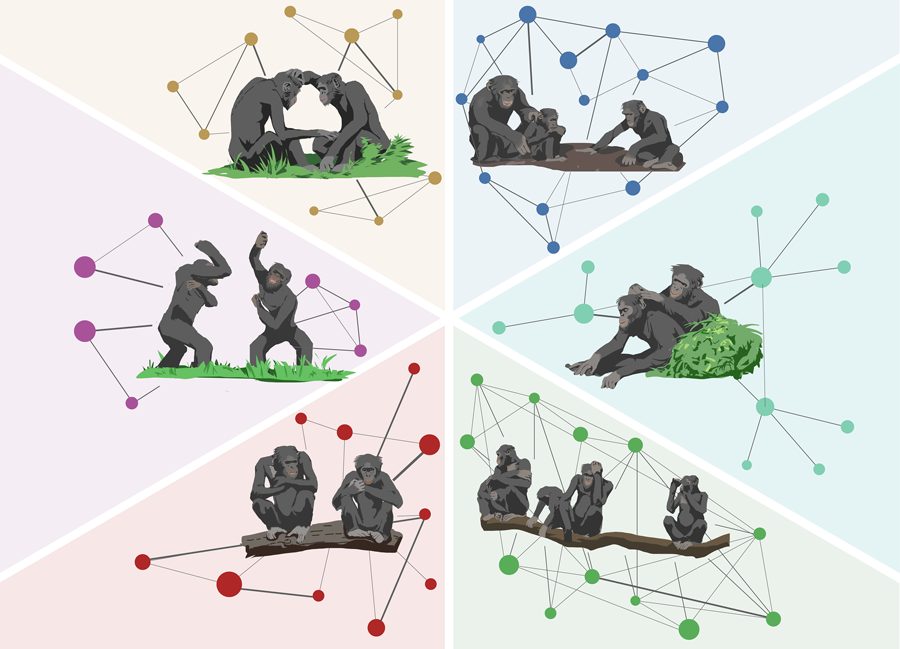
Humans show remarkable differences in social behaviour between families, groups, communities and cultures, whereas such group-level within-species variation in socio-behavioural propensities is typically overlooked in other species. Studies on intraspecific variation in animal social structures are needed to inform an evolutionary account of human sociality. Here, we study multiple independent bonobo populations (n = 6) in zoological settings to investigate if and how bonobos (n = 70) show group-specific signatures in sociality. By applying tailored Bayesian statistical methods, we find that beyond individual and dyadic variation, the groups substantially differ from each other in core dimensions of great ape sociality: social proximity, grooming and play. Moreover, the groups’ network structures are distinct regarding cohesiveness and clustering, with some groups forming cohesive wholes, while others showcasing high levels of sub-grouping. Overall, while there is consistent evidence of differences in sociality between the groups, the patterns of cohesiveness and clustering are not consistent across the networks. This suggests that rather than groups having different levels of sociality, different patterns of sociality exist in each group. These findings warrant caution with characterising bonobos’ behavioural phenotype at the species level, and identify an essential source of variation that needs to be integrated in phylogenetic analyses.
Visual release hallucinations are perceptual disturbances that occur in individuals who have experienced vision loss. Almost 50 million people worldwide are believed to experience visual release hallucinations, yet they are profoundly underdiagnosed. Although first described within the Charles Bonnet syndrome, the paradigm underlying this syndrome precludes their consideration in many populations, such as those with underlying psychiatric illness or dementia. Consequently, visual release hallucinations have rarely been studied in patients presenting with psychosis. We conducted a scoping review to determine whether visual-release hallucinations occur in psychotic patients.
Methods
The PubMed research database was searched from inception through April 2023. Cases were collected reporting on psychotic patients experiencing suspected visual release hallucinations. Individual treatment courses and responses were extracted.
Results
Thirteen cases compiled from 11 different studies were summarized to provide baseline characteristics and overall trends in treatment response. Most patients did not remit from pharmacological management alone. All patients who received reafferentation therapy remitted, though many were not candidates. Almost half of the patients did not achieve remission.
Conclusions
Visual release hallucinations can manifest in psychosis and may contribute to treatment-resistant psychosis among psychiatric populations. A shift in our understanding of visual release hallucinations may aid their recognition in psychotic patients by shifting the focus toward visual release features. Recognizing release features among patients with hallucinatory conditions may open new treatment avenues for managing patients with psychosis. A preliminary screening index for visual release features is provided to support this shift.