Refine listing
Actions for selected content:
143453 results in Open Access
Recognizing asymptomatic bacteriuria in the surveillance of catheter-associated urinary tract infections—beyond fever and positive urine culture
-
- Journal:
- Antimicrobial Stewardship & Healthcare Epidemiology / Volume 4 / Issue 1 / 2024
- Published online by Cambridge University Press:
- 14 November 2024, e207
-
- Article
-
- You have access
- Open access
- HTML
- Export citation
Part IV - Autonomy, Affectedness, and Associations
-
- Book:
- Empowering Affected Interests
- Published online:
- 14 November 2024
- Print publication:
- 14 November 2024, pp 229-274
-
- Chapter
-
- You have access
- Open access
- HTML
- Export citation
Part I - Subjection, Interaction, Power, and Domination
-
- Book:
- Empowering Affected Interests
- Published online:
- 14 November 2024
- Print publication:
- 14 November 2024, pp 19-108
-
- Chapter
-
- You have access
- Open access
- HTML
- Export citation
Verifying the robustness of automatic credibility assessment
-
- Journal:
- Natural Language Processing / Volume 31 / Issue 5 / September 2025
- Published online by Cambridge University Press:
- 14 November 2024, pp. 1134-1162
-
- Article
-
- You have access
- Open access
- HTML
- Export citation
At the same age, metallicity, and alpha-enhancement, sodium is a more effective tracer of the young and old sequences of the Milky Way disc
-
- Journal:
- Publications of the Astronomical Society of Australia / Volume 41 / 2024
- Published online by Cambridge University Press:
- 14 November 2024, e092
-
- Article
-
- You have access
- Open access
- HTML
- Export citation
-
Trends in elemental enrichment with stellar age can give us a powerful avenue to identify thus far unexplained origin sites of the elements. We investigate stellar abundance trends using the GALAH DR3 high-resolution spectroscopic dataset of 6 234 solar-type stars. Our study explores the elemental abundance [X/Fe] of sodium (Na) with stellar age. We find a pronounced enrichment in [Na/Fe] at super solar metallicity (i.e. [Fe/H] $ \gt \,0$) in the old sequence of Milky Way disc stars, a trend demanding a deeper understanding of the underlying source(s) responsible for the nucleosynthesis. This progressive [Na/Fe] enrichment at the young end of the old sequence has essential implications for Galactic archaeology. In this work, we propose a novel selection technique for separating the Milky Way’s thick and thin disc stellar populations (i.e. old and young sequences) based on the observed [Na/Fe] rise of $\sim$0.1 dex for stars around 5–8 Gyr old. We also compare our selection method to the conventional [Mg/Fe] vs. [Fe/H] selection approach, and we find that our new Na-based selection method better disentangles the overlap between young- and old-sequence disc stars at these intermediate ages. This is especially true at super solar [Fe/H], where the [Mg/Fe] vs. [Fe/H] or [ $\alpha$/Fe] vs. [Fe/H] separation approaches exhibit significant overlap. This new selection method should help us better understand the history of the formation of the Milky Way disc.


Exploring self-supervised learning biases for microscopy image representation
-
- Journal:
- Biological Imaging / Volume 4 / 2024
- Published online by Cambridge University Press:
- 14 November 2024, e12
-
- Article
-
- You have access
- Open access
- HTML
- Export citation
WeedScan, a weed reporting system for Australia using an image classification model for identification
-
- Journal:
- Invasive Plant Science and Management / Volume 17 / Issue 3 / September 2024
- Published online by Cambridge University Press:
- 14 November 2024, pp. 219-227
-
- Article
-
- You have access
- Open access
- HTML
- Export citation
The relative importance of severity and rarity criteria in health resource allocation: an umbrella review
- Part of
-
- Journal:
- International Journal of Technology Assessment in Health Care / Volume 40 / Issue 1 / 2024
- Published online by Cambridge University Press:
- 14 November 2024, e54
-
- Article
-
- You have access
- Open access
- HTML
- Export citation
6 - The All-Affected Principle and Immigration
- from Part II - Membership within and beyond Borders
-
-
- Book:
- Empowering Affected Interests
- Published online:
- 14 November 2024
- Print publication:
- 14 November 2024, pp 111-124
-
- Chapter
-
- You have access
- Open access
- HTML
- Export citation
Tilly Reversed? Another Cycle of Labor and Socialism Is Possible
-
- Journal:
- International Labor and Working-Class History / Volume 106 / October 2024
- Published online by Cambridge University Press:
- 14 November 2024, pp. 450-458
-
- Article
-
- You have access
- Open access
- HTML
- Export citation
Tracking the non-breeding range of Rapa Shearwater Puffinus myrtae, a Critically Endangered seabird of the South Pacific Ocean
-
- Journal:
- Bird Conservation International / Volume 34 / 2024
- Published online by Cambridge University Press:
- 14 November 2024, e34
-
- Article
-
- You have access
- Open access
- HTML
- Export citation
Take-off performance of a single engine battery-electric aeroplane
-
- Journal:
- The Aeronautical Journal / Volume 128 / Issue 1330 / December 2024
- Published online by Cambridge University Press:
- 14 November 2024, pp. 2781-2798
-
- Article
-
- You have access
- Open access
- HTML
- Export citation
Part II - Membership within and beyond Borders
-
- Book:
- Empowering Affected Interests
- Published online:
- 14 November 2024
- Print publication:
- 14 November 2024, pp 109-158
-
- Chapter
-
- You have access
- Open access
- HTML
- Export citation
Balancing the scales: Including under-represented herptile species in a One Health approach
-
- Journal:
- Research Directions: One Health / Volume 2 / 2024
- Published online by Cambridge University Press:
- 14 November 2024, e17
-
- Article
-
- You have access
- Open access
- HTML
- Export citation
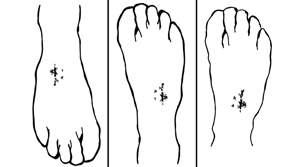
Faith embodied: a tattooed individual from medieval Ghazali
-
- Article
-
- You have access
- Open access
- HTML
- Export citation
Pre-breeding highlights of intraspecific polymorphism and genetic estimates of seed traits of African yam bean (Sphenostylis stenocarpa Hochst Ex. A. Rich.) Harms breeding lines
-
- Journal:
- Plant Genetic Resources / Volume 23 / Issue 2 / April 2025
- Published online by Cambridge University Press:
- 14 November 2024, pp. 120-128
-
- Article
-
- You have access
- Open access
- HTML
- Export citation
Clinical decision support in the electronic health record: a primer for antimicrobial stewards and infection preventionists: work smarter so end users don’t work harder
-
- Journal:
- Antimicrobial Stewardship & Healthcare Epidemiology / Volume 4 / Issue 1 / 2024
- Published online by Cambridge University Press:
- 14 November 2024, e204
-
- Article
-
- You have access
- Open access
- HTML
- Export citation
Italian parties and the European Union's response to the Russian invasion of Ukraine: A qualitative content analysis
-
- Journal:
- Italian Political Science Review / Rivista Italiana di Scienza Politica / Volume 54 / Issue 3 / November 2024
- Published online by Cambridge University Press:
- 14 November 2024, pp. 223-239
-
- Article
-
- You have access
- Open access
- HTML
- Export citation
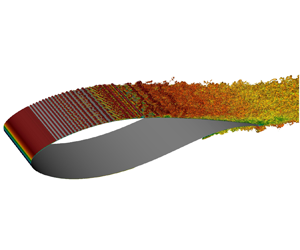
Transition to turbulence on a rotating wind turbine blade at $Re_c=3 \times 10^5$
-
- Journal:
- Journal of Fluid Mechanics / Volume 999 / 25 November 2024
- Published online by Cambridge University Press:
- 14 November 2024, A54
-
- Article
-
- You have access
- Open access
- HTML
- Export citation
-
The boundary-layer stability on a section of a rotating wind turbine blade with an FFA-W3 series aerofoil at a chord Reynolds number of $3 \times 10^5$, with varying rotation and radii, is studied with direct numerical simulations and linear stability analyses. Low rotation does not significantly affect transition in the outboard blade region. The relative insensitivity to rotation is due to a laminar separation bubble near the leading edge, spanwise-deformed by a primary self-excited instability, promoting the secondary absolute instability of the Kelvin–Helmholtz (KH) vortices and rapid transition. Moderate increases in rotation, or moving inboard, stabilise the flow by accelerating the attached boundary layer and possibly inducing competition between cross-flow and KH modes. This delays separation and transition. Initially, for high rotation rates or radial locations close to the hub, transition is delayed. Nevertheless, strong stationary and travelling cross-flow modes are eventually triggered, spanwise modulating the KH rolls and shifting the transition line close to the leading edge. Cross-flow velocities as high as $56\,\%$ of the free stream velocity directed towards the blade tip are reached at the transition location. For radial locations farther from the hub, the effective angle of attack is decreased, and cross-flow transition occurs at lower rotation rates. The advance or delay of the transition line compared with a non-rotating configuration depends on the competing rotation effects of stabilising the attached boundary layer and triggering cross-flow modes in the separation flow region.


The All-Affected Principle
-
-
- Book:
- Empowering Affected Interests
- Published online:
- 14 November 2024
- Print publication:
- 14 November 2024, pp 1-18
-
- Chapter
-
- You have access
- Open access
- HTML
- Export citation
