To save content items to your account,
please confirm that you agree to abide by our usage policies.
If this is the first time you use this feature, you will be asked to authorise Cambridge Core to connect with your account.
Find out more about saving content to .
To save content items to your Kindle, first ensure no-reply@cambridge.org
is added to your Approved Personal Document E-mail List under your Personal Document Settings
on the Manage Your Content and Devices page of your Amazon account. Then enter the ‘name’ part
of your Kindle email address below.
Find out more about saving to your Kindle.
Note you can select to save to either the @free.kindle.com or @kindle.com variations.
‘@free.kindle.com’ emails are free but can only be saved to your device when it is connected to wi-fi.
‘@kindle.com’ emails can be delivered even when you are not connected to wi-fi, but note that service fees apply.
The “All Affected Interests Principle” (AAIP) and the related “All Subjected Principle” (ASP) articulate principles of political legitimacy that can serve as potent instruments for evaluating the legitimacy of non-state institutional orders. However, while both are useful for evaluating the legitimacy of already-existing institutional orders, many of most important democratic legitimacy failures of our age arise not only from the undemocratic character of already-constituted orders but also from the fact that in many key domains we lack any institutionalized capacity to address the urgent collective action problems we face. How can such institutions be established in a democratically legitimate way, as an exercise of democratic collective agency? The chapter takes a historicizing turn, arguing that AAIP and ASP creatively retrieve and reconstruct old ideas in the history of democratic thought, liberating them from the presupposition that they can only be actualized within the territorial boundaries of the state. It then argues that we can reconstruct the concept of constituent power as a form of democratic agency to show how democratically legitimate sites of binding collective decision beyond the state can come into being.
Over recent decades, the commercial ultra-processed food industry has grown, making snacks high in energy, added sugar, saturated fat and sodium affordable and accessible to consumers. Dietary patterns high in ultra-processed snacks are concerning as this can result in negative health outcomes. This study aims to provide insight into available snack products in South African supermarkets, and the marketing thereof, which can be used to support policy development aimed at improving the healthfulness of the food supply and consumption patterns.
Design:
This was an observational cross-sectional, mixed-method study.
Setting:
Secondary data from six major supermarket chains (eight stores) in three different suburbs in Cape Town, South Africa was analysed to evaluate the nutritional composition of snack products (n 3837). The same eight supermarkets were revisited to obtain information on marketing via an observational checklist. Qualitative interviews were also conducted with store managers.
Results:
Majority (89 %) of the products assessed either contained non-sugar sweeteners or were high in sugar, saturated fat or sodium. These snack items that are high in nutrients of concern to limit were available at checkout areas in all stores and were found in high-traffic areas, and several in-store promotional strategies such as branded displays, special offers and combo-deals were commonly found.
Conclusion:
The current South African supermarket environment encourages consumers to purchase unhealthy snacks. Most snacks assessed in this study cannot be recommended for regular consumption due to the nutritional composition being high in nutrients linked to poor health outcomes. There is a need for regulation of the in-store marketing of unhealthy snacks in South Africa. Retail settings are potential intervention points for limiting exposure to these unhealthy products.
Commonly, quantitative gait analysis post-stroke is performed in fully equipped laboratories housing costly technologies for quantitative evaluation of a patient’s movement capacity. Combining such technologies with an electromyography (EMG)-driven musculoskeletal model can estimate muscle force properties non-invasively, offering clinicians insights into motor impairment mechanisms. However, lab-constrained areas and time-demanding sensor setup and data processing limit the practicality of these technologies in routine clinical care. We presented wearable technology featuring a multi-channel EMG-sensorized garment and an automated muscle localization technique. This allows unsupervised computation of muscle-specific activations, combined with five inertial measurement units (IMUs) for assessing joint kinematics and kinetics during various walking speeds. Finally, the wearable system was combined with a person-specific EMG-driven musculoskeletal model (referred to as human digital twins), enabling the quantitative assessment of movement capacity at a muscle-tendon level. This human digital twin facilitates the estimation of ankle dorsi-plantar flexion torque resulting from individual muscle-tendon forces. Results demonstrate the wearable technology’s capability to extract joint kinematics and kinetics. When combined with EMG signals to drive a musculoskeletal model, it yields reasonable estimates of ankle dorsi-plantar flexion torques (R2 = 0.65 ± 0.21) across different walking speeds for post-stroke individuals. Notably, EMG signals revealing an individual’s control strategy compensate for inaccuracies in IMU-derived kinetics and kinematics when input into a musculoskeletal model. Our proposed wearable technology holds promise for estimating muscle kinetics and resulting joint torque in time-limited and space-constrained environments. It represents a crucial step toward translating human movement biomechanics outside of controlled lab environments for effective motor impairment monitoring.
Our systematic review and meta-analysis of 40 studies (n = 3,905,559) identified gastric acid suppressants, recent hospitalization, antibiotic exposure, and certain comorbidities as independent predictors of healthcare-associated Clostridioides difficile infection (HA-CDI) among adult inpatients. Targeted antibiotic stewardship and judicious use of gastric acid suppressants can reduce the incidence of HA-CDI.
To improve transitions in care, a new patient navigation (PN) program was introduced to support older adults with complex care needs transition from hospital to home. The patient navigator is a community social worker embedded in the hospital’s care teams. A cohort observational design was used to conduct the study by analysing the patient navigator’s clinical notes and hospital’s administrative data to describe the characteristics of patients, scope of the patient navigator’s activities, and patient outcomes. Ninety patients were assigned to the patient navigator’s caseload (November 2019–November 2021) in which the average age was 78.9 (range 55–95). The most frequent PN intervention types were referrals to community services (66%, n = 59) and discharge planning (61%, n = 55). The patient navigator supported 66% patients (n = 59) in returning home and provided follow-up care for 74 days (average). This study provides important insights into the patient navigator’s role to guide decision makers in implementing PN programs for older adults in a hospital setting.
I argue that in some circumstances the capacity for voluntary agreement making can be an adequate realization of the All-Affected principle. The basic idea is that one can, with this capacity, attempt to advance one’s interests by entering into voluntary agreements with others. The All-Affected Principle can be satisfied if persons are able to enter into agreements with those whose actions affect them or with those who can advance their interests. Persons should have an equal say or a say proportionate to their legitimate interests and this can be realized in voluntary agreement making, or so I shall argue. I draw an analogy between democratic decision making traditionally conceived and voluntary agreement making. This helps us see how we can define appropriate procedural norms for the evaluation of processes of voluntary agreement making in both market and international contexts. I argue that fair voluntary agreement in markets and international decision-making is a realization of the same principle as fair collective decision-making in democracy only one is for decentralized decision making and the other is for centralized decision making.
This chapter critiques the All-Affected Principle (AAP) for its inattention to structural power relations. Illustrating with the case of school desegregation in the American metropolis, it argues that people are significantly affected not only by decisions, but also by nondecisions, doxic norms, and positioning in systemic relations of domination. It makes the case for reformulating the AAP in a way that broadens it to focus on people’s social capacity to shape the power relations that delimit their fields of possible action.
The development of multilevel regression and poststratification (MRP) has allowed scholars to more accurately estimate subnational public opinion using national polls. However, MRP generally recovers less accurate estimates from polls whose respondents are selected using cluster sampling – also called area-probability sampling. This is in part because cluster-sampled polls rely on a complex form of random sampling focused on national representativeness that may result in small or unrepresentative subsamples in subnational geographies. This has limited MRP’s usefulness in subnational opinion estimation in several contexts, including historical polls in the US, where cluster-sampling was common into the 1980s, and large academic studies in many countries today. In this paper, I propose two approaches to improve estimation from MRP with cluster-sampled polls. The first is pooling data from multiple surveys to produce a larger sample of clusters. The second is clustered MRP (CMRP), which extends MRP by modeling opinion using the geographic information included in a survey’s cluster-sampling procedure. Using simulations, I show that both methods improve upon traditional MRP, and I validate them using historical polls in the US
Previous studies have shown that nurses’ spiritual care competence is related to characteristics of personal spirituality, training adequacy, and comfort, confidence, and frequency of provision of spiritual care. However, these studies assumed that all participants understood spiritual care in the same way, and used self-ratings of spiritual care competence, which are problematic. Our previous study found that spiritual care was understood in 4 qualitatively different ways that can be arranged in order of competence. This study aimed to re-examine the relationships between nurse characteristics and spiritual care competence, using spiritual care understanding as a proxy for competence.
Methods
Data was collected from a convenience sample of nurses who completed an anonymous, online survey. The survey provided qualitative data about what spiritual care means for them. The survey also provided quantitative data regarding nurse characteristics. This study created sub-groups of nurses based on their understanding of spiritual care, and used the quantitative data to construct a profile of nurse characteristics for each sub-group. Kruskal–Wallis statistical tests determined whether nurse characteristics differed across the 4 sub-groups.
Results
Spiritual care competence was not related to confidence or comfort in providing spiritual care. Relationships with spirituality, training adequacy, and frequency of provision of spiritual care were not linear; i.e., higher competence did not always correspond with higher scores of these characteristics.
Significance of results
The results raise concerns about the construct validity of using comfort and confidence as estimates of spiritual care competence. That the relationships between competence and spirituality, training adequacy, and frequency of spiritual care provision was not as linear as portrayed in extant literature, suggests that outcomes of training may depend on the type of spiritual care understanding subscribed to by training participants. The findings offer insights about how nurses could achieve high levels of spiritual care performance.
Spinal CSF leak can cause disabling headaches and neurological symptoms. Lack of awareness, diagnostic delay and treatment inconsistencies affect the quality of CSF leak care globally. This is the first study aiming to identify and assess these challenges in Canada.
Methods:
A cross-sectional online survey of Canadian patients with spinal CSF leak was designed in collaboration with Spinal CSF Leak Canada, including questions on demographics, headache condition, investigations, treatments, quality of life, financial consequences and out-of-country care.
Results:
The survey captured 103 respondents with confirmed spinal CSF leak diagnosis, of whom 56% were still suffering. The majority were female (80%), most being highly educated, with a mean age of 41.8 (SD: 10.37) years at the time of diagnosis. Inconsistencies in care resulted in variable durations for obtaining diagnosis and treatment. The majority of respondents (88%) had seen multiple physicians, and only 50% had seen a CSF leak specialist. Invasive imaging was not performed in 43%. CSF leak relapse after initial successful treatment occurred frequently (43%). The incidence of rebound intracranial hypertension was high (52.5%), and the treatment was difficult to access (77%). Out-of-country care was common (28%), and the impact on financial health was omnipresent (81.5%).
Conclusion:
The survey demonstrates significant gaps in spinal CSF leak care in Canada, similar to global observations. Lack of awareness and access, delayed care, and inconsistencies in investigations and management are common. Spinal CSF leak significantly impacts patients’ physical, mental and financial well-being. Increased awareness, referral pathways and standardized treatment algorithms are key factors in optimizing patient care in Canada.
This study assessed the potential of using dichlobenil to manage hair fescue in lowbush blueberry crops when targeted or broadcast-applied (7,000 g ai ha−1) as justification for developing a precision-targeted applicator. A randomized complete block design was used to assess both application methods, and results were compared with industry-standard propanamide (2,240 g ai ha−1). Targeted and broadcast-applied dichlobenil in fall 2020 significantly reduced average total tuft density in the nonbearing year (2021) by 75% and 67%, respectively, and in the bearing year (2022) by 61% and 59%, respectively. Broadcast pronamide applications in fall 2020 significantly reduced total tuft density by 84% in the nonbearing year (2021) and 81% in the bearing year (2022). These reductions in total tuft density resulted in average lowbush blueberry yields of 416, 557, 573, and 617 g m−2 for the control, pronamide applications, and targeted and broadcast-applied dichlobenil, respectively. Increases in yield were not significant, though the large variation within the sample is the probable cause. The similarities between targeted and broadcast-applied treatments demonstrate the potential of using targeted dichlobenil. Given the high product cost of dichlobenil at Can$1,873 ha−1, hair fescue’s non-uniform distribution in lowbush blueberry fields and the lowbush blueberry industry’s overreliance on pronamide, targeted application of dichlobenil has significant potential. This work justifies the development of a mechanized precision-targeted applicator for use in lowbush blueberry cropping systems.
In Georgia plasticulture vegetable production, a single installation of plastic mulch is used for up to five cropping cycles over an 18-mo period. Preplant applications of glyphosate and glufosinate ensure fields are weed-free before transplanting, but recent data suggest that residual activity of these herbicides may pose a risk to transplanted vegetables. Glyphosate and glufosinate were applied preplant in combination with three different planting configurations, including 1) a new plant hole into new mulch, 2) a preexisting plant hole, 3) or a new plant hole spaced 15 cm from a preexisting plant hole (adjacent). Following herbicide application, overhead irrigation was used to remove residues from the mulch before punching transplanting holes for tomato, cucumber, or squash. Visible injury; widths; biomass; and yield of tomato, cucumber, or squash were not influenced by herbicide in the new mulch or adjacent planting configurations. When glyphosate was applied at 5.0 kg ae ha−1 and the new crop was planted into preexisting holes, tomato was injured by 45%, with reduced heights, biomass, and yields; at 2.5 kg ae ha−1 injury of 8% and a biomass reduction was observed. Cucumber and squash were injured by 23% to 32% by glyphosate at 5.0 kg ae ha−1, with reductions in growth and early-season yield; lower rates did not influence crop growth or production when the crop was placed into a preexisting plant hole. Glufosinate applied at the same rates did not affect tomato growth or yield when planted into preexisting plant holes. Cucumber, when planted into preexisting plant holes, was injured by 43% to 75% from glufosinate, with reductions in height and biomass, and yield losses of 1.3 to 2.6 kg ai ha−1; similar results from glufosinate were observed in squash. In multi-crop plasticulture production, growers should ensure vegetable transplants are placed a minimum of 15 cm away from soil exposed to these herbicides.
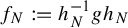
Let $f,g$ be $C^2$ expanding maps on the circle which are topologically conjugate. We assume that the derivatives of f and g at corresponding periodic points coincide for some large period N. We show that f and g are ‘approximately smoothly conjugate.’ Namely, we construct a $C^2$ conjugacy $h_N$ such that $h_N$ is exponentially close to h in the $C^0$ topology, and $f_N:=h_N^{-1}gh_N$ is exponentially close to f in the $C^1$ topology. Our main tool is a uniform effective version of Bowen’s equidistribution of weighted periodic orbits to the equilibrium state.
Unlike in solids, heat transfer in fluids can be greatly enhanced due to the presence of convection. Under gravity, an unevenly distributed temperature field results in differences in buoyancy, driving fluid motion that is seen in Rayleigh–Bénard convection (RBC). In RBC, the overall heat flux is found to have a power-law dependence on the imposed temperature difference, with enhanced heat transfer much beyond thermal conduction. In a bounded domain of fluid such as a cube, how RBC responds to thermal perturbations from the vertical sidewall is not clear. Will sidewall heating or cooling modify flow circulation and heat transfer? We address these questions experimentally by adding heat to one side of the RBC. Through careful flow, temperature and heat flux measurements, the effects of adding side heating to RBC are examined and analysed, where a further enhancement of flow circulation and heat transfer is observed. Our results also point to a direct and simple control of the classical RBC system, allowing further manipulation and control of thermal convection through sidewall conditions.
Early mild traumatic brain injury (mTBI or concussion sustained between 0 and 5 years old) can lead to post-concussive symptoms, behavioral changes, and cognitive difficulties. Although school-age children (6–17 years old) experience similar consequences, severe neuropsychological deficits are not common, and the majority have no persisting symptoms after one month. Thus, there may be value in focusing on what characterizes optimal functioning (or wellness) after mTBI, but this has not been explored in young children. This study documents the evolution and predictors of optimal functioning after early mTBI.
Method:
Participants were 190 children aged 18 – 60 months with mTBI (n = 69), orthopedic injury (OI; n = 50), or typical development (TDC; n = 71). Optimal functioning was defined as: (1) no clinically significant behavioral problems; (2) no cognitive difficulties; (3) no persisting post-concussive symptoms; (4) average quality of life or better. Predictors related to sociodemographic, injury, child, and caregiver characteristics included number of acute symptoms, child sex, age, temperament, maternal education, parent-child attachment and interaction quality, and parenting stress.
Results:
Fewer children with mTBI had optimal functioning over 6 and 18-months post-injury compared to those with OI and TDC. Higher parent-child interaction quality and lower child negative affectivity temperament independently predicted optimal functioning.
Conclusion:
Children who sustain early mTBI are less likely to exhibit optimal functioning than their peers in the long-term. Parent-child interaction quality could be a potential intervention target for promoting optimal function.
What are the legacies of the war on terror? This paper seeks to answer this question through an analysis of vernacular uses of terrorism discourse in political commentary on the Ukraine war. The paper describes how the set of tropes, ideas, and recurrent metaphors that constituted the historical backbone of narratives about terrorism before and after 9/11 is now being mobilised in the context of interstate conflict. Instead of rejecting such deployments of terrorism as lay misappropriations of an otherwise-objective concept, we argue that they evidence the aesthetic force of terrorism discourse in organising our ethical relationship to different experiences of (in)human suffering. The paper advances the concept of terrorism as an aesthetic signifier, to provide two contributions to terrorism studies. First, we argue that narrative approaches to the study of political violence in IR can only move forward if they bypass the field’s traditional framing of terrorism – which we dub the (il)legitimacy trap – and push the boundaries of critique beyond the idea of terrorism as unacceptable violence. Second, we contend that IR scholars must situate the signifiers orbiting the discourse on terror within wider racialised aesthetic regimes dictating the visibility and invisibility of collective suffering. With these two moves, we hope to bring more attention to the question of victimisation in terrorism studies, a field historically focused on perpetrators and the conditions of perpetration of violence.
In 2022, trials were carried out in New Jersey and New York to assess the efficacy of weed management and the response of two cole crops to various herbicide combinations and rates. The experiments involved the application of S-metolachlor and microencapsulated (ME) acetochlor either alone or combined with oxyfluorfen. Different application timings of oxyfluorfen were tested in greenhouse and field studies. Results from the greenhouse trials show that substituting S–metolachlor with ME acetochlor in over-the-top applied mixes with oxyfluorfen caused 15% to 22% less crop injury and increased seedling biomass by 33%. In field studies, nontreated plots exhibited significant weed growth, reaching up to 71% coverage 28 d after transplanting (DATr), whereas herbicide-treated plots exhibited weed cover at or below 10% by 28 DATr. Mixtures or sequential applications of oxyfluorfen and chloroacetamides achieved excellent control (≥99%) of the weed species complex compared to single applications of oxyfluorfen or chloroacetamides. However, applying both oxyfluorfen and a chloroacetamide posttransplanting, either as a tank mixture or in sequence, resulted in ≥19% injury. Despite the effective weed control achieved with herbicide treatments, mixing herbicides posttransplanting reduced relative commercial yield by 46% to 94% compared to oxyfluorfen applied alone or followed by chloroacetamides. The findings from these experiments will inform regional crop safety guidelines and support potential modifications to oxyfluorfen labels regarding sequential applications with chloroacetamides.
Glacier fragmentation involves the detachment of tributary glaciers from the main glacier trunk and their subsequent fragmentation into smaller units. This reconfiguration, in turn, can lead to a redistribution of stresses and strain rates affecting the dynamics of the glacier. In our study, we examined changes in the frontal position and surface velocity of Bertacchi and Upsala Glaciers using Sentinel-1 derived velocity fields and orthoimages, covering the period between January 2015 and January 2023. Comparison of these results with bed topography and ice thickness datasets indicates that the Bertacchi tributary glacier acted as a strong lateral pinning point for the main flow unit from 2015 to 2018. This slowed its retreat rate to −6 ± 2.5 ma−1 despite the high surface velocity (1825 ± 11 ma−1) and buoyancy conditions. However, the loss of this pinning point in early 2019 led to accelerated retreat rates (−325 ± 2.5 ma−1) of the western tongue of Upsala Glacier, even though it retreated over a shallow bed and the surface velocity was 45% lower than previous. This retreat was synchronous with the advance of Bertacchi terminus (15 ± 2.5 ma−1), suggesting a reduction in the resistive stresses experienced by this glacier following unpinning.
This article presents a novel sense in which theoretical structure has been preserved across the transition from classical to quantum physics. I import mathematical tools from category theory that have been used for structural comparisons in the context of theoretical equivalence and apply these tools to new situations involving theory change. The structural preservation takes the form of a categorical equivalence between categories of models of classical and quantum physics. I situate the significance of this structural preservation in terms of prospects for theory construction in quantum physics.
An array of information about the Antarctic ice sheet can be extracted from ice-sheet internal architecture imaged by airborne ice-penetrating radar surveys. We identify, trace and date three key internal reflection horizons (IRHs) across multiple radar surveys from South Pole to Dome A, East Antarctica. Ages of ~38 ± 2.2, ~90 ± 3.6 and ~162 ± 6.7 ka are assigned to the three IRHs, with verification of the upper IRH age from the South Pole ice core. The resultant englacial stratigraphy is used to identify the locations of the oldest ice, specifically in the upper Byrd Glacier catchment and the Gamburtsev Subglacial Mountains. The distinct glaciological conditions of the Gamburtsev Mountains, including slower ice flow, low geothermal heat flux and frozen base, make it the more likely to host the oldest ice. We also observe a distinct drawdown of IRH geometry around South Pole, indicative of melting from enhanced geothermal heat flux or the removal of deeper, older ice under a previous faster ice flow regime. Our traced IRHs underpin the wider objective to develop a continental-scale database of IRHs which will constrain and validate future ice-sheet modelling and the history of the Antarctic ice sheet.