To save content items to your account,
please confirm that you agree to abide by our usage policies.
If this is the first time you use this feature, you will be asked to authorise Cambridge Core to connect with your account.
Find out more about saving content to .
To save content items to your Kindle, first ensure no-reply@cambridge.org
is added to your Approved Personal Document E-mail List under your Personal Document Settings
on the Manage Your Content and Devices page of your Amazon account. Then enter the ‘name’ part
of your Kindle email address below.
Find out more about saving to your Kindle.
Note you can select to save to either the @free.kindle.com or @kindle.com variations.
‘@free.kindle.com’ emails are free but can only be saved to your device when it is connected to wi-fi.
‘@kindle.com’ emails can be delivered even when you are not connected to wi-fi, but note that service fees apply.
Trifludimoxazin is a new herbicide that inhibits protoporphyrinogen oxidase (PPO) and is targeted for commercial market introduction in North America, South America, and Asia. It will be available both as a stand-alone product and in a 1:2 mixture with saflufenacil. The herbicide is intended for use in preplant burndown and preemergence applications in cereal, corn (Zea mays L.), soybean [Glycine max (L.) Merr.], and pulse crops to control a variety of annual broadleaf and grass weed species. Additionally, it is intended to be used in tree crops, oil palm (Elaeis guineensis Jacq.), and non-crop areas. In this study, we meticulously evaluated the performance and effectiveness of both the stand-alone herbicide and the innovative mixture concept in combating prevalent weeds commonly encountered in corn and soybean fields. Our findings revealed that both products exhibited exceptional efficacy, significantly reducing the presence of these troublesome weeds. Furthermore, the mixture concept not only demonstrated commendable soil mobility but also showcased impressive residual activity, positioning it as a powerful tool for sustainable weed control. These promising effects are further substantiated by our comprehensive adsorption–distribution–metabolism–extraction (ADME) studies, which provide insight into the behavior and longevity of the herbicides in the agricultural ecosystem.
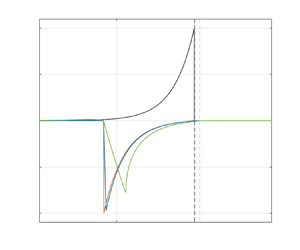
The reflection of a shock pulse at a liquid–gas interface occurs in many applications, from lithotripsy to underwater explosions and additive manufacturing. In linear theory, reflection and transmission at an interface depend only on the impedance difference, but this does not hold for a nonlinear pulse. This work develops an analytical framework for computing the reflection and transmission coefficients for an impulsive shock wave at a liquid–gas interface. The problem is treated analytically by considering idealised pulses and solving a series of consecutive Riemann problems. These correspond to the initial interaction with the interface and important subsequent wave interactions that enable a complete description of the process to be obtained. Comparisons with numerical and existing analytical approaches are made for the case of a water–air interface. In the acoustic limit, the method produces results identical to those of linear acoustic theory. As the pulse strength increases, the proposed method agrees well with numerical simulation results, whereas existing analytical methods that consider only the interface fail. We detail how a reflecting pulse can put water into tension without any incident negative pressure. It is further shown that the magnitude of the reflection coefficient decreases with increasing incident shock pressure, and the reflected pulse widens. Reflections of pulses with positive and negative pressures temporarily create negative pressure regions with greater magnitude than the incident pulse. Finally, we consider non-idealised waves. Comparisons with simulations show that the reflection characteristics can be explained qualitatively using the analytical method, and the reflection coefficients are predicted accurately.
Turbulent convection in the interiors of the Sun and the Earth occurs at high Rayleigh numbers $Ra$, low Prandtl numbers $Pr$, and different levels of rotation rates. To understand the combined effects better, we study rotating turbulent convection for $Pr = 0.021$ (for which some laboratory data corresponding to liquid metals are available), and varying Rossby numbers $Ro$, using direct numerical simulations in a slender cylinder of aspect ratio 0.1; this confinement allows us to attain high enough Rayleigh numbers. We are motivated by the earlier finding in the absence of rotation that heat transport at high enough $Ra$ is similar between confined and extended domains. We make comparisons with higher aspect ratio data where possible. We study the effects of rotation on the global transport of heat and momentum as well as flow structures (a) for increasing rotation at a few fixed values of $Ra$, and (b) for increasing $Ra$ (up to $10^{10}$) at the fixed, low Ekman number $1.45 \times 10^{-6}$. We compare the results with those from unity $Pr$ simulations for the same range of $Ra$ and $Ro$, and with the non-rotating case over the same range of $Ra$ and low $Pr$. We find that the effects of rotation diminish with increasing $Ra$. These results and comparison studies suggest that for high enough $Ra$, rotation alters convective flows in a similar manner for small and large aspect ratios, so useful insights on the effects of high thermal forcing on convection can be obtained by considering slender domains.
This study examined the validity of a visual inspection time (IT) task as a measure of processing speed (PS) in a sample of children with and without cerebral palsy (CP). IT tasks measure visualization speed without focusing on the motor response time to indicate decision making about the properties of those stimuli.
Methods:
Participants were 113 children ages 8–16, including 45 with congenital CP, and 68 typically developing peers. Measures were a standard visual IT task that required dual key responding and a modified version using an assistive technology button with response option scanning. Performance on these measures was examined against traditional Wechsler PS measures (Coding, Symbol Search).
Results:
IT performance shared considerable variance with traditional paper-pencil PS measures for the group with CP, but not necessarily in the typically developing group. Concurrent validity was found for both IT task versions with traditional PS measures in the group with CP. IT classification accuracy for lowered PS showed modest sensitivity and good specificity particularly for the modified IT task.
Conclusions:
As measures of PS in children with CP who are unable to validly participate in traditional PS tasks, IT tasks demonstrate adequate concurrent validity and may serve as a beneficial alternative measure of PS in this population.
Human–wildlife conflict is a critical and complex challenge in wildlife conservation. It arises when humans and wildlife interact and one or both parties suffer negative consequences from the interaction. This research assessed the extent of damage resulting from human–African buffalo Syncerus caffer conflict and explored mitigation strategies. We used a semi-structured questionnaire-based survey of 131 households randomly selected in Kambi ya Simba, Oldeani and Tloma villages surrounding Ngorongoro Conservation Area, Tanzania. Our results revealed that resource competition was the main factor inducing human–African buffalo conflict. The impacts reported most frequently were crop damage (especially during the wet seasons) and human casualties. Crops that were most often damaged included maize, beans, wheat, peas and coffee. To minimize buffalo crop depredation, farmers currently use traditional mitigation approaches such as guarding farms, lighting fires, using torchlight and vocal and other auditory deterrents. In addition, a local coffee estate installed electrified fencing around its plantation. Our findings demonstrate the impacts of human–African buffalo conflict on local communities and the importance of continuing human–African buffalo conflict monitoring to improve conservation action and increase the participation of the local community in conservation activities. To minimize human–African buffalo conflict, we recommend conservation strategies that improve the natural habitat of the African buffalo. Most importantly, providing communities affected by human–African buffalo conflict with modern and more effective mitigation methods, paired with increased community awareness of the use of these methods, could result in significant reductions in the human cost of human–African buffalo conflict.
New technologies in grain sorghum allow for the use of multiple acetyl CoA carboxylase- (ACCase) or acetolactate synthase- (ALS) inhibiting herbicides for johnsongrass control. With the growing issue of herbicide resistance, producers need to understand which herbicides will successfully control johnsongrass accessions. To determine the efficacy of herbicides recently registered or ones with potential to become available for use in grain sorghum, johnsongrass seeds were collected from 2017 to 2021 in Arkansas, Kansas, Texas, and Oklahoma and were screened for sensitivity to fluazifop, quizalofop, nicosulfuron, and imazamox. Additionally, glyphosate sensitivity was evaluated because of its use before planting or postharvest. Quizalofop resulted in 100% mortality of all johnsongrass accessions. Of the johnsongrass accessions evaluated, 89% were completely controlled with glyphosate. The ALS inhibitors nicosulfuron and imazamox resulted in 100% mortality of all Oklahoma accessions, but failures occurred on samples from other states. One accession from Kansas, 12 from Texas, and eight from Arkansas were found to have reduced sensitivity to nicosulfuron and imazamox. If producers plan to plant grain sorghum in areas with johnsongrass populations, an ACCase-inhibitor herbicide will most likely provide effective control. Imazamox and nicosulfuron, in conjunction with the appropriate trait, can be utilized in areas with sensitive johnsongrass populations or where other sensitive grass species are present.
Jostedalsbreen in western Norway is the mainland Europe's largest ice cap and a complex system of more than 80 glaciers. While observational records indicate a significant sensitivity to climate fluctuations, knowledge about ice-cap wide spatiotemporal mass changes and their drivers remain sparse. Here, we quantify the surface mass balance (SMB) of Jostedalsbreen from 1960 to 2020 using a temperature-index model within a Bayesian framework. We assimilate seasonal glaciological SMB to constrain accumulation and ablation, and geodetic mass balance to adjust model parameters for each glacier individually. Overall, we find that Jostedalsbreen has experienced a small mass loss of −0.07 m w.e. a−1 (−0.21 to +0.08 m w.e. a−1), but with substantial spatiotemporal variability. Our results suggest that winter SMB variations were the main control on annual SMB between 1960 and 2000, while increasingly negative summer SMB is responsible for substantial mass losses after 2000. Spatial variations in SMB between glaciers or regions of the ice cap are likely associated with local topography and its effect on orographic precipitation. We advocate for models to leverage the growing availability of observational resources to improve SMB predictions. We demonstrate an approach that incorporates complementary datasets, while addressing their inherent uncertainties, to constrain models and provide robust estimates of spatiotemporal SMB and associated uncertainties.
With the emerging developments in millimeter-wave/5G technologies, the potential for wireless Internet of things devices to achieve widespread sensing, precise localization, and high data-rate communication systems becomes increasingly viable. The surge in interest surrounding virtual reality (VR) and augmented reality (AR) technologies is attributed to the vast array of applications they enable, ranging from surgical training to motion capture and daily interactions in VR spaces. To further elevate the user experience, and real-time and accurate orientation detection of the user, the authors proposes the utilization of a frequency-modulated continuous-wave (FMCW) radar system coupled with an ultra-low-power, sticker-like millimeter-wave identification (mmID). The mmID features four backscattering elements, multiplexed in amplitude, frequency, and spatial domains. This design utilizes the training of a supervised learning classification convolutional neural network, enabling accurate real-time three-axis orientation detection of the user. The proposed orientation detection system exhibits exceptional performance, achieving a noteworthy accuracy of 90.58% over three axes at a distance of 8 m. This high accuracy underscores the precision of the orientation detection system, particularly tailored for medium-range VR/AR applications. The integration of the FMCW-based mmID system with machine learning proves to be a promising advancement, contributing to the seamless and immersive interaction within virtual and augmented environments.
Rebel Angel Theodicy – often called Satan Theodicy – is the thesis that horrendous evils are directly or indirectly caused by angels who disobeyed God. In this article, I defend it, developing Gary Emberger’s suggestion that they influenced the course of evolution. After defending speculative theodicy, I expound Rebel Angel Theodicy and reply to seven objections that explicate the widespread judgement of implausibility:
1. That the existence of angels is metaphysically problematic.
2. That God has no good reason to create angels.
3. That angels have no power to harm human beings.
4. That God, foreknowing the possibility of rebellion, would not delegate to angels the power to guide evolution.
5. That even if there was a good reason for God to delegate this power to angels it is metaphysically impossible for an omnipotent God to do so.
6. That God, knowing of the angels’ rebellion, would subsequently intervene to put evolution back onto the preferred divine plan.
7. That there is no plausible motive for angels to rebel.
I argue that relaxed moral realists are not ontologically committed to moral properties. Regardless of whether we tie ontological commitment to quantification, entailment, or truthmaking, if moral properties are not explanatory (as relaxed realists claim), then moral truths do not require moral properties. This permits a nominalist form of relaxed realism that is both simpler and more ecumenical than extant formulations. The possibility of such a position places pressure on the ontology of competing views—and helps focus attention on the critical and underexplored explanatory element of the relaxed realist’s program.
The continued development of herbicide-resistant weeds, such as Palmer amaranth, represents a growing concern across the United States Cotton Belt. To mitigate this issue, BASF Corp. developed Axant™ Flex cotton, the first quadruple-stacked herbicide resistance germplasm to improve the control of troublesome weed species in cotton. Field studies were conducted in 2022 and 2023 at the Texas Tech University Research Farm near New Deal, TX, to evaluate the response of Axant Flex cotton to topramezone applied alone or in combinations when applied to three-leaf cotton (early-postemergence or EPOST) or to seven-leaf cotton (mid-postemergence or MPOST). No difference in cotton stand was observed between isoxaflutole or prometryn preemergence treatments compared to the nontreated control. In 2022, no EPOST treatment caused greater than 6% crop response at 7 and 14 d after application (DAA). When treatments were made to seven-leaf cotton, crop response did not exceed 18% at 7 and 14 DAA. In 2023, crop response was ≤2% at 28 DAA regardless of application timing. No differences in lint yield were observed following any herbicide treatment when compared to the nontreated control in either year. Additionally, fiber length and strength were not adversely affected by treatments containing topramezone EPOST or MPOST in 2022 and 2023. These results support the potential use of topramezone in Axant Flex cotton to help manage troublesome weeds without detrimental effects on yield and fiber quality.
Italian ryegrass control is one of the most significant limitations in wheat production in the United States today. Resistance to Herbicide Resistance Action Committee (HRAC)/Weed Science Society of America (WSSA) Groups 1, 2, and 9 in Arkansas have further complicated postemergence control, whereas residual herbicides still show effective weed control. One problem is the potential of HRAC/WSSA Group 15 herbicides to injure wheat when applied preemergence, indicating the need for a herbicide safener. A series of experiments were conducted in Fayetteville, AR, to evaluate crop tolerance and Italian ryegrass control using a capsule suspension (CS) formulation of S-metolachlor in conjunction with fenclorim-treated wheat. Experiments were conducted as a two-factor factorial with S-metolachlor applied at three rates (0.37, 0.74, and 1.12 kg ai ha–1) and a microencapsulated formulation of acetochlor at 1.05 kg ai ha–1, and three rates of a fenclorim seed treatment at 0, 0.5, and 2.0 g ai kg–1 of seed. Separate experiments utilized either a preemergence (PRE) or a delayed-preemergence (DPRE) application timing. In both experiments, S-metolachlor at 0.74 and 1.12 kg ai ha–1 provided 77% to 96% control of Italian ryegrass by preharvest, whereas acetochlor only provided 49% to 72% control. Visible wheat injury from PRE applications ranged from 7% to 49% for all treatments 21 d after treatment (DAT), with a reduction in injury when fenclorim-treated wheat was used for both the 0.74 and 1.12 kg ai ha–1 rate of S-metolachlor. In the DPRE experiments, wheat injury ranged from 5% to 16% 21 DAT with no noticeable safening from the presence of fenclorim at any herbicide rate. The results of these experiments indicate that a DPRE application using a CS formulation of S-metolachlor would be more favorable for producers to mitigate the potential for injury to wheat while providing Italian ryegrass control. Additionally, at the DPRE application timing, fenclorim is unnecessary for S-metolachlor to be safely applied at the rates evaluated.
We report two congenitally malformed hearts found at autopsy to have common arterial trunk and pulmonary atresia. Both exhibited usual atrial arrangement, along with concordant atrioventricular connections. In one case, the common arterial trunk arose predominantly from the right ventricle, while the other had a balanced commitment. In both, the atretic pulmonary trunk arose from the left posterolateral aspect of the common trunk. Confluent right and left pulmonary arteries, which were hypoplastic but patent, were present. On the inner aspect of the common trunk, there was a dimple immediately adjacent to the atretic segment of the pulmonary component identified externally. In one case, the fibrous pulmonary component had been accidentally cut during dissection. A solitary coronary artery was identified in both cases.
This paper investigates if there is an optimum design of loaded-line phase shifters with respect to phase shift/loss figure of merit (FOM) and linearity. The investigation was performed by comparing six loaded-line phase shifters that were implemented in printed circuit board (PCB)technology with shunt-loaded hyperabrupt varactor-diodes. It was demonstrated that the hyperabrupt varactor’s C-V characteristics must be modeled with high accuracy to predict the nonlinear behavior. A polynomial varactor model was employed and experimentally validated. To extend the range of investigated parameter values, the extracted model was scaled and evaluated further in a circuit simulator. The investigation reveals that for a given varactor-capacitance, the phase shift/loss FOM is improved if the varactor-capacitance is evenly distributed and the unit cell length is much shorter than a quarter wavelength. The study demonstrates that the phase shift/loss depends mainly on the distribution of varactor-capacitance and Q factor. The intermodulation (IM) distortion is primarily proportional to the total varactor-capacitance per unit cell. The study also revealed that an increase in the varactor’s Q factor results in higher IM. Therefore, it is a trade-off between low loss and low IM.
Epidemiological studies show that despite the episodic nature, the long-term trajectory of depression can be variable. This study evaluated the heterogeneity of 10-year trajectory of major depressive disorder (MDD) related service utilization and associated clinical characteristics among US Veterans with a first diagnosis after 9/11.
Methods
Using a cohort design, electronic health record data for 293,265 Operation Enduring Freedom and Iraqi Freedom (OEF/OIF) Veterans were extracted to identify those with MDD between 2001 and 2021 with a full preceding year of clinical data and 10 years following the diagnosis. Latent class growth analysis compared clinical characteristics associated with four depression trajectories. Across all Veterans Affairs (VA)hospitals, 25,307 Veterans met our inclusion criteria. Demographic and clinical information from medical records was extracted and used as predictors of depression 10-year trajectories.
Results
Among the study cohort (N = 25,307), 27.7% were characterized by brief contact, 41.7% were later re-entry, 17.6% were persistent contact and 12.9% were prolonged initial contact for depression related services. Compared to Veterans with trajectories showing brief contact, those with protracted treatment (persistent or prolonged initial contact) were more likely to be diagnosed with comorbid posttraumatic stress disorder (PTSD) and with MDD that was moderate to severe or recurrent.
Conclusions
Depression is associated with a range of treatment trajectories. The persistent and prolonged initial contact trajectories may have distinct characteristics and uniquely high resource utilization and disability income. We can anticipate that patients with comorbid PTSD may need longer-term care which has implications for brief models of care.
The formation of the civil militias (burgerwachten) in 1918 across a range of Dutch cities, in response to the threat of revolution, has received extremely limited attention in both Dutch and international historiography. They have never been studied in their own right, having been considered a largely local and politically irrelevant phenomenon. In fact this large voluntary organisation existed both locally and nationally, and recruited over 100,000 men and women, and had ties to state and fringe groups abroad. Reconstructing the formation and development of the militias, and analysing its character as a paramilitary and strikebreaking organisation, this article demonstrates that the militias were an important ideological formation. The militia institutionalised anti-Bolshevism and radical right paramilitarism in the Netherlands, and as such had a role to play in the counter-revolutionary network that was developed across Europe.
Herbicide-resistant Palmer amaranth is creating additional challenges for producers who choose to adopt a furrow-irrigated rice production system due to the absence of a sustained flood, enabling extended weed emergence. Fluridone has been shown to effectively control Palmer amaranth in cotton production systems and was recently registered for use in rice. Experiments were initiated in 2022 and 2023 1) to evaluate Palmer amaranth control and rice tolerance to preemergence- and postemergence-applied fluridone at 0.5× (84 g ai ha−1) and 1× (168 g ai ha−1) rates on a silt loam soil; and 2) assess the effect of various herbicide programs that contain fluridone on Palmer amaranth biomass, seed production, and rough rice grain yield. Preemergence applications of fluridone at a 1× rate in combination with clomazone resulted in 84% control of Palmer amaranth 21 d after treatment (DAT). Fluridone, in combination with clomazone preemergence, caused up to 36% rice injury 21 DAT; however, early season injury did not negatively affect rice yields. Palmer amaranth biomass and fecundity were reduced with herbicide programs that included fluridone plus florpyrauxifen-benzyl, and, in some instances, there was no Palmer amaranth biomass or seed production following multiple applications of both herbicides. Fluridone- and florpyrauxifen-benzyl–based herbicide programs achieved effective control of Palmer amaranth when applied timely, but injury to hybrid rice is enhanced with preemergence applications of fluridone that are not permitted with the current label.
The conceptualization of a proper approach to patent law, as it relates to drug patents and access to medicines, remains contested. This article joins the discourse by positing that an application of the communitarian approach of ubuntu to the might of human rights is a useful framing for normalizing equity-based interventions and would help tilt the balance of power from a narrow profit-seeking imperative to one that prioritizes the public good. It contends that, while private entity ubuntu, corporate social responsibility or charity yield some positive results, they are inadequate and must be buttressed by the right to health, which entails access to the necessary diagnostics, therapeutics and medicine for all. The article argues against the predominant hegemony of current thought, which has so far not yielded meaningful and timely access, and advocates for a rethink of the possibilities of more just outcomes through more just processes.