To save content items to your account,
please confirm that you agree to abide by our usage policies.
If this is the first time you use this feature, you will be asked to authorise Cambridge Core to connect with your account.
Find out more about saving content to .
To save content items to your Kindle, first ensure no-reply@cambridge.org
is added to your Approved Personal Document E-mail List under your Personal Document Settings
on the Manage Your Content and Devices page of your Amazon account. Then enter the ‘name’ part
of your Kindle email address below.
Find out more about saving to your Kindle.
Note you can select to save to either the @free.kindle.com or @kindle.com variations.
‘@free.kindle.com’ emails are free but can only be saved to your device when it is connected to wi-fi.
‘@kindle.com’ emails can be delivered even when you are not connected to wi-fi, but note that service fees apply.
This article addresses the interstate differences in outcomes from the coronavirus disease COVID-19 pandemic by focusing on state capacity. State capacity refers to states’ ability to create and implement policy. We posit that states want to limit death and destruction within their borders. COVID-19 created an instance in which states had a shared, preferred outcome but had very different levels of success. Using a novel measure of state capacity that allows for subnational comparisons – and is independent of ideological political will – we show that states with greater capacity experienced fewer excess deaths during 2020 and more successfully distributed vaccines in early 2021. The findings are robust to various measures of partisanship, social capital, geography, and demographics. Our work bridges US state politics literature and comparative politics literature on state capacity, and it contributes to research on the politics of pandemics.
Recent discussions of misanthropy consider misanthropy to be cognitive at its core, consisting of the judgment that humanity is a failure. If this judgment is justified, then one question is whether one can be both a misanthrope and virtuous. This article argues that cognitive misanthropes can adopt a sympathetic outlook on humanity which is a necessary step for being virtuous. This is because the sympathetic outlook requires the virtue of practical wisdom, a special virtue in being either necessary or necessary and sufficient for other virtues. The article then argues that virtue is open to even some misanthropes whose misanthropy is also affective. Given that dislike is a common affective state among misanthropes, the article focuses on misanthropes who dislike humanity (as opposed to those who, say, hate it or view it with contempt) and argues that dislike is compatible with virtue. Misanthropes are thus not condemned to non-virtuous lives.
Productivity and function of arid and semiarid ecosystems (drylands) are optimised when critical resources such as water, organic matter and nutrients are assembled into discrete patches known as fertile patches or fertile islands. The strength of these islands is greater when the focal island plants are larger, but it is unclear whether this size effect holds true within similar-sized island species or across gradients in productivity. We examined the strength of the fertile island effect beneath three shrub species of similar structure but varying size across a gradient in productivity from ranges (low productivity), to footslopes (intermediate) and plains (high productivity). We predicted that fertility effects would be greater for larger plants and under lower productivity. There was no evidence of a productivity effect, but the fertility island effect increased with shrub size, irrespective of species. Furthermore, the fertile island effect was stronger for plant-related attributes (plants and litter) than functions associated with either soil fertility or soil stability. Our results reinforce the notion that plant size is an important determinant of the extent to which perennial plants enhance their understorey environment, irrespective of productivity or species. This has important implications for restoration programmes involving shrub plantings where the aim is to enhance the functionality of degraded dryland systems.
Human creativity originates from brain cortical networks that are specialized in idea generation, processing, and evaluation. The concurrent verbalization of our inner thoughts during the execution of a design task enables the use of dynamic semantic networks as a tool for investigating, evaluating, and monitoring creative thought. The primary advantage of using lexical databases such as WordNet for reproducible information-theoretic quantification of convergence or divergence of design ideas in creative problem solving is the simultaneous handling of both words and meanings, which enables interpretation of the constructed dynamic semantic networks in terms of underlying functionally active brain cortical regions involved in concept comprehension and production. In this study, the quantitative dynamics of semantic measures computed with a moving time window is investigated empirically in the DTRS10 dataset with design review conversations and detected divergent thinking is shown to predict success of design ideas. Thus, dynamic semantic networks present an opportunity for real-time computer-assisted detection of critical events during creative problem solving, with the goal of employing this knowledge to artificially augment human creativity.
As contemporaries noted, the long months from the Munich Crisis (autumn 1938) through to the end of the Phoney War (spring 1940) felt like a ‘war of nerves’. The battlefields were physical and material as much as psychological and imagined. Turning to sources that reveal visceral experience, we can explore the internal and internalized history of the international crisis. First, I listen to writers, politicians, academics, anthropological researchers, psychiatrists, and advertisers as one after the other they projected this overwhelming nervous disorder onto bodies and onto the body politic. In his largely forgotten Journal under the terror, 1938 (1939), the Bloomsburyite, prolific man of letters, and literary scholar F. L. Lucas emerges as a perspicacious narrator of the war of nerves, and he was both witness and victim of a world he described as filled with ‘nervous breakdowns’. Second, I exhume the casualties of this war of nerves, a group of people who exercised their bodily autonomy and self-determination to free themselves from the world in crisis. Based on a dataset of 185 cases, the ‘crisis suicides’ – ‘committed daily by people terrorised at the thought of a war’ – constituted an apparent epidemic. Together these bodies of evidence of bodily experience make a case for reframing and renaming the period, and identifying the first battle of Britain’s ‘People’s War’.
Beyond obesity, visceral adipose tissue (VAT) has emerged as an important predictor of chronic disease, but the role of diet quality patterns (DQP) in VAT development is not well defined. Therefore, we conducted a systematic review of how various DQP are associated with VAT via literature searches in PubMed and EMBASE. We included observational investigations in disease-free adults/adolescents that related DQP to VAT assessed by imaging methods. The studies were evaluated separately for a priori and a posteriori DQP and according to design differences. Study quality was assessed using the Risk of Bias in Non-randomised Studies of Interventions tool. Of the 1807 screened articles, thirty-five studies met the inclusion criteria. The majority of a priori indices, for example, the Healthy Eating Index, showed significant inverse associations with VAT, while only a small proportion of a posteriori patterns were related to VAT. Results did not differ substantially by the method of exposure and outcome assessment or between studies with (n 20) or without (n 15) body-size adjustment, but significant findings were more common in younger v. older individuals, USA v. other populations and investigations with moderate v. serious risk of bias. The heterogeneity of the existing literature limited the ability to quantify the magnitude of the associations across studies. These findings suggest that a high-quality diet, as assessed by a priori DQP, is generally inversely associated with VAT, but results for a posteriori DQP are less consistent. As associations persisted after adjusting for body size, diet quality may beneficially influence VAT beyond its association with obesity.
Parkinson’s disease (PD) chronic L-Dopa treatment often triggers motor complications, such as L-Dopa-induced dyskinesias (LID). LID are reported to be associated with abnormal glutamatergic activity between the striatum and primary motor cortex (M1), resulting in M1 hyperactivation. Beneficial noninvasive brain stimulation (NIBS) paradigms were reported to normalize glutamatergic activity. The objective of the present study was thus to set up a NIBS paradigm in parkinsonian monkeys to investigate motor behavior under basal conditions and with L-Dopa treatment-inducing dyskinesias.
Methods:
Motor behavior was investigated in five 1-methyl-4-phenyl-1,2,3,6-tetrahydropyridine (MPTP) dyskinetic female Macaca fascicularis monkey models of PD, allowing us to monitor the administration of NIBS and drugs. NIBS used were inhibitory protocols, that is, cathodal transcranial direct current stimulation (c-tDCS) and continuous theta-burst stimulation (cTBS). A procedure of three weeks was developed to progressively acclimate animals to the experimental conditions, equipment and noise of c-tDCS and cTBS before stimulating them with either vehicle or L-Dopa.
Results:
One session of c-tDCS with L-Dopa yielded no effect, whereas five sessions briefly reduced LID but decreased the duration of L-Dopa anti-PD effects. cTBS alone improved (decreased) parkinsonian scores as compared to sham stimulation or vehicle alone. Two sessions of cTBS with L-Dopa decreased LID without affecting L-Dopa anti-PD effects.
Conclusion:
This is the first study testing c-tDCS and cTBS on the motor behavior of MPTP dyskinetic monkeys. As compared to medicated patients, MPTP monkeys offer the opportunity to evaluate NIBS after-effects in drug-free and LID conditions, which are critical in the search for new PD treatment.
Trisokkas raises two objections to my defence of Heidegger's claim against Hegel. Heidegger's claim is that Hegel had dogmatically assumed the priority of ‘logic’ in any inquiry into the meaning of being, thus inheriting the metaphysical tradition's dual assumptions that what must be said to matter most of all in our attempt understand our place in the world and a possible reconciliation with the world is the knowability of being. Everything else can only matter if the world is first of all available as knowable. The claim is not that Hegel cannot develop a ‘science of logic’ or, to use Hegelian shorthand, that Being cannot be understood as Concept. The issue is the status of the Logic, what significance it has in our attempt to understand ourselves and the meaning of being in general. Ultimately Hegel counts as the culmination of the metaphysical tradition because he believes, citing Aristotle, that ‘nous rules the world’, that everything is primordially available to us as rationally available, explicable. This means that even the meaning of the being of human history, sociality, religion and art is as expressions of reason, even as modes of rationality. Trisokkas objects that it is question-begging to saddle Hegel with a question that he is not, in the Science of Logic at least, attempting to answer. He puts this by saying that Hegel is simply not addressing the question of the status or significance of the Logic, that he has not ‘chosen’ to raise any question about what matters to human beings or to Hegel himself, but has chosen an inquiry into being. (‘Mattering is irrelevant at the beginning of Hegel's Logic.’ ‘All being is taken to be, is simply being.’) According to Trisokkas the Logic is simply an inquiry into being's possible determinacy. Trisokkas's second objection is a classic Hegelian objection, the one he himself raised against Schelling. He alleges that any philosophical understanding, even of the nondiscursive sources of meaningfulness, must itself be discursive in some way, as in Heidegger's own analysis or as in my book, and he cites this as evidence against the priority, at least for philosophy, of a nondiscursive attunement to significances. Mattering is a concept and our account of its significance must remain conceptual, not itself ‘poetic’.
This study addresses the regulatory impacts on an innovative project seeking to introduce autonomous robots into the potable water network, Pipebots. It does so through the lens of adaptive governance, principally the under-explored area of adaptive governance and formal law. Through this study, suggestions are made to improve the regulatory regime, including a separate authorisation process for novel or complex products, built-in feedback loops to encourage learning and reflection and the need for early engagement by innovators in the regulatory process. Further, the analysis exposes a wider, serious tension: How do we encourage the innovation and flexibility we need to ensure the resilience and sustainability of our systems and at the same time safeguard strict human and environmental protections? The Pipebots project is used to explore the law’s role within adaptive governance, and suggestions to improve water governance are proposed.
The intersection of physics and machine learning has given rise to the physics-enhanced machine learning (PEML) paradigm, aiming to improve the capabilities and reduce the individual shortcomings of data- or physics-only methods. In this paper, the spectrum of PEML methods, expressed across the defining axes of physics and data, is discussed by engaging in a comprehensive exploration of its characteristics, usage, and motivations. In doing so, we present a survey of recent applications and developments of PEML techniques, revealing the potency of PEML in addressing complex challenges. We further demonstrate the application of select such schemes on the simple working example of a single degree-of-freedom Duffing oscillator, which allows to highlight the individual characteristics and motivations of different “genres” of PEML approaches. To promote collaboration and transparency, and to provide practical examples for the reader, the code generating these working examples is provided alongside this paper. As a foundational contribution, this paper underscores the significance of PEML in pushing the boundaries of scientific and engineering research, underpinned by the synergy of physical insights and machine learning capabilities.
Understanding cranial sutures and how they relieve and dissipate stress is essential to assess their role in cranial biomechanics and to develop highly accurate predictive models. This involves examining how ontogeny affects cranial sutures, as well as their morphology and function, and how these changes through time may impact essential biomechanical loadings such as chewing or direct biting. In this work, we study the cranial sutures of Crocodylus niloticus in detail using contact elements under finite element analysis. Contact elements permit the creation of a physical relationship between two bones that are in contact and even the configuration of these relationships, for example, in terms of movement or flexibility. The definition of bone contacts may require linear and/or nonlinear computational solutions to attain higher accuracy. Herein, skull geometry is tested to determine how bones may be altered by different types of contacts under various conditions. As predicted, the absence of sutures or cranial kinesis leads to a reduction in stress distribution across the skull, whereas sutures and cranial kinesis help the skull relieve stress and prevent certain bones from sustaining high stress levels. The type of contact used in individual sutures has a significant effect on model outcomes. Additionally, feeding behaviors significantly impact cranial biomechanics, reflecting the influence of other variables that may be applied to the models. As highlighted by the results, in order to obtain accurate results when analyzing fossil taxa, the nature of the cranial sutures should be taken into account. Therefore, developing predictive models based on living taxa is invaluable, because it facilitates the study of extinct taxa for which there is a lack of information on the fibrous joints due to poor or no preservation in the fossil record.
We investigate the heterogeneous cavitation phenomenon in water when a spherical surface is abruptly separated from a nearby flat substrate, at a distance of approximately 10 nm. By tracking the surface separation using Newton ring positions, and capturing the bubble evolution with a high-speed camera on a microscope, we compare our experimental findings with hydrodynamic predictions at low Reynolds numbers. Upon upward movement of the spherical surface, the resulting bubble develops branched fingers through the Saffman–Taylor instability. Simultaneously, negative liquid pressures in the range $\sim$10 atm are observed. These large tension values occasionally lead to secondary nucleation events. The bubble sizes satisfy a predicted Family–Vicsek scaling law where the bubble area is proportional to the inverse bubble lifetime. The fact that creeping flow cavitation bubbles are more short-lived the larger they are separates them from bubbles that are governed by inertial dynamics.
Older adults often have a heightened awareness of death due to personal losses. In many low- and middle-income countries, including Nigeria, conversation about end-of-life issues and advanced care planning (ACP) among older adults is gradually emerging. Our study explored older adults’ knowledge and perceptions towards advanced directives and end-of-life issues in a geriatric care setting in Nigeria.
Methods
A cross-sectional study was conducted among older adults (aged ≥60 years) in a geriatric outpatient clinic. Data were collected using an interviewer-administered, semi-structured questionnaire, tested at a significance level set at alpha 0.05.
Results
The study included 204 participants with a mean age of 71.3 ± 7.2 years, predominantly female (67.2%). Few of the participants have heard about end of life (20.1%), living will (19.1%), power of attorney (19.6%), and ACP (25.9%). About 29.9% of the respondents considered having a living will, of which about 34.4% have written one. Only 23 (11.3%) would consider discussing ACP in the future, 32 (15.7%) would discuss place of care, and 30 (14.7%) place of death. Preparedness for end of life and knowledge of ACP was higher among males, those with formal education, and those with good self-rated health (p < 0.05).
Significance of results
The study highlighted gap in awareness and engagement in ACP among older adults in a country like Nigeria. This lack of knowledge can lead to inadequate end-of-life care and unpreparedness for critical health decisions for older adults in Africa. Thus, improving awareness and understanding of ACP can empower older adults, ensuring their end-of-life preferences are respected, enhancing the quality of care, and reducing the emotional and financial burden on families.
Purportedly in line with the Sustainable Development Goals’ (SDGs) commitment to end poverty and gender inequality by 2030, conditional cash transfer programs (CCTs) provide poor households with cash contingent on parents making human capital investments in their children. Advocates claim CCTs empower and so benefit women and girls. Critics worry the programs reinforce gendered expectations by tying social protection to “good mothering.” The aim of this paper is to assess whether CCTs are compatible with the SDGs’ stated aims with regards to Goal 5 on gender equality and empowerment. I argue that CCTs run contrary to the stated aims of SDG 5. CCTs rely on and perpetuate sexist ideology about women while simultaneously policing women’s behavior to ensure they fulfill the state’s conception of a “good mother.” Notwithstanding the potential benefits women receive from CCTs, the programs prevent the disruption of power relations by reinforcing norms that incentivize women to engage in self-subordinating ways in exchange for cash. Given that the programs re-entrench and police gender norms, CCTs thwart progress towards SDG 5 and so move us no closer to a gender equal world.
Whiterockite, CaMgMn3+3O2(PO4)2CO3F·5H2O, is a new phosphate–carbonate mineral from the White Rock No. 2 quarry, Bimbowrie Conservation Park, South Australia, Australia. The mineral is associated with dufrénite/natrodufrénite, ushkovite, bermanite, leucophosphite and sellaite in a matrix comprising fluorapatite and minor quartz. Whiterockite has formed from hydrothermal alteration and weathering in an oxidising, low-temperature and low-pH environment. Whiterockite forms aggregates of thin platy dark-red crystals up to 0.7 mm across with individual crystals up to 0.2 mm in across. Crystals are transparent with a vitreous lustre. The mineral is brittle, has a perfect cleavage on {001} and has an irregular fracture. The measured density is 2.76(2) g/cm–3. Whiterockite is optically biaxial (–), with α = 1.660(3), β = 1.760(5) and γ = 1.770(5), determined in white light; 2Vmeas = 30(1)°; and orientation: X ≈ c*. The mineral is pleochroic: shades of red brown; X < Y < Z. Electron microprobe analyses provided the empirical formula (Ca0.87Na0.18)Σ1.05Mg1.05(Mn3+2.87Fe3+0.10)Σ2.97O1.93(PO4)2.01CO3F1.04·4.99H2O. Whiterockite is monoclinic, C2/m, a = 11.112(2), b = 6.4551(13), c = 10.667(2) Å, β = 102.61(3)º, V = 746.7(3)Å3 and Z = 2. The crystal structure of whiterockite has been refined using single-crystal synchrotron X-ray diffraction data to R1 = 5.10% on the basis of 957 reflections with F0 > 4σ(F0). The structure can be described as a layered structure formed by the stacking along [001] of three kinds of layers and is related to the structure of jörgkellerite.
The origin of eclogite-bearing granitoid gneisses and metapelites of the Chuacús Complex is investigated. This complex represents the internal basement massif of the Guatemala Suture Zone, a part of the western North America–Caribbean plate boundary. LA-ICP-MS U-Pb and trace element zircon data are combined with whole-rock Sm-Nd and Lu-Hf isotopes to re-evaluate granitoid petrogenesis and inquire into the sedimentary record. New granitoid ages of ca. 1030–1010 Ma are reported, adding to those already known of ca. 1100, 990 and 225 Ma. Stenian A-type granitoids within the bimodal Cubulco unit formed by mixing of magmas derived from late Palaeoproterozoic crust and mantle-derived melts produced in an extensional setting during Rodinia assembly. During the Tonian, an extended (or later) period of extensional tectonics produced peraluminous granitoids (Pachajob gneiss) by anatexis of rejuvenated late Mesoproterozoic crust. After a hiatus encompassing most of the Neoproterozoic, marine sedimentation occurred between the Ediacaran and the early Palaeozoic as recorded by the Palibatz schist, a sequence formed by detritus sourced from peri-Gondwanan continental areas. No evidence of middle to late Palaeozoic magmatism or sedimentation was found in the studied area. Late Triassic granitoids (Agua Caliente unit) were produced by mixing melts from late Mesoproterozoic crust with enriched mantle magmas in response to post-collisional thinning during the western Pangea breakup. This extensional stage led to considerable thinning of the Chuacús crust and its evolution into a passive margin that would be prone to subduct during the Cretaceous.
The research field of physical education and health (PEH) holds a great potential for exploring environmental issues, but the interest has been scarce. In this paper, we aim to trouble the separation of humans and nature, which has long been reproduced in PEH research and practice. To frame the problem, we turn to environmental education (EE) research, where scholars have argued that the human/nature divide serves as a foundation for environmental degradation. Drawing on Karen Barad’s posthumanist framework of agential realism, we explore the emerging conceptualisations of humans and nature when Swedish PEH policy documents are diffractively read through previous research, the concept of agential cuts and our own historicities. The analysis is presented through three diffraction patterns emerging around movement, health and indoors/outdoors, phenomena which are central not only to PEH but also to EE. We conclude that thinking with diffraction can open spaces within PEH educational policy for reimagining existing binaries between humans and nature. In this way, PEH practice might contribute to troubling the foundations for environmental injustices and issues of unsustainability.
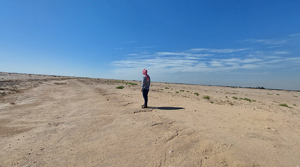
The Battle of al-Qadisiyyah (c. AD 637/8) was a crucial victory by the Arab Muslims over the forces of the Sasanian Empire during the early Islamic conquests. Analysis of satellite imagery of south-west Iraq has now revealed the likely location of this important historic battle.
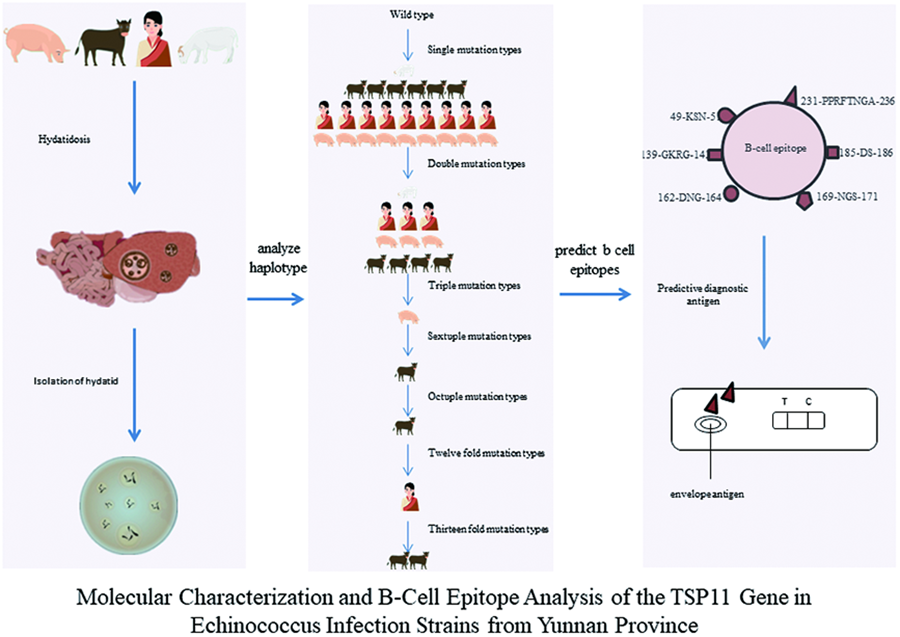
This study investigates the molecular intricacies of the transmembrane protein TSP11 gene in Echinococcus strains isolated from livestock and patients in Yunnan Province afflicted with Echinococcus granulosus (E. granulosus) between 2016 and 2020. Gene typing analysis of the ND1 gene revealed the presence of the G1 type, G5 type and untyped strains, constituting 52.4, 38.1 and 9.5%, respectively. The analysis of 42 DNA sequences has revealed 24 novel single nucleotide polymorphic sites, delineating 11 haplotypes, all of which were of the mutant type. Importantly, there were no variations observed in mutation sites or haplotypes in any of the hosts. The total length of the TSP11 gene's 4 exons is 762 bp, encoding 254 amino acids. Our analysis posits the existence of 6 potential B-cell antigenic epitopes within TSP11, specifically at positions 49-KSN-51, 139-GKRG-142, 162-DNG-164, 169-NGS-171, 185-DS-186 and 231-PPRFTN-236. Notably, these epitopes exhibit consistent presence among various intermediate hosts and haplotypes. However, further validation is imperative to ascertain their viability as diagnostic antigens for E. granulosus in the Yunnan Province.