To save content items to your account,
please confirm that you agree to abide by our usage policies.
If this is the first time you use this feature, you will be asked to authorise Cambridge Core to connect with your account.
Find out more about saving content to .
To save content items to your Kindle, first ensure no-reply@cambridge.org
is added to your Approved Personal Document E-mail List under your Personal Document Settings
on the Manage Your Content and Devices page of your Amazon account. Then enter the ‘name’ part
of your Kindle email address below.
Find out more about saving to your Kindle.
Note you can select to save to either the @free.kindle.com or @kindle.com variations.
‘@free.kindle.com’ emails are free but can only be saved to your device when it is connected to wi-fi.
‘@kindle.com’ emails can be delivered even when you are not connected to wi-fi, but note that service fees apply.
In recent years, the significance of terahertz (THz) and (sub-)THz communications has grown substantially due to its promising trade-off between higher capacity compared to microwave-based communication and better resilience against weather dependent influences (e.g., fog and rain). While electronic and optoelectronic techniques have been extensively explored, each offering distinct advantages and limitations, they have predominantly been demonstrated and discussed as individual experiments, making performance comparison challenging. This paper addresses this gap by systematically benchmarking electronic and optoelectronic signal generation approaches under comparable conditions. Our experiments incorporate various receiver types, revealing that best performance is achieved by combining optoelectronic signal generation techniques at the transmitter in combination with an all-electric intradyne receiver. This results in a remarkable line rate of 200 Gbit/s over a distance of 52 m. To our knowledge, this represents the highest line rate achieved for technically relevant transmission distances for indoor access or outdoor small cell networks.
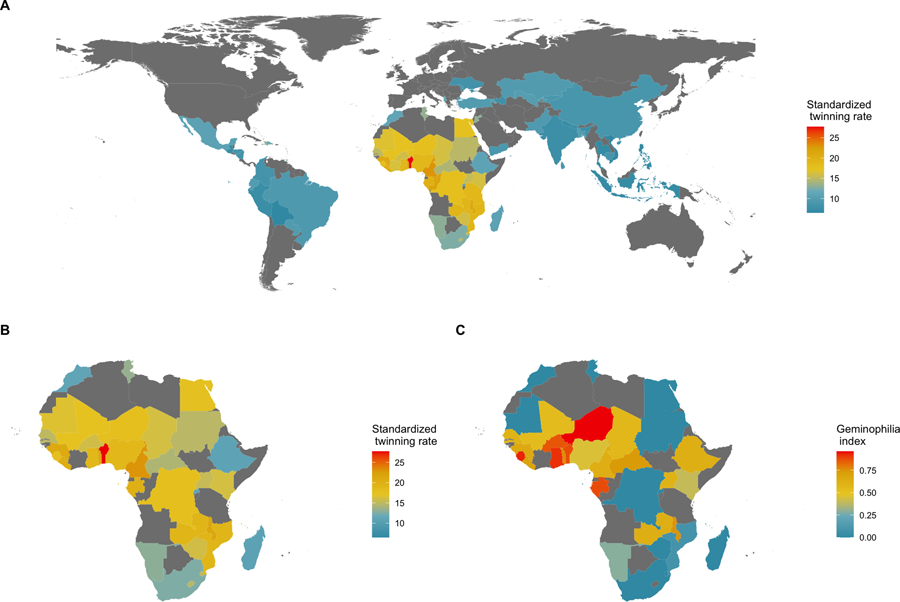
Natural selection should favour litter sizes that optimise trade-offs between brood-size and offspring viability. Across the primate order, the modal litter size is one, suggesting a deep history of selection favouring minimal litters in primates. Humans, however – despite having the longest juvenile period and slowest life-history of all primates – still produce twin births at appreciable rates, even though such births are costly. This presents an evolutionary puzzle. Why is twinning still expressed in humans despite its cost? More puzzling still is the discordance between the principal explanations for human twinning and extant empirical data. Such explanations propose that twinning is regulated by phenotypic plasticity in polyovulation, permitting the production of larger sib sets if and when resources are abundant. However, comparative data suggest that twinning rates are actually highest in poorer economies and lowest in richer, more developed economies. We propose that a historical dynamic of gene–culture co-evolution might better explain this geographic patterning. Our explanation distinguishes geminophilous and geminophobic cultural contexts, as those celebrating twins (e.g. through material support) and those hostile to twins (e.g. through sanction of twin-infanticide). Geminophilous institutions, in particular, may buffer the fitness cost associated with twinning, potentially reducing selection pressures against polyovulation. We conclude by synthesising a mathematical and empirical research programme that might test our ideas.
Most studies concerning parasitic infections in European bison have been performed on free-ranging animals: comparatively little is known about the abomasal nematodes of captive wisents, which are widely used in reintroduction programmes. The aim of the study was to determine the infection level and species composition of abomasal nematodes in captive European bison in enclosures (including zoos) and breeding centres compared to free-ranging individuals. It also includes a morphological analysis of the parasites based on figures and measurement data. Altogether, 11 species of nematodes were detected, with both captive and free-ranging animals demonstrating similar species compositions. Among those, 2 species of blood-sucking nematodes were detected, including Ashworthius sidemi and Haemonchus contortus. Interestingly, A. sidemi was found in almost all free-roaming animals, but only in 1 captive European bison. In addition, H. contortus was predominant in captive animals. The morphological identification was confirmed molecularly for 5 nematode species: A. sidemi, H. contortus, Ostertagia kolchida, O. ostertagi and Spiculopteragia boehmi. The identification was performed using small subunit ribosomal rDNA. The study provides the first available set of specular lengths of the gastric nematodes of European bison, and the first molecular data of O. kolchida and S. boehmi derived from the same host species. Our findings may simplify the morphometrical and molecular identification of Trichostrongylidae species infecting European bison, and can be useful in developing new management strategies for populations of this near-threatened species in Europe.
To assess whether isolated very low QRS voltage of ≤0.3 mV in the frontal leads might be a marker for diagnosing paediatric vasovagal syncope and the risk of recurrence.
Methods:
We included 118 children with vasovagal syncope, comprising 70 males and 48 females in our retrospective analysis. All patients underwent head-up tilt test and supine 12-lead electrocardiography. Furthermore, the QRS voltage was measured from each one of the 12 leads on basal electrocardiography. Patients were followed up for 6–24 months (average, 16 months).
Results:
Eighty-six patients (73%) patients displayed isolated very low QRS voltage in frontal leads. Furthermore, the patients were classified into two groups based on the presence or absence of isolated very low QRS voltage. Enhanced syncopic spells over the past 6 months, and the positive rates of head-up tilt test were observed in patients having isolated very low QRS voltage in the frontal leads than those without isolated very low QRS voltage (p < 0.05). The single factor and time-to-event analyses also showed an increased syncope recurrence rate in patients with isolated very low QRS voltage in frontal leads when compared with those without isolated very low QRS voltage (p < 0.01).
Conclusions:
Isolated very low QRS voltage in frontal leads is correlated with the positive response of the head-up tilt test in children who experience syncope and its recurrence post-treatment. Hence, isolated very low QRS voltage in frontal leads might become a novel diagnostic indicator and a risk factor for syncope recurrence in children with vasovagal syncope.
Understanding post-stroke spasticity (PSS) treatment in everyday clinical practice may guide improvements in patient care.
Methods:
This was a retrospective cohort study that used population-level administrative data. Adults (aged ≥18 years) who initiated PSS treatment (defined by the first PSS clinic visit, focal botulinum toxin injection, or anti-spasticity medication dispensation [baclofen, dantrolene and tizanidine] with none of these treatments occurring during the 2 years before the stroke) were identified between 2012 and 2019 in Alberta, Canada. Spasticity treatment use, time to treatment start and type of prescribing/treating physician were measured. Descriptive statistics were performed.
Results:
Within the cohort (n = 1,079), the most common PSS treatment was oral baclofen (initial treatment: 60.9%; received on/after the initial treatment date up to March 31, 2020: 69.0%), largely prescribed by primary care physicians (77.6%) and started a median of 348 (IQR 741) days after the stroke. Focal botulinum toxin (23.3%; 37.7%) was largely prescribed by physiatrists (72.2%) and started 311 (IQR 446) days after the stroke; spasticity clinic visits (18.6%; 23.8%) were also common.
Conclusions:
We found evidence of gaps in provision of spasticity management in persons with PSS including overuse of systemic oral baclofen (that has common adverse side effects and lacks evidence of effectiveness in PSS) and potential underuse of focal botulinum toxin injections. Further investigation and strategies should be pursued to improve alignment of PSS treatment with guideline recommendations that in turn will support better outcomes for those with PSS.
This paper presents a comprehensive evaluation of reduced-order models (ROMs) for the determination of pressure coefficient distributions on supersonic and hypersonic bodies. The study investigates the limitations, aerodynamic precision and computational performance associated with various methodologies, ranging from simplistic Newtonian theory-based approaches to more advanced first and second-order shock-expansion theories. Validation is performed by comparing computed results with experimental and computational data for pressure distributions, drag and lift coefficients and centres of pressure for fundamental geometries and authentic vehicle design over a wide range of freestream conditions. The study also includes a comprehensive computational complexity analysis, demonstrating the superiority of finite-element ROM approaches over traditional finite-volume computational fluid dynamics (CFD) simulations. The primary objective of this paper is to scrutinise the extension of these methodological classes to the low supersonic regime. Hence, thermo-chemical reactions within the flow are disregarded, and the ideal gas law is adopted. A value of $\gamma = 1.4$ is chosen for consistency and comparability across the analyses. The proposed ROMs show remarkable potential for reducing high-speed simulation execution times by four orders of magnitude, maintaining accuracy within 20 per cent and as low as 1 per cent. The study unveils three key findings: first, the accuracy degradation of Newtonian-based theories for inclined elements, particularly around 45 degrees, and their reduced dependency on Mach number at large inclination. Secondly, the study presents novel insights into the impact of shock-wave-Mach-wave interactions on pressure distribution calculations, emphasising the Mach number as a crucial metric governing recompression effects. Lastly, the study demonstrates the exceptional accuracy of DeJarnette’s method, providing ${C_P}$ results within 2 per cent for a wide range of conditions, offering an attractive alternative to the Taylor-Maccoll equation.
This article examines the role of the mass media in driving anticartel debates during a coal crisis in Germany in 1900. Threatening the fuel supplies of millions of people, the nationwide energy shortage marked the beginning of the anticartel movement, adding a decisive thrust to antimonopoly sentiment toward the cartelized Ruhr coal industry. While hitherto overlooked, this symbolic chapter of German antimonopoly history was profoundly shaped by daily newspapers, a medium that revolutionized public communication during this period. By cross-referencing newspaper articles with records of the coal industry, this paper investigates how newspapers raised public concern for the fuel shortage and thereby forged narratives blaming the coal industrialists as well as how the coal producers responded to the ever-intensifying public scrutiny. As such, this study would serve to identify the mass media as a key determinant in the broader history of cartels and cartel politics in the twentieth century.
As posthumous data use policy within the broader scope of navigating postmortem data privacy is a procedurally complex landscape, our study addresses this by exploring patterns in individuals’ willingness to donate data with health researchers after death and developing practical recommendations.
Methods:
An electronic survey was conducted in April 2021 among adults (≥18 years of age) registered in ResearchMatch (www.researchmatch.org), a national health research registry. Descriptive statistics were used to observe trends in, and multinomial logistic regression analyses were conducted at a 95% confidence interval to determine the association between, willingness to donate some, all, or no data after death with researchers based on the participants’ demographics (education level, age range, duration of using online medical websites, and annual frequency of getting ill).
Results:
Of 399 responses, most participants were willing to donate health data (electronic medical record data [67%], prescription history data [63%], genetic data [54%], and fitness tracker data [53%]) after death. Among 397 respondents, we identified that individuals were more likely to donate some data after death (vs. no data) if they had longer duration of using online medical websites (adjusted relative risk ratio = 1.22, p= 0.04, 95% CI: 1.01 to 1.48). No additional significant findings were observed between willingness to donate all, some, or none of their data after death and other demographic factors.
Conclusions:
Engaging patients in online medical websites may be one potential mechanism to encourage or inspire individuals to participate in posthumous data donation for health research purposes.
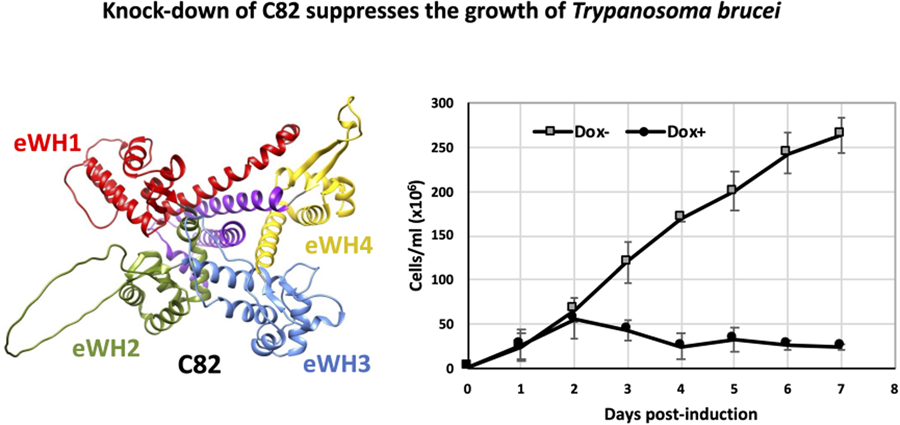
The 17-subunit RNA polymerase III (RNAP III) synthesizes essential untranslated RNAs such as tRNAs and 5S rRNA. In yeast and vertebrates, subunit C82 forms a stable subcomplex with C34 and C31 that is necessary for promoter-specific transcription initiation. Little is known about RNAP III transcription in trypanosomatid parasites. To narrow this knowledge gap, we characterized the C82 subunit in Trypanosoma brucei and Leishmania major. Bioinformatic analyses showed that the 4 distinctive extended winged-helix (eWH) domains and the coiled-coil motif are present in C82 in these microorganisms. Nevertheless, C82 in trypanosomatids presents certain unique traits, including an exclusive loop within the eWH1 domain. We found that C82 localizes to the nucleus and binds to RNAP III-dependent genes in the insect stages of both parasites. Knock-down of C82 by RNA interference significantly reduced the levels of tRNAs and 5S rRNA and led to the death of procyclic forms of T. brucei. Tandem affinity purifications with both parasites allowed the identification of several C82-interacting partners, including C34 and some genus-specific putative regulators of transcription. However, the orthologue of C31 was not found in trypanosomatids. Interestingly, our data suggest a strong association of C82 with TFIIIC subunits in T. brucei, but not in L. major.
While Canadian law has started to seriously grapple with questions that relate to reconciliation with Indigenous communities and laws, much of the focus is on specific, often resource-based, projects. As a result, there has been relatively little attention paid to other aspects of reconciliation, such as how legal aspects of employment may be re-evaluated. Employment law is a useful place to start as employment is a fundamental aspect of a person’s life, providing both financial support and a contributory role in society. This paper examines how different societal values impact employment law and in particular, how Coast Salish worldviews and law may impact, facilitate, and resist, the employment legislation in force in British Columbia.
Compulsory mental health treatment has increased globally. In Scotland, compulsory treatment for >28 days is permitted under hospital- and community-based compulsory treatment orders. Community-based compulsory treatment has not been shown to lead to improved outcomes, and scrutiny of their use is needed.
Aims
To describe the trend, duration and demographic characteristics of compulsory treatment orders in Scotland over a 14-year period.
Method
We conducted a retrospective analysis of order use in Scotland from 1 January 2007 to 31 December 2020, focusing on the (a) number and demographic characteristics of those treated, (b) duration, (c) extensions beyond the 6-month review point and (d) characteristics of new versus continued orders.
Results
The number of individuals on a community-based order increased by 118% (571 v. 1243) from 2007 to 2020, compared with a 16% increase (1316 v. 1532) for hospital-based orders. Of orders starting in 2007, 57.3% were extended, compared with 43.7% in 2020. The median duration was 6 months for first-time orders and 9 months for subsequent orders, which were longest for males (median 11 months); those of African, Caribbean or Black (median 11 months), Asian (median 11 months) and mixed ethnicity (median 10 months); and individuals from the most deprived communities (median 10 months).
Conclusions
There has been a marked rise of community-based compulsory treatment orders in Scotland. If existing trends continue, there will be more people receiving care under community-based orders than hospital-based orders, fundamentally changing the nature of involuntary treatment. Further work needs to explore associations between demographic and diagnostic characteristics on order duration.
The avoidance of asthma triggers, like tobacco smoke, facilitates asthma management. Reliance upon caregiver report of their child’s environmental tobacco smoke (ETS) exposure may result in information bias and impaired asthma management. This analysis aimed to characterize the chronicity of ETS exposure, assess the validity of caregiver report of ETS exposure, and investigate the relationship between ETS exposure and asthma attack.
Methods:
A secondary data analysis was performed on data from a longitudinal study of 162 children aged 7–12 years with asthma living in federally subsidized housing in three US cities (Boston, Cincinnati, and New Orleans). Data were collected at three time points over 1 year.
Results:
Over 90% of children were exposed to ETS (≥0.25 ng/ml of urine cotinine (UC)). Exposure was consistent over 1 year. Questionnaire data had a sensitivity of 28–34% using UC ≥0.25 ng/ml as the gold standard. High ETS exposure (UC ≥ 30 ng/ml) was significantly associated with asthma attack (aOR 2.97, 0.93–9.52, p = 0.07). Lower levels (UC 0.25–30 ng/ml) were not statistically significant (aOR 1.76, 0.71– 4.38, p = 0.22). No association was found using caregiver-reported ETS exposure.
Conclusion:
Relying on questionnaire data to assess children’s exposure to tobacco smoke may lead to substantial information bias. For children with asthma, incorrect characterization may substantially impact asthma morbidity.
This article distinguishes causal modeling, metaphysical, epistemic, and modeling reasons for variable/parameter choice. I argue in favor of justifying variable/parameter choices by appealing to modeling reasons concerning the limitations of the available measurements, experimental data, modeling techniques, and modeling frameworks. I use this “tyranny of availability” to identify normative criteria for variable/parameter choice that apply across most scientific modeling contexts and investigate their metaphysical and epistemological implications.
Traumatic Brain Injury (TBI) often leads to cognitive impairments, particularly regarding working memory (WM). This meta-analysis aims to examine the impact of TBI on WM, taking into account moderating factors which has received little attention in previous research, such as severity of injury, the different domains of Baddeley’s multi-component model, and the interaction between these two factors, as well as the interaction with other domains of executive functions.
Method:
Following Preferred Reporting Items for Systematic Reviews and Meta-analyses guidelines, a systematic review and meta-analysis searched Google Scholar, PubMed, and PsycNET for studies with objective WM measures. Multiple meta-analyses were performed to compare the effects of TBI severity on different WM components. Twenty-four English, peer-reviewed articles, mostly cross-sectional were included.
Results:
TBI significantly impairs general WM and all Baddeley’s model components, most notably the Central Executive (d’ = 0.74). Severity categories, mild-moderate and moderate-severe, were identified. Impairment was found across severities, with “moderate-severe” demonstrating the largest effect size (d’ = 0.81). Individuals with moderate-severe TBI showed greater impairments in the Central Executive and Episodic Buffer compared to those with mild-moderate injury, whereas no such differences were found for the Phonological Loop and Visuospatial Sketchpad.
Conclusions:
These findings enhance our understanding of WM deficits in varying severities of TBI, highlighting the importance of assessing and treating WM in clinical practice and intervention planning.
Microorganism motility often takes place within complex, viscoelastic fluid environments, e.g. sperm in cervicovaginal mucus and bacteria in biofilms. In such complex fluids, strains and stresses generated by the microorganism are stored and relax across a spectrum of length and time scales and the complex fluid can be driven out of its linear response regime. Phenomena not possible in viscous media thereby arise from feedback between the swimmer and the complex fluid, making swimming efficiency co-dependent on the propulsion mechanism and fluid properties. Here, we parameterize a flagellar motor and filament properties together with elastic relaxation and nonlinear shear-thinning properties of the fluid in a computational immersed boundary model. We then explore swimming efficiency, defined as a particular flow rate divided by the torque required to spin the motor, over this parameter space. Our findings indicate that motor efficiency (measured by the volumetric flow rate) can be boosted or degraded by relatively moderate or strong shear thinning of the viscoelastic environment.
This article discusses reproductionist perspectives that assume there is little local participatory institutions can do to address the underrepresentation and the domination of some social groups. While there is also empirical basis to be skeptical, the evidence suggests that, occasionally, the reproduction of class inequalities can be counteracted. This encourages us to consider the conditions that favor greater participation of working-class, economically and culturally disadvantaged people. Comparing evidence from various studies in a range of countries, the article argues that certain contextual factors and inclusion tools produce higher rates of mobilization and more egalitarian deliberations. Specifically, the article focuses on the effects of three conditions: a) special mobilization efforts; b) design choices and inclusion tools; and c) the broadening of the political subject through cultural mobilization. As well as reflecting on the shortcomings of these factors, a new research agenda for social equality in participation is also proposed.
From 1860 to 1900, a modern system of property rights emerged in the International Settlement in Shanghai. This paper examines the largely overlooked process by which the Shanghai Municipal Council (SMC) brought about a system of well-functioning property rights through land surveys, mapping, and assessments. These methods worked hand-in-hand with road planning and construction in facilitating the expansion of the International Settlement to the Chinese-controlled area. Colonial officials, merchants, and Chinese intellectuals worked collectively and sometimes separately to generate knowledge about land and property by translating terms in the Chinese tradition. It argues that the efforts in institution-building and translation helped normalize the definition of property rights as things exclusively owned, strengthening the SMC's control over the land in Shanghai. These processes illuminate the relationship between empire-making and property rights by showing how property rights emerged and functioned in a semi-colonial context where multiple foreign authorities coexisted with the local government. The relatively secure system of property rights, which both foreign and Chinese merchants exploited, formed the foundation of a prosperous Shanghai in the twentieth century.
We characterize four fruitful and underappreciated epistemic roles played by the concept of an individualized niche in contemporary biology, utilizing results of a qualitative empirical study conducted within an interdisciplinary biological research center. We argue that the individualized niche concept (1) shapes the research agenda of the center, (2) facilitates explaining core phenomena related to interindividual differences, (3) helps with managing individual-level causal complexity, and (4) promotes integrating local knowledge from ecology, evolutionary biology, behavioral biology, and other biological fields. We thereby also challenge arguments that the niche concept is superfluous in ecology.
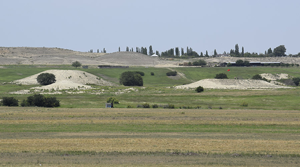
This project documents the current archaeological record of the Qaraçay River Basin in western Azerbaijan. Integrating intensive pedestrian survey, satellite imagery analysis and topographic mapping, the study identified 85 kurgans, six necropolises and nine sites from the Chalcolithic or medieval periods. The authors believe this demonstrates the potential for further archaeological studies in the region.
For adult patients with Staphylococcus aureus bacteremia (SAB), Infectious Diseases consultation (IDC) significantly lowers mortality and recurrence rate. Our systematic review and meta-analysis demonstrate that IDC is also associated with significantly lower mortality in children with SAB. Analysis of the impact of IDC on pediatric recurrence rates revealed moderate heterogeneity.