To save content items to your account,
please confirm that you agree to abide by our usage policies.
If this is the first time you use this feature, you will be asked to authorise Cambridge Core to connect with your account.
Find out more about saving content to .
To save content items to your Kindle, first ensure no-reply@cambridge.org
is added to your Approved Personal Document E-mail List under your Personal Document Settings
on the Manage Your Content and Devices page of your Amazon account. Then enter the ‘name’ part
of your Kindle email address below.
Find out more about saving to your Kindle.
Note you can select to save to either the @free.kindle.com or @kindle.com variations.
‘@free.kindle.com’ emails are free but can only be saved to your device when it is connected to wi-fi.
‘@kindle.com’ emails can be delivered even when you are not connected to wi-fi, but note that service fees apply.
Gestational diabetes mellitus (GDM) poses significant health concerns for women and their offspring, with implications that extend beyond pregnancy. While GDM often resolves postpartum, a diagnosis of GDM confers a greater risk of future type 2 diabetes (T2D) and other chronic illnesses. Furthermore, the intergenerational impact of GDM predisposes offspring to increased chronic disease risk. Despite the awareness of the short- and long-term consequences of GDM, translating this knowledge into prevention strategies remains challenging. Challenges arise from a lack of clarity among health professionals regarding roles and responsibilities in chronic disease prevention and women’s lack of awareness of the magnitude of associated health risks. These challenges are compounded by changes in the circumstances of new mothers as they adjust to balance the demands of infant and family care with their own needs. Insights into behaviour change strategies, coupled with advances in technology and digital healthcare delivery options, have presented new opportunities for diabetes prevention among women with a history of GDM. Additionally, there is growing recognition of the benefits of adopting an implementation science approach to intervention delivery, which seeks to enhance the effectiveness and scalability of interventions. Effective prevention of T2D following GDM requires a comprehensive person-centred approach that leverages technology, targeted interventions and implementation science methodologies to address the complex needs of this population. Through a multifaceted approach, it is possible to improve the long-term health outcomes of women with prior GDM.
Both depression and respiratory disease are common today in young populations. However, little is known about the relationship between them.
Aims
This study aims to explore the association between depression in childhood to early adulthood and respiratory health outcomes in early adulthood, and the potential underlying mechanisms.
Method
A prospective study was conducted based on the Swedish BAMSE (Barn, Allergi, Miljö, Stockholm, Epidemiologi [Children, Allergy, Milieu, Stockholm, Epidemiology]) birth cohort (n = 4089). We identified clinically diagnosed depression through the dispensation of antidepressants, using national register data confirmed by self-reported diagnosis. At the 24-year follow-up, respiratory health was assessed via questionnaires and clinical evaluation. Metabolic and inflammatory profiles were analysed to explore potential mechanisms.
Results
Among the 2994 participants who provided study data, 403 (13.5%) had depression at any time point from around age 10 to 25 years. Depression was associated with higher risks of any chronic bronchitis symptoms (odds ratio = 1.58, 95% CI 1.21–2.06) and respiratory symptoms (odds ratio = 1.41, 95% CI 1.11–1.80) in early adulthood, independent of body mass index (BMI) and smoking status. Compared to individuals without depression, those with depression had a higher fat mass index (FMI (β = 0.48, 95% CI 0.22–0.74)) and increased blood levels of fibroblast growth factor 21 and Interleukin-6 in early adulthood. These markers together with FMI were found to partly mediate the association between depression and respiratory symptoms (total mediation proportion: 19.8 and 15.4%, respectively, P < 0.01).
Conclusions
Depression in childhood to early adulthood was associated with an increased risk of respiratory ill-health in early adulthood, independently of smoking. Metabolic and inflammatory dysregulations may underlie this link.
Emerging evidence has shown a strong correlation between serum TAG levels, the inflammatory response and Parkinson’s disease (PD) onset. However, the causal relationship between TAG levels and PD has not been well established. We aimed to investigate the relationship between serum TAG levels and risk of PD and explore the potential mediating role of circulating immune cells and inflammatory proteins. We utilised genotype data from the GeneRISK cohort, and summary data from genome-wide association studies investigating PD, circulating immune cells, inflammatory proteins and plasma lipidomes. Using Mendelian randomisation (MR) and multivariate MR (MVMR) analysis, we further adjusted for phosphatidylcholine (17:0_18:1) and TAG (58:7). Our results suggested a robust causal link between higher serum TAG (51:4) levels and a decreased risk of PD, with 1 sd genetically instrumented higher serum TAG (51:4) level leading to a 21 per cent (95 % CI 0·66, 0·96) reduction in the risk of PD (P= 0·015). Additionally, the results of the mediation analysis suggested a possible role for mediation through circulating immune cells (including IgD-CD38-B cells and resting CD4 regulatory T cells), but not circulating inflammatory proteins, in the causal relationship between the plasma lipidomes and PD. Our study confirms a causal relationship between higher serum TAG (51:4) levels and a lower risk of PD and clarifies a possible role for mediation through circulating immune cells, but not inflammatory proteins. These findings indicate that serum TAG (51:4) regulates immunity to effectively lower the risk of PD.
Of all the principles in classical Jewish law that stand out from a comparative legal perspective perhaps none is more notable than the ban on self-incrimination in criminal procedures. Contrary to the most basic evidentiary assumptions of other ancient legal systems, this principle differs fundamentally from the right to remain silent that is part of both early modern and modern legal systems. Only rabbinic jurisprudence incorporates an outright exclusion of criminal confessions. Despite receiving much scholarly attention over the centuries, this principle’s fundamental justification relating to the rule of law and the public pursuit of justice has gone unnoticed. This article explores this salient jurisprudential perspective, and sheds new light on this principle by contrasting the Jewish legal approach with the primary modes of criminal adjudication that were adopted in the West. What emerges from this comparative analysis is that this seemingly anomalous principle actually reveals much about the core commitments and values of Jewish law. These, in turn, have substantial implications for certain contemporary legal practices and dilemmas.
This article seeks to contribute to the growing scholarship on object-focused Roman histories by expanding the conversation to previously overlooked archaeological finds from Roman Palestine. This case study focuses on “Northern Collar-Neck Lamps,” which have been found throughout Roman Galilee and date to the first two centuries CE. I argue that their distinctive high collar, perhaps designed to reduce spillage, also served as an affordance that invited additional modes of interaction, namely placing a supplemental reservoir for oil – such as a pierced eggshell – over the filling hole. Once set up, this would allow for a slow drip of oil to prolong illumination time without human intervention. This usage is suggested from chronologically and geographically proximate sources, namely early rabbinic literature: Hebrew and Aramaic writings from the first centuries that reference physical details and uses of hundreds of objects and could prove helpful for future material histories of the Roman era.
This article examines the business strategies employed by early twentieth-century Bombay mill owners in work organization and wage differentiation. The traditionally highly segmented and fluctuating domestic textile markets in India were further complicated by colonial free trade policies, making them highly competitive. This prompted Bombay mills to adopt various strategies, including maintaining a flexible workforce, product diversification, tailoring sales strategies to the Indian market, and increasing labour inputs, related to their heavy reliance on short-stapled Indian raw cotton. Using detailed and disaggregated data reported by textile mills in Bombay during the 1920s and 1930s, this article investigates how employers adopted these strategies in tandem with distinct wage-setting systems as management tools to depress the wage bill. By analysing the motivations behind the adoption of or resistance to these tools across different operations within the production process – such as weaving, spinning, reeling, and winding – the article reveals how gendered and social-class stratifications shaped these strategies and led to wage disparities across the industry. Ultimately, these labour-intensive strategies, conditioned by the broader colonial context in which India's textile industry developed, were at the root of the lower productivity of Indian workers, with long-run adverse consequences for India's general industrial development.
This study explores precession-driven flows in a non-axisymmetric ellipsoid spinning around its medium axis. Using an experimental approach, we focus on two aspects of the flow: the base flow of uniform vorticity and the development of fluid instabilities. In contrast to a preceding paper (J. Fluid. Mech., vol. 932, 2022, A24), where the ellipsoid rotated around its shortest axis, we do not observe bi-stability or hysteresis of the base flow, but a continuous transition from small to large differential rotation and tilt of the fluid rotation axis. We then use the model developed by Noir & Cébron (J. Fluid. Mech., vol. 737, 2013, pp. 412–439) to numerically determine regions in the parameter space of axial and equatorial deformations for which bi-stability may exist. Concerning fluid instabilities, we use three independent observations to track the onset of both boundary layer and parametric instabilities. Our results clearly show the presence of a parametric instability, yet the exact nature of the underlying mechanism (conical shear layer instability, shear instability and elliptical instability) is not unambiguously identified. A coexisting boundary layer instability, although unlikely, cannot be ruled out based on our experimental data. To make further progress on this topic, a new generation of experiments at significantly lower Ekman numbers (ratio of rotation and viscous time scales) is clearly needed.
Business courts can function as loci of privilege, both institutional and substantive, expressing a clear privileging of business as a sphere of social action. Using an original case study, we show how the establishment of a new business court privileged businesspersons in two ways: by providing them with expert judicial services and by receiving into law a rule that gives them unique protection from liability—the Delaware Business Judgment Rule. We did not find that this reception reflected court capture by businesspersons. It did reflect a conviction that Delaware law is best, inculcated by US-educated academics, and inter-jurisdictional competitive aspirations. Our case study demonstrates how business courts express the structured power of business and businesspersons.
Many companion kittens entering shelters are fostered by volunteer community members during the sensitive period for socialisation (~2 to 9 weeks of age) when early experiences are critical to behavioural development. Using a mixed-method survey, we explored current fostering practices relevant to kitten behavioural development and welfare. Foster caretaker participants (n = 487) described their fostering practices and reported providing kittens with a majority of recommended socialisation experiences, such as handling and exposure to various toys and exploratory items. In open-ended text responses, foster caretakers described how they adapted socialisation practices for fearful kittens and the supports and challenges they perceived to impact their ability to properly socialise kittens. Some non-recommended techniques (e.g. flooding) were reported for socialising fearful kittens, with a decreased odds of reporting non-recommended techniques for participants with a higher level of agreeableness personality trait and an increased odds of reporting if fostering practices had been impacted by the COVID-19 pandemic. Foster caretakers reported feeling supported through shelter-supplied resources, personal knowledge, external support, and having access to socialisation opportunities; however, faced personal (e.g. time constraints), shelter-specific (e.g. lack of shelter support), and kitten-specific challenges (e.g. kitten illness). This study highlights the perspectives of foster caretakers as related to optimal socialisation, behavioural development, and welfare. To identify opportunities for improvement it is important to investigate the socialisation guidelines provided to foster caretakers, with the ultimate goal of enhancing kitten behavioural development for improved welfare, long-term adoption, and caretaker satisfaction.
This paper explores the use of mindset material in terrorism cases. Mindset material is a broad category of evidence, including social media activity and internet search histories, relied on to infer or imply that the accused is affiliated or aligned with terrorists. Although mindset material plays a central role throughout the justice process in terrorism cases, no work to date has explored and discussed its use in depth. In this paper I draw on doctrinal and empirical findings, including interviews, to examine how and why it has come to play such a central role in terror cases. While mindset material is a well-intentioned tool used to selectively enforce broadly drafted and vaguely defined terrorism offences, it is also a blunt tool, and sees great emphasis placed on the accused's inferred status as terrorist (or not). In this paper I explore and problematise the use of mindset material and the inferences drawn from it, specifically in relation to to fantasists, the merely curious, and young autistic defendants. I posit that mindset material is symptomatic of a need to revisit the substantive law and to rethink the proper role of the criminal law in preventing terrorism.
To investigate COVID-19 disparities between Hispanic/Latino persons (H/L) and non-H/L persons in an agricultural community by examining behavioral and demographic differences.
Methods
In September 2020, we conducted Community Assessments for Public Health Emergency Response in Wenatchee and East Wenatchee, Washington, to evaluate differences between H/L and non-H/L populations in COVID-19 risk beliefs, prevention practices, household needs, and vaccine acceptability. We produced weighted sample frequencies.
Results
More households from predominately H/L census blocks (H/L-CBHs) versus households from predominately non-H/L census blocks (non-H/L-CBHs) worked in essential services (79% versus 57%), could not telework (70% versus 46%), and reported more COVID-19 cases (19% versus 4%). More H/L-CBHs versus non-H/L-CBHs practiced prevention strategies: avoiding gatherings (81% versus 61%), avoiding visiting friends/family (73% versus 36%), and less restaurant dining (indoor 24% versus 39%). More H/L-CBHs versus non-H/L-CBHs needed housing (16% versus 4%) and food assistance (19% versus 6%). COVID-19 vaccine acceptance in H/L-CBHs and non-H/L-CBHs was 42% versus 46%, respectively.
Conclusions
Despite practicing prevention measures with greater frequency, H/L-CBHs had more COVID-19 cases. H/L-CBHs worked in conditions with a higher likelihood of exposure. H/L-CBHs had increased housing and food assistance needs due to the pandemic. COVID-19 vaccine acceptability was similarly low (<50%) between groups.
While studies have examined the effects of large-scale disasters on disaster-vulnerable individuals, these analyses may not capture the full impact. This study qualitatively explored the impacts of the March 2011 Fukushima triple disaster on patients with breast cancer and their families, aiming to highlight the importance of incorporating family narratives to grasp the full effect of large-scale disasters.
Methods
Utilizing the medical records from two hospitals, deceased patients with breast cancer from the disaster period were identified. Relatives were interviewed using a semi-structured approach. Thematic analysis was conducted via the Braun and Clarke method and Taguette transcription software.
Results
Interviews with seven family members of six patients revealed three main themes: the family’s caregiving burden and their deepened bonds with the patient, the patients’ extensive medical challenges and their physical and mental decline, and the shared confusion during the disaster due to resource shortages and evacuation dilemmas.
Conclusions
This study uncovered significant infrastructural issues such as reduced medical support and the heavy caregiving load on families, amidst some strengthened relationships during a time of crisis. Future research should investigate these issues across various disaster contexts, and proactive measures should be implemented to prevent exacerbation of these challenges.
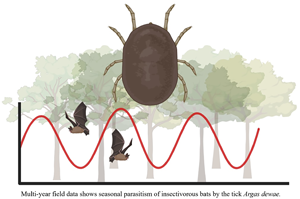
Although 12 soft tick species (Argasidae) are native to Australia, the ecology of most is poorly known. Argas dewae parasitizes several insectivorous bat species and has been recorded on humans. Therefore, understanding its ecology is crucial for wildlife health management and public health preparedness. To address this knowledge gap, A. dewae populations were monitored from 2 bat hosts (Chalinolobus gouldii and Austronomus australis) using bat boxes at 3 sites in Victoria, Australia, for 28 months (July 2005–December 2007). A phenological profile undertaken for A. dewae revealed that tick load on bat hosts increased throughout winter and peaked in the first month of spring, before collapsing and remaining low throughout the drier late spring and summer periods. There was also further investigation of the relationship between 2 response variables (tick infestation risk and tick load) and a range of explanatory variables (body condition index, sex, age class, bioseason, site, bat density per nest box). In C. gouldii, site was the only significant predictor of A. dewae infestation risk, while load was correlated with several variables including age class, sex, bioseason, roost density and body condition index. This paper also reports the first records of A. dewae from 6 bat species in 3 bat families (Miniopteridae: Miniopterus australis; Molossidae: A. australis; Vespertilionidae: Chalinolobus morio, Myotis Macropus, Vespadelus darlingtonia, Vespadelus regulus) and a second record of A. dewae from a human. The first distribution records are presented for A. dewae in South Australia, the Australian Capital Territory and Queensland.
Understanding how to improve the physical and cognitive accessibility of visitor economy businesses and organisations wanting to offer nature-based outdoor pursuits for people with dementia is key to supporting their inclusion and agency. The aim of this qualitative study was to understand the experiences, needs and preferences of people with dementia participating in nature-based outdoor pursuits in their leisure time. Semi-structured interviews were conducted with 15 people with dementia and 15 family members and subjected to thematic analysis. Four themes related to inclusion for people with dementia and their family members reflected diversity in individual needs and preferences for engaging with nature-based outdoor pursuits, their own adaptations to maintain access including accommodating risk, how cognitive and physical accessibility can be supported by businesses, and which practical and psychosocial barriers prevent inclusion. Learning from people with dementia and their family members has helped bridge the gap to their inclusion in nature-based outdoor pursuits. Their insights will inform the development of such pursuits by businesses and organisations as well as future work into risk decision-making.
Cancer diagnosis and treatment can result in a significant psychological burden. This study sought to investigate the prevalence of major depression, associated treatments, and suicidal ideation in cancer survivors compared to a non-cancer cohort.
Methods
This is a retrospective, population-based study using survey responses from the National Survey on Drug Use and Health collected from January 2015 to December 2019. Survey data sets were queried for all respondents who provided a cancer history. Respondents with a reported history of cancer (“cancer survivors”) were further stratified by whether they reported a “recent” cancer diagnosis within the past 12 months. Survey responses were evaluated for recent diagnoses of and treatments for major depressive disorder and suicidal ideation.
Results
Among the 212,411 survey respondents identified, 7,635 (3.6%) reported a cancer history, with 1,486 (0.7%) reporting a recent cancer history. There were no differences in prevalence of major depression between cancer survivors and participants without cancer (9.3% vs 9.2%, p = 0.762), though the prevalence was slightly higher among recent cancer survivors (10.0% vs 9.2%, p = 0.259). Among respondents diagnosed with major depression, cancer survivors were significantly more likely to receive treatment for depression (78.6% vs 60.3%, p < 0.001). Suicidal ideation was significantly lower among cancer survivors (5.1% vs 6.2%, p < 0.001) including recent survivors (5.0% vs 6.2%, p < 0.001).
Significance of results
There was no overall difference in the prevalence of major depression between cancer survivors and respondents without cancer. Survivors with major depression were more likely to receive treatments. Prevalence of major depression was higher in recent cancer survivors.
We present the Pilot Survey Phase 2 data release for the Wide-field ASKAP L-band Legacy All-sky Blind surveY (WALLABY), carried-out using the Australian SKA Pathfinder (ASKAP). We present 1760 H i detections (with a default spatial resolution of 30′′) from three pilot fields including the NGC 5044 and NGC 4808 groups as well as the Vela field, covering a total of $\sim 180$ deg$^2$ of the sky and spanning a redshift up to $z \simeq 0.09$. This release also includes kinematic models for over 126 spatially resolved galaxies. The observed median rms noise in the image cubes is 1.7 mJy per 30′′ beam and 18.5 kHz channel. This corresponds to a 5$\sigma$ H i column density sensitivity of $\sim 9.1\times10^{19}(1 + z)^4$ cm$^{-2}$ per 30′′ beam and $\sim 20$ km s$^{-1}$ channel and a 5$\sigma$ H i mass sensitivity of $\sim 5.5\times10^8 (D/100$ Mpc)$^{2}$ M$_{\odot}$ for point sources. Furthermore, we also present for the first time 12′′ high-resolution images (“cut-outs”) and catalogues for a sub-sample of 80 sources from the Pilot Survey Phase 2 fields. While we are able to recover sources with lower signal-to-noise ratio compared to sources in the Public Data Release 1, we do note that some data quality issues still persist, notably, flux discrepancies that are linked to the impact of side lobes associated with the dirty beams due to inadequate deconvolution. However, in spite of these limitations, the WALLABY Pilot Survey Phase 2 has already produced roughly a third of the number of HIPASS sources, making this the largest spatially resolved H i sample from a single survey to date.

This study investigates the stigma against people with mental illness in Bangladesh through in-depth interviews with 14 patients and 9 healthcare professionals, and 33 focus group discussions with people without mental illness. The research has delved into the understanding of different types of stigma against mental illness in the context of Bangladesh. The findings revealed four types of stigma which were categorized into four themes namely self-stigma, public stigma, professional, and institutional stigma. Patients had internalized negative attitudes, thereby discriminated toward themselves. The public discriminated against patients because of believing in prejudices against them. Other health professionals had negative conceptions toward patients, and they devalued mental health professionals (MHPs). A culture of negative attitude and belief had emerged in institutional settings which encouraged discrimination. Policymakers and healthcare professionals can use the findings to develop a mental health service by addressing the stigma. Mental health practitioners can assess the impact of stigma to improve the mental well-being of their patients. Students and workplace staff will benefit from intentional or unintentional discrimination in educational institutions and workplace settings by addressing the effects of stigma. Importantly, other health care providers will be aware of their thoughts against patients and MHPs.
We develop a novel method for image segmentation of 3D confocal microscopy images of emerging hematopoietic stem cells. The method is based on the theory of persistent homology and uses an optimal threshold to select the most persistent cycles in the persistence diagram. This enables the segmentation of the image’s most contrasted and representative shapes. Coupling this segmentation method with a meshing algorithm, we define a pipeline for 3D reconstruction of confocal volumes. Compared to related methods, this approach improves shape segmentation, is more ergonomic to automatize, and has fewer parameters. We apply it to the segmentation of membranes, at subcellular resolution, of cells involved in the endothelial-to-hematopoietic transition (EHT) in the zebrafish embryos.