To save content items to your account,
please confirm that you agree to abide by our usage policies.
If this is the first time you use this feature, you will be asked to authorise Cambridge Core to connect with your account.
Find out more about saving content to .
To save content items to your Kindle, first ensure no-reply@cambridge.org
is added to your Approved Personal Document E-mail List under your Personal Document Settings
on the Manage Your Content and Devices page of your Amazon account. Then enter the ‘name’ part
of your Kindle email address below.
Find out more about saving to your Kindle.
Note you can select to save to either the @free.kindle.com or @kindle.com variations.
‘@free.kindle.com’ emails are free but can only be saved to your device when it is connected to wi-fi.
‘@kindle.com’ emails can be delivered even when you are not connected to wi-fi, but note that service fees apply.
Let $\mathcal {O}$ be a maximal order in the quaternion algebra over $\mathbb Q$ ramified at p and $\infty $. We prove two theorems that allow us to recover the structure of $\mathcal {O}$ from limited information. The first says that for any infinite set S of integers coprime to p, $\mathcal {O}$ is spanned as a ${\mathbb {Z}}$-module by elements with norm in S. The second says that $\mathcal {O}$ is determined up to isomorphism by its theta function.
During the ill-fated 1897 Andrée balloon expedition, Nils Strindberg allegedly dropped a small tin containing a last message for his fiancée onto the island Fuglesongen in northwestern Svalbard, as the expedition crew passed over it in their hydrogen balloon, Örnen. Despite at least one lengthy search on Fuglesongen, the tin has never been found. This paper investigates the hypothesis that the tin was accidentally dropped onto Klovningen, a neighbouring island similar in size and shape, situated approximately 2.4 km east of Fuglesongen. A re-analysis of Strindberg’s original handwritten notes from the balloon flight, along with other primary sources and meteorological analyses, suggests that a targeted search for the tin on Klovningen could be a promising next step in solving this enduring mystery.
In this note we provide an upper bound for the difference between the value function of a distributionally robust Markov decision problem and the value function of a non-robust Markov decision problem, where the ambiguity set of probability kernels of the distributionally robust Markov decision process is described by a Wasserstein ball around some reference kernel whereas the non-robust Markov decision process behaves according to a fixed probability kernel contained in the ambiguity set. Our derived upper bound for the difference between the value functions is dimension-free and depends linearly on the radius of the Wasserstein ball.
While Stephen Greenblatt’s 1980 book, Renaissance self-fashioning: from More to Shakespeare, was methodologically innovative within the field of literary criticism, his work also grew from the roots of Jacob Burckhardt’s old cultural history, and his method of new historicism developed alongside the new cultural history. Although certain parts of Burckhardt’s arguments have been discarded, the work of Greenblatt and others has continued to build upon his foundation. Courtiership, anxiety, and the relationship between outward and interior identities, text and context, hybridity, and individuation are all useful concepts for constructing less monolithic understandings of early modern identities. With a European scale, this article traces early modern historiography and literary criticism from the nineteenth century to 2024 and introduces historical examples of identity formation from early modern England, France, Iberia, the Italian peninsula, and the Holy Roman Empire. The article reflects upon early modern examples of self-fashioning in the light of Burckhardt, the Annales, Greenblatt, and others who have contributed to our understanding of agency and identity up to the present day, arguing that these historians and literary scholars have worked together to answer questions that are fundamentally psychological in nature.
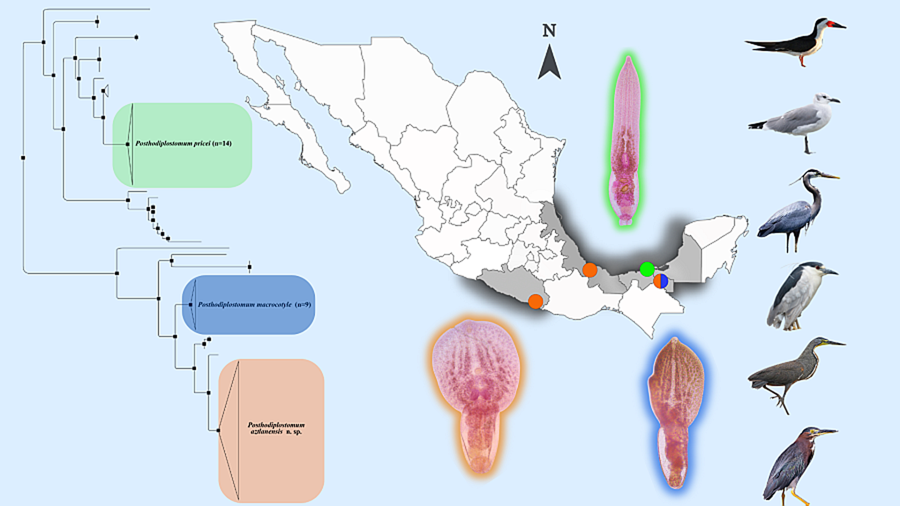
Adults of the genus Posthodiplostomum, Dubois, 1936 are parasites of fish-eating birds, mainly of the family Ardeidae, and are globally distributed. The genus currently comprises 35 species, although recent molecular evidence has shown that the diversity of the genus is underestimated since several candidate species have been recognized. In the Neotropical region of Mexico, at least 6 Posthodiplostomum lineages have been detected with metacercaria stages recovered from unrelated fish hosts. Here, we obtained adult specimens of Posthodiplostomum from 6 fish-eating birds representing 2 families (Butorides virescens, Ardea herodias, Nycticorax nycticorax, Tigrisoma mexicanum – Ardeidae, and Rynchops niger and Leucophaeus atricilla – Lariidae) from 4 localities in southern Mexico. Specimens were sequenced for 2 nuclear (28S and ITS1–5.8S–ITS2) and 1 mitochondrial (cox1) molecular marker. Phylogenetic analyses allowed us to link metacercariae and adult specimens and recognized a lineage, which was described morphologically. The new species can be distinguished from its congeners by its prosoma morphology and body size; this is the first described species in the Neotropical region of Mexico. Additionally, new host and locality records for P. macrocotyle and P. pricei are presented, expanding their geographical distribution range in the Americas.
Authentic leadership studies are often criticised for the limited use of causally defined research designs. To advance scholarship is this area, this article presents a scoping review on the use of experimental designs to examine causality in authentic leadership. Eleven publications were identified, which presented 16 experiments that met the inclusion criteria. Generally, these experiments tested authentic leadership as an antecedent; were conducted online; used a one-factor design; involved large samples, typically of working adults or residents; involved a manipulation check; involved the use of written vignettes to manipulate levels of authentic leadership; included counterfactual conditions; culminated with outcomes pertaining to followers; and established the causal effects of authentic leadership on the outcome(s) of interest. These findings suggest the value of: written vignettes; multi-method approaches; and online experiments. They also highlight opportunities to advance authentic leadership research through the use of sequential experiments and immersive technologies.
On September 17, 2024, an unforeseen attack due to the Pagers Explosion targeting a military party in Lebanon left more than 2750 casualties. A total of 38 injured patients presented to the Lebanese American University Medical Center-Rizk Hospital (LAUMC-RH), a private university hospital. Most injuries were amputated fingers and eye injuries. Intensive training and regular drills are conducted at the hospital level to ensure readiness. This report highlights major challenges that were encountered during this explosion and provides possible strategies to overcome them.
Various studies have highlighted the increased incidence and symptoms of depression and anxiety in paediatric cancer survivors (PCS). Yet no meta-analysis has focused on post-traumatic stress disorder (PTSD) or post-traumatic stress symptoms (PTSS) in PCS and their family nucleus.
Aims
To evaluate the overall risk of PTSD and severity of PTSS in PCS and their family nucleus. Secondary objectives include identifying potential risk factors of PTSD and high PTSS.
Method
We systematically searched PubMed, Embase and PsycINFO for studies comparing the risk of PTSD and PTSS severity among PCS, their family nucleus and non-cancer controls. PRISMA reporting guidelines were followed. Random effects meta-analyses and meta-regressions were conducted.
Results
From 1089 records, we included 21 studies. PCS have an increased risk of PTSD (risk ratio 2.36, 95% CI 1.37–4.06) and decreased PTSS severity (standardised mean difference −0.29, 95% CI −0.50 to −0.08). Subgroup analyses of other categorical study-level characteristics revealed that female PCS who were older at diagnosis and data collection had a significantly higher risk of PTSD. Meta-regression were insignificant. Family nucleus did not show a significantly increased risk of PTSD (risk ratio 1.13, 95% CI 0.59–5.00) and PTSS severity (standardised mean difference 0.53, 95% CI −0.00 to 1.06). Systematically reviewing studies on the family nucleus found that the majority reported a significantly increased risk of psychological trauma compared with the comparator. Lower education, income and social status were also risk factors.
Conclusions
Timely identification and interventions are imperative for policy makers and healthcare providers to prevent trauma from worsening in this population group.
This article explores how Protestants defended the co-existence of multiple translations of the Bible into English in Elizabethan England. The matter of biblical plurality is considered through the prism of the debates surrounding bible translation which occurred throughout the 1580s between the Catholic translator of the Bible into English, Gregory Martin (c. 1542–1582), and the English Protestant polemicist William Fulke (1537/8–1589). It is contended that this debate, which has tended to be cast as a storm in a teacup, reveals how Protestants responded, innovatively, to the publication of the Catholic English New Testament. Attention is paid to how Martin attacked the existence of the many different Protestant English bible translations in circulation and, reciprocally, how Fulke defended them. This study of the Martin and Fulke debate thereby unsettles some long-standing assumptions about the combative relationship between different versions of the English Bible and it points, instead, to ways in which contemporaries might have seen the plurality of translations as spiritually and polemically advantageous. Fulke's arguments help us to comprehend how, prior to early seventeenth-century attempts to restrict the existence of multiple English bibles, some Elizabethans responded to, and even defended, the plurality of English bible translations which had come to exist.
Asymptomatic bacteriuria (ASB) treatment is a common form of antibiotic overuse and diagnostic error. Antibiotic stewardship using the inappropriate diagnosis of urinary tract infection (ID-UTI) measure has reduced ASB treatment in diverse hospitals. However, critical access hospitals (CAHs) have differing resources that could impede stewardship. We aimed to determine if stewardship including the ID-UTI measure could reduce ASB treatment in CAHs.
Methods:
From October 2022 to July 2023, ten CAHs participated in an Intensive Quality Improvement Cohort (IQIC) program including 3 interventions to reduce ASB treatment: 1) learning labs (ie, didactics with shared learning), 2) mentoring, and 3) data-driven performance reports including hospital peer comparison based on the ID-UTI measure. To assess effectiveness of the IQIC program, change in the ID-UTI measure (ie, percentage of patients treated for a UTI who had ASB) was compared to two non-equivalent control outcomes (antibiotic duration and unjustified fluoroquinolone use).
Results:
Ten CAHs abstracted a total of 608 positive urine culture cases. Over the cohort period, the percentage of patients treated for a UTI who had ASB declined (aOR per month = 0.935, 95% CI: 0.873, 1.001, P = 0.055) from 28.4% (range across hospitals, 0%-63%) in the first to 18.6% (range, 0%-33%) in the final month. In contrast, antibiotic duration and unjustified fluoroquinolone use were unchanged (P = 0.768 and 0.567, respectively).
Conclusions:
The IQIC intervention, including learning labs, mentoring, and performance reports using the ID-UTI measure, was associated with a non-significant decrease in treatment of ASB, while control outcomes (duration and unjustified fluoroquinolone use) did not change.
Reynolds-Averaged Navier–Stokes (RANS) simulations, both steady and unsteady, are used to investigate supersonic, chemically reacting, flow fields inside a strut-stabilised supersonic combustion ramjet (scramjet) engine operating under different fuel flow rates. Fully supersonic, fully subsonic and mixed modes of operations inside the combustor, obtained at different fuel flow rates, are studied numerically through shock wave visualisations and top-wall static-pressure probing. The effect of changing fuel flow rates, imposed both suddenly and gradually, on the behaviour of shock waves and wall pressure profiles are studied in detail. For certain modes of combustion characterised by the presence of oblique shocks at the strut, shockwaves in the combustor respond predictably to an increase or decrease in fuel flow rate attaining the steady state flow fields as predicted by RANS simulations for those fuel flow rates. For certain other modes of combustion, characterised by the presence of shockwaves in the isolator and the absence of oblique shocks at the leading edge of the strut, shockwaves in the flow field appear unstable to fuel flow rate modulations. For such cases, any change in fuel flow rates, sudden or gradual, increase or decrease, causes the isolator shocks to immediately move upstream and eventually out of the isolator. A plausible physics-based explanation of the observed phenomena is presented.
Growing evidence suggests that direct oral anticoagulants (DOACs) may be suitable for cerebral venous thrombosis (CVT). The optimal strategy regarding lead-in parenteral anticoagulation (PA) prior to DOAC is unknown.
Methods:
In this post hoc analysis of the retrospective ACTION-CVT study, we compared patients treated with DOACs as part of routine care: those given “very early” DOAC (no PA), “early” (<5 days PA) and “delayed” (5–21 days PA). We compared baseline characteristics and outcomes between the very early/early and delayed groups. The primary outcome was a composite of day-30 CVT recurrence/extension, new peripheral venous thromboembolism, cerebral edema and intracranial hemorrhage.
Results:
Of 231 patients, 11.7% had very early DOAC, 64.5% early (median [IQR] 2 [1–2] days) and 23.8% delayed (5 [5–6] days). More patients had severe clinical/radiological presentations in the delayed group; more patients had isolated headaches in the very early/early group. Outcomes were better in the very early/early groups (90-day modified Rankin Scale of 0–2; 94.3% vs. 83.9%). Primary outcome events were rare and did not differ significantly between groups (2.4% vs. 2.1% delayed; adjusted HR 1.49 [95%CI 0.17–13.11]).
Conclusions:
In this cohort of patients receiving DOAC for CVT as part of routine care, >75% had <5 days of PA. Those with very early/early initiation of DOAC had less severe clinical presentations. Low event rates and baseline differences between groups preclude conclusions about safety or effectiveness. Further prospective data will inform care.
Social prescribing is growing rapidly globally as a way to tackle social determinants of health. However, whom it is reaching and how effectively it is being implemented remains unclear.
Aims
To gain a comprehensive picture of social prescribing in the UK, from referral routes, reasons, to contacts with link workers and prescribed interventions.
Method
This study undertook the first analyses of a large database of administrative data from over 160 000 individuals referred to social prescribing across the UK. Data were analysed using descriptive analyses and regression modelling, including logistic regression for binary outcomes and negative binomial regression for count variables.
Results
Mental health was the most common referral reason and mental health interventions were the most common interventions prescribed. Between 72% and 85% of social prescribing referrals were from medical routes (primary or secondary healthcare). Although these referrals demonstrated equality in reaching across sociodemographic groups, individuals from more deprived areas, younger adults, men, and ethnic minority groups were reached more equitably via non-medical routes (e.g. self-referral, school, charity). Despite 90% of referrals leading to contact with a link worker, only 38% resulted in any intervention being received. A shortage of provision of community activities – especially ones relevant to mental health, practical support and social relationships – was evident. There was also substantial heterogeneity in how social prescribing is implemented across UK nations.
Conclusions
Mental health is the leading reason for social prescribing referrals, demonstrating its relevance to psychiatrists. But there are inequalities in referrals. Non-medical referral routes could play an important role in addressing inequality in accessing social prescribing and therefore should be prioritised. Additionally, more financial and infrastructural resource and strategic planning are needed to address low intervention rates. Further investment into large-scale data platforms and staff training are needed to continue monitoring the development and distribution of social prescribing.
During the French Revolution, thousands of revolutionaries and royalists fled the turmoil in French islands. Many went to nearby islands, from which they could observe events. Situated between Martinique and Guadeloupe, Dominica had a majority French population and a long history of connection with its French neighbors. This article uses the case of Dominica to explore the effects of the French Revolution on a non-French island in the Eastern Caribbean. From the start, its proximity to the French islands led to its entanglement in revolutionary politics. It was the first British island to receive refugees, and the influx of people of all racial, social, and political backgrounds into Dominica posed challenges for island officials. Officials had to determine on what terms to admit emigrants, whether they posed a threat to the colony, and how to feed and house them. They also worried about the influences of foreigners and revolutionary ideas on their own disaffected free and enslaved populations. This article argues that Dominica's location, heterogeneous population, and internal instability allowed it to become a node for regional migration and information networks that embroiled it in the turmoil that engulfed its neighbors and ultimately threatened British control of the island.
Minoritised young people face a double burden of discrimination through increased risk of stress and differential treatment access. However, acute care pathways for minoritised young people with urgent mental health needs are poorly understood.
Aims
To explore variation in stress-related presentations (SRPs) to acute hospitals across racial-ethnic groups in England.
Method
We examined rates, distribution, duration and types of SRPs across racial-ethnic groups in a retrospective cohort of 11- to 15-year-olds with one or more emergency hospital admissions between April 2014 and March 2020. SRPs were defined as emergency admissions for potentially psychosomatic symptoms, self-harm and internalising, externalising and thought disorders.
Results
White British (8–38 per 1000 births) and Mixed White–Black (9–42 per 1000 births) young people had highest rates of SRPs, whereas Black African (5–14 per 1000 births), Indian (6–19 per 1000 births) and White other (4–19 per 1000 births) young people had the lowest rates of SRPs. The proportion of readmissions were highest for Pakistani (47.7%), White British (41.4%) and Mixed White–Black (41.3%) groups. Black Other (36.4%) and White Other (35.8%) groups had the lowest proportions of readmissions. The proportion of admission durations ≥3 days was higher for Black Other (16.6%), Bangladeshi (16.3%), Asian Other (15.9%) and Black Caribbean (15.8%) groups than their White British (11.9%) and Indian (11.8%) peers. The type of SRPs varied across racial-ethnic groups.
Conclusions
Patterns of SRP admissions systematically differed across racial-ethnic groups, indicative of inequitable triage, assessment and treatment processes. These findings highlight the need for implementation of race equality frameworks to address structural racism in healthcare pathways.
To assess the potential contribution of large-scale food fortification (LSFF) towards meeting dietary micronutrient requirements in Tanzania.
Design:
We used household food consumption data from the National Panel Survey 2014–15 to estimate fortifiable food vehicle coverage and consumption (standardised using the adult female equivalent approach) and the prevalence at risk of inadequate apparent intake of five micronutrients included in Tanzania’s fortification legislation. We modelled four LSFF scenarios: no fortification, status quo (i.e. compliance with current fortification contents) and full fortification with and without maize flour fortification.
Setting:
Tanzania.
Participants:
A nationally representative sample of 3290 Tanzanian households.
Results:
The coverage of edible oils and maize and wheat flours (including products of wheat flour and oil such as bread and cakes) was high, with 91 percent, 88 percent and 53 percent of households consuming these commodities, respectively. We estimated that vitamin A-fortified oil could reduce the prevalence of inadequate apparent intake of vitamin A (retinol activity equivalent) from 92 percent without LSFF to 80 percent with LSFF at current fortification levels. Low industry LSFF compliance of flour fortification limits the contribution of other micronutrients, but a hypothetical full fortification scenario shows that LSFF of cereal flours could substantially reduce the prevalence at risk of inadequate intakes of iron, zinc, folate and vitamin B12.
Conclusions:
The current Tanzania LSFF programme likely contributes to reducing vitamin A inadequacy. Policies that support increased compliance could improve the supply of multiple nutrients, but the prominence of small-scale maize mills restricts this theoretical benefit.
We extend the Kechris–Pestov–Todorčević correspondence to weak Fraïssé categories and automorphism groups of generic objects. The new ingredient is the weak Ramsey property. We demonstrate the theory on several examples including monoid categories, the category of almost linear orders and categories of strong embeddings of trees.
This paper seeks to grapple with questions of polity and innovation in the Church of England and specifically to explore the place of non-parochial forms of church within this tradition of Anglicanism. The paper begins by outlining recent developments within the Church of England around the ‘mixed ecology’ and church planting, before summarizing Alison Milbank’s recent critique of these changes. Then, building on in example of the Guild Churches Act from London Diocese in the mid-twentieth century, it is argued that within a commitment to Anglican polity there lies a vision for creativity in mission which might sometimes mean the pursuing non-parochial forms of ministry.
All IN for Health is a well-established community-academic partnership dedicated to helping improve the lives of Indiana residents by increasing health research literacy and promoting health resources, as well as opportunities to participate in research. It is sponsored by the Indiana Clinical and Translational Science Institute (I-CTSI). The study’s purpose was to measure trust in biomedical research and healthcare organizations among research volunteers.
Methods:
The Relationship of Trust and Research Engagement (RTRE) survey was developed utilizing 3 validated scales. The RTRE consisted of 36 items in a 5-point Likert scale with three open-text questions. We conducted 3 focus groups with a total of 24 individuals ahead of the survey’s launch. Recruitment was done through the All IN for Health newsletter. The survey was administered in the summer of 2022.
Results:
Six hundred and sixty-three individuals participated in the survey. Forty-one percent agreed that doctors do medical research for selfish reasons. Moreover, 50% disagree that patients get the same medical treatment regardless of race/ethnicity. Sixty-seven percent think it is safe to participate in medical research, yet 79% had never been asked to participate. Ten percent believe that researchers select minorities for their most dangerous studies and expose minoritized groups to diseases.
Conclusion:
The utilization of tools to measure trust will facilitate participant recruitment and will assist institutions and investigators alike in accountability. It is imperative, we work toward understanding our communities’ trust in medical research, assessing our own trustworthiness, and critically reflect on the authenticity of our efforts.
Using a polynomial cointegration technique, this paper shows that the bilateral US current account balance with China has a U-shaped relationship with the life expectancy gap between the US and China. A narrowing gap initially increases the US deficit with China, but eventually, this increased US deficit falls with the further catching-up of Chinese life expectancy. The life expectancy gap between the two countries has been below the threshold level since 2013, and this demographic trend has the potential to improve the US deficit with China. This U-shaped relationship can be theoretically reproduced. A two-country overlapping generations model indicates that the effect of life expectancy is decomposed into four components: retirement savings, social security burden, the number of elderly workers, and the productivity of elderly workers. The total effect of foreign life expectancy on the home current account balance exhibits a sign change in the catching-up of foreign life expectancy.