To save content items to your account,
please confirm that you agree to abide by our usage policies.
If this is the first time you use this feature, you will be asked to authorise Cambridge Core to connect with your account.
Find out more about saving content to .
To save content items to your Kindle, first ensure no-reply@cambridge.org
is added to your Approved Personal Document E-mail List under your Personal Document Settings
on the Manage Your Content and Devices page of your Amazon account. Then enter the ‘name’ part
of your Kindle email address below.
Find out more about saving to your Kindle.
Note you can select to save to either the @free.kindle.com or @kindle.com variations.
‘@free.kindle.com’ emails are free but can only be saved to your device when it is connected to wi-fi.
‘@kindle.com’ emails can be delivered even when you are not connected to wi-fi, but note that service fees apply.
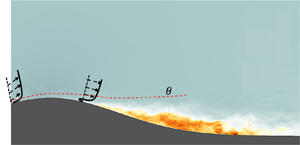
Thwaites (Aeronaut. Q., vol. 1, 1949, pp. 245–280) developed an approximate method for determining the evolution of laminar boundary layers. The approximation follows from an assumption that the growth of a laminar boundary layer in the presence of pressure gradients could be parameterized solely as a function of the Holstein–Bohlen flow parameter, thus reducing the von Kármán momentum integral to a first-order ordinary differential equation. This method is useful for the analysis of laminar flows, and in computational potential flow solvers to account for the viscous effects. In this work, an approximate method for determining the momentum thickness of a two-dimensional, turbulent boundary layer is proposed following Thwaites’ work. It is shown that the method provides good estimates of the momentum thickness for multiple boundary layers, including both favourable and adverse pressure gradient effects, up to the point of separation. In the limit of high Reynolds numbers, it is possible to derive a criterion for the onset of separation from the proposed model, which is shown to be in agreement with prior empirical observations (Alber, 9th Aerospace Sciences Meeting, 1971). The sensitivity of the separation location with respect to upstream perturbations is also analysed through this model for the NASA/Boeing speed bump and the transonic Bachalo–Johnson bump.
Personalised management of recurrent depression, considering individual patient characteristics, is crucial.
Aims
This study evaluates the potentially different mediating role of mindfulness skills in managing recurrent depression using mindfulness-based cognitive therapy (MBCT) among people with varying depression severity.
Method
Data from the Prevention of Depressive Relapse or Recurrence (PREVENT) trial, comparing MBCT (with antidepressant medication (ADM) tapering support, MBCT-tapering support) versus maintenance-ADM, were used. The study included pre, post, 9-, 12-, 18- and 24-month follow-ups. Adults with ≥3 previous major depressive episodes, in full/partial remission (below threshold for a current episode), on ADM, were assessed for eligibility in primary care practices in the UK. People were randomised (1:1) to MBCT-tapering support or maintenance-ADM. We used the Beck Depression Inventory-II to evaluate depressive symptom changes over the six time points. Pre-post treatment, we employed the Five Facets of Mindfulness Questionnaire to gauge mindfulness skills. Baseline symptom and history variables were used to identify individuals with varying severity profiles. We conducted Latent Profile Moderated-Mediation Growth Mixture Models.
Results
A total of 424 people (mean (s.d.) age = 49.44 (12.31) years; with 325 (76.7%) self-identified as female) were included. A mediating effect of mindfulness skills, between trial arm allocation and the linear rate of depressive symptoms change over 24 months, moderated by depression severity, was observed (moderated-mediation index = −0.27, 95% CI = −0.66, −0.03). Conditional indirect effects were −0.42 (95% CI = −0.78, −0.18) for higher severity (expected mean BDI-II reduction = 10 points), and −0.15 (95% CI = −0.35, −0.02) for lower severity (expected mean BDI-II reduction = 3.5 points).
Conclusions
Mindfulness skills constitute a unique mechanism driving change in MBCT (versus maintenance-ADM). Individuals with higher depression severity may benefit most from MBCT-tapering support for residual symptoms. It is unclear if these effects apply to those with a current depressive episode. Future research should investigate individuals who are not on medication. This study provides preliminary evidence for personalised management of recurrent depression.
In 2023, the U.S. Office of Management and Budget (OMB) issued guidance documents that specified new procedures for assessing prospective government regulations (Circular A-4) and economic policies more generally (Circular A-94). These revisions to long-standing guidance were not minor updates but shifted policy analyses from an efficiency-oriented perspective to a redistributive approach. OMB broadened the guidelines for reporting distributional consequences of policies and also specified how policy impacts on different income groups should be weighted. The weights assume that the social welfare function is governed by the sum of identical individual utility functions, each of which exhibits a substantial rate of diminishing marginal utility of income. The resulting weights provide a premium for households below the median-income level and a considerable penalty for those at higher-income levels. Application of the weights to property losses creates potentially substantial inefficiencies. If based on current empirical evidence on the income elasticity of the value of a statistical life rather than assuming that there is a complete offset of the weights, application of the weights to mortality risk valuation would generate inequities in protection.
Labor historians, particularly in the United States, have given unique attention to the International Longshore and Warehouse Union (ILWU). Emerging out of a series of tumultuous strikes on the West Coast during the early Depression years, the ILWU won trend-setting employment contracts, survived Second Red Scare-era persecution despite keeping avowedly leftwing leadership, and maintained its presence on the docks even after containerization dramatically reshaped the longshore industry. This review examines multiple recent works on the ILWU, noting new interventions—both in ILWU history and labor history, more broadly. All three reviewed works offer invaluable insight for how contemporary unions can adapt to technological changes in the workplace, foster internal democracy, and build labor power while fighting for social justice. The review concludes by offering potential avenues for further scholarly research, particularly on the nature of leftwing unionism and labor-generated alternatives to deindustrialization and workforce displacement.
In this paper, we study the approximate minimization problem of weighted finite automata (WFAs): to compute the best possible approximation of a WFA given a bound on the number of states. By reformulating the problem in terms of Hankel matrices, we leverage classical results on the approximation of Hankel operators, namely the celebrated Adamyan-Arov-Krein (AAK) theory. We solve the optimal spectral-norm approximate minimization problem for irredundant WFAs with real weights, defined over a one-letter alphabet. We present a theoretical analysis based on AAK theory and bounds on the quality of the approximation in the spectral norm and $\ell ^2$ norm. Moreover, we provide a closed-form solution, and an algorithm, to compute the optimal approximation of a given size in polynomial time.
Classical approaches for flood prediction apply numerical methods for the solution of partial differential equations that capture the physics of inundation processes (e.g., the 2D Shallow Water equations). However, traditional inundation models are still unable to satisfy the requirements of many relevant applications, including early-warning systems, high-resolution (or large spatial domain) simulations, and robust inference over distributions of inputs (e.g., rainfall events). Machine learning (ML) approaches are a promising alternative to physics-based models due to their ability to efficiently capture correlations between relevant inputs and outputs in a data-driven fashion. In particular, once trained, ML models can be tested/deployed much more efficiently than classical approaches. Yet, few ML-based solutions for spatio-temporal flood prediction have been developed, and their reliability/accuracy is poorly understood. In this paper, we propose FloodGNN-GRU, a spatio-temporal flood prediction model that combines a graph neural network (GNN) and a gated recurrent unit (GRU) architecture. Compared to existing approaches, FloodGNN-GRU (i) employs a graph-based model (GNN); (ii) operates on both spatial and temporal dimensions; and (iii) processes the water flow velocities as vector features, instead of scalar features. We evaluate FloodGNN-GRU using a LISFLOOD-FP simulation of Hurricane Harvey (2017) in Houston, Texas. Our results, based on several metrics, show that FloodGNN-GRU outperforms several data-driven alternatives in terms of accuracy. Moreover, our approach can be trained 100x faster and tested 1000x faster than the time required to run a comparable simulation. These findings illustrate the potential of ML-based methods to efficiently emulate physics-based inundation models, especially for short-term predictions.
This article examines the complex phenomenon of self-harm, exploring its motivations, theoretical underpinnings and the intricate transference and countertransference reactions that arise in clinical settings. It aims to integrate psychiatric understanding with contemporary theories of the impact of trauma on both the body and the mind, to deepen the knowledge of self-harm and increase the effectiveness of treatment approaches. The article argues for a nuanced view of self-harm and emphasises the need for compassionate, well-informed care. By addressing the psychodynamics of self-harm, the article seeks to improve therapeutic outcomes and foster an empathetic and effective clinical response. Fictitious case studies are used to illustrate these concepts, demonstrating the critical role of early attachment experiences and the challenges faced by healthcare providers in management.
Cystic echinococcosis (CE), caused by Echinococcus granulosus s.l. is a neglected zoonosis posing a significant public health challenge. Little is known about human CE in Bhutan. This study was conducted to gain an understanding of the burden, distribution, and potential risk factors of CE in Bhutan. From January 2015 to December 2019 data from Jigme Dorji Wangchuck National Referral Hospital (JDWNRH) and 6 other district-level hospitals were reviewed. Descriptive statistics were used to summarize the data. DALYs and Poisson regression models were used to estimate the burden and explore the relationship between cases and possible risk factors. A total of 159 cases were recorded. Most cases (145) were admitted to the surgical ward and 14 cases were referred to India. The average annual incidence was 4.4 cases per 100 000 population. The burden of disease was estimated to be approximately 39 DALYs per year for treatment-seeking cases, or possibly 80 DALYs per year including non-treatment seeking cases. This translates to approximately to 5.2 DALYs and 10.2 per 100 000 per year respectively. The commonest sites of infection were the liver (78%) and lungs (13%). Most cases were treated with surgery (>82%), and more than 47% were admitted to the hospital for >4 days. Policy interventions targeting community engagement, awareness, education, high risk occupational groups, females, and those living in the endemic districts of the central and western regions may yield larger gains. More studies and the institution of a surveillance system can help better guide policy interventions.
I formulate a compatibilism that is distinctively responsive to skeptical worries about the justification of punishment and other moral responsibility practices. I begin with an evolutionary story explaining why backward-looking reactive attitudes are “given” in human society. Cooperative society plausibly could not be sustained without such practices. The necessary accountability practices have complex internal standards. These internal standards may fully ground the appropriateness of reactive attitudes. Following a recent analogy, we can similarly hold that there are no external standards for what is funny; the norms of comedy are complex, but funny is funny. However, this is compatible with moral reasons to change the practices themselves, and therefore change what is fitting within them: in the first instance, a moralistic “that's not funny” is ill-fitting, but “that shouldn't be funny” can be apt. The analogous reformist position prescribes practices constituting the minimal responsibility norms necessary for cooperative society.
The plastic pollution crisis has resulted in the establishment of many voluntary plastic waste initiatives in Southeast Asia, where most of the plastic leakage occurs. This study aims to assess the sustainability of four types of voluntary, partly or fully externally funded plastic waste initiatives within Indonesia’s current waste management system and anticipate challenges that can arise in the future. The research used the qualitative approach of Strengths, Weaknesses, Opportunities and Threats and Internal and External Factors Analysis framework to evaluate the initiatives’ techno-economic, socio-cultural, legislative and environmental sustainability. The results showed that three out of four types of plastic waste initiatives were in the diversification quadrant, and one type was in the survival quadrant. The unfavoured position of the initiatives in the quadrant is mainly due to important regulatory gaps in Indonesia and the lack of a stable funding mechanism. The appropriate strategy for the voluntary plastic waste initiatives to be self-sustainable and a catalyst for sustainable national waste management is to exert pressure on the government to establish an institutionalised and legislated waste management system and endorse a mandatory implementation of the polluter pays principle. Otherwise, improving waste management systems in Indonesia at the macro level could be challenging to achieve.
The cable-driven parallel mechanism (CDPM) is known as an interesting application in industry to pick and place objects owing to its advantages such as large workspaces. In addition to the advantages of this mechanism, there are some challenges to improving performance by considering constraints in different components, such as the behavior of cables, shape, size of the end effector and base, and model of pulleys and actuators. Moreover, the impact of online geometry reconfiguration must be analyzed. This paper demonstrates the impact of these constraints on the performance of reconfigurable CDPM. The methodology is based on the systematic review and meta-analysis guidelines to report the results. The databases used to find the papers are extracted from Scopus and Google Scholar, using related keywords. As a result, the impact of physical constraints on system performance is discussed. A total of 90 and 37 articles are selected, respectively. After removing duplicates and unrelated papers, 88 studies that met the inclusion criteria are selected for review. Even when considering the physical constraints in modeling the mechanism, simplifications in designing a model for the reconfigurable CDPM generate errors. There is a gap in designing high-performance controllers to track desired trajectories while reconfiguring the geometry, and the satisfaction of physical constraints needs to be satisfied. In conclusion, this review presents several constraints in designing a controller to track desired trajectories and improve performance in future work. This paper presents an integrated controller architecture that includes physical constraints and predictive control.
The rising incidence of cancer has led to an increased number of adult children impacted by parental cancer. Previous research primarily focused on younger individuals, leaving a gap in understanding the experiences of adult children aged 20–35.
Objectives
To examine a model that integrates the interrelationships among the disease’s characteristics (i.e., disease stage), illness representations, coping strategies, and posttraumatic growth (PTG) in young adults with parents diagnosed with cancer. In addition, we examined indirect relationships involving illness representations as independent variables, coping strategies as mediators, and PTG as the outcome variable.
Purpose
The rising incidence of cancer has led to an increased number of adult children impacted by parental cancer. Previous research primarily focused on younger individuals, leaving a gap in understanding the experiences of adult children aged 20–35. This study examines a model that integrates the interrelationships among the disease’s characteristics (i.e., disease stage), illness representations, coping strategies, and posttraumatic growth (PTG) in young adults with parents diagnosed with cancer. In addition, we examined indirect relationships involving illness representations as independent variables, coping strategies as mediators, and PTG as the outcome variable.
Methods
A cross-sectional survey was conducted with 109 adult children (ages 20–35) of cancer patients. Data were collected using the Posttraumatic Growth Inventory, the Brief Illness Perception Questionnaire, and the COPE questionnaire. Path analysis was performed to test the study’s hypotheses.
Results
The findings revealed that illness representations and coping strategies accounted for significant variance in PTG. Higher perceived severity of the parent’s illness was associated with greater use of problem-focused and emotion-focused coping strategies, which were linked to higher PTG. Lower perceived control over the illness was associated with less use of problem-focused coping and subsequently lower PTG.
Conclusions
This study underscores the importance of subjective perceptions and coping strategies in fostering PTG among young adults with parents diagnosed with cancer. The findings highlight the need for tailored psychosocial interventions to enhance adaptive illness representations and effective coping strategies, promoting resilience and growth in this unique demographic.
The ethical treatment of human remains after excavation is a core debate in archaeology. This project explores the treatment of human remains in some European museums with an aim to support open discussion of complex ethical issues among research and heritage professionals involved in the care of human remains.
We derive an asymptotic expansion for the critical percolation density of the random connection model as the dimension of the encapsulating space tends to infinity. We calculate rigorously the first expansion terms for the Gilbert disk model, the hyper-cubic model, the Gaussian connection kernel, and a coordinate-wise Cauchy kernel.
Self-efficacy (or the belief in one’s ability to effect change) often moderates the relationship between education, interest, and actions in evaluations of training programs that prepare community-based investigators in the clinical and translational sciences workforce. Such evaluations, however, tend to emphasize individual-level attitudes when there are also community- or organizational-level outcomes impacted. Methods: This study uses a novel sequential, explanatory mixed-methods design to explore multiple levels of self-efficacy (or self-awareness of personal growth in leadership) in the Clinical Scholars program, an equity-centered leadership development program for mid- to later-career healthcare professionals. Our design involves: (1) bivariate correlations and confirmatory factor analysis of self-assessed competencies across all program participants to identify emergent combinations of competencies, which informed (2) more nuanced thematic coding of participants’ stories of most significant change in their personal and professional lives, as a result of the program. Results: In unpacking their accounts of personal leadership styles (that aligned with our quantitative analyses of competencies), we found that participants demonstrated multiple competencies simultaneously. Specifically, they employed emotionally intelligent learning and consensus-building dialogue to manage conflict for interpersonal impact. Additionally, they used this combination of skills to unite diverse stakeholders under a shared vision in order to lead and manage organizational change where all colleagues’ contributions were valued. Conclusion: Together, these methods extend our understanding of personal growth in leadership as an outcome of the program in terms of individual- and organizational-level impacts, using representative quantitative self-assessments to categorize rich qualitative descriptions.
Understanding gender disparities in home-based self-employment (HBS) and their links to homeownership and socioeconomic factors is crucial for advancing sustainable development goals (SDGs) in Sub-Saharan Africa, especially Nigeria. This study uses data from the 2010/2011, 2012/13, 2015/16, and 2018/19 waves of the Nigerian General Household Survey (GHS). It employs random effect probit regression, the LASSO method for identifying predictors, and the Blinder–Oaxaca decomposition technique to analyse gender differences in nonlinear binary outcomes. The results show that female business owners are more likely to engage in HBS compared to males, highlighting the importance of gender equality (SDG 5) and decent work (SDG 8). While male entrepreneurs are mainly driven by profit, females prioritise balancing paid and unpaid work, reflecting motivations beyond profit within heterodox economics. Significant gender-differentiated impacts are observed in relation to monthly rent, post-secondary education, dwelling space, energy, and regional locations. Notably, the presence of children significantly increases female involvement in HBS, a trend not seen among males. Marriage also influences female participation, suggesting that marital circumstances and economic benefits play a role. These findings highlight the need for policies addressing gender-specific constraints, challenging traditional gender roles, and promoting inclusive human development within the SDG framework.
Aqueous foams coarsen with time due to gas diffusion through the liquid between the bubbles. The mean bubble size grows, and small bubbles vanish. However, coarsening is little understood for foams with an intermediate liquid content, particularly in the presence of surfactant-induced attractive forces between the bubbles, measured by the interface contact angle where thin films meet the bulk liquid. Rigorous bubble growth laws have yet to be developed, and the evolution of bulk foam properties is unclear. We present a quasistatic numerical model for coarsening in two-dimensional wet foams, focusing on growth laws and related bubble properties. The deformation of bubble interfaces is modelled using a finite-element approach, and the gas flow through both films and Plateau borders is approximated. We give results for disordered two-dimensional wet foams with $256$ to $1024$ bubbles, at liquid fractions from $2\,\%$ to $25\,\%$, beyond the zero-contact-angle unjamming transition, and with contact angles up to $10^\circ$. Simple analytical models for the bubble pressures, film lengths and coarsening growth rates are developed to aid interpretation. If the contact angle is non-zero, we find that a prediction of the coarsening rate approaches a non-zero value as the liquid fraction is increased. We also find that an individual bubble's effective number of neighbours determines whether it grows or shrinks to a good approximation.
Research on the language acquisition of deaf individuals who are exposed to accessible linguistic input at a variety of ages has provided evidence for a sensitive period of first language acquisition. Recent studies have shown that deaf individuals who first learn language after early childhood, late first-language learners (LL1), do not comprehend reversible Subject-Verb-Object (SVO) sentences. The present study analyzed 478 signed productions elicited with pictures depicting simple events with one or two arguments by 28 signers. The argument order patterns of native signers converged with one another and the word order patterns of American Sign Language (ASL). By contrast, the ordering patterns of the LL1 signers did not converge with one another or with the patterns of the native signers. This indicates that early childhood is a period of heightened sensitivity to basic word order and may help explain why complex structures are difficult for LL1 signers to learn.
The associations of prior homelessness with current health are unknown. Using nationally representative data collected in private households in England, this study aimed to examine Common Mental Disorders (CMDs), physical health, alcohol/substance dependence, and multimorbidities in people who formerly experienced homelessness compared to people who never experienced homelessness.
Methods
This cross-sectional study utilised data from the 2007 and 2014 Adult Psychiatric Morbidity Surveys. Former homelessness and current physical health problems were self-reported. Current CMDs, alcohol dependence and substance dependence were ascertained using structured validated scales. Survey-weighted logistic regression was used to compare multimorbidities (conditions in combination) for participants who formerly experienced homelessness with those who had never experienced homelessness, adjusting for sociodemographic characteristics, smoking status and adverse experiences. Population attributable fractions (PAFs) were calculated.
Results
Of 13,859 people in the sample, 535 formerly experienced homelessness (3.6%, 95% CI 3.2–4.0). 44.8% of people who formerly experienced homelessness had CMDs (95% CI 40.2–49.5), compared to 15.0% (95% CI 14.3–15.7) for those who had never experienced homelessness. There were substantial associations between prior homelessness and physical multimorbidity (adjusted odds ratio [aOR] 1.98, 95% CI 1.53–2.57), CMD–physical multimorbidity (aOR 3.43, 95% CI 2.77–4.25), CMD–alcohol/substance multimorbidity (aOR 3.53, 95% CI 2.49–5.01) and trimorbidity (CMD–alcohol/substance–physical multimorbidity) (aOR 3.26, 95% CI 2.20–4.83), in models adjusting for sociodemographic characteristics and smoking. After further adjustment for adverse experiences, associations attenuated but persisted for physical multimorbidity (aOR 1.40, 95% CI 1.10–1.79) and CMD–physical multimorbidity (aOR 1.55, 95% CI 1.20–2.00). The largest PAFs were observed for CMD–alcohol/substance multimorbidity (17%) and trimorbidity (16%).
Conclusions
Even in people currently rehoused, marked inequities across multimorbidities remained evident, highlighting the need for longer-term integrated support for people who have previously experienced homelessness.