To save content items to your account,
please confirm that you agree to abide by our usage policies.
If this is the first time you use this feature, you will be asked to authorise Cambridge Core to connect with your account.
Find out more about saving content to .
To save content items to your Kindle, first ensure no-reply@cambridge.org
is added to your Approved Personal Document E-mail List under your Personal Document Settings
on the Manage Your Content and Devices page of your Amazon account. Then enter the ‘name’ part
of your Kindle email address below.
Find out more about saving to your Kindle.
Note you can select to save to either the @free.kindle.com or @kindle.com variations.
‘@free.kindle.com’ emails are free but can only be saved to your device when it is connected to wi-fi.
‘@kindle.com’ emails can be delivered even when you are not connected to wi-fi, but note that service fees apply.
Evidence on the effectiveness and implementation of mental health and psychosocial support (MHPSS) interventions for men in humanitarian settings is limited. Moreover, engagement and retention of men in such interventions has been challenging. Adaptations may therefore be required to improve the appropriateness and acceptability of these interventions for men. This study conducted formative research and examined the feasibility of combining an MHPSS intervention, Self-Help Plus, with a brief intervention to reduce harmful alcohol use among refugee men in Uganda. We conducted a cluster randomized feasibility trial comparing the combined alcohol intervention and Self-Help Plus, Self-Help Plus alone and enhanced usual care. Participants were 168 South Sudanese refugee men in Rhino Settlement who reported moderate or high levels of psychological distress. Session attendance was adequate: all sessions had at least 69% of participants present. Participant outcome measures, including symptoms of psychological distress, functional impairment, self-defined problems, depressive symptoms, post-traumatic stress symptoms, overall substance use risk, substance specific risk (alcohol, cannabis, stimulants and sedatives) and well-being, were sensitive to change. A combined approach to addressing mental health and alcohol use appears feasible among men in refugee settings, but further research is needed to examine the effectiveness of combined interventions among men.
Cultural sensitivity, competence and curiosity are essential for clinicians. To promote these, we developed an elective module in cultural psychiatry for medical students, consisting of eight seminars. In seminar eight, we used film clips to teach mental state examination. We comment on the development and delivery of the module, and offer a selection of student feedback. Cultural psychiatry could be better integrated into core medical school curricula, and we call for research to explore this.
Neonatal intensive care units (NICUs) emerge as one of the areas where palliative care is most needed. This study was conducted to examine the attitudes and compassion fatigue levels of NICUs nurses working in Şanlıurfa, where the fertility rate and infant mortality are highest in Turkey, toward palliative care.
Design
This study was conducted in descriptive type.
Methods
The research was carried out with 204 (85%) nurses who agreed to participate in the research between October 2022 and February 2023, out of 240 neonatal intensive care nurses working in the NICU of 2 training and research hospitals and a university hospital in Şanlıurfa. The data of the study were collected using an Introductory Information Form, the Neonatal Palliative Care Attitude Scale, and the Compassion Fatigue Short Scale.
Results
Nurses; compassion fatigue scale mean score was 61.46 ± 26.64, palliative care scale mean score was 3.13 ± 0.74 for organization subdimension, 2.85 ± 0.73 for resources subdimension, and 3.08 ± 0.89 for clinician subdimension. In the results of the study, 8 barriers (parents do not participate in decisions, there is not enough staff, lack of time to spend with the family, lack of policies/rules in institutions for palliative care, lack of education and communication, society’s beliefs, nurses’ personal attitudes toward death, and lack of appreciation of past experiences with palliative care) and 6 facilitators (Nurses’ ability to express their perceptions, views and beliefs about palliative care, to participate and support palliative care, to inform parents, to provide counseling, adequate physical conditions) for palliative care were determined.
Conclusion
While it was determined that nurses had a slightly below moderate level of compassion fatigue and a close attitude toward organization and resources toward palliative care, it was determined that ethical conflict toward palliative care was high in clinical subdimension scores.
Objectives and Significance of Results
It is recommended that all nurses working in the NICU obtain certificates, improvements in resources such as personnel and equipment, improvements in the shift work system and development of policies/rules in institutions for palliative care.
Mixed Reality enables individuals to visualise and interact with artefacts and environments through a combination of physical and virtual assets. It has received increased interest from the design community as a means to accelerate, enrich and enhance prototyping activities. This article concerns MR’s ability to deceive an individual through the combination of virtual and physical assets and their underlying traits (e.g., mass, size), and a user’s cognitive ability to ‘join the dots’. If properly implemented, MR could save time and resources by reducing the required prototype fidelity and the need to fully realise variants. However, there is a gap in understanding how the traits of physical and virtual assets and cognition combine to form reality. This article presents a study investigated the role mass, virtual and physical model size played on users perception of an MR prototype. The relative impact of these factors was determined by varying these parameters and assessing the user’s perceived change. The key finding from this study was that the virtual model size had a far greater influence on prototype perceived by the user. This suggests that the required physical fidelity of an MR prototype can be lower than the virtual. Furthermore, exploring size design variants can be achieved exclusively through changes to the virtual model.
Probabilistic Answer Set Programming under the credal semantics extends Answer Set Programming with probabilistic facts that represent uncertain information. The probabilistic facts are discrete with Bernoulli distributions. However, several real-world scenarios require a combination of both discrete and continuous random variables. In this paper, we extend the PASP framework to support continuous random variables and propose Hybrid Probabilistic Answer Set Programming. Moreover, we discuss, implement, and assess the performance of two exact algorithms based on projected answer set enumeration and knowledge compilation and two approximate algorithms based on sampling. Empirical results, also in line with known theoretical results, show that exact inference is feasible only for small instances, but knowledge compilation has a huge positive impact on performance. Sampling allows handling larger instances but sometimes requires an increasing amount of memory.
This study explored the use of sophisticated vocabulary, complex syntax, and decontextualized language (including book information, conceptual information, past/future experiences, and vocabulary information) in teachers’ instructional interactions with children during the literacy block in prekindergarten and kindergarten classrooms. The sample included 33 teachers and 421 children. We examined correlations among these language features and their unique contributions to children’s vocabulary learning. Teachers who used more sophisticated vocabulary also engaged in more decontextualized talk about vocabulary and past/future experiences. Additionally, teachers’ use of complex syntax was uniquely associated with talk about conceptual information. Both complex syntax and conceptual information talk predicted children’s vocabulary learning; however, complex syntax emerged as the sole predictor when accounting for this relationship. This finding suggests that decontextualized talk about concepts, characterized by complex language structures, may facilitate vocabulary acquisition.
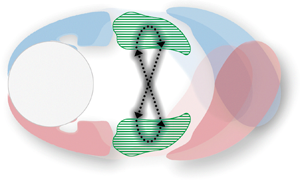
We examine the mechanisms responsible for the onset of the three-dimensional mode B instability in the wake behind a circular cylinder. We show that it is possible to explicitly account for the stabilising effect of spanwise viscous diffusion and then demonstrate that the remaining mechanisms involved in this short-wavelength instability are preserved in the limit of zero wavelength. Using the resulting simplified equations, we show that perturbations in different fluid particles interact only through the in-plane viscous diffusion which turns out to have a destabilising effect. We also show that in the presence of viscous diffusion, the closed trajectories which had been conjectured to play a crucial role in the onset of the mode B instability are not actually a prerequisite for the growth of mode B type perturbations. We combine these observations to identify the three essential ingredients for the development of the mode B instability: (i) the amplification of perturbations in the braid regions due to the stretching mechanism; and the spreading of perturbations through (ii) viscous diffusion, and (iii) cross-flow advection which transports fluid between the two braid regions on either side of the cylinder. Finally, we develop a simple criterion that allows the prediction of the regions where three-dimensional short-wavelength perturbations are amplified by the stretching mechanism. The approach used in our study is general and has the potential to give insights into the onset of three-dimensionality via short-wavelength instabilities in other flows.
Ideal points of MPs in the UK House of Commons (HoC) are characteristically difficult to ascertain due to tight party discipline and strategic voting by opposition members. This research note generates left/right ideal point estimates for 591 British MPs sitting in the HoC as of 22/08/2022, ascertained through their social media followership. Specifically, estimates are derived by conducting correspondence analysis (CA) on MP Twitter (X) follower networks, which are subsequently validated against an expert survey, confirming that these estimates have a high degree of between-party (R2 = 0.93) and within-party (Con: r = 0.84; Lab: r = 0.81) accuracy. The informative value of these estimates is then demonstrated by predicting candidate endorsement in the September 2022 Conservative leadership contest, confirming that an MP's ideal point was a statistically significant predictor of candidate endorsement, with Liz Truss drawing support primarily from the further right of the party.
We investigate the mean-field dynamics of stochastic McKean differential equations with heterogeneous particle interactions described by large network structures. To express a wide range of graphs, from dense to sparse structures, we incorporate the recently developed graph limit theory of graphops into the limiting McKean–Vlasov equations. Global stability of the splay steady state is proven via a generalised entropy method, leading to explicit graph structure-dependent decay rates. We highlight the robustness of the entropy approach by extending the results to the closely related Sakaguchi–Kuramoto model with intrinsic frequency distributions. We also present central examples of random graphs, such as power law graphs and the spherical graphop, and analyse the limitations of the applied methodology.
Let A be an abelian surface over ${\mathbb {Q}}$ whose geometric endomorphism ring is a maximal order in a non-split quaternion algebra. Inspired by Mazur’s theorem for elliptic curves, we show that the torsion subgroup of $A({\mathbb {Q}})$ is $12$-torsion and has order at most $18$. Under the additional assumption that A is of $ {\mathrm{GL}}_2$-type, we give a complete classification of the possible torsion subgroups of $A({\mathbb {Q}})$.
How do we do public scholarship? It might seem like a simple question, but as anyone who has attempted to experiment with academic norms—let alone work collaboratively in and through institutional regulations, cultural expectations, and diverse personalities—is well aware, things get complicated quickly. As scholars, practitioners, and educators in the public humanities, the authors offer a set of sticky and thorny questions that are both theoretically minded and practice oriented, as possibilities to consider throughout the process of working on public projects or with community partners. Questions are grouped thematically—Framing, Planning, Partnerships, Institutions, Tools, Outputs and Forms, Documentation, Evaluation and Reflection—though are not meant to be exhaustive or prescriptive. In so doing, the essay insists that public scholarship not be codified into a clearly-defined discipline, but rather acknowledged as both an always already present practice for many scholars and in a constant state of emergence as a field. To that end, the authors also invite direct engagement with these questions, both inside and outside of the space of the text, encouraging readers to generate and share their own questions as well.
In 2003, rescue excavations at Piazzeta dell'Anfiteatro, Trento, identified an extramural funerary area dated to the 5th c. CE. The necropolis yielded 45 coins (3rd–5th c.), most of which were involuntary losses. Owing to the sound stratigraphy of the site, these coins present a reliable sample of coinage circulating in Tridentum during the 5th c. This study presents a brief synthesis of the transformations undergone by the Late Antique city, so as to understand the dynamics attested in Piazzeta dell'Anfiteatro, a description of the stratigraphic units that contained coins, and a detailed analysis of the coins from several perspectives. The aim is to improve our understanding of the Late Antique monetary history of the city and Trentino's territory.
A double-blind, randomized, active-controlled, parallel-group, noninferiority trial (NCT03345342) demonstrated that paliperidone palmitate once-every-6-months (PP6M) was noninferior to paliperidone palmitate once-every-3-months (PP3M) in preventing relapse in clinically stable adults with schizophrenia. This post hoc analysis assessed efficacy and safety following transition to PP6M from paliperidone once-monthly (PP1M) versus PP3M.
Methods
Adults with schizophrenia who were clinically stable on moderate/high doses of PP1M or PP3M were randomly assigned 1:2 to dorsogluteal PP3M or PP6M treatment for 12 months. The primary efficacy measure was time to relapse during the 12-month DB phase. Secondary endpoints included change from DB baseline to endpoint in Positive and Negative Syndrome Scale (PANSS) total and subscale scores, Clinical Global Impression-Severity (CGI-S) scale score, and Personal and Social Performance (PSP) scale score. Safety was assessed by treatment-emergent adverse events (TEAEs), vital signs, and clinical laboratory tests.
Results
Of 702 patients in the study, 231 transitioned from PP1M to PP6M and 247 transitioned from PP3M to PP6M. Low relapse rates for PP6M were observed regardless of transition pathway (PP1M/PP6M: 7.8%; PP3M/PP6M: 7.3%). Changes from DB baseline to endpoint in PANSS total, PSP, and CGI-S scores were similar between transition groups. In the DB phase, ≥1 TEAE was observed in 61.0% and 63.2% of patients in the PP1M/PP6M and PP3M/PP6M, groups, respectively.
Conclusion
Adults with schizophrenia who transitioned to PP6M from either PP1M or PP3M experienced similarly low relapse rates. Additionally, symptom and functionality scores supported the primary analysis and, along with TEAE incidences, were comparable between transition groups.
Lately, my students have been asking: “Why should we be here, when there are people suffering out there?” Evidently, they are asking about the public value of higher education. But they are also asking old questions, some of the oldest that human beings have seen fit to ask. Versions of these questions appear in all scriptural traditions, in ancient and modern philosophical works, in stories and novels and songs. They are questions at the core of what we call “the humanities.” Part of why we study the humanities – and why we must – is to get help in asking, articulating, and trying to answer such questions. There aren’t single right answers to any of those questions. Each of us must work answers out for ourselves. But we can work out better answers for ourselves if we spend time in the company of others who take those questions seriously. This is not just an individual task; it’s a collective task of great public import. In this short piece, I defend the idea of the public humanities on these terms.
Despite the growing interest in secondary state efforts to avoid choosing sides in great power competition, International Relations scholars have paid scant attention to the question of how great powers respond to secondary state ‘hedging’. We offer a first approximation for this important question by focusing on ‘high-value’ hedgers, i.e. secondary states whose location or capabilities afford them the potential to tip the scales in a great power war. We posit that great powers are likely to accommodate high-value hedgers and refrain from trying to manipulate their alignment choice. This is because the likelihood and costs of losing a high-value hedger are such that competing great powers would rather be safe than sorry. Concretely, we expect established and rising great powers to (re)assure high-value hedgers: the former by demonstrating their commitment to a regional balance of power, and the latter by showing they harbour no ill intent towards the hedging secondary state. To probe our argument, we examine how Great Britain and Germany responded to Dutch hedging in the early 20th century, and how the United States and China are responding to Singapore’s hedging today.
Humanitarian Organizations often use social media in their work both to engage with those in need and for campaigning and fundraising purposes. While this chapter focuses on the former use case, it will sometimes refer to the latter, as usually the social media “profile” used is the same for both purposes and thus a completely separate analysis is not possible.
Judges are not the first political officials that come to mind when one considers the role of social media in modern politics. Following in the wake of some prominent judicial personalities adopting Twitter, however, a growing number of state high court judges have adopted and established more public personas on the platform. Judges use Twitter in substantively different ways than traditional elected officials (Curry and Fix 2019); however, little is understood about how the use of such social media platforms affects broader judicial networks. Recognizing that judges, like typical social media users, may aspire to expand their networks to build and appeal to broader audiences, we contend that active participation in judicial Twitterverse could yield personal and professional advantages. Here, we address a currently unexplored question: To what extent have judges formed a distinctive “judicial network,” on Twitter, and what discernible patterns present in these networks? Leveraging the unique structure of social media, we collect comprehensive network data on judging using Twitter and analyze what institutional and social factors impact greater power within the judicial network. We find that early adoption, electoral concerns, and connective links between judges all impact the strength of the judicial network, highlighting the complex motivations driving judicial Twitter engagement, and the significance of network building in judges’ social media strategies and its potential impact on career advancement.
Wave-assisted propulsion (WAP) systems directly convert wave energy into thrust using elastically mounted hydrofoils. The wave conditions as well as the design of the hydrofoil drive the fluid–structure interaction of the hydrofoil and, consequently, its performance. We employ simulations using a sharp-interface immersed boundary method to examine the effect of three key parameters on the flow physics, the fluid–structure interaction as well as thrust performance of these systems – the stiffness of the torsional spring, the location of the pitch axis and the Strouhal number. We demonstrate the utility of ‘maps’ of energy exchange between the flow and the hydrofoil system, as a way to understand and predict these characteristics. The force-partitioning method (FPM) is used to decompose the pressure forces into interpretable components and to quantify the mechanisms associated with thrust generation. Based on the results from FPM, a phenomenological model for the thrust generated by the WAP foil is presented. The parameters associated with this model are estimated based on data from over 450 distinct simulations. The predictions of the model are compared with the simulations and the use of this model for guiding WAP design is discussed.