Refine listing
Actions for selected content:
143443 results in Open Access
Autonomy, Violence, and Consent in the Obstetric Field
-
- Article
-
- You have access
- Open access
- HTML
- Export citation
Forecast Errors and Welfare Conclusions Based on the Flyvbjerg Database
-
- Journal:
- Journal of Benefit-Cost Analysis / Volume 15 / Issue 3 / Winter 2024
- Published online by Cambridge University Press:
- 08 November 2024, pp. 440-455
-
- Article
-
- You have access
- Open access
- HTML
- Export citation
Advocacy versus depart: How perceived organizational support influences employee well-being and shapes their intentions
-
- Journal:
- Journal of Management & Organization / Volume 31 / Issue 1 / January 2025
- Published online by Cambridge University Press:
- 08 November 2024, pp. 195-214
-
- Article
-
- You have access
- Open access
- HTML
- Export citation
Policy over Protest: Experimental Evidence on the Drivers of Support for Movement Parties
-
- Journal:
- Perspectives on Politics / Volume 23 / Issue 3 / September 2025
- Published online by Cambridge University Press:
- 08 November 2024, pp. 901-923
- Print publication:
- September 2025
-
- Article
-
- You have access
- Open access
- HTML
- Export citation
The performance of a new rapid interferon gamma release assay based on fluorescence immunochromatography for Mycobacterium tuberculosis infection testing in village doctors in China
-
- Journal:
- Epidemiology & Infection / Volume 152 / 2024
- Published online by Cambridge University Press:
- 08 November 2024, e155
-
- Article
-
- You have access
- Open access
- HTML
- Export citation
Nutritional status of Saudi obese patients undergoing laparoscopic sleeve gastrectomy, one-year follow-up study
-
- Journal:
- British Journal of Nutrition / Volume 132 / Issue 11 / 14 December 2024
- Published online by Cambridge University Press:
- 08 November 2024, pp. 1454-1465
- Print publication:
- 14 December 2024
-
- Article
-
- You have access
- Open access
- HTML
- Export citation
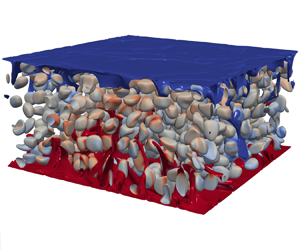
Turbulent convection in emulsions: the Rayleigh–Bénard configuration
-
- Journal:
- Journal of Fluid Mechanics / Volume 999 / 25 November 2024
- Published online by Cambridge University Press:
- 08 November 2024, A4
-
- Article
-
- You have access
- Open access
- HTML
- Export citation
-
This study explores heat and turbulent modulation in three-dimensional multiphase Rayleigh–Bénard convection using direct numerical simulations. Two immiscible fluids with identical reference density undergo systematic variations in dispersed-phase volume fractions, $0.0 \leq \varPhi \leq 0.5$, and ratios of dynamic viscosity, $\lambda _{\mu }$, and thermal diffusivity, $\lambda _{\alpha }$, within the range $[0.1\unicode{x2013}10]$. The Rayleigh, Prandtl, Weber and Froude numbers are held constant at $10^8$, $4$,
$4$,  $6000$ and $1$, respectively. Initially, when both fluids share the same properties, a 10 % Nusselt number increase is observed at the highest volume fractions. In this case, despite a reduction in turbulent kinetic energy, droplets enhance energy transfer to smaller scales, smaller than those of single-phase flow, promoting local mixing. By varying viscosity ratios, while maintaining a constant Rayleigh number based on the average mixture properties, the global heat transfer rises by approximately 25 % at $\varPhi =0.2$ and $\lambda _{\mu }=10$. This is attributed to increased small-scale mixing and turbulence in the less viscous carrier phase. In addition, a dispersed phase with higher thermal diffusivity results in a 50 % reduction in the Nusselt number compared with the single-phase counterpart, owing to faster heat conduction and reduced droplet presence near walls. The study also addresses droplet-size distributions, confirming two distinct ranges dominated by coalescence and breakup with different scaling laws.


Singularities of nilpotent Slodowy slices and collapsing levels of W-algebras
- Part of
-
- Journal:
- Forum of Mathematics, Sigma / Volume 12 / 2024
- Published online by Cambridge University Press:
- 08 November 2024, e95
-
- Article
-
- You have access
- Open access
- HTML
- Export citation
-
We develop techniques to construct isomorphisms between simple affine W-algebras and affine vertex algebras at admissible levels. We then apply these techniques to obtain many new, and conjecturally all, admissible collapsing levels for affine W-algebras. In short, if a simple affine W-algebra at a given level is equal to its affine vertex subalgebra generated by the centraliser of an ${\mathfrak {sl}}_2$-triple associated with the underlying nilpotent orbit, then that level is said to be collapsing. Collapsing levels are important both in representation theory and in theoretical physics. Our approach relies on two fundamental invariants of vertex algebras. The first one is the associated variety, which, in the context of admissible level simple affine W-algebras, leads to the Poisson varieties known as nilpotent Slodowy slices. We exploit the singularities of these varieties to detect possible collapsing levels. The second invariant is the asymptotic datum. We prove a general result asserting that, under appropriate hypotheses, equality of asymptotic data implies isomorphism at the level of vertex algebras. Then we use this to give a sufficient criterion, of combinatorial nature, for an admissible level to be collapsing. Our methods also allow us to study isomorphisms between quotients of W-algebras and extensions of simple affine vertex algebras at admissible levels. Based on such examples, we are led to formulate a general conjecture: for any finite extension of vertex algebras, the induced morphism between associated Poisson varieties is dominant.

Factors associated with construction apprenticeship completion in the United States
-
- Journal:
- The Economic and Labour Relations Review / Volume 35 / Issue 4 / December 2024
- Published online by Cambridge University Press:
- 08 November 2024, pp. 939-958
-
- Article
-
- You have access
- Open access
- HTML
- Export citation
A Conversation with James LaBelle, MD, PhD, Associate Professor of Pediatric Hematology/Oncology/Stem Cell Transplant, University of Chicago
-
- Journal:
- Journal of Clinical and Translational Science / Volume 8 / Issue 1 / 2024
- Published online by Cambridge University Press:
- 08 November 2024, e193
-
- Article
-
- You have access
- Open access
- HTML
- Export citation
Groupoidal realizability for intensional type theory
-
- Journal:
- Mathematical Structures in Computer Science / Volume 34 / Issue 9 / October 2024
- Published online by Cambridge University Press:
- 08 November 2024, pp. 911-944
-
- Article
-
- You have access
- Open access
- HTML
- Export citation
Prevalence and prognosis of tinnitus in post-COVID-19 patients: a cross-sectional survey
-
- Journal:
- Epidemiology & Infection / Volume 152 / 2024
- Published online by Cambridge University Press:
- 08 November 2024, e137
-
- Article
-
- You have access
- Open access
- HTML
- Export citation
Data-driven decarbonization framework with machine learning
- Part of
-
- Journal:
- Environmental Data Science / Volume 3 / 2024
- Published online by Cambridge University Press:
- 08 November 2024, e22
-
- Article
-
- You have access
- Open access
- HTML
- Export citation
Airborne lidar at Guiengola, Oaxaca: Mapping a Late Postclassic Zapotec city
-
- Journal:
- Ancient Mesoamerica / Volume 35 / Issue 3 / Fall 2024
- Published online by Cambridge University Press:
- 08 November 2024, pp. 899-916
-
- Article
-
- You have access
- Open access
- HTML
- Export citation
Profiling moral potency dimensions: A person-centered, multi-sample study
-
- Journal:
- Journal of Management & Organization / Volume 31 / Issue 2 / March 2025
- Published online by Cambridge University Press:
- 08 November 2024, pp. 495-510
-
- Article
-
- You have access
- Open access
- HTML
- Export citation
Design, modeling, and preliminary evaluation of a 3D-printed wrist–hand grasping orthosis for stroke survivors
-
- Journal:
- Wearable Technologies / Volume 5 / 2024
- Published online by Cambridge University Press:
- 08 November 2024, e12
-
- Article
-
- You have access
- Open access
- HTML
- Export citation
Recruitment and retention strategies to promote research engagement among caregivers and their children: A scoping review
-
- Journal:
- Journal of Clinical and Translational Science / Volume 8 / Issue 1 / 2024
- Published online by Cambridge University Press:
- 08 November 2024, e194
-
- Article
-
- You have access
- Open access
- HTML
- Export citation
Isolating influences of varying pitch from the effects of non-zero compound angles on effusion cooling
-
- Journal:
- The Aeronautical Journal / Volume 129 / Issue 1331 / January 2025
- Published online by Cambridge University Press:
- 08 November 2024, pp. 63-83
-
- Article
-
- You have access
- Open access
- HTML
- Export citation
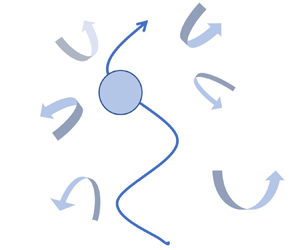
Direct numerical simulation of bubble rising in turbulence
-
- Journal:
- Journal of Fluid Mechanics / Volume 999 / 25 November 2024
- Published online by Cambridge University Press:
- 08 November 2024, A11
-
- Article
-
- You have access
- Open access
- HTML
- Export citation
-
We describe the rising trajectory of bubbles in isotropic turbulence and quantify the slowdown of the mean rise velocity of bubbles with sizes within the inertial subrange. We perform direct numerical simulations of bubbles, for a wide range of turbulence intensity, bubble inertia and deformability, with systematic comparison with the corresponding quiescent case, with Reynolds number at the Taylor microscale from 38 to 77. Turbulent fluctuations randomise the rising trajectory and cause a reduction of the mean rise velocity $\tilde {w}_b$ compared with the rise velocity in quiescent flow $w_b$. The decrease in mean rise velocity of bubbles $\tilde {w}_b/w_b$ is shown to be primarily a function of the ratio of the turbulence intensity and the buoyancy forces, described by the Froude number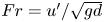 $Fr=u'/\sqrt {gd}$, where $u'$ is the root-mean-square velocity fluctuations, $g$ is gravity and $d$ is the bubble diameter. The bubble inertia, characterised by the ratio of inertial to viscous forces (Galileo number), and the bubble deformability, characterised by the ratio of buoyancy forces to surface tension (Bond number), modulate the rise trajectory and velocity in quiescent fluid. The slowdown of these bubbles in the inertial subrange is not due to preferential sampling, as is the case with sub-Kolmogorov bubbles. Instead, it is caused by the nonlinear drag–velocity relationship, where velocity fluctuations lead to an increased average drag. For $Fr > 0.5$, we confirm the scaling $\tilde {w}_b / w_b \propto 1 / Fr$, as proposed previously by Ruth et al. (J. Fluid Mech., vol. 924, 2021, p. A2), over a wide range of bubble inertia and deformability.


Patience: A New Account of a Neglected Virtue
-
- Journal:
- Journal of the American Philosophical Association / Volume 11 / Issue 1 / March 2025
- Published online by Cambridge University Press:
- 08 November 2024, pp. 97-117
-
- Article
-
- You have access
- Open access
- HTML
- Export citation
