To save content items to your account,
please confirm that you agree to abide by our usage policies.
If this is the first time you use this feature, you will be asked to authorise Cambridge Core to connect with your account.
Find out more about saving content to .
To save content items to your Kindle, first ensure no-reply@cambridge.org
is added to your Approved Personal Document E-mail List under your Personal Document Settings
on the Manage Your Content and Devices page of your Amazon account. Then enter the ‘name’ part
of your Kindle email address below.
Find out more about saving to your Kindle.
Note you can select to save to either the @free.kindle.com or @kindle.com variations.
‘@free.kindle.com’ emails are free but can only be saved to your device when it is connected to wi-fi.
‘@kindle.com’ emails can be delivered even when you are not connected to wi-fi, but note that service fees apply.
We performed a systematic literature review to identify and describe pharmacist-led antimicrobial stewardship programs (ASPs) interventions in low- and middle-income countries (LMICs).
Design:
Systematic literature review.
Methods:
We searched PubMed for studies evaluating pharmacist-led ASP interventions in LMICs from January 1, 2012, to November 4, 2023. We evaluated the article’s country of origin, described ASP interventions, and analyzed their reported outcomes.
Results:
Twenty-four studies were included; ten were conducted in China, two in India, two in Thailand, five in Africa, three in Latin America, and two in the Middle East. The predominant interventions in the studies were education and training followed by audit and feedback. The outcomes reported included reduction in antimicrobial consumption, cost reduction, shortening of the duration of antimicrobial therapy, and de-escalation.
Conclusions:
Our findings reinforce the importance of clinical pharmacists leading interventions related to antimicrobial stewardship in LMCIs and the global importance of investing in Infectious Disease training.
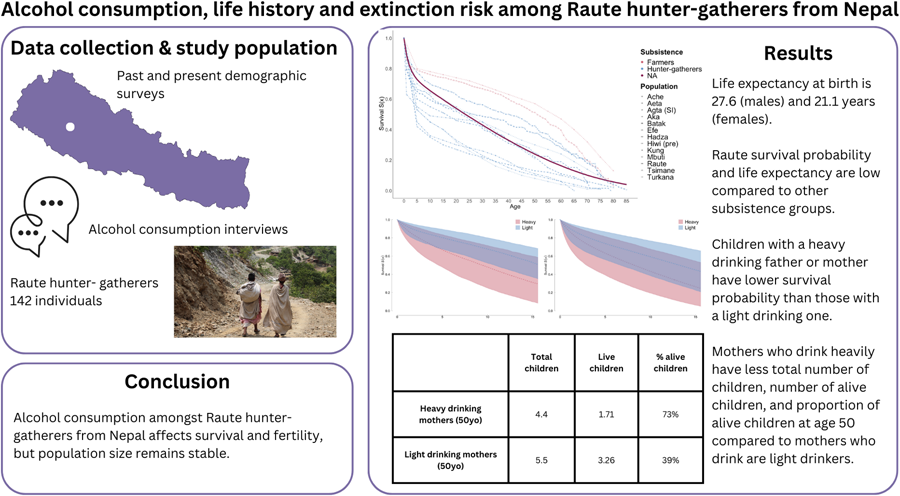
Hunter–gatherer populations underwent a mass extinction in the Neolithic, and in present times face challenges such as explicit sedentarisation policies. An exception is in Nepal, where the nomadic Raute people receive monthly governmental individual payments. One consequence of the money transfers has been a significant increase in alcohol consumption, with nearly all individuals drinking industrially produced alcohol. Here we investigate the Raute demography based on a full census of 144 individuals. We show that the Raute exhibit the short life expectancies typical of other hunter–gatherer populations from Africa, Asia and America. Bayesian survival trajectory analysis demonstrated that heavy drinking by either parent substantially reduces offspring survival to age 15. Bayesian regressions revealed a significant effect of heavy drinking on maternal fertility by decreasing the number of living children and reducing the proportion of live children at the end of maternal reproductive life. Although the absence of data prior to monetary support precludes a direct assessment of long-term demographic trends, relatively stable population sizes over the last decades and a fertility rate close to the replacement rate rule out an imminent population crash. Further studies are required to elucidate the Rautes’ origins and relationship with other nomadic people in the region.
The world is facing a global plastics crisis with more than 50% of plastics produced only being used once and then discarded. If nothing is done to put an end to plastic pollution, it is projected that by 2050, there will be more plastic (by weight) than fish in the ocean, affecting natural ecosystems, biodiversity and human health. While solutions often target governments and corporations, a crucial group is frequently ignored: informal waste pickers. Despite the limitations of recycling alone, waste pickers significantly impact the plastic recycling chain. This review addresses the gap in our understanding of their role. It argues that waste pickers are an essential component of the larger portfolio of solutions for the plastic crisis but face significant challenges.
Gender is a socially constructed concept influenced by social practices, norms, and expectations. The impact of gender differences on mental health has been long recognized, with consequences such as over-diagnosis and pathologization or under-diagnosis of some disorders depending on gender. This also has implications for the treatments that each gender receives. In this narrative review, we will analyze (a) the gender differences in the prevalence of mental disorders, (b) the explanations for gender differences in mental health, including biological, social constructionist, and sociocultural risk factors, and (c) the gender differences in the treatment of mental disorders, including differences in health-seeking behavior and treatment outcomes. Overall, there is a consistent pattern of differences in prevalence, with women more likely to have internalizing disorders (e.g., anxiety or depression) and men more likely to have externalizing disorders (e.g., antisocial personality or substance use). The explanations aimed at disentangling the reasons for these gender differences are complex, and several approaches should be considered to achieve a comprehensive explanation. In addition to biological factors (e.g., hormonal changes), social constructionist factors (e.g., biased diagnostic criteria and clinicians’ gender bias) and sociocultural factors (e.g., feminization of poverty, gender discrimination, violence against women, and prescriptive beauty standards) should be considered. Future studies in the field of mental health should consider gender differences and explore the bio-psycho-socio-cultural factors that may underlie these differences.
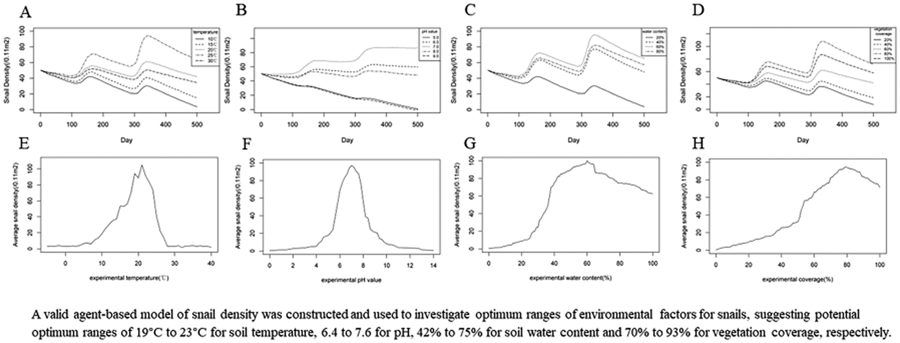
Oncomelania hupensis (O. hupensis), the sole intermediate host of Schistosoma japonicum, greatly influence the prevalence and distribution of schistosomiasis japonica. The distribution area of O. hupensis has remained extensive for numerous years. This study aimed to establish a valid agent-based model of snail density and further explore the environmental conditions suitable for snail breeding. A marshland with O. hupensis was selected as a study site in Dongting Lake Region, and snail surveys were monthly conducted from 2007 to 2016. Combined with the data from historical literature, an agent-based model of snail density was constructed in NetLogo 6.2.0 and validated with the collected survey data. BehaviorSpace was used to identify the optimal ranges of soil temperature, pH, soil water content, and vegetation coverage for snail growth, development and reproduction. An agent-based model of snail density was constructed and showed a strong agreement with the monthly average snail density from the field surveys. As soil temperature increased, the snail density initially rose before declining, reaching its peak at around 21°C. There were similar variation patterns for other environmental factors. The findings from the model suggested that the optimum ranges of soil temperature, pH, soil water content and vegetation coverage were 19°C to 23 °C, 6.4 to 7.6, 42% to 75%, and 70% to 93%, respectively. A valid agent-based model of snail density was constructed, providing more objective information about the optimum ranges of environmental factors for snail growth, development and reproduction.
In 2023, the UK government announced a Major Conditions Strategy, publishing ‘The case for change and our strategic framework’, which set out the focus on cancers, diabetes, dementia, mental ill health, musculoskeletal disorders, CVD and chronic respiratory diseases. Together, these conditions account for 60% of total disability-adjusted life years lost to early death or ill health in England, and one in four adults has at least two (multimorbidity). This review considers some of the key dietary risks for these major conditions and population policies that may improve diets and reduce risks. UK Government dietary recommendations, based on independent risk assessment and advice from the Scientific Advisory Committee on Nutrition, are encapsulated in the national food model, the Eatwell Guide. Based on key sources of dietary data – chiefly consumption data from the National Diet and Nutrition Survey and consumer purchase data from Kantar – most people do not meet dietary recommendations. This review considers how science and evidence inform health improvement policy. This includes policies that encourage healthier food choices, such as labelling and public procurement standards to those that minimise the impact of the less healthy choice such as sugar and salt reduction and reformulation. The review also considers nutritional approaches to managing some non-communicable diseases. Given the role nutrition and excess weight play in the onset, prognosis and quality of life for those living with one or more of the major conditions, there are huge potential gains from even small dietary improvements across population groups.
We characterize Borel line graphs in terms of 10 forbidden induced subgraphs, namely the nine finite graphs from the classical result of Beineke together with a 10th infinite graph associated with the equivalence relation $\mathbb {E}_0$ on the Cantor space. As a corollary, we prove a partial converse to the Feldman–Moore theorem, which allows us to characterize all locally countable Borel line graphs in terms of their Borel chromatic numbers.
Technological innovations in the online food delivery sector include the use of autonomous delivery vehicles. The aim of the present study was to investigate consumers’ intentions to use these services once they are widely available and their motivations for using them to access unhealthy food.
Design:
Online survey including a vignette describing a future world where autonomous food deliveries are in common use in both metropolitan and non-metropolitan areas.
Setting:
Australia.
Participants:
1078 Australians aged 18 years and older, nationally representative by sex, age and location (metropolitan v. non-metropolitan residence).
Results:
Around half of the sample reported intending to use an autonomous food delivery service at least once per week for fast food (53 %) and/or healthy pre-prepared food (50 %). Almost two-thirds (60 %) intended using autonomous vehicle deliveries to receive groceries. Around one in five (17 %) anticipated an increase in their fast-food intake as a result of access to autonomous delivery services compared with one in two (46 %) expecting others’ total fast-food intake to increase. The most common reason provided for using autonomous food deliveries was increased convenience. More frequent current fast-food ordering, higher socio-economic status, younger age and regional location were significantly associated with an anticipated increase in fast-food consumption.
Conclusions:
The emergence of autonomous food delivery systems may bring both benefits and adverse consequences that in combination are likely to constitute a substantial regulatory challenge. Proactive efforts will be required to avoid negative public health nutrition outcomes of this transport evolution.
Enterococcus faecium is a difficult-to-treat gram positive organism with increasing rates of resistance to vancomycin which is commonly mediated through the vanA gene cluster. There have been international reports of E. faecium isolates that are genotypically positive for vanA but phenotypically vancomycin-susceptible. These isolates, commonly called vancomycin-variable enterococci (VVE), can convert to phenotypic vancomycin resistance upon exposure to vancomycin. Multiple mechanisms for this genotypic-phenotypic mismatch have been reported and most commonly involve the regulatory components of the vanA gene cluster. VVE are challenging to identify unless microbiology labs routinely implement both genotypic and phenotypic screening methods. VVE has been associated with outbreaks and has become a prevalent pathogen in several countries. In this review, we summarize the mechanisms, microbiology and epidemiology of VVE. Clinicians must remain vigilant for VVE as diagnosis can be challenging and treatment failure on vancomycin is possible.
Mechanisms of sleep disorders in fibromyalgia (FM) patients, such as insomnia, early morning awakenings and poor quality sleep, have not yet been proven and no consistent and effective treatment is yet available. The aim of this study was to investigate the pineal gland volume and the relationship between total fibre count, total fibre volume and total fibre length of the spinoreticular tract involved in regulation of sleep and wakefulness in terms of the mechanism of sleep disturbance.
Methods:
This study included only female cases, 31 with fibromyalgia and 31 controls. Pittsburgh Sleep Quality Index was used to assess sleep quality. Tractography of targeted pathway from brain diffusion MR images was calculated in Diffusion Studio Imaging (DSI) Studio programme and the volume of the pineal gland was calculated in ITK-SNAP programme.
Results:
The mean volume of the pineal gland was higher in control group (218.84 ± 64.45 mm3) than in fibromyalgia group (174.77 ± 48.65 mm3), which was statistically significant (p = 0.004). However, there was no statistically significant difference between two groups in total spinoreticular tract (TSRT), total volume (TSRTV), TSRT fractional anisotropy, TSRT mean diffusion, TSRT axial diffusion and TSRT radial diffusion of spinoreticular tract, which is involved in the regulation of sleep and wakefulness (p > 0.05).
Conclusion:
In conclusion, it is thought that the endocrine system may be more related to sleep disturbance in individuals with FM than central nervous system. Therefore, we believe that it may be more appropriate to work on the endocrine system rather than neural system in the treatment of sleep disturbance in patients with FM.
The objective of our study was to determine the prevalence of anaemia among 14–19 years school going girls, risk factors for it and profile of micronutrient status among rural girls from western state of India.
Design:
Using a cross-sectional design, we obtained information on socio-demography, menstruation, dietary habits, knowledge and daily consumption of the government recommended iron and folic acid (IFA) tablets, and anthropometry. Blood was collected to assess Hb, red blood cell indices, serumFe, folate and vitamin B12 levels.
Settings:
Nagpur district, Maharashtra, India.
Participants:
A total of 221 girls aged 14–19 years studying in twenty-four government institutes included.
Results:
57 % girls were anaemic, 84 % had deficiency of one or more micronutrients and 60 % were malnourished based on body mass index (BMI). The prevalence of Fe, vitamin B12 and folate deficiency was 37·7 %, 69·8 % and 1·4 %, respectively. Among anaemic girls, Fe and vitamin B12 deficiency was observed in 45·5 % and 67·5 %, respectively, v. among non-anaemic girls it was 27 % and 73 %, respectively. Fe deficiency was a predictor of anaemia and its severity. Girls residing in non-nuclear family were more likely to have anaemia. The consumption of daily non-vegetarian food and green leafy vegetables was 3 % and 3·6 %, respectively. Only 9 % consumed IFA tablets in the past 2 weeks.
Conclusions:
Anaemia is common in adolescent girls, particularly associated with Fe and vitamin B12 deficiency. There is need to reconsider the approach to prevention of anaemia in adolescent girls, particularly before they become pregnant.
Cognitive decline is intricately linked to various factors such as obesity, stress, poor sleep, and circadian rhythm misalignment, which are interrelated in their impact on cognitive health. Irregular food-intake timing further compounds these issues. The practice of prolonged nightly fasting (PNF) may help synchronize food intake with circadian rhythms, potentially mitigating adverse effects of cognitive decline and associated factors.
Methods:
A pilot nationwide, remotely delivered, 2-arm randomized controlled trial was conducted to assess the 8-week outcomes of cognition, stress, and sleep, after a PNF intervention (14-hr nightly fast, 6 nights/week, no calories after 8 pm) compared to a health education (HED) control condition. Participants were living with memory decline, stress, and obesity and had weekly check-in calls to report fasting times (PNF) or content feedback (HED).
Results:
Participants were enrolled from 37 states in the US; N = 58, 86% women, 71% white, 93% non-Latinx, mean (SD) age 50.1 (5.1) years and BMI 35.6 (3.6) kg/m2. No group differences existed at baseline. Linear mixed-effects models were used to compare outcome change differences between groups. Compared to the HED control, the PNF intervention was associated with improved sleep quality (B = −2.52; SE = 0.90; 95% CI −4.30–−0.74; p = 0.006). Perceived stress and everyday cognition significantly changed over time (p < 0.02), without significant difference by group.
Discussion:
Changing food intake timing to exclude nighttime eating and promote a fasting period may help individuals living with obesity, memory decline, and stress to improve their sleep. Improved sleep quality may lead to additional health benefits.
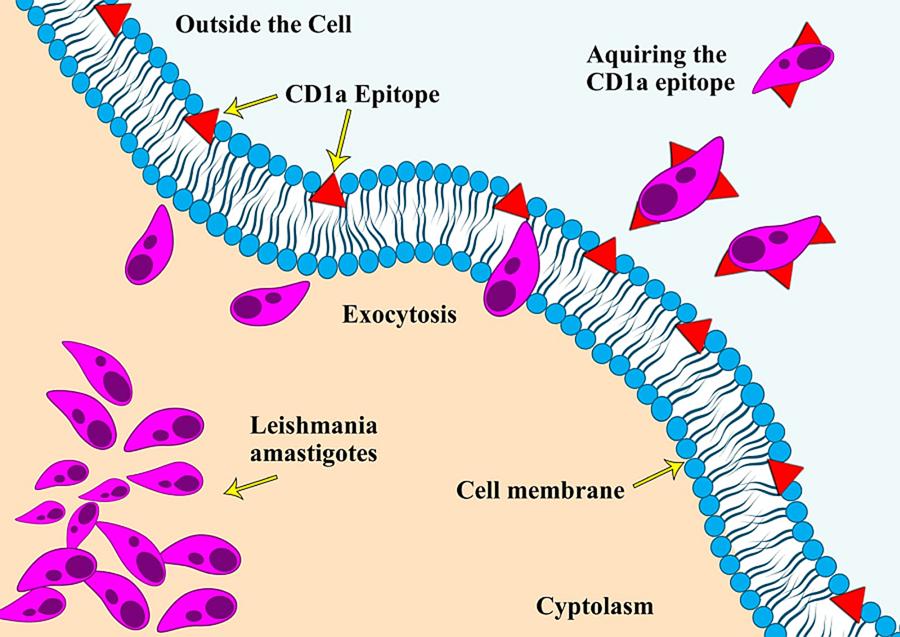
Cutaneous leishmaniasis (CL) is a vector-borne parasitic disease, routinely diagnosed by direct light microscopy. The sensitivity of this method is dependent on the number of parasites present in the lesion. Immunoexpression of CD1a surface antigen by Leishmania amastigotes and its application as a diagnostic tool has been recently demonstrated in several species including Leishmania major, Leishmania tropica and Leishmania infantum. Leishmania donovani is the only reported species in Sri Lanka primarily causing CL and its CD1a status remains unexplored. We studied CD1a expression by amastigotes of L. donovani in skin biopsies from 116 patients with suspected CL. The biopsy sections were stained with CD1a clones O10 and MTB1 separately. Slit skin smear (SSS) results were considered the gold standard for diagnosis of CL. 103 cases were confirmed through SSS where 73 of them showed positive parasite staining for CD1a clone MTB1 with 70.9% sensitivity. Positivity was seen mostly in parasites closer to the epidermis. CD1a clone O10 failed to detect any amastigotes. Test sensitivity improved to 74.1% when the analysis was applied only to patients with low/no discernible Leishman-Donovan (LD) bodies in histology. Our findings show that CD1a clone MTB1 successfully stains amastigotes of L. donovani species and can be used as a supplementary diagnostic tool in detecting CL, especially when LD bodies are low in number. This method could be validated to detect other forms of leishmaniasis caused by L. donovani in Indian and sub-Saharan regions.
Graph-based semi-supervised learning methods combine the graph structure and labeled data to classify unlabeled data. In this work, we study the effect of a noisy oracle on classification. In particular, we derive the maximum a posteriori (MAP) estimator for clustering a degree corrected stochastic block model when a noisy oracle reveals a fraction of the labels. We then propose an algorithm derived from a continuous relaxation of the MAP, and we establish its consistency. Numerical experiments show that our approach achieves promising performance on synthetic and real data sets, even in the case of very noisy labeled data.
To determine the associations among iron status, depressive/anxiety symptoms, and quality of life (QoL) throughout pregnancy.
Design:
This longitudinal study recruited participants in their 1st trimester (< 13 weeks; n=116) and followed in their 2nd (n=71) and 3rd (n=71) trimesters. Sociodemographic, food security, anxiety, depressive symptoms, and QoL questions were collected. Hemoglobin (Hb), ferritin (Ft), and transferrin saturation (TSAT) were determined. Women were categorized as iron improvers or non-improvers based on changes in iron status. Associations were assessed using difference-in-difference analyses.
Setting:
Cape Coast, Ghana between October 2017 to September 2018.
Participants:
Pregnant women, 18-38 years.
Results:
Improvement in Ft levels from the 1st to 2nd trimester were associated with reduced depressive symptoms (-2.96 vs -0.58, p=0.028), and higher overall QoL (13.99 vs 1.92, p=0.006) particularly role physical (23.32 vs -2.55, p=0.025) and role emotional (27.50 vs 10.06, p=0.025) subscales. Improvement in Hb levels during the same period were linked to less anxiety, particularly fear factor (-2.62 vs -0.51, p=0.020); and worsened physical health aspect of QoL (-21.80 vs -3.75, p=0.005). Improvement in TSAT levels from 2nd to 3rd trimester were associated with increased total anxiety (1.56 vs -0.64, p=0.030) and panic factor (0.45 vs -0.26, p=0.004) and decreased total QoL (-1.08 vs 7.94, p=0.017), specifically role physical (-10.98 vs 11.93, p=0.018).
Conclusion:
Increases in iron status from first to second trimester were related to improvements in psychosocial wellbeing, implying potential benefit of iron supplementation on affect in early pregnancy. Larger studies are needed to confirm these findings.
We describe our experience implementing an intensive quality improvement cohort pilot focused on managing asymptomatic bacteriuria in 19 critical access hospitals. Participation in the pilot was high, and almost all sites identified an improvement goal and collected clinical data. Barriers to implementation included staffing shortages, turnover, and lack of bandwidth.
Prior studies have documented that working-class individuals rarely become parliamentarians. We know less about when in the career pipeline to parliament workers disappear, and why. We study these questions using detailed data on the universe of Swedish politicians’ careers over a 50-year period. We find roughly equal-sized declines in the proportion of workers on various rungs of the political career ladder ranging from local to national office. We reject the potential explanations that workers lack political ambition, public service motivation, honesty, or voter support. And while workers’ average high school grades and cognitive test scores are lower, this cannot explain their large promotion disadvantage, a situation that we label a class ceiling. Organizational ties to blue-collar unions help workers advance, but only to lower-level positions in left-leaning parties. We conclude that efforts to improve workers’ numerical representation should apply throughout the career ladder and focus on intra-party processes.
This study extends the upper echelons literature by shedding light on the role of top management team (TMT) dissimilarity, a specific conceptualization of team diversity. TMTs are typically composed of members from different functional areas who have unique information and values. The perception of the degree to which TMT members view themselves as dissimilar from other team members affects the TMT’s decision-making and, therefore, organizational outcomes. However, research does not address this perspective of TMT diversity. We examine how informational and value dissimilarity among TMT members is associated with incremental and radical innovation capability. We survey top managers from various industries and use partial least squares structural equation modeling analysis to explore the association between TMT dissimilarity and innovation capability empirically. The findings show that informational dissimilarity is positively associated with incremental innovation capability. Value dissimilarity is negatively associated with incremental innovation capability, whereas it is positively associated with radical innovation capability.
Temporal energy intake (EI) and physical activity (PA) patterns may be associated with obesity. We aimed to derive and characterise temporal EI and PA patterns, and assess their cross-sectional association with weight status, in 6-to-14-year-old Portuguese participants of the National Food, Nutrition and Physical Activity Survey 2015–2016. We extracted times and EI of all eating occasions from two 1-d food diaries/24-h recalls, while types and times of PA from 4-d PA diaries. We derived EI patterns (n 714) and PA patterns (n 595), using, respectively, a hierarchical and K-means cluster analysis, considering the average proportion of total daily EI (%TEI) and PA intensity (%TPA), within each 2-h interval across the 24-h day. Patterns were labelled based on the 2-h intervals of %TEI/TPA peaks. We assessed the association between patterns and overweight or obesity (BMI z-score ≥ +1 sd) using adjusted logistic regressions (OR (95 % CI)). Three EI patterns emerged: 1 – ‘Early afternoon and early evening’; 2 – ‘Early afternoon and late evening’; and 3 – ‘Late morning, early and mid-afternoon and late evening’. EI Pattern 3 v. Pattern 1 was negatively associated with overweight or obesity (0·49 (0·26, 0·92)). PA Pattern 1 – ‘Late morning, mid-afternoon and early evening’ v. Pattern 2 – ‘Late afternoon’, was not associated with weight status (0·95 (0·65, 1·38)). A daily EI pattern with more and even %TEI peaks at earlier daytime periods, rather than fewer and higher, may be negatively associated with overweight or obesity amongst this population whereas the identified PA patterns might have no relationship.