To save content items to your account,
please confirm that you agree to abide by our usage policies.
If this is the first time you use this feature, you will be asked to authorise Cambridge Core to connect with your account.
Find out more about saving content to .
To save content items to your Kindle, first ensure no-reply@cambridge.org
is added to your Approved Personal Document E-mail List under your Personal Document Settings
on the Manage Your Content and Devices page of your Amazon account. Then enter the ‘name’ part
of your Kindle email address below.
Find out more about saving to your Kindle.
Note you can select to save to either the @free.kindle.com or @kindle.com variations.
‘@free.kindle.com’ emails are free but can only be saved to your device when it is connected to wi-fi.
‘@kindle.com’ emails can be delivered even when you are not connected to wi-fi, but note that service fees apply.
Recently, several philosophers have argued that, when faced with moral uncertainty, we ought to choose the option with the maximal expected choiceworthiness (MEC). This view has been challenged on the grounds that it is implausibly demanding. In response, those who endorse MEC have argued that we should take into account the all-things-considered choiceworthiness of our options. I argue that this gives rise to another problem: acts that we consider to be supererogatory are rendered impermissible, and acts that we consider to be suberogatory are rendered obligatory, under MEC. I suggest a way to reformulate MEC to solve this problem.
Where and under what conditions the transfer of energy between electromagnetic fields and particles takes place in the solar wind remains an open question. We investigate the conditions that promote the growth of kinetic instabilities predicted by linear theory to infer how turbulence and temperature-anisotropy-driven instabilities are interrelated. Using a large dataset from Solar Orbiter, we introduce the radial rate of strain, a novel measure computed from single-spacecraft data, which we interpret as a proxy for the double-adiabatic strain rate. The solar wind exhibits high absolute values of the radial rate of strain at locations with large temperature anisotropy. We measure the kurtosis and skewness of the radial rate of strain from the statistical moments to show that it is non-Gaussian for unstable intervals and increasingly intermittent at smaller scales with a power-law scaling. We conclude that the velocity field fluctuations in the solar wind contribute to the presence of temperature anisotropy sufficient to create potentially unstable conditions.
In magnetic confinement fusion devices close to axisymmetry, such as tokamaks, a key element is the winding profile of the magnetic field lines, or its inverse, the safety profile $q=q_{\boldsymbol {B}}$. A corresponding profile, $q_{\boldsymbol {J}}$, can be defined for the current density field lines. Ampère's law relates any mode of current perturbation $\delta \boldsymbol {J}_{m,n}$ with a mode of magnetic perturbation $\delta \boldsymbol {B}_{m,n}$. It is shown that the knowledge of the pair $(q_{\boldsymbol {B}},q_{\boldsymbol {J}})$ allows us then to characterize the resonant, or non-resonant, nature of the modes for both the magnetic and current density field lines. The expression of $q_{\boldsymbol {J}}$ in the flux coordinate is derived. Including this calculation in real-time Grad–Shafranov equilibrium reconstruction codes would yield a comprehensive view of the magnetics. The monitoring of the pair $(q_{\boldsymbol {B}},q_{\boldsymbol {J}})$ would then allow us to investigate the role played by the resonant modes for the current density, that are current filamentary modes, in the plasma small-scale turbulence. By driving the magnetic and current density profiles apart so that the images of $q_{\boldsymbol {B}}$ and $q_{\boldsymbol {J}}$ are disjoint, these filamentary modes would not impact the magnetic field topology, being not associated with magnetic islands but with non-resonant magnetic modes. It remains to be explored to what extent such a configuration, where the spectrum of tiny current density filaments produces a spectrum of magnetic modes that has practically no effect on heat transport, is beneficial.
We investigate voter preferences for changes in voting rules, focusing specifically on the creation of citizen-initiative processes that were originally adopted in South Dakota in 1898 and eventually enacted by half of the states. Various claims have been advanced about why the process was adopted and who supported or opposed it, but without presenting evidence from referenda where voters approved the creation of the process. We test these claims by examining county-level election returns from South Dakota’s 1898 referendum that created the first statewide initiative process in the United States. We find that support for the initiative process was generally higher among groups that are disadvantaged in various ways by existing representative institutions and perceive advantages in creating direct democratic institutions capable of bypassing representative processes. These findings stand in contrast to the notion that the adoption of constitutional rules will be relatively free from calculations rooted in self-interest and perceived advantage from the rules changes.
The extent to which the oro-faecal route contributes to the transmission of SARS-CoV-2 is not established.
We systematically reviewed the evidence on the presence of infectious SARS-CoV-2 in faeces and other gastrointestinal sources by examining studies that used viral culture to investigate the presence of replication-competent virus in these samples. We conducted searches in the WHO COVID-19 Database, LitCovid, medRxiv, and Google Scholar for SARS-CoV-2 using keywords and associated synonyms, with a search date up to 28 November 2023.
We included 13 studies involving 229 COVID-19 subjects – providing 308 faecal or rectal swab SARS-CoV2 reverse transcription-polymerase chain reaction (RT-PCR)-positive samples tested with viral culture. The methods used for viral culture across the studies were heterogeneous. Three studies (two cohorts and one case series) reported observing replication-competent SARS-CoV-2 confirmed by quantitative RT-PCR (qPCR) and whole-genome sequencing, and qPCR including appropriate cycle threshold changes. Overall, six (1.9%) of 308 faecal samples subjected to cell culture showed replication-competent virus. One study found replication-competent samples from one immunocompromised patient. No studies were identified demonstrating direct evidence of oro-faecal transmission to humans.
Our review found a relatively low frequency of replication-competent SARS-CoV-2 in faecal and other gastrointestinal sources. Although it is biologically plausible, more research is needed using standardized cell culture methods, control groups, adequate follow-up, and robust epidemiologic methods, including whether secondary infections occurred, to determine the role of the oro-faecal route in the transmission of SARS-CoV-2.
This study investigates the interaction between a freely rising, deformable bubble and a freely settling particle of the same size due to gravity. Initially, an in-line configuration is considered while varying the Bond, Galilei and Archimedes numbers. The study shows that as the bubble and particle approach each other, a liquid film forms between them that undergoes drainage. The formation of the liquid film leads to dissipation of kinetic energy, and for sufficiently large bubble velocities, particle flotation takes place. Increasing the Bond number causes the bubble to deform more severely, which may allow the particle to pass through the bubble as it ruptures. This work also considers an offset configuration, which shows that the bubble slides away from the particle, affecting its settling trajectory.
Studies indicate a high burden of mental health disorders among female sex workers (FSWs) in low- and middle-income countries (LMICs). Despite available data on suicidal ideation and suicide attempts among FSWs, little is known about suicide deaths in this hard-to-reach population. This study aims to examine the extent to which suicide is a cause of maternal mortality among FSWs, the contexts in which suicides occur, and the methods used. From January to October 2019, the Community Knowledge Approach method for identifying cause-specific deaths in communities was employed across eight LMICs (Angola, Brazil, the Democratic Republic of the Congo (DRC), India, Indonesia, Kenya, Nigeria, and South Africa). A total of one thousand two hundred eighty FSWs provided detailed reports on two thousand one hundred twelve FSW deaths in the preceding 5 years, including 288 (13.6%) suicides, 178 (61.8%) of which were maternal. Of these maternal suicides, 57.9% occurred during pregnancy (antepartum), 20.2% within two months of delivery (puerperium), and 21.9% in the 2–12 months following delivery (postpartum). The highest proportion of suicides occurred in Nigeria, Kenya, and DRC in sub-Saharan Africa. A total of 504 children lost their mothers to suicide. Further research is needed to identify interventions for suicide risk among FSW mothers.
Unveiling the pressure‒temperature path of low-grade metamorphic rocks is challenging because of the occurrence of detrital minerals and high-variance mineral assemblages (i.e. chlorite–white mica–quartz). This paper is an attempt to reconstruct the pressure–temperature history on metapelites from a low-grade metamorphic unit, i.e. the Cabanaira Unit, located in the Marguareis Massif (Western Ligurian Alps, Italy). In order to obtain the most robust result possible, multi-equilibrium thermobarometry, forward modelling and crystallochemical index measurements are used together to reconstruct a pressure–temperature path, with consideration of the strengths and weaknesses of these methods.
This multidisciplinary approach allowed us to reconstruct the metamorphic evolution of the unit of interest, characterised by a pressure peak reached under low-temperature conditions (0.85–0.68 GPa and 250–285°C) followed by decompressional warming (low pressure–high temperature, 0.4-0.6 GPa and 300–335°C).
This pressure‒temperature path is consistent with the tectonic evolution of the investigated area proposed by previous studies, where a geological scenario in which the Cabanaira Unit experienced subduction-related processes was postulated, even if the reasons for warming remain unclear.
Multi-equilibrium thermobarometry is considered to be the most suitable method to unravel the metamorphic history of low-grade rocks, whereas forward thermodynamic modelling and the calculation of crystallochemical indexes seem to resolve only some segments of the pressure‒temperature path.
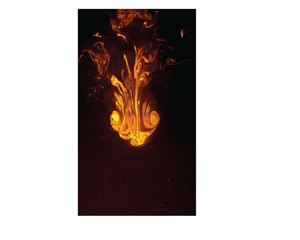
The penetration of a spherical vortex into turbulence is studied theoretically and experimentally. The characteristics of the vortex are first analysed from an integral perspective that reconciles the far-field dipolar flow with the near-field source flow. The influence of entrainment on the vortex drag force is elucidated, extending the Maxworthy (J. Fluid Mech., vol. 81, 1977, pp. 465–495) model to account for turbulent entrainment into the vortex movement and vortex penetration into an evolving turbulent field. The physics are explored numerically using a spherical vortex (initial radius $R_0$, speed $U_{v0}$), characterised by a Reynolds number $Re_0(=2R_0U_{v0}/\nu$, where $\nu$ is the kinematic viscosity) of 2000, moving into decaying homogeneous turbulence (root-mean-square $u_0$, integral scale $L$) with turbulent intensity $I_t=u_0/U_{v0}$. When the turbulence is absent ($I_t=0$), a wake volume flux leads to a reduction of vortex impulse that causes the vortex to slow down. In the presence of turbulence ($I_t> 0$), the loss of vortical material is enhanced and the vortex speed decreases until it is comparable to the local turbulent intensity and quickly fragments, penetrating a distance that scales as $I_t^{-1}$. In the experimental study, a vortex ($Re_0\sim 1490\unicode{x2013}5660$) propagating into a statistically steady, spatially varying turbulent field ($I_{ve}=0.02$ to 0.98). The penetration distance is observed to scale with the inverse of the turbulent intensity. Incorporating the spatially and temporally varying turbulent fields into the integral model gives a good agreement with the predicted trend of the vortex penetration distance with turbulent intensity and insight into its dependence on the structure of the turbulence.


Here, we report the first discovery of Antarctic fossil resin (commonly referred to as amber) within a ~5 cm-thick lignite layer, which constitutes the top part of a ~3 m-long palynomorph-rich and root-bearing carbonaceous mudstone of mid-Cretaceous age (Klages et al.2020). The sedimentary sequence (Fig. 1) was recovered by the MARUM-MeBo70 seafloor drill rig at Site PS104_20 (73.57° S, 107.09° W; 946 m water depth) from the mid-shelf section of Pine Island trough in the Amundsen Sea Embayment, West Antarctica, during RV Polarstern Expedition PS104 in early 2017 (Gohl 2017; Fig. 1a). So far, amber deposits have been described from every continent except Antarctica (Langenheim 2003, Quinney et al. 2015; Fig. 1a).
With global wind energy capacity ramping up, accurately predicting damage equivalent loads (DELs) and fatigue across wind turbine populations is critical, not only for ensuring the longevity of existing wind farms but also for the design of new farms. However, the estimation of such quantities of interests is hampered by the inherent complexity in modeling critical underlying processes, such as the aerodynamic wake interactions between turbines that increase mechanical stress and reduce useful lifetime. While high-fidelity computational fluid dynamics and aeroelastic models can capture these effects, their computational requirements limits real-world usage. Recently, fast machine learning-based surrogates which emulate more complex simulations have emerged as a promising solution. Yet, most surrogates are task-specific and lack flexibility for varying turbine layouts and types. This study explores the use of graph neural networks (GNNs) to create a robust, generalizable flow and DEL prediction platform. By conceptualizing wind turbine populations as graphs, GNNs effectively capture farm layout-dependent relational data, allowing extrapolation to novel configurations. We train a GNN surrogate on a large database of PyWake simulations of random wind farm layouts to learn basic wake physics, then fine-tune the model on limited data for a specific unseen layout simulated in HAWC2Farm for accurate adapted predictions. This transfer learning approach circumvents data scarcity limitations and leverages fundamental physics knowledge from the source low-resolution data. The proposed platform aims to match simulator accuracy, while enabling efficient adaptation to new higher-fidelity domains, providing a flexible blueprint for wake load forecasting across varying farm configurations.
Childhood bullying is a public health priority. We evaluated the effectiveness and costs of KiVa, a whole-school anti-bullying program that targets the peer context.
Methods
A two-arm pragmatic multicenter cluster randomized controlled trial with embedded economic evaluation. Schools were randomized to KiVa-intervention or usual practice (UP), stratified on school size and Free School Meals eligibility. KiVa was delivered by trained teachers across one school year. Follow-up was at 12 months post randomization. Primary outcome: student-reported bullying-victimization; secondary outcomes: self-reported bullying-perpetration, participant roles in bullying, empathy and teacher-reported Strengths and Difficulties Questionnaire. Outcomes were analyzed using multilevel linear and logistic regression models.
Findings
Between 8/11/2019–12/02/2021, 118 primary schools were recruited in four trial sites, 11 111 students in primary analysis (KiVa-intervention: n = 5944; 49.6% female; UP: n = 5167, 49.0% female). At baseline, 21.6% of students reported being bullied in the UP group and 20.3% in the KiVa-intervention group, reducing to 20.7% in the UP group and 17.7% in the KiVa-intervention group at follow-up (odds ratio 0.87; 95% confidence interval 0.78 to 0.97, p value = 0.009). Students in the KiVa group had significantly higher empathy and reduced peer problems. We found no differences in bullying perpetration, school wellbeing, emotional or behavioral problems. A priori subgroup analyses revealed no differences in effectiveness by socioeconomic gradient, or by gender. KiVa costs £20.78 more per pupil than usual practice in the first year, and £1.65 more per pupil in subsequent years.
Interpretation
The KiVa anti-bullying program is effective at reducing bullying victimization with small-moderate effects of public health importance.
Funding
The study was funded by the UK National Institute for Health and Care Research (NIHR) Public Health Research program (17-92-11). Intervention costs were funded by the Rayne Foundation, GwE North Wales Regional School Improvement Service, Children's Services, Devon County Council and HSBC Global Services (UK) Ltd.
ATO4 compounds are a class of oxides which includes the rare earth element (REE) bearing phosphates and arsenates, REEPO4 and REEAsO4. In this study, we have investigated the isothermal high-pressure and the isobaric high-temperature behaviour of natural samples of xenotime-(Y) (ideally YPO4), chernovite-(Y) (YAsO4) and monazite-(Ce) (CePO4) from the hydrothermal veins cropping out at Mt. Cervandone in the Western Italian Alps. Experimental data based on in situ X-ray diffraction (both single-crystal and powder techniques with conventional or synchrotron radiation) have allowed us to fit the unit-cell volumes and axial thermal and compressional evolution and provide a suite of refined thermo-elastic parameters. A comprehensive analysis of the role played by the crystal chemistry on the thermo-elastic response of these minerals is discussed, along with the description of the main crystal-structural deformation mechanisms for both the zircon (xenotime and chernovite) and monazite (monazite) structural types. Pressure-induced phase transitions of xenotime-(Y) and chernovite-(Y) are discussed and compared with previous literature data, whereas a change in the compressional behaviour of monazite-(Ce) at ∼18 GPa, involving an increase in the coordination number of the REE-hosting A site, is presented and discussed.
Free normal-flow (NF) conditions at the plasma boundary are shown to be essential for three-dimensional magnetohydrodynamic (MHD) simulations to agree with linear stability theory. A comparative verification study is presented between two different formulations of the boundary conditions (BCs) for velocity perturbations: (i) fully consistent free NF implementation and (ii) fixed NF formulation, neglecting flow perturbations at the numerical boundary. Numerical results are compared with consolidated figures of merit from the linear theory of external kink modes. We consider two classes of initial equilibria presenting different numerical challenges: a uniform current channel surrounded by pure vacuum and a shaped Wesson-like equilibrium, with smooth (polynomial) radial dependency. Only the fully consistent free NF formulation is invariably accurate in modelling the plasma interface at the numerical boundary, without the need of enforcing a pseudovacuum region at the edge of the simulation domain, as in most analogous past studies. This study employs the cylindrical code SPECYL (Cappello & Biskamp, Nucl. Fusion, vol. 36, no. 5, 1996, p. 571) that solves a full-MHD model without pressure gradients, whose fully consistent resistive wall module with free NF BCs was recently successfully verified against the independent code PIXIE3D (Spinicci et al., AIP Adv., vol. 13, no. 9, 2023, p. 095111).
Superhydrophobic (SHPo) surfaces can capture a thin layer of air called a plastron under water to reduce skin friction. Although a ~30 % drag reduction has been recently reported with longitudinal micro-trench SHPo surfaces under a boat and in a towing tank, the results lacked the consistency to establish a clear trend. Designed based on Yu et al. (J. Fluid Mech, vol. 962, 2023, A9), this work develops and tests a series of high-performance SHPo surface coupons that can sustain a pinned plastron underneath a passenger motorboat revamped to reach 14 knots. Importantly, plastrons in a pinned state, not just their existence, are confirmed during flow experiments for the first time. All the drag-reduction data measured on different longitudinal micro-trenches are found to collapse if plotted against slip length in wall units. In comparison, aligned posts and transverse trenches show less and little drag reduction, respectively, confirming the adverse effect of the spanwise slip in turbulent flows. This report not only verifies SHPo surfaces can provide a consistent drag reduction at high speeds in open sea but also shows that one may predict the amount of drag reduction in turbulent flows using the physical slip length obtained for Stokes flows.
Early phases of the design process require designers to select into view elements of the problem that they deem important. This exploration process is commonly referred to as problem framing and is essential to solution generation. There have recently been calls in the literature for more precise representations of framing activity and how individual designers come to negotiate shared frames in team settings. This paper presents a novel research approach to understand design framing activity using a system thinking lens. Systems thinking is the way that we understand a system’s components and the interrelations to create interventions, which can be used to move the system outcomes in a more favorable direction. The proposed approach is based on the observation that systems as mental representations of the problem bear some similarity to frames as collections of concepts implicit in the designer’s cognition. Systems mapping – a common visualization tool used to facilitate systems thinking – could then be used to model external representations of framing, made explicit through speech, and sketches. We thus adapt systems mapping to develop a coding scheme to analyze verbal protocols of design activity to retrospectively represent framing activity. The coding scheme is applied on two distinct datasets. The resulting system maps are analyzed to highlight team problem frames, individual contributions, and how the framing activity evolves over time. This approach is well suited to visualize the framing activity that occurs in open-ended problem contexts, where designers are more focused on problem finding and analysis rather than concept generation and detailed design. Several future research avenues for which this approach could be used or extended, including using new computational methods, are presented.
Borders are ubiquitous. As invisible lines, they contribute to a functioning world order and guarantee security for the people. In the form of walls and fences, they divide society and establish strongholds of prosperity that are not accessible to everyone. A similar effect can be observed in connection with the concept of citizenship, which binds people fatefully to a particular territory and thus significantly determines an individual’s life chances. This article shows how borders and their protection as well as the concept of citizenship challenge fundamental ideas of justice and traces discourses that seek to evolve the current border and citizenship regimes into a more universal and just form of human coexistence.
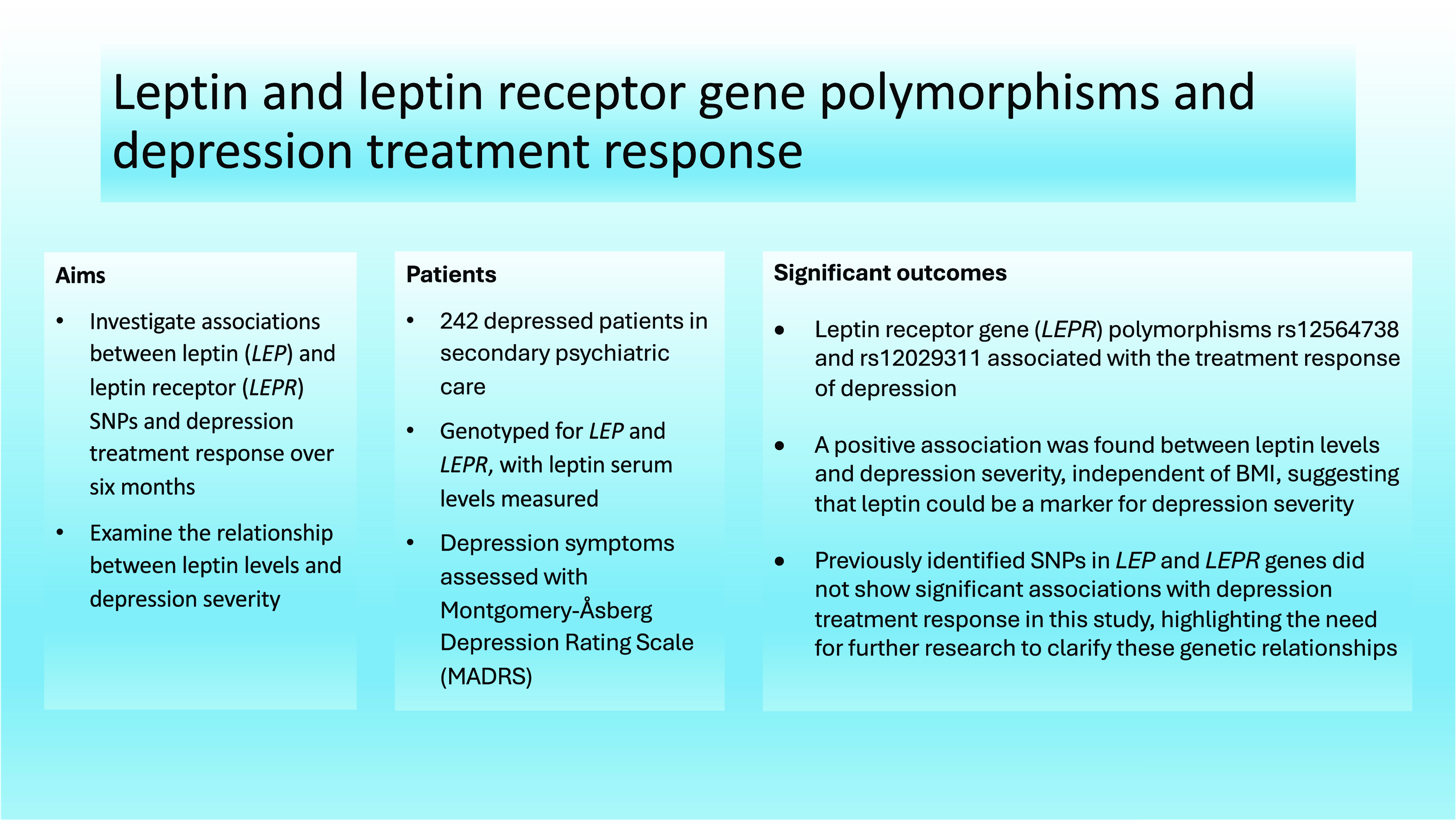
Associations between leptin (LEP) and leptin receptor (LEPR) gene polymorphisms and mood disorders have been found but not yet confirmed in multiple studies. The aim of our study was to study the associations between LEP and LEPR single nucleotide polymorphisms (SNPs) and treatment response of depression. Associations between leptin levels and depression severity were also investigated.
Methods:
The data included 242 depressed patients in secondary psychiatric care. Symptoms of depression were assessed with the Montgomery–Åsberg Depression Rating Scale (MADRS). Previously found LEP and LEPR SNPs associated with depression and other mood disorders were studied. Furthermore, all available LEP and LEPR SNPs were clumped using proxy SNPs to represent gene areas in r2 > 0.2 linkage disequilibrium and their association with treatment response was analysed with logistic regression.
Results:
Two proxy SNPs of LEPR gene, rs12564738 and rs12029311, were associated with MADRS response at 6 weeks (p adjusted = 0.024, p adjusted = 0.024). SNPs from previous studies were not associated with MADRS response, but LEPR rs12145690 from a previous study was strongly associated with rs12564738 (r2 = 0.94). The positive association between leptin levels and MADRS score at baseline after adjusting with age, sex, body mass index (BMI), Alcohol Use Disorders Identification Test score, and smoking was found (p = 0.011).
Conclusion:
Our findings suggest that LEPR polymorphisms are associated with depression treatment response. We also found associations between leptin levels and depression independently of BMI. Further studies and meta-analyses are needed to confirm the significance of found SNPs and the role of leptin in depression.
We present the generation of high-repetition-rate strong-field terahertz (THz) pulses from a thin 4-N,N-dimethylamino-4’-N’-methyl-stilbazolium 2,4,6-trimethylbenzenesulfonate (DSTMS) organic crystal pumped by an ytterbium-doped yttrium aluminum garnet laser. The generated THz pulse energy reaches 932.8 nJ at 1 kHz repetition rate, with a conversion efficiency of 0.19% and a peak electric field of 819 kV/cm. At a repetition rate of 10 kHz, it is able to maintain a peak electric field of 236 kV/cm and an average THz power of 0.77 mW. The high-repetition-rate, strong-field THz source provides a convenient tool for the study of THz matter manipulation and THz spectroscopy.