To save content items to your account,
please confirm that you agree to abide by our usage policies.
If this is the first time you use this feature, you will be asked to authorise Cambridge Core to connect with your account.
Find out more about saving content to .
To save content items to your Kindle, first ensure no-reply@cambridge.org
is added to your Approved Personal Document E-mail List under your Personal Document Settings
on the Manage Your Content and Devices page of your Amazon account. Then enter the ‘name’ part
of your Kindle email address below.
Find out more about saving to your Kindle.
Note you can select to save to either the @free.kindle.com or @kindle.com variations.
‘@free.kindle.com’ emails are free but can only be saved to your device when it is connected to wi-fi.
‘@kindle.com’ emails can be delivered even when you are not connected to wi-fi, but note that service fees apply.
This article delves into the doctrine of inherent powers within the Sudanese Civil Procedure Code, with a specific focus on its origin, nature and scope. It posits that this doctrine empowers the courts to undertake actions essential for fulfilling their duties and ensuring the pursuit of justice, even in instances where such powers are not explicitly granted to them under statutory provisions. Additionally, the article examines the potential advantages and disadvantages associated with inherent powers and contemplates whether their exercise might pose a threat to the rule of law. It also explores the arguments both in favour of and against the possibility of rule-making within the framework of these powers and the potential impact of such regulations on the administration of justice. The article asserts that while a court's inherent powers are indispensable for the efficient dispensation of justice, it is imperative that they are not wielded capriciously or arbitrarily. Instead, their exercise should be guided by the principles of equity and good conscience.
This paper presents the novel concept of a singularity-free tube (SFT) in the constant orientation workspace of a spatial parallel manipulator. The concept is developed and demonstrated in the context of a $6$-$6$ spatial parallel manipulator, namely, the semi-regular Stewart platform manipulator. Given two points in the said workspace, the SFT is a tubular volume which contains these points and is free of gain-type or forward-kinematic singularities. The purpose of identifying such regions in space is to allow abundant freedom to the path-planner to connect the said points by a path, which can be free of gain-type singularities simply by remaining inside the SFT at all times. To demonstrate the concept, two smooth paths obtained by formulating two different optimisation problems have been presented as examples. The SFT can be of great help in singularity-free path-planning in many similar manipulators.
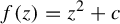
Let $f(z)=z^2+c$ be an infinitely renormalizable quadratic polynomial and $J_\infty $ be the intersection of forward orbits of ‘small’ Julia sets of its simple renormalizations. We prove that if f admits an infinite sequence of satellite renormalizations, then every invariant measure of $f: J_\infty \to J_\infty $ is supported on the postcritical set and has zero Lyapunov exponent. Coupled with [13], this implies that the Lyapunov exponent of such f at c is equal to zero, which partly answers a question posed by Weixiao Shen.

By appealing to public concern over environmental issues, Green parties have emerged to gain secure positions in several party systems. However, in Canada, we know very little about why people support the Green Party. This research note draws upon the Canadian Election Study (CES) to explore the ways in which demographic factors, personality traits and individual environmentalism impact vote choice. Theorizing Green Party support as a form of pro-environmental behaviour, we build a model that tests the impact of demographic factors and personality traits as mediated through environmental attitudes. It finds that, while pro-environmental policy attitudes are the strongest predictor of Green Party support, several demographic factors and personality traits—specifically conscientiousness, openness to experience, agreeableness and extraversion—have an effect.
Health Technology Assessment (HTA) practitioners recognize the significance of qualitative methodologies that focus on how a technology is feasible, meaningfulness, acceptable, and equitable. This mapping aimed to delineate the frameworks employed to synthesize qualitative evidence and assess the quality of synthesis in HTA .
Methods
Mapping was conducted using Medline, LILACS, CINAHL, Embase, Web of Science, Scopus, PsycINFO, Cochrane Library, JBI, and ScienceDirect databases. Gray literature searches included PROQUEST, Open Grey, Canadian Agency for Drugs and Technologies in Health’s Grey Matters, Google Scholar, and HTA agency websites. The inclusion criteria were centered on global qualitative evidence synthesis frameworks. The data are presented in the tables.
Results
Of the 2054 articles, 31 were included, mostly from Europe. Guide was the type of document more cited, and most authors are from HTA agencies and universities. Incorporating both patient and family perspectives is the most cited reason for include qualitative evidence. Regardless of the framework or tool, SPICE was the main acronym, and RETREAT was preferred for approach selection. Thematic synthesis dominated analytic methods, and CASP was the primary quality appraisal tool. GRADE-CERQual graded evidence synthesis, with ENTREQ as the top reporting guidance. The GRADE evidence-to-decision framework was mentioned for recommendations.
Conclusion
This mapping highlights the movement incorporate qualitative evidence in HTA employing specific frameworks. Despite the similarities among documents, most of them describe part of the process to synthesize qualitative evidence. Standardizing procedures to incorporate qualitative evidence into HTA can enhance decision-making. These findings offer essential considerations for HTA practice.
We introduce non-associative skew Laurent polynomial rings and characterize when they are simple. Thereby, we generalize results by Jordan, Voskoglou, and Nystedt and Öinert.
Transgressive segregation refers to the phenomenon whereby the progeny of a diverse cross exhibit phenotypes that fall outside the range of the parents for a particular trait of interest. Segregants that exceed the parental values in life-history traits contributing to survival and reproduction may represent beneficial new allelic combinations that are fitter than respective parental genotypes. In this research, we use geographically disparate paraquat-resistant biotypes of horseweed (Canada fleabane) [Erigeron canadensis L.; syn.: Conyza canadensis (L.) Cronquist] to explore transgressive segregation in biomass accumulation and the inheritance of the paraquat resistance trait in this highly self-fertilizing species. Results of this research indicate that the paraquat resistance traits in E. canadensis biotypes originating in California, USA, and Ontario, Canada, were not conferred by single major gene mechanisms. Segregating generations from crosses among resistant and susceptible biotypes all displayed transgressive segregation in biomass accumulation in the absence of the original selective agent, paraquat. However, when challenged with a discriminating dose of paraquat, progeny from the crosses of susceptible × resistant and resistant × resistant biotypes displayed contrasting responses with those arising from the cross of two resistant biotypes no longer displaying transgressive segregation. These results support the prediction that transgressive segregation is frequently expressed in self-fertilizing lineages and is positively correlated with the genetic diversity of the parental genotypes. When exposed to a new environment, transgressive segregation was observed regardless of parental identity or history. However, if hybrid progenies were returned to the parental environment with exposure to paraquat, the identity of the fittest genotype (i.e., parent or segregant) depends on the history of directional selection in the parental lineages and the dose to which the hybrid progeny was exposed. It is only in the original selective environment that the impact of allelic fixation on transgressive segregation can be observed.
This article critically evaluates Jeffrey Koperski’s decretalism, which presents the laws of nature as divine decrees functioning as constraints rather than dynamic forces. Building on his work, we explore whether his model successfully avoids the implications of occasionalism, as he claims. By analysing his latest publications, we first reconstruct Koperski’s argument and then present three key objections. These include (1) issues related to scientific realism, (2) the principle of simplicity, and (3) the reduction of Koperski’s model to occasionalism. We argue that despite his attempts to distinguish his framework, Koperski’s model ultimately collapses into occasionalism due to the continuous divine sustenance required for natural processes. By engaging with recent developments in metaphysical and scientific debates, this article highlights the limitations of Koperski’s decretalism.
Bermudagrass is the most troublesome and difficult-to-control perennial grass weed in Florida sugarcane. Once established, it may be effectively controlled only during the sugarcane fallow period using a combination of nonselective herbicides and tillage. Options for selective management of bermudagrass that escape sugarcane fallow period management programs must be evaluated to mitigate its progressive increase as the crop cycle increases from plant cane to ratoon crops. Greenhouse and field studies were conducted in Belle Glade, Florida, from 2017 to 2018, to determine the response of newly established bermudagrass from sprigs with stolons to two or three sequential applications of topramezone (25 and 50 g ha−1) every 14 d, and combinations of topramezone (25 and 50 g ha−1) with herbicides that inhibit photosystem II (PS II) such as atrazine (2,240 g ha−1), ametryn (440 g ha−1), and metribuzin (2,240 g ha−1). Two or three sequential applications of topramezone with a cumulative total of 75 to 100 g ha−1 provided >93% bermudagrass control 42 d after the first sequential application under greenhouse and field conditions. These treatments exhibited 12% chance of survival 70 d after the first sequential application. There was an additive effect of PS II-inhibitor herbicides on bermudagrass control in mixtures with topramezone. The mixture of topramezone (50 g ha−1) with metribuzin and atrazine provided more than 87% and 92% bermudagrass control under greenhouse and field conditions, respectively, 42 d after treatment. Bermudagrass treated with topramezone (50 g ha−1) in a mixture with metribuzin exhibited 23% chance of survival 70 d after treatment. The results show good efficacy of sequential topramezone applications every 14 d or in a mixture with the PS II-inhibitor herbicides atrazine and metribuzin for control of newly established bermudagrass that typically escape control measures during the sugarcane fallow management period.
In 1945, actions which have been understood as strikes against wartime inflation occurred across colonized Africa: this essay identifies a deeper motivation in the events which happened in the Uganda Protectorate in early 1945. An understanding that people had a moral responsibility to act, and leaders had a moral responsibility to see them, to listen, and to respond led from a mobilization of workers on town streets, to efforts to see wrongful deaths acknowledged, to gatherings in the courtyard of the Buganda king in which he was almost overthrown. In each of the three stages of the protest, Ugandans of different ethnicities asserted an ethic of mutual obligation which acknowledged no boundary between the political and the economic, spoke to authority with an expectation that they would be heard, and drew on enduring knowledge of politics as well as a range of new ideas to solve the problems they confronted.
Previous research has shown that positive perceptions of government performance are linked to higher levels of citizens’ support for democracy. However, the policy response to the COVID-19 crisis presented a unique paradox as relative success in preventing the virus spread depended on expanding executive powers, often at the cost of individual freedoms. Exploring this paradox, we investigate whether the link between perceptions of government performance and support for democracy holds in a situation where positive performance essentially means a restriction of freedoms. Using original survey data from seven European countries, we show that notwithstanding the democratic sacrifices, people with positive evaluations of the government’s response are more likely to maintain support for the democratic system. Nevertheless, people weighed responses to the health domain more heavily than to the economic domain, suggesting that the output legitimacy – democratic support link varies across domain-specific evaluations.
On 15 March 2019, a white supremacist terrorist attacked two mosques in Christchurch, New Zealand. Fifty-one people were killed and another 40 sustained non-fatal gunshot injuries.
Aims
To examine the mental health of the Muslim community, and individual and exposure-related factors associated with mental health outcomes.
Method
This is the baseline analysis of a longitudinal study of adults from the Muslim community interviewed 11–32 months after the shootings. It included a diagnostic interview (MINI), measures of sociodemographic factors, prior mental health, prior traumatic events, exposure in the attacks, discrimination, life stressors, social support and religious coping. Logistic regression models examined associations with mental health outcomes.
Results
The sample comprised 189 participants (mean age 41 (s.d. = 13); 60% female), and included: bereaved, 17% (n = 32); injured survivors 12% (n = 22); non-injured survivors, 19% (n = 36); family members of survivors, 35% (n = 67); and community members without the above exposures, 39% (n = 74). Overall, 61% had at least one mental disorder since the attacks. Those bereaved (P < 0.01, odds ratio 4.28, 95% CI 1.75–10.49) and survivors, whether injured (P < 0.001, odds ratio 18.08, 95% CI 4.70–69.60) or not (P < 0.01, odds ratio 5.26, 95% CI 1.99–13.89), had greater odds of post-traumatic stress disorder. Those bereaved (P < 0.001, odds ratio 5.79, 95% CI 2.49–13.46) or injured (P = 0.04, odds ratio 4.43, 95% CI 1.07–18.28) had greater odds of depression.
Conclusions
Despite unique features of this attack on a Muslim population, findings accord with previous studies. They suggest generalisability of psychopathology after terror attacks, and that being bereaved or directly experiencing such events is associated with adverse mental health outcomes.
Trial registration number
The study is registered on the Australian NZ Clinical Trials Registry (ACTRN12620000909921).
Barley (Hordeum vulgare L.) and brown mustard [Brassica juncea (L.) Czern.] are winter cover crops known to produce allelochemicals that suppress plant growth. Incorporating barley or brown mustard residues into the soil before planting a spring-seeded cash crop may suppress early-season weeds in the cash crop; however, the comparative levels of weed suppression offered by barley and brown mustard cover crops incorporated into soil have not been determined. This study analyzed the relative capacities of barley and brown mustard cover crops to suppress early-season weeds of spring-seeded chile pepper (Capsicum annuum L.). Reductions in weed density or hand-hoeing time as a result of barley and/or brown mustard cover crop treatment were determined in two chile pepper fields in New Mexico over two growing seasons. For cover crop species that suppressed weeds in multiple site-years, a controlled environment study clarified possible growth stages adversely affected by determining the effects of cover crop–amended soil on the germination and seedling development of Palmer amaranth (Amaranthus palmeri S. Watson). Field study results indicated barley reduced early-season weed densities of chile pepper by up to 80% compared with the noncover control. Barley also reduced hoeing time in 3 of 4 site-years without affecting chile pepper fruit yield. Mustard cover crops reduced weed density in only 1 site-year (56% reduction relative to noncover control) and did not decrease hoeing time. The controlled environment study indicated that soil amended with barley slowed germination of A. palmeri without inhibiting seedling development. The results of this study indicate that a barley cover crop is more effective than brown mustard for early-season weed control of chile pepper in the southwestern United States.
This article deals with multilayer substrate integrated waveguide (SIW) six-port junctions with embedded carbon resistive films. SIW six-ports usually employ reactive power dividers, which degrade the amplitude and phase balance when the six-port is terminated with mismatched power detectors. The associated impairments are studied and two SIW six-port junctions with improved isolation and output matching are designed for K-/Ka-band applications to overcome these limitations. The proposed designs differ with respect to the configuration of the output ports making the underlying six-port topology applicable for different layout requirements. Measurements of the fabricated components validate the concept. The six-ports are compact, fully shielded and can be integrated in multilayer printed circuit boards.
This article sets out to explain why Nigeria was unable to prevent the loss of heritage objects in the 1960s and 1970s. Obvious answers to this question would include the limited enforcement capacity of the African state and the complacency of European and North American art dealers. “How Our Heritage Is Looted” argues, however, that a colonial legal category, namely “antiquity,” played a key role in creating an ineffective enforcement regime for cultural property theft. The mismatch between the ordinary meaning of the term “antiquity,” denoting a remnant of an ancient civilization, and the kinds of modern crafts that the state wanted to protect ultimately resulted in the inability of Nigeria’s colonial preservation statute to convey clear rules to customs officers and museum curators about what exporters could take out of the country. Nigeria’s heritage law thus constituted a project of legal meaning-making whose failure facilitated illicit commerce.
Trifludimoxazin is a novel protoporphyrinogen oxidase (PPO)-inhibiting herbicide currently under development for foliar and residual control of several problematic weeds in preplant applications for soybean production. Field experiments were conducted in 2017 and 2018 to evaluate the foliar efficacy of trifludimoxazin applied alone and in combination with other herbicides on waterhemp, giant ragweed, and horseweed. Foliar applications of trifludimoxazin alone at 12.5 or 25.0 g ai ha−1 were highly efficacious on glyphosate-resistant waterhemp (94% to 99% control) and moderately effective on giant ragweed (78% to 79% control) and resulted in minor efficacy on horseweed (≤20% control). Combinations of trifludimoxazin with glufosinate, glyphosate, paraquat, or saflufenacil remained highly effective (≥91% control) on waterhemp and giant ragweed. All herbicide mixtures with trifludimoxazin applied to horseweed were classified as additive interactions. Greenhouse experiments and Isobole analysis indicated that trifludimoxazin mixtures with glyphosate and glufosinate on waterhemp and giant ragweed were additive. Mixtures of trifludimoxazin + paraquat were slightly antagonistic under greenhouse conditions when applied to either waterhemp or giant ragweed, whereas trifludimoxazin + saflufenacil was synergistic when applied to giant ragweed. Overall, trifludimoxazin applied alone at 12.5 or 25.0 g ha−1 is effective for managing waterhemp and, to an extent, giant ragweed, but not horseweed, in preplant burndown applications. Furthermore, the addition of glufosinate, glyphosate, paraquat, or saflufenacil to applications of trifludimoxazin does not appreciably reduce weed control for these mixtures. As such, applications of trifludimoxazin alone and in combination with these herbicides may be utilized for effective preplant management of several problematic weeds in soybean.
Multiple herbicide–resistant (MHR) kochia [Bassia scoparia (L.) A.J. Scott] is a concern for farmers in the Great Plains. A total of 82 B. scoparia populations were collected from western Kansas (KS), western Oklahoma (OK), and the High Plains of Texas (TX) during fall of 2018 and 2019 (from the various locations), and their herbicide resistance status was evaluated. The main objectives were to (1) determine the distribution and frequency of resistance to atrazine, chlorsulfuron, dicamba, fluroxypyr, and glyphosate; and (2) characterize the resistance levels to glyphosate, dicamba, and/or fluroxypyr in selected B. scoparia populations. Results indicated that 33%, 100%, 48%, 30%, and 70% of the tested B. scoparia populations were potentially resistant (≥20% survival frequency) to atrazine, chlorsulfuron, dicamba, fluroxypyr, and glyphosate, respectively. A three-way premixture of dichlorprop/dicamba/2,4-D provided 100% control of all the tested populations. Dose–response studies further revealed that KS-9 and KS-14 B. scoparia populations were 5- to 10-fold resistant to dicamba, 3- to 6-fold resistant to fluroxypyr, and 4- to 5-fold resistant to glyphosate as compared with the susceptible (KS-SUS) population. Similarly, OK-10 and OK-11 populations were 10- to 13-fold resistant to dicamba and 3- to 4-fold resistant to fluroxypyr and glyphosate compared with the OK-SUS population. TX-1 and TX-13 B. scoparia populations were 2- to 4-fold resistant to dicamba, and TX-1 was 5-fold resistant to glyphosate compared with the TX-SUS population. These results confirm the first report of dicamba- and fluroxypyr-resistant B. scoparia from Oklahoma and glyphosate- and dicamba-resistant B. scoparia from Texas. These results imply that adopting effective integrated weed management strategies (chemical and nonchemical) is required to mitigate the further spread of MHR B. scoparia in the region.
Reducing loneliness amongst older people is an international public health and policy priority, with signs of decreasing importance in the UK. A growing body of research on tackling loneliness indicates it is a complex challenge. Most interventions imply they address loneliness, when in fact they offer social connectedness to address social isolation and can inadvertently responsibilise the individual for the causes and solutions for loneliness. This article presents research that explored loneliness in an underprivileged community in South Wales through interviews and focus groups with nineteen older people and eighteen local service providers. Their perspective supports a growing body of evidence that loneliness amongst older people is driven by wider structural and socio-cultural exclusion. Interventions to build social connections will be more effective if coupled with policies that reverse the reduction in public services (including transport and healthcare), and challenge socio-cultural norms, including a culture of self-reliance and ageism.
Al-Hoorie et al. (2024: Studies in Second Language Acquisition, 1–23) illuminate a validation crisis within the second language (L2) Motivational Self System (L2MSS), revealing empirical flaws in its current measurement. Their analysis indicates a persistent lack of discriminant validity among the system’s constructs, issuing a fundamental challenge in distinguishing the concepts. These findings, echoing previous concerns, underscore a pressing need for theoretical refinement and methodological rigor within the field, leading the authors to advocate for a temporary halt in L2 self-studies to address these issues comprehensively. This commentary discusses the call for a substantive moratorium presented by Al-Hoorie et al. (2024: Studies in Second Language Acquisition, 1–23) as a necessary step toward resolving persistent challenges in the field. By highlighting historical issues and suggesting pathways for theoretical diversification and methodological advancement, I aim to foster a productive dialogue on motivational psychology in language learning while ensuring empirical robustness.
