To save content items to your account,
please confirm that you agree to abide by our usage policies.
If this is the first time you use this feature, you will be asked to authorise Cambridge Core to connect with your account.
Find out more about saving content to .
To save content items to your Kindle, first ensure no-reply@cambridge.org
is added to your Approved Personal Document E-mail List under your Personal Document Settings
on the Manage Your Content and Devices page of your Amazon account. Then enter the ‘name’ part
of your Kindle email address below.
Find out more about saving to your Kindle.
Note you can select to save to either the @free.kindle.com or @kindle.com variations.
‘@free.kindle.com’ emails are free but can only be saved to your device when it is connected to wi-fi.
‘@kindle.com’ emails can be delivered even when you are not connected to wi-fi, but note that service fees apply.
Recent years have seen an increased focus on the implementation of Preferential Trade Agreements (PTAs). While the number of PTAs has risen remarkably since early 2000, data on the utilization of preferential tariffs under these agreements point out that some businesses have not gained access to all the benefits that PTAs can provide. When utilization rates are low, the impact of the agreement will likely differ from what was anticipated by ex-ante economic research. This paper conducts a dynamic Computable General Equilibrium (CGE) analysis of the expected impact of the EU–Japan Economic Partnership Agreement and compares a scenario that includes realistic preference utilization data with a standard scenario where all tariff liberalization is assumed to be fully utilized by businesses. The results show considerable differences between the two scenarios and illustrate the need to make the inclusion of credible utilization data standard practice in the modelling of international trade.
We propose a neural network architecture and a training procedure to estimate blurring operators and deblur images from a single degraded image. Our key assumption is that the forward operators can be parameterized by a low-dimensional vector. The models we consider include a description of the point spread function with Zernike polynomials in the pupil plane or product-convolution expansions, which incorporate space-varying operators. Numerical experiments show that the proposed method can accurately and robustly recover the blur parameters even for large noise levels. For a convolution model, the average signal-to-noise ratio of the recovered point spread function ranges from 13 dB in the noiseless regime to 8 dB in the high-noise regime. In comparison, the tested alternatives yield negative values. This operator estimate can then be used as an input for an unrolled neural network to deblur the image. Quantitative experiments on synthetic data demonstrate that this method outperforms other commonly used methods both perceptually and in terms of SSIM. The algorithm can process a 512 $ \times $ 512 image under a second on a consumer graphics card and does not require any human interaction once the operator parameterization has been set up.1
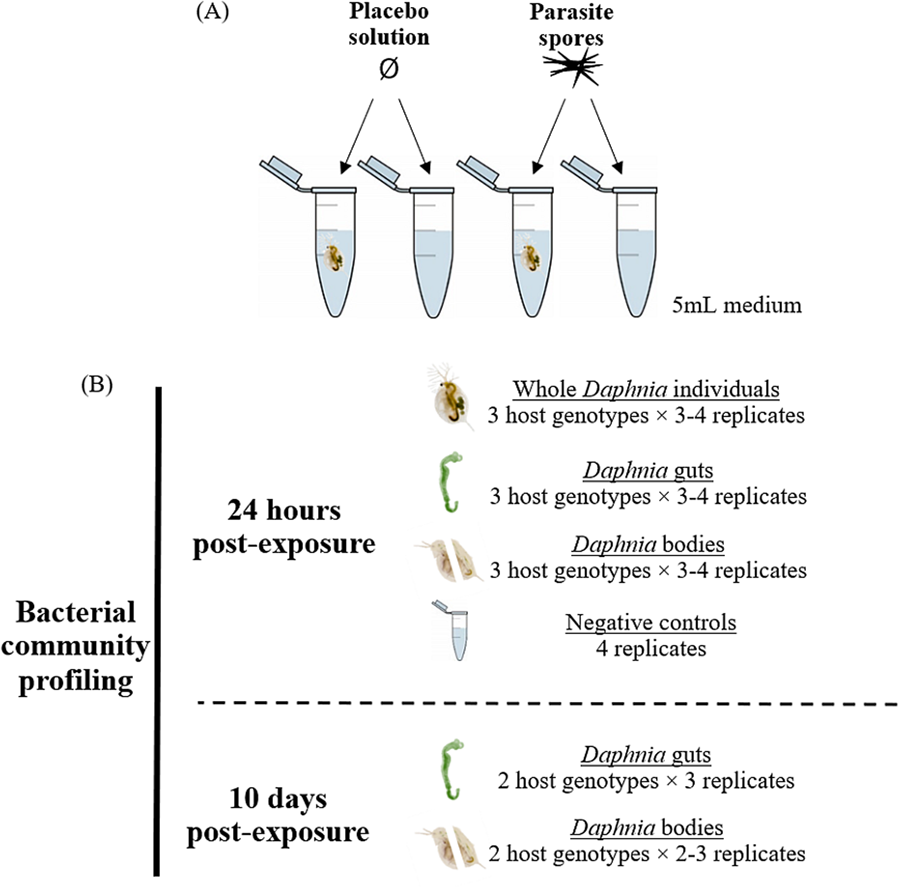
Host–bacterial communities (microbiomes) are influenced by a wide range of factors including host genotype and parasite exposure. However, few studies disentangle temporal and host-genotype-specific variation in microbiome response to infection across several host tissues. We experimentally exposed the freshwater crustacean Daphnia magna to its fungal parasite Metschnikowia bicuspidata and characterized changes in host–bacterial communities associated with the parasite's development within the host. We used 16S rRNA gene sequencing to assess bacterial communities of the host (a) 24 h (‘initial parasite exposure’) and (b) 10 days (‘successful infection’) after exposure to a standard dose of M. bicuspidata spores, in host guts, body tissue (excluding guts) and whole individuals. We also investigated whether bacterial community responses to parasite exposure varied by host genotype.
Parasite exposure did not immediately alter host gut bacterial communities, but drove host-genotype-specific changes in the bacterial community composition of whole individuals. We validated that these changes were not driven by shifts in bacterial communities of the culturing medium, due to the addition of the parasite spore solution. Successful infection (i.e. the proliferation of M. bicuspidata spores in the host body) reduced alpha diversity and shifted abundance of dominant bacterial orders in the gut. Moreover, it induced a host-genotype-specific changes in body bacterial community composition. Overall, bacterial community responses to parasite exposure and subsequent infection are complex: they occur in a host-genotype-dependent manner, differentially at distinct timepoints after parasite exposure, and in specific host tissue.
As funding for large translational research consortia increases across the National Institutes of Health (NIH), focused working groups provide an opportunity to leverage the power of unique networks to conduct high-impact science and offer a strategy for building collaborative infrastructure to sustain networks long-term. This sustainment leverages the existing NIH investments, amplifying the impact and creating conditions for future innovative translational research. However, few resources exist that detail practical strategies for establishing and sustaining working groups in consortia. Here, we describe how the Coordinating Center for the National Cancer Institute-funded Cancer Center Cessation Initiative (C3I) utilized principles derived from the Science of Team Science to develop replicable strategies for building and sustaining an effective working group-led consortium. These strategies include continually engaging community members in strategic planning, prioritizing diversity in leadership and membership, creating multi-level opportunities for leadership and participation, providing intensive community management and facilitation, and incentivizing projects that support the consortium sustainment. When assessing the impact of these interventions through qualitative exit interviews, four key themes emerged: through the C3I working group consortium, members co-created new dissemination products, gained new insights and innovations, enhanced local program implementation, and invested in cross-network collaboration to support sustained engagement in the initiative.
This study explored monolingual and multilingual two- to five-year-olds’ reliance on a non-verbal and a verbal cue during word-referent mapping, in relation to vocabulary knowledge and, for the multilinguals, Dutch language exposure. Ninety monolingual and sixty-seven multilingual children performed a referential conflict experiment that pitted a non-verbal (pointing) cue and a verbal (mutual exclusivity) cue. Mixed-effect regressions showed no main effects of vocabulary and language exposure. An interaction between vocabulary and group showed that lower vocabulary scores were associated with a stronger reliance on pointing over mutual exclusivity for multilinguals (but not monolinguals). Furthermore, an interaction between vocabulary, language exposure, and cue word (novel vs. familiar label) indicated that multilinguals with lower exposure and lower vocabulary showed a stronger reliance on pointing over mutual exclusivity when a novel rather than familiar word was used. These findings suggest that multilingual and monolingual children go through different trajectories when learning to map words to referents.
In addition to the type species, Binkhorstia ubaghsii, which is fairly common in the upper part of the Nekum Member (Maastricht Formation) in the wider vicinity of Maastricht (the Netherlands) and Binkhorstia euglypha, which appears to be restricted to the overlying Meerssen Member of the same formation (uppermost Maastrichtian), a third member, B. desaegheri nov. sp., is recorded from the upper middle Santonian of the Campine area in north-east Belgium. The history of Binkhorstia is convoluted, serving as a prime example of how attempts to unravel the higher-level taxonomic position of late Mesozoic crabs may prove difficult. Over time, the genus has been referred to various families or subfamilies, either podotreme or putative eubrachyuran; here the new family Binkhorstiidae is placed in the superfamily Retroplumoidea. Binkhorstiids appear to have been a relatively short-lived endemic group that fell victim to Cretaceous‒Paleogene (K/Pg) boundary perturbations.
The high-power narrow-linewidth fiber laser has become the most widely used high-power laser source nowadays. Further breakthroughs of the output power depend on comprehensive optimization of stimulated Brillouin scattering (SBS), stimulated Raman scattering (SRS) and transverse mode instability (TMI). In this work, we aim to further surpass the power record of all-fiberized and narrow-linewidth fiber amplifiers with near-diffraction-limited (NDL) beam quality. SBS is suppressed by white-noise-signal modulation of a single-frequency seed. In particular, the refractive index of the large-mode-area active fiber in the main amplifier is controlled and fabricated, which could simultaneously increase the effective mode field area of the fundamental mode and the loss coefficient of higher-order modes for balancing SRS and TMI. Subsequent experimental measurements demonstrate a 7.03 kW narrow-linewidth fiber laser with a signal-to-noise ratio of 31.4 dB and beam quality factors of Mx2 = 1.26, My2 = 1.25. To the best of our knowledge, this is the highest reported power with NDL beam quality based on a directly laser-diode-pumped and all-fiberized format, especially with narrow-linewidth spectral emission.
Moral and pragmatist sociology has studied capitalism as a set of institutions that require justification, which has historically been offered through forms of rewarding and meaningful work, anchoring the human life course in a narrative of individual and collective progress. However, emerging with neoliberalism, then becoming explicit after 2008, contemporary capitalism has become organised around the logic of assets and wealth as opposed to labour and production. This provokes a vacuum of justification. Once all actors are (as Minsky argued) balance sheet actors and profit becomes a function of sheer temporality, the economy ceases to function as a moral order and instead becomes imbued with existential concerns of temporality, durability, survival, and finitude. Possessed only of certain contingently acquired assets and liabilities, the self becomes wholly contingent in the sense described by Heidegger; that is, as ‘thrown’ into having had a past and into a relationship of ‘care’ towards the future. The article identifies symptoms of this existential condition in empirical studies of wealth elites, for whom (in the absence of conventional liberal and production-based measures of worth) problems of meaning, purpose, and finitude are endemic.
Although pediatric cancer often causes significant stress for families, most childhood cancer survivors are resilient and do not exhibit severe or lasting psychopathology. Research demonstrates some survivors may report benefit-finding or positive outcomes following this stressful life event. However, considerably less research has included families of children who are unlikely to survive their illness. Thus, this study investigated benefit-finding among parents and their children with advanced cancer, as well as associated demographic and medical factors.
Methods
Families (N = 72) of children with advanced cancer (ages 5–25) were recruited from a large pediatric hospital. Advanced cancer was defined as relapsed or refractory disease, an estimated prognosis of <60%, or referral to end-of-life care. Participants completed a demographic survey and the Benefit Finding Scale at enrollment.
Results
Children, mothers, and fathers reported moderate to high benefit-finding scores. Correlations between family members were weak and non-significant. Children reported significantly higher benefit-finding than fathers. Demographic and medical factors were not associated with benefit-finding in children, mothers, or fathers.
Significance of results
Families of children with advanced cancer reported moderate to high benefit-finding regardless of background or medical factors. Children identified benefits of their cancer experience independent of the experiences of their mothers and fathers. Larger studies should continue to examine factors associated with positive and negative outcomes in the context of childhood cancer to inform interventions.
In this paper, I pick up on an important theme in Mario Rizzo’s work: that rationality should be understood more broadly than the rational choice model as learning to adjust behaviour in the light of experience and the mistakes that it yields. In particular, I focus on learning-by-doing (LBD). I argue in the first part of the paper that it should be regarded as one of the central insights in economics, alongside those that are more usually recognised like the gains from trade and the importance of unintended consequences. I use Smith and Hirschman’s discussion of LBD to ground this claim. In the second part of the paper, I turn to the determinants of LBD in teams. I argue that the key rule or constitutional/policy design question is how best to embrace the diversity that is central to LBD within teams without this undermining the social origins of co-operation in teams.
Since the emergence of psychological and behavioural science, one of its foundational goals has been to explain human behaviour. Although the discipline has been highly successful in this endeavour, there is an elephant in the room. Psychological and behavioural science has neglected studying the most challenging aspect of human behaviour−transformative behavioural change. This change can be described as a fundamental and difficult-to-achieve shift in someone’s actions that involves a transformation of one’s way of living. Understanding transformative behavioural change is essential not only for psychological and behavioural science to accomplish its foundational goal but also to maintain its contemporary relevance. Indeed, it is imminent that both solving the world’s biggest issues (e.g., climate change) and living through major disruptions (e.g., technological revolution) will require people to transform their behaviour. In this perspective, I first review and discuss previous relevant research, and then propose a seven-step agenda for how psychological and behavioural science can become the science of transformative behavioural change.
The emergence of AH multiresistant GIN compromises sustainability of grassland sheep farming worldwide. Plants rich in condensed tannins are an alternative method of parasitism management that is currently being explored. Feed supplementation trials with pellets rich in sainfoin (Onobrychis viciifolia) and quebracho (Schinopsis spp.) were carried out. Three meat sheep farms in western France took part in the study and a total of 4 trials were carried out.
During these 21-day trials, the ewes were returned to the sheepfold and half of them received a balanced ration supplemented with 70 g day−1 of healthy hay and quebracho pellets, while the other half received the same ration supplemented with 70 g day−1 of lucerne pellets. Fecal egg counts (FEC) were carried out at the start and end of each trial, and nematode species were identified by real-time PCR after larval culture. At D0, FEC were similar in both groups for all 4 trials. Proportions of species infecting the ewes varied from 1 trial to another: Haemonchus contortus was predominant in summer and Trichostrongylus colubriformis in winter. At D21, there were no significant differences in FEC between groups. Helminthofauna were not significantly different between groups, except for 1 trial where the proportion of H. contortus was reduced in the group supplemented with condensed-tannin pellets. The use of condensed tannins still requires additional studies to be advised as an effective method to manage gastrointestinal nematodes in farm.
Aggregate implements an efficient fast Fourier transform (FFT)-based algorithm to approximate compound probability distributions. Leveraging FFT-based methods offers advantages over recursion and simulation-based approaches, providing speed and accuracy to otherwise time-consuming calculations. Combining user-friendly features and an expressive domain-specific language called DecL, Aggregate enables practitioners and nonprogrammers to work with complex distributions effortlessly. The software verifies the accuracy of its FFT-based numerical approximations by comparing their first three moments to those calculated analytically from the specified frequency and severity. This moment-based validation, combined with carefully chosen default parameters, allows users without in-depth knowledge of the underlying algorithm to be confident in the results. Aggregate supports a wide range of frequency and severity distributions, policy limits and deductibles, and reinsurance structures and has applications in pricing, reserving, risk management, teaching, and research. It is written in Python.
Identifying persons with HIV (PWH) at increased risk for Alzheimer’s disease (AD) is complicated because memory deficits are common in HIV-associated neurocognitive disorders (HAND) and a defining feature of amnestic mild cognitive impairment (aMCI; a precursor to AD). Recognition memory deficits may be useful in differentiating these etiologies. Therefore, neuroimaging correlates of different memory deficits (i.e., recall, recognition) and their longitudinal trajectories in PWH were examined.
Design:
We examined 92 PWH from the CHARTER Program, ages 45–68, without severe comorbid conditions, who received baseline structural MRI and baseline and longitudinal neuropsychological testing. Linear and logistic regression examined neuroanatomical correlates (i.e., cortical thickness and volumes of regions associated with HAND and/or AD) of memory performance at baseline and multilevel modeling examined neuroanatomical correlates of memory decline (average follow-up = 6.5 years).
Results:
At baseline, thinner pars opercularis cortex was associated with impaired recognition (p = 0.012; p = 0.060 after correcting for multiple comparisons). Worse delayed recall was associated with thinner pars opercularis (p = 0.001) and thinner rostral middle frontal cortex (p = 0.006) cross sectionally even after correcting for multiple comparisons. Delayed recall and recognition were not associated with medial temporal lobe (MTL), basal ganglia, or other prefrontal structures. Recognition impairment was variable over time, and there was little decline in delayed recall. Baseline MTL and prefrontal structures were not associated with delayed recall.
Conclusions:
Episodic memory was associated with prefrontal structures, and MTL and prefrontal structures did not predict memory decline. There was relative stability in memory over time. Findings suggest that episodic memory is more related to frontal structures, rather than encroaching AD pathology, in middle-aged PWH. Additional research should clarify if recognition is useful clinically to differentiate aMCI and HAND.
The lower Triassic Main Buntsandstein Subgroup represents a promising, but high-risk geothermal play in the Netherlands. Although the gross thickness in boreholes locally exceeds 200 m, the spatial distribution, geometries and preservation of these sedimentary units remained uncertain due to the lack of seismic data with sufficient resolution and the sparse borehole network. This creates uncertainty in the quantification of the aquifer dimensions that is essential for the planning of geothermal operations.
In this study, seismic interpretation and 2D palinspastic restoration of new and reprocessed seismic data were conducted and combined with borehole data to assess the tectonic evolution of the Roer Valley Graben in the southeastern Netherlands and its control on the spatial distribution of the Main Buntsandstein Subgroup sediments. Our results show that the central and southern parts of the Roer Valley Graben were active depocenters in the Early to Middle Triassic times dominated by fluvial sandstone deposition, providing important play elements for prospective leads on geothermal exploration. The northern part of the basin was a more marginal area where mostly fine-grained sediments were deposited. To the northwest, differential subsidence resulted in the development of areas where the Buntsandstein thickness is reduced to ∼150 m.
After deposition, the Main Buntsandstein sediments were compartmentalised by faulting related to post-depositional tectonic activity, locally reducing the lateral extent of the geothermal target areas down to 1–2 km in a ∼NE–SW direction. On the platform areas adjacent to the Roer Valley Graben and to the southeast, Jurassic sediments are largely absent and the Main Buntsandstein sediments are present at depths shallower than 2 km. These platforms are promising targets for further investigation, as the relatively shallow burial depths, compared to the central part of the Graben, may have contributed to the preservation of more favourable reservoir properties.
The posterior pharyngeal wall is an anatomical subsite of both the oropharynx and hypopharynx. The treatment outcomes of squamous cell carcinoma (SCC) of these sites are generally published together, which makes the interpretation of data challenging. The aim of this analysis was to determine if there is any difference in the treatment outcomes of these two rare disease entities.
Materials and Methods
Retrospetive analysis showed that the posterior pharyngeal wall was the primary subsite in 17 patients (1.65 per cent) out of 1031 patients with oropharyngeal SCC, and in 23 patients (11.73 per cent) out of 196 patients with hypopharyngeal SCC.
Results
The five-year overall survival was 45 per cent for oropharyngeal origin and 53 per cent for hypopharyngeal origin patients. There was no significant difference in survival and locoregional control between these two groups of patients.
Conclusion
Squamous cell carcinoma of the posterior pharyngeal wall is a rare entity, which in our series represents 1.65 per cent of oropharyngeal cases and 11.73 per cent of hypopharyngeal tumours. There was no difference in treatment outcomes between the two groups.
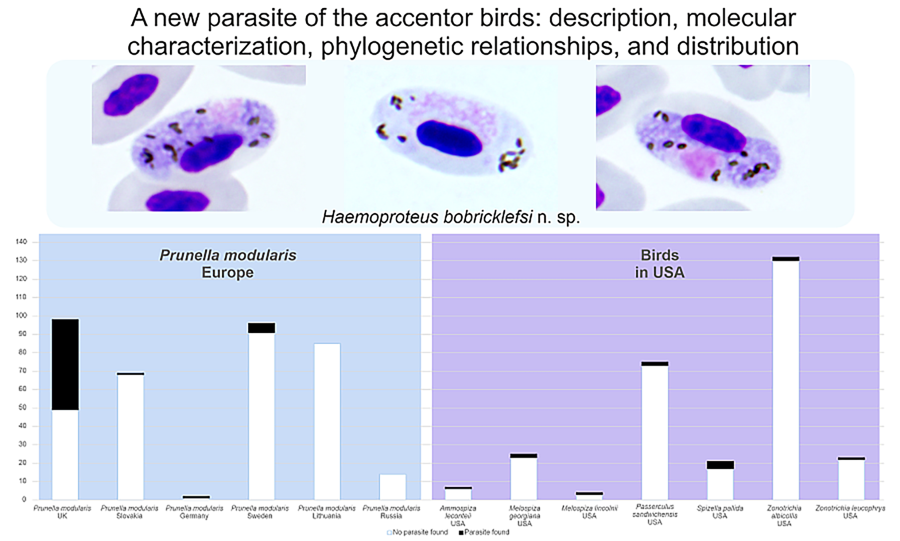
Haemoproteus bobricklefsi sp. nov. (Haemosporida, Haemoproteidae) was found in the dunnock Prunella modularis and represents the first blood parasite described in accentor birds of the Prunellidae. The description is based on the morphology of blood stages and includes information about a barcoding segment of the mitochondrial cytochrome b gene (lineage hDUNNO01) and the full mitochondrial genome, which can be used for identification and diagnosis of this infection. The new parasite can be readily distinguished from described species of haemoproteids parasitizing passeriform birds due to markedly variable position of nuclei in advanced and fully grown macrogametocytes. Illustrations of blood stages of the new species are given, and phylogenetic analyses based on partial mitochondrial cytochrome b gene sequences and the full mitochondrial genome identified the closely related lineages. DNA haplotype networks showed that transmission occurs in Europe and North America. This parasite was found in the dunnock in Europe and several species of the Passerellidae in North America. It is probably of Holarctic distribution, with the highest reported prevalence in the UK. The parasite distribution seems to be geographically patchy, with preference for areas of relatively cool climates. Phylogenetic analysis suggests that H. bobricklefsi sp. nov. belongs to the Parahaemoproteus subgenus and is probably transmitted by biting midges belonging to Culicoides (Ceratopogonidae). The available data on molecular occurrence indicate that this pathogen is prone to abortive development, so worth attention in regard of consequences for bird health.
Weeds belonging to the Amaranthus family are most problematic for soybean producers. With Palmer amaranth evolving resistance to multiple herbicides labeled for use in soybean, producers seek new sites of action to integrate into season-long herbicide programs. Bayer CropScience plans to launch a Convintro™ brand of herbicides, one being a premixture that will include diflufenican (categorized as a Group 12 herbicide by the Weed Science Society of America [WSSA]), metribuzin (WSSA Group 5), and flufenacet (WSSA Group 15), for use preemergence in soybean. Research trials were conducted in Fayetteville and Keiser, AR, and Holt, MI, in 2022 and 2023, to evaluate the premixture in a season-long program in a dicamba-resistant soybean system. A 0.17:0.35:0.48 ratio of a premixture of diflufenican:metribuzin:flufenacet (DFF-containing premixture) was applied preemergence with different combinations of glyphosate, glufosinate, dicamba, and acetochlor at 28 (early postemergence) and 42 (late postermergence) days after planting (DAP). At the early postemergence timing, the DFF-containing premixture provided >90% control of Palmer amaranth and prickly sida. However, common ragweed, common lambsquarters, morningglory ssp., and annual grass control was ≤80% at this timing. When the late postemergence applications occurred, treatments that had already received an early postemergence application controlled prickly sida, morningglory ssp., Palmer amaranth, and annual grasses to a greater extent than those that had not, indicating the preemergence application of the DFF-containing premixture was not sufficient to provide control of the weed spectrum through 42 DAP. By 70 DAP, all programs provided ≥93% control of all weeds evaluated. Herbicide programs that included the DFF-containing premixture preemergence followed by (fb) EPOST fb LPOST common ragweed, common lambsquarters, morningglory ssp., and annual grasses to a greater than the one-pass postemergence systems. In addition, all herbicide programs evaluated in this study reduced Palmer amaranth seed production by >99%. However, producers who plan to use the DFF-containing premixture may need two postemergence herbicide applications to obtain high levels of weed control throughout the growing season.
Ediacaran fossils, obtained in stratigraphic context in 1993, 1995, and 1996, with the assistance of A. Seilacher, IGCP project 320 scientists, and the Geological Survey of Namibia, are described for the first time. Most are from the Kliphoek and Buchholzbrunn members of the Dabis Formation and the Huns and Spitskop members of the Urusis Formation, Witputs subbasin, but a significant number, including Pteridinium, are from the Kliphoek Member, Zaris Formation, and the Neiderhagen Member, Nudaus Formation, north of the Osis arch, which separates the two subbasins. We extend the stratigraphic ranges and geographic distributions of several important taxa, including Archaeichnium, Ernietta, Pteridinium, and Swartpuntia, provide reassessments of the paleobiology of these and other organisms, and describe a new sponge—possibly an unmineralized archaeocyath—Arimasia germsi n. gen. n. sp. We also describe and illustrate various ichnofossils (including the oldest known traces from the Nama Group), narrow down the first appearance of Treptichnus in the Nama succession, and reinforce the idea that there was a prolific infauna of micrometazoans during the latest Ediacaran by naming and describing previously reported microburrows found on the surfaces of gutter casts as Ariichnus vagus n. igen. n. isp.
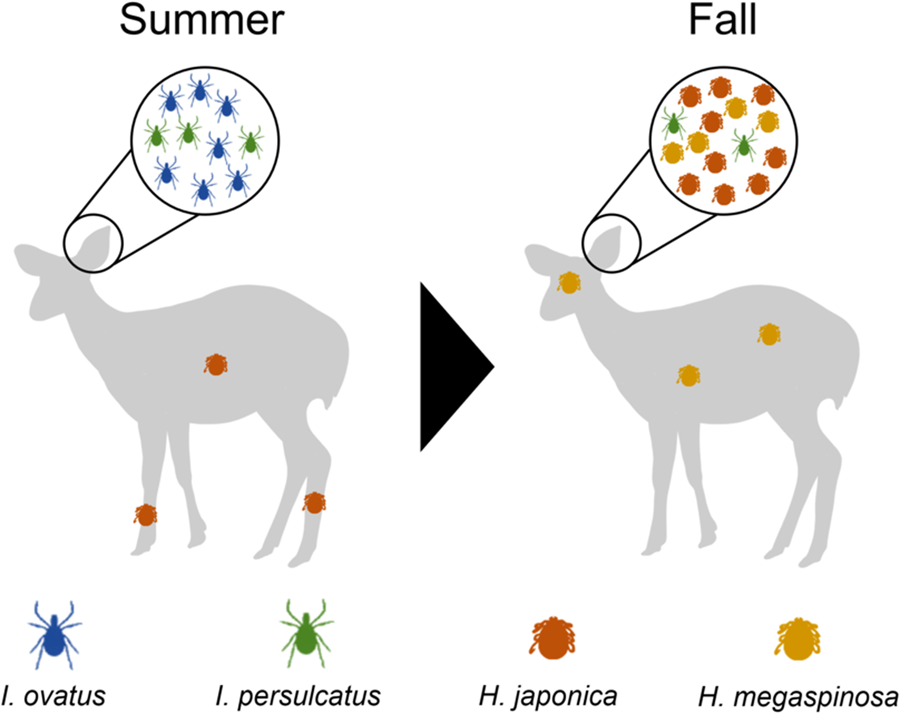
Ticks prefer specific feeding sites on a host that are influenced by host–tick and tick–tick interactions. This study focused on the spatiotemporal distribution of ticks in Hokkaido sika deer, an important tick host in Hokkaido, Japan. Tick sampling was performed on the sika deer in the Shiretoko National Park between June and October 2022. Ticks were collected from 9 different body parts of the deer to compare their attachment site preferences. Interspecific and intraspecific relationships among ticks were examined using co-occurrence analysis. The collected ticks were nymphal and adult stages of 4 species: Ixodes ovatus, Ixodes persulcatus, Haemaphysalis japonica and Haemaphysalis megaspinosa. Seasonal variations in tick burden were observed, with I. persulcatus and I. ovatus peaking in June and declining towards October; H. japonica showing low numbers in July and August and increasing from September; and H. megaspinosa appearing from September onwards with little variation. Attachment site preferences varied among species, with a significant preference for the pinna in I. ovatus and I. persulcatus. Haemaphysalis japonica was mainly found on the body and legs between June and August, and shifted to the pinna from September. Haemaphysalis megaspinosa showed a general preference for areas other than the legs. Co-occurrence analysis revealed positive, negative and random co-occurrence patterns among the tick species. Ticks of the same genus and species exhibited positive co-occurrence patterns; I. ovatus showed negative co-occurrence patterns with Haemaphysalis spp. This study revealed the unique attachment site preferences and distinct seasonal distributions of tick species in the Hokkaido sika deer.