Refine search
Actions for selected content:
57 results
Expansions for Hilbert schemes of points on semistable degenerations
- Part of
-
- Journal:
- Forum of Mathematics, Sigma / Volume 14 / 2026
- Published online by Cambridge University Press:
- 06 April 2026, e53
-
- Article
-
- You have access
- Open access
- HTML
- Export citation
Two dimensional versions of the affine Grassmannian and their geometric description
- Part of
-
- Journal:
- Forum of Mathematics, Sigma / Volume 14 / 2026
- Published online by Cambridge University Press:
- 09 March 2026, e42
-
- Article
-
- You have access
- Open access
- HTML
- Export citation
-
For a smooth affine algebraic group G over an algebraically closed field, we consider several two-variables generalizations of the affine Grassmannian
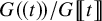 , given by quotients of the double loop group $G(\!(x)\!)(\!(y)\!)$. We prove that they are representable by ind-schemes if G is solvable. Given a smooth surface X and a flag of subschemes of X, we provide a geometric interpretation of the two-variables Grassmannians, in terms of bundles and trivialisation data defined on appropriate loci in X, which depend on the flag.
 , given by quotients of the
K-stability of Thaddeus’ moduli of stable bundle pairs on genus two curves
- Part of
-
- Journal:
- Forum of Mathematics, Sigma / Volume 14 / 2026
- Published online by Cambridge University Press:
- 27 February 2026, e33
-
- Article
-
- You have access
- Open access
- HTML
- Export citation
-
The moduli space of bundle stable pairs $\overline {M}_C(2,\Lambda )$ on a smooth projective curve C, introduced by Thaddeus, is a smooth Fano variety of Picard rank two. Focusing on the genus two case, we show that its K-moduli space is isomorphic to a GIT moduli of lines in quartic del Pezzo threefolds. Additionally, we construct a natural forgetful morphism from the K-moduli of $\overline {M}_C(2,\Lambda )$ to that of the moduli spaces of stable vector bundles $\overline {N}_C(2,\Lambda )$. In particular, Thaddeus’ moduli spaces for genus two curves are all K-stable.


The McKay correspondence in type D4 via variation of geometric invariant theory
- Part of
-
- Article
-
- You have access
- Open access
- HTML
- Export citation
-
We present an explicit geometric invariant theory construction which produces both the minimal resolution of the type $D_4$ surface singularity, and also the orbifold resolution. Our construction is based on a Tannakian approach which is in principle applicable to larger groups.

Wall-crossing integral chow rings of ${\overline {\mathcal {M}}}_{1,n\leq 4}$
- Part of
-
- Journal:
- Forum of Mathematics, Sigma / Volume 13 / 2025
- Published online by Cambridge University Press:
- 05 December 2025, e196
-
- Article
-
- You have access
- Open access
- HTML
- Export citation
-
We compute the integral Chow rings of $\overline {\mathcal {M}}_{1,n}$ for $n=3,4$. The alternative compactifications introduced by Smyth – and studied further by Lekili and Polishchuk – present each of these stacks as a sequence of weighted blow-ups and blow-downs from a weighted projective space. We compute all the integral Chow rings by repeated application of the blow-up formula.


Corrigendum: Low degree Hurwitz stacks in the Grothendieck ring (Compositio Math. 160 (2024), 1784–1849)
- Part of
-
- Journal:
- Compositio Mathematica / Volume 161 / Issue 12 / December 2025
- Published online by Cambridge University Press:
- 22 April 2026, pp. 3459-3460
- Print publication:
- December 2025
-
- Article
-
- You have access
- HTML
- Export citation
A flag version of Beilinson–Drinfeld Grassmannian for surfaces
- Part of
-
- Article
-
- You have access
- Open access
- HTML
- Export citation
-
We define and study a generalization of the Beilinson–Drinfeld Grassmannian to the case where the curve is replaced by a smooth projective surface $X$, and the trivialization data are given on loci associated with a nonlinear flag of closed subschemes. We first establish some general formal gluing results for moduli of (almost) perfect complexes and torsors. We construct a simplicial object $\operatorname {\underline {\mathsf{Fl}}}_X$ of flags of closed subschemes of a smooth projective surface $X$, associated with the operation of taking union of flags. We prove that this simplicial object has the $2$-Segal property. For an affine complex algebraic group $G$, we define a derived, flag analogue $\mathcal{G}r_X$ of the Beilinson–Drinfeld Grassmannian of $G$-bundles on the surface $X$, and show that most of the properties of the Beilinson–Drinfeld Grassmannian for curves can be extended to our flag generalization: we prove a factorization formula, the existence of a canonical flat connection and define a chiral product on suitable sheaves on $\operatorname {\underline {\mathsf{Fl}}}_X$ and on $\mathcal{G}r_X$. We sketch the construction of actions of flags analogues of the loop group and of the positive loop group on $\mathcal{G}r_X$. To fixed ‘large’ flags on $X$, we associate ‘exotic’ derived structures on the stack of $G$-bundles on $X$.
$X$.


Moduli of objects in finite length abelian categories
- Part of
-
- Article
-
- You have access
- Open access
- HTML
- Export citation
Mixed Hodge modules on stacks
- Part of
-
- Journal:
- Forum of Mathematics, Sigma / Volume 13 / 2025
- Published online by Cambridge University Press:
- 17 October 2025, e175
-
- Article
-
- You have access
- Open access
- HTML
- Export citation
-
Using the $\infty $-categorical enhancement of mixed Hodge modules constructed by the author in a previous paper, we explain how mixed Hodge modules canonically extend to algebraic stacks, together with all the six operations and weights. We also prove that Drew’s approach to motivic Hodge modules gives an $\infty $-category that embeds fully faithfully in mixed Hodge modules, and we identify the image as mixed Hodge modules of geometric origin.


Lagrangian families of Bridgeland moduli spaces from Gushel–Mukai fourfolds
- Part of
-
- Journal:
- Compositio Mathematica / Volume 161 / Issue 8 / August 2025
- Published online by Cambridge University Press:
- 09 October 2025, pp. 2091-2135
- Print publication:
- August 2025
-
- Article
-
- You have access
- Open access
- HTML
- Export citation
-
Let $X$ be a very general Gushel–Mukai (GM) variety of dimension $n\geq 4$, and let $Y$ be a smooth hyperplane section. There are natural pull-back and push-forward functors between the semi-orthogonal components (known as the Kuznetsov components) of the derived categories of $X$ and $Y$. In this paper, we prove that the Bridgeland stability of objects is preserved by both pull-back and push-forward functors. We then explore various applications of this result, such as constructing an eight-dimensional smooth family of Lagrangian subvarieties for each moduli space of stable objects in the Kuznetsov component of a general GM fourfold and proving the projectivity of the moduli spaces of semistable objects of any class in the Kuznetsov component of a general GM threefold, as conjectured by Perry, Pertusi, and Zhao.


DEGENERATIONS OF ORBIFOLD CURVES AS NONCOMMUTATIVE VARIETIES
- Part of
-
- Journal:
- Nagoya Mathematical Journal / Volume 261 / 2026
- Published online by Cambridge University Press:
- 15 July 2025, e4
-
- Article
-
- You have access
- Open access
- HTML
- Export citation
Vanishing of Brauer groups of moduli stacks of stable curves
- Part of
-
- Journal:
- Forum of Mathematics, Sigma / Volume 13 / 2025
- Published online by Cambridge University Press:
- 10 July 2025, e115
-
- Article
-
- You have access
- Open access
- HTML
- Export citation
-
We show that the cohomological Brauer groups of the moduli stacks of stable genus g curves over the integers and an algebraic closure of the rational numbers vanish for any $g\geq 2$. For the n marked version, we show the same vanishing result in the range $(g,n)=(1,n)$ with $1\leq n \leq 6$ and all $(g,n)$ with $g\geq 4.$ We also discuss several finiteness results on cohomological Brauer groups of proper and smooth Deligne-Mumford stacks over the integers.


Kappa classes on KSBA spaces
- Part of
-
- Article
-
- You have access
- Open access
- HTML
- Export citation
-
We define kappa classes on moduli spaces of Kollár-Shepherd-Barron-Alexeev (KSBA)-stable varieties and pairs, generalizing the Miller–Morita–Mumford classes on moduli of curves, and computing them in some cases where the virtual fundamental class is known to exist, including Burniat and Campedelli surfaces. For Campedelli surfaces, an intermediate step is finding the Chow (same as cohomology) ring of the GIT quotient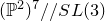 $(\mathbb {P}^2)^7//SL(3)$.
Rationality and arithmetic of the moduli of abelian varieties
- Part of
-
- Article
-
- You have access
- Open access
- HTML
- Export citation
-
We study the rationality properties of the moduli space ${\mathcal{A}}_g$ of principally polarised abelian $g$-folds over $\mathbb{Q}$ and apply the results to arithmetic questions. In particular, we show that any principally polarised abelian 3-fold over ${\mathbb{F}}_p$ may be lifted to an abelian variety over $\mathbb{Q}$. This is a phenomenon of low dimension: assuming the Bombieri–Lang conjecture, we also show that this is not the case for abelian varieties of dimension at least 7. Concerning moduli spaces, we show that ${\mathcal{A}}_g$ is unirational over $\mathbb{Q}$ for $g\le 5$ and stably rational for $g=3$. This also allows us to make unconditional one of the results of Masser and Zannier about the existence of abelian varieties over $\mathbb{Q}$ that are not isogenous to Jacobians.


A power structure over the Grothendieck ring of geometric dg categories
- Part of
-
- Journal:
- Proceedings of the Edinburgh Mathematical Society / Volume 68 / Issue 1 / February 2025
- Published online by Cambridge University Press:
- 05 December 2024, pp. 300-318
-
- Article
- Export citation
On irreducible representations of Fuchsian groups
- Part of
-
- Journal:
- Canadian Mathematical Bulletin / Volume 67 / Issue 4 / December 2024
- Published online by Cambridge University Press:
- 27 August 2024, pp. 970-990
- Print publication:
- December 2024
-
- Article
- Export citation
-
Let ${\mathcal {R}} \subset \mathbb {P}^1_{\mathbb {C}}$ be a finite subset of markings. Let G be an almost simple simply-connected algebraic group over $\mathbb {C}$. Let $K_G$ denote the compact real form of G. Suppose for each lasso l around the marked point, a conjugacy class $C_l$ in $K_G$ is prescribed. The aim of this paper is to give verifiable criteria for the existence of an irreducible homomorphism of $\pi _{1}(\mathbb P^1_{\mathbb {C}} \,{\backslash}\, {\mathcal {R}})$ into $K_G$ such that the image of l lies in $C_l$.


Low-degree Hurwitz stacks in the Grothendieck ring
- Part of
-
- Journal:
- Compositio Mathematica / Volume 160 / Issue 8 / August 2024
- Published online by Cambridge University Press:
- 11 September 2024, pp. 1784-1849
- Print publication:
- August 2024
-
- Article
- Export citation
-
For $2 \leq d \leq 5$, we show that the class of the Hurwitz space of smooth degree $d$, genus $g$ covers of $\mathbb {P}^1$ stabilizes in the Grothendieck ring of stacks as $g \to \infty$, and we give a formula for the limit. We also verify this stabilization when one imposes ramification conditions on the covers, and obtain a particularly simple answer for this limit when one restricts to simply branched covers.


Mirror symmetry and Hitchin system on Deligne–Mumford curves: Strominger–Yau–Zaslow duality
- Part of
-
- Journal:
- Canadian Journal of Mathematics / Volume 77 / Issue 5 / October 2025
- Published online by Cambridge University Press:
- 06 May 2024, pp. 1488-1545
- Print publication:
- October 2025
-
- Article
- Export citation
A note on quantum K-theory of root constructions
- Part of
-
- Journal:
- Glasgow Mathematical Journal / Volume 66 / Issue 3 / September 2024
- Published online by Cambridge University Press:
- 12 April 2024, pp. 494-500
-
- Article
-
- You have access
- Open access
- HTML
- Export citation
-
We consider K-theoretic Gromov-Witten theory of root constructions. We calculate some genus $0$ K-theoretic Gromov-Witten invariants of a root gerbe. We also obtain a K-theoretic relative/orbifold correspondence in genus $0$.
$0$.


Components of moduli stacks of two-dimensional Galois representations
- Part of
-
- Journal:
- Forum of Mathematics, Sigma / Volume 12 / 2024
- Published online by Cambridge University Press:
- 11 March 2024, e31
-
- Article
-
- You have access
- Open access
- HTML
- Export citation
