Refine search
Actions for selected content:
31 results
Wall-crossing for K-moduli spaces of certain families of weighted projective hypersurfaces
- Part of
-
- Journal:
- Forum of Mathematics, Sigma / Volume 14 / 2026
- Published online by Cambridge University Press:
- 20 May 2026, e79
-
- Article
-
- You have access
- Open access
- HTML
- Export citation
-
We describe the K-moduli spaces of weighted hypersurfaces of degree $2(n+3)$ in $\mathbb {P}(1,2,n+2,n+3)$. We show that the K-polystable limits of these weighted hypersurfaces are also weighted hypersurfaces of the same degree in the same weighted projective space. This is achieved by an explicit study of the wall crossing for K-moduli spaces $M_w$ of certain log Fano pairs with coefficient w whose double cover gives the weighted hypersurface. Moreover, we show that the wall crossing of $M_w$ coincides with variation of GIT except at the last K-moduli wall which gives a divisorial contraction. Our K-moduli spaces provide new birational models for some natural loci in the moduli space of marked hyperelliptic curves.


Expansions for Hilbert schemes of points on semistable degenerations
- Part of
-
- Journal:
- Forum of Mathematics, Sigma / Volume 14 / 2026
- Published online by Cambridge University Press:
- 06 April 2026, e53
-
- Article
-
- You have access
- Open access
- HTML
- Export citation
The McKay correspondence in type D4 via variation of geometric invariant theory
- Part of
-
- Article
-
- You have access
- Open access
- HTML
- Export citation
-
We present an explicit geometric invariant theory construction which produces both the minimal resolution of the type $D_4$ surface singularity, and also the orbifold resolution. Our construction is based on a Tannakian approach which is in principle applicable to larger groups.

COHOMOLOGICAL INTEGRALITY FOR WEAKLY SYMMETRIC REPRESENTATIONS OF REDUCTIVE GROUPS
- Part of
-
- Journal:
- Journal of the Institute of Mathematics of Jussieu / Volume 25 / Issue 1 / January 2026
- Published online by Cambridge University Press:
- 03 December 2025, pp. 477-513
- Print publication:
- January 2026
-
- Article
- Export citation
Kappa classes on KSBA spaces
- Part of
-
- Article
-
- You have access
- Open access
- HTML
- Export citation
-
We define kappa classes on moduli spaces of Kollár-Shepherd-Barron-Alexeev (KSBA)-stable varieties and pairs, generalizing the Miller–Morita–Mumford classes on moduli of curves, and computing them in some cases where the virtual fundamental class is known to exist, including Burniat and Campedelli surfaces. For Campedelli surfaces, an intermediate step is finding the Chow (same as cohomology) ring of the GIT quotient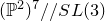 $(\mathbb {P}^2)^7//SL(3)$.
On the moduli of hypersurfaces in toric orbifolds
- Part of
-
- Journal:
- Proceedings of the Edinburgh Mathematical Society / Volume 67 / Issue 2 / May 2024
- Published online by Cambridge University Press:
- 14 March 2024, pp. 577-616
-
- Article
- Export citation
-
We construct and study the moduli of stable hypersurfaces in toric orbifolds. Let X be a projective toric orbifold and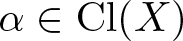 $\alpha \in \operatorname{Cl}(X)$ an ample class. The moduli space is constructed as a quotient of the linear system $|\alpha|$ by $G = \operatorname{Aut}(X)$. Since the group G is non-reductive in general, we use new techniques of non-reductive geometric invariant theory. Using the A-discriminant of Gelfand, Kapranov and Zelevinsky, we prove semistability for quasismooth hypersurfaces of toric orbifolds. Further, we prove the existence of a quasi-projective moduli space of quasismooth hypersurfaces in a weighted projective space when the weighted projective space satisfies a certain condition. We also discuss how to proceed when this condition is not satisfied. We prove that the automorphism group of a quasismooth hypersurface of weighted projective space is finite excluding some low degrees.


Stability conditions for polarised varieties
- Part of
-
- Journal:
- Forum of Mathematics, Sigma / Volume 11 / 2023
- Published online by Cambridge University Press:
- 20 November 2023, e104
-
- Article
-
- You have access
- Open access
- HTML
- Export citation
NON-ISOMORPHIC SMOOTH COMPACTIFICATIONS OF THE MODULI SPACE OF CUBIC SURFACES
- Part of
-
- Journal:
- Nagoya Mathematical Journal / Volume 254 / June 2024
- Published online by Cambridge University Press:
- 03 October 2023, pp. 315-365
-
- Article
-
- You have access
- Open access
- HTML
- Export citation
-
The well-studied moduli space of complex cubic surfaces has three different, but isomorphic, compact realizations: as a GIT quotient ${\mathcal {M}}^{\operatorname {GIT}}$, as a Baily–Borel compactification of a ball quotient ${(\mathcal {B}_4/\Gamma )^*}$, and as a compactified K-moduli space. From all three perspectives, there is a unique boundary point corresponding to non-stable surfaces. From the GIT point of view, to deal with this point, it is natural to consider the Kirwan blowup ${\mathcal {M}}^{\operatorname {K}}\rightarrow {\mathcal {M}}^{\operatorname {GIT}}$, whereas from the ball quotient point of view, it is natural to consider the toroidal compactification ${\overline {\mathcal {B}_4/\Gamma }}\rightarrow {(\mathcal {B}_4/\Gamma )^*}$. The spaces ${\mathcal {M}}^{\operatorname {K}}$ and ${\overline {\mathcal {B}_4/\Gamma }}$ have the same cohomology, and it is therefore natural to ask whether they are isomorphic. Here, we show that this is in fact not the case. Indeed, we show the more refined statement that ${\mathcal {M}}^{\operatorname {K}}$ and ${\overline {\mathcal {B}_4/\Gamma }}$ are equivalent in the Grothendieck ring, but not K-equivalent. Along the way, we establish a number of results and techniques for dealing with singularities and canonical classes of Kirwan blowups and toroidal compactifications of ball quotients.


Maximum likelihood estimation for tensor normal models via castling transforms
- Part of
-
- Journal:
- Forum of Mathematics, Sigma / Volume 10 / 2022
- Published online by Cambridge University Press:
- 01 July 2022, e50
-
- Article
-
- You have access
- Open access
- HTML
- Export citation
Overgroups of regular unipotent elements in reductive groups
- Part of
-
- Journal:
- Forum of Mathematics, Sigma / Volume 10 / 2022
- Published online by Cambridge University Press:
- 24 February 2022, e13
-
- Article
-
- You have access
- Open access
- HTML
- Export citation
Semisimplification for subgroups of reductive algebraic groups
- Part of
-
- Journal:
- Forum of Mathematics, Sigma / Volume 8 / 2020
- Published online by Cambridge University Press:
- 09 November 2020, e43
-
- Article
-
- You have access
- Open access
- Export citation
-
Let G be a reductive algebraic group—possibly non-connected—over a field k, and let H be a subgroup of G. If $G= {GL }_n$, then there is a degeneration process for obtaining from H a completely reducible subgroup $H'$ of G; one takes a limit of H along a cocharacter of G in an appropriate sense. We generalise this idea to arbitrary reductive G using the notion of G-complete reducibility and results from geometric invariant theory over non-algebraically closed fields due to the authors and Herpel. Our construction produces a G-completely reducible subgroup $H'$ of G, unique up to $G(k)$-conjugacy, which we call a k-semisimplification of H. This gives a single unifying construction that extends various special cases in the literature (in particular, it agrees with the usual notion for $G= GL _n$ and with Serre’s ‘G-analogue’ of semisimplification for subgroups of $G(k)$ from [19]). We also show that under some extra hypotheses, one can pick $H'$ in a more canonical way using the Tits Centre Conjecture for spherical buildings and/or the theory of optimal destabilising cocharacters introduced by Hesselink, Kempf, and Rousseau.


ON THE SHARPNESS OF TIAN’S CRITERION FOR K-STABILITY
- Part of
-
- Journal:
- Nagoya Mathematical Journal / Volume 245 / March 2022
- Published online by Cambridge University Press:
- 23 October 2020, pp. 41-73
-
- Article
- Export citation
-
Tian’s criterion for K-stability states that a Fano variety of dimension n whose alpha invariant is greater than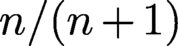 ${n}{/(n+1)}$ is K-stable. We show that this criterion is sharp by constructing n-dimensional singular Fano varieties with alpha invariants ${n}{/(n+1)}$ that are not K-polystable for sufficiently large n. We also construct K-unstable Fano varieties with alpha invariants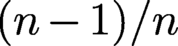 ${(n-1)}{/n}$.
G-torseurs en théorie de Hodge p-adique
- Part of
-
- Journal:
- Compositio Mathematica / Volume 156 / Issue 10 / October 2020
- Published online by Cambridge University Press:
- 24 November 2020, pp. 2076-2110
- Print publication:
- October 2020
-
- Article
- Export citation
-
Étant donné un groupe réductif $G$ sur une extension de degré fini de $\mathbb {Q}_p$ on classifie les $G$-fibrés sur la courbe introduite dans Fargues and Fontaine [Courbes et fibrés vectoriels en théorie de Hodge $p$-adique, Astérisque 406 (2018)]. Le résultat est interprété en termes de l'ensemble $B(G)$ de Kottwitz. On calcule également la cohomologie étale de la courbe à coefficients de torsion en lien avec la théorie du corps de classe local.


RELATIVE COMPLETE REDUCIBILITY AND NORMALIZED SUBGROUPS
- Part of
-
- Journal:
- Forum of Mathematics, Sigma / Volume 8 / 2020
- Published online by Cambridge University Press:
- 26 May 2020, e30
-
- Article
-
- You have access
- Open access
- Export citation
-
We study a relative variant of Serre’s notion of $G$-complete reducibility for a reductive algebraic group $G$. We let $K$ be a reductive subgroup of $G$, and consider subgroups of $G$ that normalize the identity component $K^{\circ }$. We show that such a subgroup is relatively $G$-completely reducible with respect to $K$ if and only if its image in the automorphism group of $K^{\circ }$ is completely reducible. This allows us to generalize a number of fundamental results from the absolute to the relative setting. We also derive analogous results for Lie subalgebras of the Lie algebra of $G$, as well as ‘rational’ versions over nonalgebraically closed fields.


The volume of singular Kähler–Einstein Fano varieties
- Part of
-
- Journal:
- Compositio Mathematica / Volume 154 / Issue 6 / June 2018
- Published online by Cambridge University Press:
- 29 April 2018, pp. 1131-1158
- Print publication:
- June 2018
-
- Article
- Export citation
-
We show that the anti-canonical volume of an $n$ -dimensional Kähler–Einstein $\mathbb{Q}$ -Fano variety is bounded from above by certain invariants of the local singularities, namely $\operatorname{lct}^{n}\cdot \operatorname{mult}$ for ideals and the normalized volume function for real valuations. This refines a recent result by Fujita. As an application, we get sharp volume upper bounds for Kähler–Einstein Fano varieties with quotient singularities. Based on very recent results by Li and the author, we show that a Fano manifold is K-semistable if and only if a de Fernex–Ein–Mustaţă type inequality holds on its affine cone.


On the Popov–Pommerening conjecture for linear algebraic groups
- Part of
-
- Journal:
- Compositio Mathematica / Volume 154 / Issue 1 / January 2018
- Published online by Cambridge University Press:
- 09 October 2017, pp. 36-79
- Print publication:
- January 2018
-
- Article
- Export citation
-
Let $G$ be a reductive group over an algebraically closed subfield $k$ of $\mathbb{C}$ of characteristic zero, $H\subseteq G$ an observable subgroup normalised by a maximal torus of $G$ and $X$ an affine $k$ -variety acted on by $G$ . Popov and Pommerening conjectured in the late 1970s that the invariant algebra $k[X]^{H}$ is finitely generated. We prove the conjecture for: (1) subgroups of $\operatorname{SL}_{n}(k)$ closed under left (or right) Borel action and for: (2) a class of Borel regular subgroups of classical groups. We give a partial affirmative answer to the conjecture for general regular subgroups of $\operatorname{SL}_{n}(k)$ .


Motivic zeta functions for prehomogeneous vector spaces and castling transformations
-
- Journal:
- Nagoya Mathematical Journal / Volume 171 / 2003
- Published online by Cambridge University Press:
- 22 January 2016, pp. 85-105
-
- Article
-
- You have access
- Export citation
A study of the representations supported by the orbit closure of the determinant
- Part of
-
- Journal:
- Compositio Mathematica / Volume 151 / Issue 2 / February 2015
- Published online by Cambridge University Press:
- 24 October 2014, pp. 292-312
- Print publication:
- February 2015
-
- Article
- Export citation
Octonion Algebras over Rings Are Not Determined by their Norms
-
- Journal:
- Canadian Mathematical Bulletin / Volume 57 / Issue 2 / 14 June 2014
- Published online by Cambridge University Press:
- 20 November 2018, pp. 303-309
- Print publication:
- 14 June 2014
-
- Article
-
- You have access
- Export citation
Rationality and the Jordan–Gatti–Viniberghi Decomposition
-
- Journal:
- Canadian Mathematical Bulletin / Volume 57 / Issue 1 / 14 March 2014
- Published online by Cambridge University Press:
- 20 November 2018, pp. 97-104
- Print publication:
- 14 March 2014
-
- Article
-
- You have access
- Export citation
