Refine search
Actions for selected content:
19 results
On the faithful flatness of some modules arising in analysis
- Part of
-
- Journal:
- Nagoya Mathematical Journal / Volume 261 / 2026
- Published online by Cambridge University Press:
- 23 February 2026, e19
-
- Article
-
- You have access
- Open access
- HTML
- Export citation
-
The notion of faithful flatness of a module over a commutative ring is studied for two R-modules M arising in functional analysis, where R is a Banach algebra and M is a Hilbert space. The following results are shown:
If X is a locally compact Hausdorff topological space, and $\mu $ is a positive Radon measure on X, then $L^2(X,\mu )$ is a flat $L^\infty (X,\mu )$-module. Moreover:
• If $\mu $ is $\sigma $-finite, then for every finitely generated, nonzero, proper ideal $\mathfrak {n}$ of $L^\infty (X,\mu )$, there holds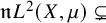 $\mathfrak {n}L^2(X,\mu )\subsetneq $ $L^2(X,\mu )$.
• If X is the union of an increasing family of Borel sets $U_n$, $n\!\in \! {\mathbb {N}}$, such that for each $n\in {\mathbb {N}}$, $\overline {U_n}$ is compact and $\mu (U_{n+1}\setminus U_n)>0$, then $L^2(X,\mu )$ is not a faithfully flat $L^\infty (X,\mu )$-module. $H^2$ is a flat, but not a faithfully flat $H^\infty $-module, which answers a 2005 question of Alban Quadrat.


Silting, cosilting and extensions of commutative rings
- Part of
-
- Journal:
- Mathematical Proceedings of the Cambridge Philosophical Society / Volume 180 / Issue 2 / March 2026
- Published online by Cambridge University Press:
- 27 October 2025, pp. 363-388
- Print publication:
- March 2026
-
- Article
-
- You have access
- Open access
- HTML
- Export citation
FLAT RING EPIMORPHISMS OF COUNTABLE TYPE
- Part of
-
- Journal:
- Glasgow Mathematical Journal / Volume 62 / Issue 2 / May 2020
- Published online by Cambridge University Press:
- 07 May 2019, pp. 383-439
-
- Article
-
- You have access
- Export citation
-
Let R→U be an associative ring epimorphism such that U is a flat left R-module. Assume that the related Gabriel topology $\mathbb{G}$ of right ideals in R has a countable base. Then we show that the left R-module U has projective dimension at most 1. Furthermore, the abelian category of left contramodules over the completion of R at $\mathbb{G}$ fully faithfully embeds into the Geigle–Lenzing right perpendicular subcategory to U in the category of left R-modules, and every object of the latter abelian category is an extension of two objects of the former one. We discuss conditions under which the two abelian categories are equivalent. Given a right linear topology on an associative ring R, we consider the induced topology on every left R-module and, for a perfect Gabriel topology $\mathbb{G}$, compare the completion of a module with an appropriate Ext module. Finally, we characterize the U-strongly flat left R-modules by the two conditions of left positive-degree Ext-orthogonality to all left U-modules and all $\mathbb{G}$-separated $\mathbb{G}$-complete left R-modules.


DING-GRADED MODULES AND GORENSTEIN GR-FLAT MODULES
- Part of
-
- Journal:
- Glasgow Mathematical Journal / Volume 60 / Issue 2 / May 2018
- Published online by Cambridge University Press:
- 02 November 2017, pp. 339-360
-
- Article
-
- You have access
- Export citation
Rings of Polynomials With Artinian Coefficients
- Part of
-
- Journal:
- Proceedings of the Edinburgh Mathematical Society / Volume 60 / Issue 4 / November 2017
- Published online by Cambridge University Press:
- 30 January 2017, pp. 947-954
-
- Article
- Export citation
-
We study the extent to which the weak Euclidean and stably free cancellation properties hold for rings of Laurent polynomials
 with coefficients in an Artinian ring A.
 with coefficients in an Artinian ring
 On Global Dimensions of Tree Type Finite Dimensional Algebras
-
- Journal:
- Canadian Mathematical Bulletin / Volume 57 / Issue 4 / 01 December 2014
- Published online by Cambridge University Press:
- 20 November 2018, pp. 814-820
- Print publication:
- 01 December 2014
-
- Article
-
- You have access
- Export citation
-
A formula is provided to explicitly describe global dimensions of all kinds of tree type finite dimensional $k$ -algebras for $k$ an algebraic closed field. In particular, it is pointed out that if the underlying tree type quiver has $n$ vertices, then the maximum global dimension is $n\,-\,1$ .


AN ALTERNATIVE PERSPECTIVE ON PROJECTIVITY OF MODULES
-
- Journal:
- Glasgow Mathematical Journal / Volume 57 / Issue 1 / January 2015
- Published online by Cambridge University Press:
- 26 August 2014, pp. 83-99
-
- Article
-
- You have access
- Export citation
(STRONGLY) GORENSTEIN FLAT MODULES OVER GROUP RINGS
- Part of
-
- Journal:
- Bulletin of the Australian Mathematical Society / Volume 90 / Issue 1 / August 2014
- Published online by Cambridge University Press:
- 17 December 2013, pp. 57-64
- Print publication:
- August 2014
-
- Article
-
- You have access
- Export citation
-
Let $\Gamma $ be a group and ${\Gamma }^{\prime } $ be a subgroup of $\Gamma $ of finite index. Let $M$ be a $\Gamma $-module. It is shown that $M$ is (strongly) Gorenstein flat if and only if it is (strongly) Gorenstein flat as a ${\Gamma }^{\prime } $-module. We also provide some criteria in which the classes of Gorenstein projective and strongly Gorenstein flat $\Gamma $-modules are the same.


ALMOST-PERFECT MODULES
-
- Journal:
- Glasgow Mathematical Journal / Volume 52 / Issue A / July 2010
- Published online by Cambridge University Press:
- 24 June 2010, pp. 33-40
-
- Article
-
- You have access
- Export citation
ON RINGS WHOSE RIGHT ANNIHILATORS ARE BOUNDED
-
- Journal:
- Glasgow Mathematical Journal / Volume 51 / Issue 3 / September 2009
- Published online by Cambridge University Press:
- 01 September 2009, pp. 539-559
-
- Article
-
- You have access
- Export citation
MODULES WITH FI-EXTENDING HULLS
-
- Journal:
- Glasgow Mathematical Journal / Volume 51 / Issue 2 / May 2009
- Published online by Cambridge University Press:
- 01 May 2009, pp. 347-357
-
- Article
-
- You have access
- Export citation
-
It is shown that every finitely generated projective module PR over a semiprime ring R has the smallest FI-extending essential module extension
 (called the absolute FI-extending hull of PR) in a fixed injective hull of PR. This module hull is explicitly described. It is proved that
  , where
 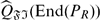 is the smallest right FI-extending right ring of quotients of End(PR) (in a fixed maximal right ring of quotients of End(PR). Moreover, we show that a finitely generated projective module PR over a semiprime ring R is FI-extending if and only if it is a quasi-Baer module and if and only if End(PR) is a quasi-Baer ring. An application of this result to C*-algebras is considered. Various examples which illustrate and delimit the results of this paper are provided.
 (called the absolute FI-extending hull of
  , where
  is the smallest right FI-extending right ring of quotients of End(
2-Clean Rings
-
- Journal:
- Canadian Mathematical Bulletin / Volume 52 / Issue 1 / 01 March 2009
- Published online by Cambridge University Press:
- 20 November 2018, pp. 145-153
- Print publication:
- 01 March 2009
-
- Article
-
- You have access
- Export citation
- $\text{A}$ ring $R$ is said to be $n$ -clean if every element can be written as a sum of an idempotent and $n$ units. The class of these rings contains clean rings and $n$ -good rings in which each element is a sum of $n$ units. In this paper, we show that for any ring $R$ , the endomorphism ring of a free $R$ -module of rank at least 2 is 2-clean and that the ring $B\left( R \right)$ of all $\omega \,\times \,\omega$ row and column-finite matrices over any ring $R$ is 2-clean. Finally, the group ring $R{{C}_{n}}$ is considered where $R$ is a local ring.


THE UNIT SUM NUMBER OF SOME PROJECTIVE MODULES
-
- Journal:
- Glasgow Mathematical Journal / Volume 50 / Issue 1 / January 2008
- Published online by Cambridge University Press:
- 01 January 2008, pp. 71-74
-
- Article
-
- You have access
- Export citation
-
The unit sum number u(R) of a ring R is the least k such that every element is the sum of k units; if there is no such k then u(R) is ω or ∞ depending whether the units generate R additively or not. If RM is a left R-module, then the unit sum number of M is defined to be the unit sum number of the endomorphism ring of M. Here we show that if R is a ring such that R/J(R) is semisimple and
 is not a factor of R/J(R) and if P is a projective R-module such that JP ≪ P, (JP small in P), then u(P)= 2. As a result we can see that if P is a projective module over a perfect ring then u(P)=2.
 is not a factor of
 A GENERALIZATION OF PP-RINGS AND p.q.-BAER RINGS
-
- Journal:
- Glasgow Mathematical Journal / Volume 48 / Issue 2 / May 2006
- Published online by Cambridge University Press:
- 23 August 2006, pp. 217-229
-
- Article
-
- You have access
- Export citation
ANOTHER CRITERION FOR A RING TO BE PROJECTIVE-FREE
-
- Journal:
- Bulletin of the London Mathematical Society / Volume 37 / Issue 6 / December 2005
- Published online by Cambridge University Press:
- 12 December 2005, pp. 857-859
- Print publication:
- December 2005
-
- Article
- Export citation
PURE-PROJECTIVE MODULES
-
- Journal:
- Journal of the London Mathematical Society / Volume 71 / Issue 2 / April 2005
- Published online by Cambridge University Press:
- 06 April 2005, pp. 304-320
- Print publication:
- April 2005
-
- Article
- Export citation
Covers and Envelopes via Endoproperties of Modules
-
- Journal:
- Proceedings of the London Mathematical Society / Volume 86 / Issue 3 / May 2003
- Published online by Cambridge University Press:
- 09 June 2003, pp. 649-665
- Print publication:
- May 2003
-
- Article
- Export citation
Stably Free Modules Over Rings of Generalised Integer Quaternions
-
- Journal:
- Canadian Mathematical Bulletin / Volume 38 / Issue 4 / 01 December 1995
- Published online by Cambridge University Press:
- 20 November 2018, pp. 408-411
- Print publication:
- 01 December 1995
-
- Article
-
- You have access
- Export citation
Weakly Projective and Weakly Injective Modules
-
- Journal:
- Canadian Journal of Mathematics / Volume 46 / Issue 5 / 01 October 1994
- Published online by Cambridge University Press:
- 20 November 2018, pp. 971-981
- Print publication:
- 01 October 1994
-
- Article
-
- You have access
- Export citation
-
A module M is said to be weakly N-projective if it has a projective cover π: P(M) ↠M and for each homomorphism
 : P(M) → N there exists an epimorphism σ:P(M) ↠M such that
  (kerσ) = 0, equivalently there exists a homomorphism
 :M ↠N such that
. A module M is said to be weakly projective if it is weakly N-projective for all finitely generated modules N. Weakly N-injective and weakly injective modules are defined dually. In this paper we study rings over which every weakly injective right R-module is weakly projective. We also study those rings over which every weakly projective right module is weakly injective. Among other results, we show that for a ring R the following conditions are equivalent:(1) R is a left perfect and every weakly projective right R-module is weakly injective.
(2) R is a direct sum of matrix rings over local QF-rings.
(3) R is a QF-ring such that for any indecomposable projective right module eR and for any right ideal I, soc(eR/eI) = (eR/eJ)n for some positive integer n.
(4) R is right artinian ring and every weakly injective right R-module is weaklyprojective.
(5) Every weakly projective right R-module is weakly injective and every weakly injective right R-module is weakly projective.
 :
:  (kerσ) = 0, equivalently there exists a homomorphism