Refine search
Actions for selected content:
24 results
On the time-dependent Born–Oppenheimer approximation
- Part of
-
- Journal:
- European Journal of Applied Mathematics , First View
- Published online by Cambridge University Press:
- 04 March 2026, pp. 1-49
-
- Article
-
- You have access
- Open access
- HTML
- Export citation
Derivation of the Gross-Pitaevskii dynamics through renormalized excitation number operators
- Part of
-
- Journal:
- Forum of Mathematics, Sigma / Volume 13 / 2025
- Published online by Cambridge University Press:
- 07 July 2025, e107
-
- Article
-
- You have access
- Open access
- HTML
- Export citation
-
We revisit the time evolution of initially trapped Bose-Einstein condensates in the Gross-Pitaevskii regime. We show that the system continues to exhibit BEC once the trap has been released and that the dynamics of the condensate is described by the time-dependent Gross-Pitaevskii equation. Like the recent work [15], we obtain optimal bounds on the number of excitations orthogonal to the condensate state. In contrast to [15], however, whose main strategy consists of controlling the number of excitations with regard to a suitable fluctuation dynamics $t\mapsto e^{-B_t} e^{-iH_Nt}$ with renormalized generator, our proof is based on controlling renormalized excitation number operators directly with regards to the Schrödinger dynamics $t\mapsto e^{-iH_Nt}$.

A sharp threshold for Trudinger–Moser type inequalities with logarithmic kernels in dimension N
- Part of
-
- Journal:
- Proceedings of the Royal Society of Edinburgh. Section A: Mathematics , First View
- Published online by Cambridge University Press:
- 17 February 2025, pp. 1-39
-
- Article
- Export citation
-
In the article, we investigate Trudinger–Moser type inequalities in presence of logarithmic kernels in dimension N. A sharp threshold, depending on N, is detected for the existence of extremal functions or blow-up, where the domain is the ball or the entire space $\mathbb{R}^N$. We also show that the extremal functions satisfy suitable Euler–Lagrange equations. When the domain is the entire space, such equations can be derived by a N-Laplacian Schrödinger equation strongly coupled with a higher order fractional Poisson’s equation. The results extends [16] to any dimension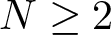 $N \geq 2$.

Dispersive and Strichartz estimates for 3D wave equation with a Laguerre potential
- Part of
-
- Journal:
- Canadian Journal of Mathematics / Volume 77 / Issue 3 / June 2025
- Published online by Cambridge University Press:
- 07 March 2024, pp. 863-890
- Print publication:
- June 2025
-
- Article
- Export citation
Stable solutions to double phase problems involving a nonlocal term
- Part of
-
- Journal:
- Proceedings of the Edinburgh Mathematical Society / Volume 66 / Issue 4 / November 2023
- Published online by Cambridge University Press:
- 23 October 2023, pp. 1119-1141
-
- Article
- Export citation
-
In this paper, we study weak solutions, possibly unbounded and sign-changing, to the double phase problem
where \begin{equation*}-\text{div} (|\nabla u|^{p-2} \nabla u + w(x)|\nabla u|^{q-2} \nabla u) = \left(\frac{1}{|x|^{N-\mu}}*f|u|^r\right) f(x)|u|^{r-2}u \quad\text{in}\ \mathbb{R}^N,\end{equation*}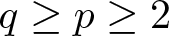 $q\ge p\ge2$, r > q, $0 \lt \mu \lt N$ and $w,f \in L^1_{\rm loc}(\mathbb{R}^N)$ are two non-negative functions such that $w(x) \le C_1|x|^a$ and $f(x) \ge C_2|x|^b$ for all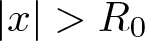 $|x| \gt R_0$, where $R_0,C_1,C_2 \gt 0$ and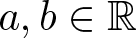 $a,b\in\mathbb{R}$. Under some appropriate assumptions on p, q, r, µ, a, b and N, we prove various Liouville-type theorems for weak solutions which are stable or stable outside a compact set of $\mathbb{R}^N$. First, we establish the standard integral estimates via stability property to derive the non-existence results for stable weak solutions. Then, by means of the Pohožaev identity, we deduce the Liouville-type theorem for weak solutions which are stable outside a compact set.

Quantum systems at the brink: existence of bound states, critical potentials, and dimensionality
- Part of
-
- Journal:
- Forum of Mathematics, Sigma / Volume 11 / 2023
- Published online by Cambridge University Press:
- 17 July 2023, e61
-
- Article
-
- You have access
- Open access
- HTML
- Export citation
Polynomial stability of a piezoelectric beam with magnetic effect and a boundary dissipation of the fractional derivative type
- Part of
-
- Journal:
- Proceedings of the Edinburgh Mathematical Society / Volume 66 / Issue 1 / February 2023
- Published online by Cambridge University Press:
- 05 April 2023, pp. 23-53
-
- Article
- Export citation
STABLE SOLUTIONS TO THE STATIC CHOQUARD EQUATION
- Part of
-
- Journal:
- Bulletin of the Australian Mathematical Society / Volume 102 / Issue 3 / December 2020
- Published online by Cambridge University Press:
- 10 June 2020, pp. 471-478
- Print publication:
- December 2020
-
- Article
-
- You have access
- Export citation
-
This paper is concerned with the static Choquard equation
where $$\begin{eqnarray}-\unicode[STIX]{x1D6E5}u=\bigg(\frac{1}{|x|^{N-\unicode[STIX]{x1D6FC}}}\ast |u|^{p}\bigg)|u|^{p-2}u\quad \text{in }\mathbb{R}^{N},\end{eqnarray}$$ $N,p>2$ and $\max \{0,N-4\}<\unicode[STIX]{x1D6FC}<N$. We prove that if $u\in C^{1}(\mathbb{R}^{N})$ is a stable weak solution of the equation, then $u\equiv 0$. This phenomenon is quite different from that of the local Lane–Emden equation, where such a result only holds for low exponents in high dimensions. Our result is the first Liouville theorem for Choquard-type equations with supercritical exponents and $\unicode[STIX]{x1D6FC}\neq 2$.


Spectral transitions for Aharonov-Bohm Laplacians on conical layers
- Part of
-
- Journal:
- Proceedings of the Royal Society of Edinburgh. Section A: Mathematics / Volume 149 / Issue 6 / December 2019
- Published online by Cambridge University Press:
- 26 January 2019, pp. 1663-1687
- Print publication:
- December 2019
-
- Article
- Export citation
The time-dependent Schrödinger equation with piecewise constant potentials
- Part of
-
- Journal:
- European Journal of Applied Mathematics / Volume 31 / Issue 1 / February 2020
- Published online by Cambridge University Press:
- 18 September 2018, pp. 57-83
-
- Article
- Export citation
The initial-value problem for a fourth-order dispersive closed curve flow on the 2-sphere
- Part of
-
- Journal:
- Proceedings of the Royal Society of Edinburgh. Section A: Mathematics / Volume 147 / Issue 6 / December 2017
- Published online by Cambridge University Press:
- 14 August 2017, pp. 1243-1277
- Print publication:
- December 2017
-
- Article
- Export citation
Fast Evaluation of the Caputo Fractional Derivative and its Applications to Fractional Diffusion Equations
- Part of
-
- Journal:
- Communications in Computational Physics / Volume 21 / Issue 3 / March 2017
- Published online by Cambridge University Press:
- 07 February 2017, pp. 650-678
- Print publication:
- March 2017
-
- Article
- Export citation
-
The computational work and storage of numerically solving the time fractional PDEs are generally huge for the traditional direct methods since they require total
 memory and
  work, where NT and NS represent the total number of time steps and grid points in space, respectively. To overcome this difficulty, we present an efficient algorithm for the evaluation of the Caputo fractional derivative
  of order α∈(0,1). The algorithm is based on an efficient sum-of-exponentials (SOE) approximation for the kernel t –1–α on the interval [Δt, T] with a uniform absolute error ε. We give the theoretical analysis to show that the number of exponentials N exp needed is of order
  for T≫1 or
  for TH1 for fixed accuracy ε. The resulting algorithm requires only
  storage and
  work when numerically solving the time fractional PDEs. Furthermore, we also give the stability and error analysis of the new scheme, and present several numerical examples to demonstrate the performance of our scheme.
 memory and
  work, where
  of order
  for
for  for
for  storage and
  work when numerically solving the time fractional PDEs. Furthermore, we also give the stability and error analysis of the new scheme, and present several numerical examples to demonstrate the performance of our scheme.
Accurate and Efficient Numerical Methods for Computing Ground States and Dynamics of Dipolar Bose-Einstein Condensates via the Nonuniform FFT
- Part of
-
- Journal:
- Communications in Computational Physics / Volume 19 / Issue 5 / May 2016
- Published online by Cambridge University Press:
- 17 May 2016, pp. 1141-1166
- Print publication:
- May 2016
-
- Article
- Export citation
Computing the Ground and First Excited States of the Fractional Schrödinger Equation in an Infinite Potential Well
- Part of
-
- Journal:
- Communications in Computational Physics / Volume 18 / Issue 2 / August 2015
- Published online by Cambridge University Press:
- 30 July 2015, pp. 321-350
- Print publication:
- August 2015
-
- Article
- Export citation
Local Discontinuous Galerkin Methods for the 2D Simulation of Quantum Transport Phenomena on Quantum Directional Coupler
-
- Journal:
- Communications in Computational Physics / Volume 15 / Issue 4 / April 2014
- Published online by Cambridge University Press:
- 03 June 2015, pp. 1012-1028
- Print publication:
- April 2014
-
- Article
- Export citation
Linear Scaling Discontinuous Galerkin Density Matrix Minimization Method with Local Orbital Enriched Finite Element Basis: 1-D Lattice Model System
-
- Journal:
- Communications in Computational Physics / Volume 14 / Issue 2 / August 2013
- Published online by Cambridge University Press:
- 03 June 2015, pp. 276-300
- Print publication:
- August 2013
-
- Article
- Export citation
A Numerical Study of Quantum Decoherence
-
- Journal:
- Communications in Computational Physics / Volume 12 / Issue 1 / July 2012
- Published online by Cambridge University Press:
- 20 August 2015, pp. 85-108
- Print publication:
- July 2012
-
- Article
- Export citation
A Finite Volume Method for the Multi Subband Boltzmann Equation with Realistic 2D Scattering in Double Gate MOSFETs
-
- Journal:
- Communications in Computational Physics / Volume 10 / Issue 2 / August 2011
- Published online by Cambridge University Press:
- 20 August 2015, pp. 305-338
- Print publication:
- August 2011
-
- Article
- Export citation
Radial functions and maximal estimates for solutions to the Schrödinger equation
- Part of
-
- Journal:
- Journal of the Australian Mathematical Society. Series A. Pure Mathematics and Statistics / Volume 59 / Issue 1 / August 1995
- Published online by Cambridge University Press:
- 09 April 2009, pp. 134-142
-
- Article
-
- You have access
- Export citation
Short Time Behavior of Solutions to Linear and Nonlinear Schrödinger Equations
-
- Journal:
- Canadian Journal of Mathematics / Volume 60 / Issue 5 / October 2008
- Published online by Cambridge University Press:
- 20 November 2018, pp. 1168-1200
- Print publication:
- October 2008
-
- Article
-
- You have access
- Export citation
-
We examine the fine structure of the short time behavior of solutions to various linear and nonlinear Schrödinger equations ${{u}_{t}}=i\Delta u+q(u)$ on $I\times {{\mathbb{R}}^{n}}$ , with initial data $u(0,x)=f(x)$ . Particular attention is paid to cases where $f$ is piecewise smooth, with jump across an $(n-1)$ -dimensional surface. We give detailed analyses of Gibbs-like phenomena and also focusing effects, including analogues of the Pinsky phenomenon. We give results for general $n$ in the linear case. We also have detailed analyses for a broad class of nonlinear equations when $n=1$ and 2, with emphasis on the analysis of the first order correction to the solution of the corresponding linear equation. This work complements estimates on the error in this approximation.


