To save content items to your account,
please confirm that you agree to abide by our usage policies.
If this is the first time you use this feature, you will be asked to authorise Cambridge Core to connect with your account.
Find out more about saving content to .
To save content items to your Kindle, first ensure no-reply@cambridge.org
is added to your Approved Personal Document E-mail List under your Personal Document Settings
on the Manage Your Content and Devices page of your Amazon account. Then enter the ‘name’ part
of your Kindle email address below.
Find out more about saving to your Kindle.
Note you can select to save to either the @free.kindle.com or @kindle.com variations.
‘@free.kindle.com’ emails are free but can only be saved to your device when it is connected to wi-fi.
‘@kindle.com’ emails can be delivered even when you are not connected to wi-fi, but note that service fees apply.
This chapter offers a new outlook on the history of Scots, a minority language related to English, up to 1700. Scots and its history have been a subject of pioneering work in historical linguistics, especially in historical dialectology and digital approaches to language change. The chapter takes stock of previous scholarship and the extra-linguistic events which shaped the linguistic situation in Scotland from the medieval period till the early eighteenth century. It then highlights problematic areas and questions related to constructing a narrative for a history of an unstandardised minority language, with special focus on defining Scots as a language of written communication, its family tree, periodisation and status, as well as metalinguistic perspectives. The discussion finishes with an overview of the most recent research on various aspects of structure and language use, and a summary of available resources for the study of historical Scots.
The Introduction outlines the essential premises behind this book and the structure the book will take. It also offers some thoughts on the book’s approach to periodisation.
Recent years have seen a remarkable revival of research on Cassius Dio and his Roman History, including the publication of numerous volumes of collective essays, and this has been accompanied by a much higher estimation of his achievement than used to be customary. This article seeks to assess the progress made on a range of key issues relating to Dio and his history and to point ahead to further directions for research. The chief topics considered are Dio’s career as senator and historian, central aspects of his history (transmission, sources and models, structure, speeches), and Dio’s handling of politics and system change.
This chapter focuses on Neo-Victorian fiction as a sub-genre of the historical novel. It examines how British neo-Victorian texts are informed by Anglo-American and European postmodernist theories that challenged the division between history and literature. In this context, it contains discussions of a wide range of novels including Jean Rhys’s Wide Sargasso Sea (1966), John Fowles’ The French Lieutenant’s Woman (1969), A.S. Byatt’s Possession: A Romance (1990), and Sarah Waters’s Victorian trilogy that have now become part of an ever-growing Neo-Victorian canon, while also engaging with more recent manifestations of Neo-Victorianism in TV and film adaptations. It explores how Neo-Victorianism has intersected with British political discourse; how authors’ investment in Britain’s history and Victorian literary culture problematises the Neo-Victorian novel’s position in the academy; the form’s perceived prestige; and its contribution to debates surrounding accuracy and authenticity to argue that neo-Victorianism can be read as a symptom of decadent postmodernity.
Periodisations are inevitable and useful short-cuts in conceptualising the past. But they are often inherited without reflection or a clear idea of their origins; in literature they can endow fashionable aesthetic judgements with lasting canonical force in ways that can be intellectually harmful. Latin is a language with a literary history of over two millennia, with highly differentiated levels of survival from different periods, and with a complex scholarly tradition: its periodisation is both important and challenging. I open with three vignettes of attitudes to Latin literature which in their different ways show the tendency to esteem antiquity above all. I look at six possible ways in which the history of Latin literature has been periodised or could be better periodised, with a recurring focus on two particularly dynamic periods : the last half-century before Christ and the fourth and fifth centuries of our era. An examination of changes in language, metre, prose rhythm, politics, religion and book history is used to challenge and test established periodisations, and to suggest the benefits of a greater acknowledgement of continuities and the longue durée.
With his ‘imaginary portraits’, Pater developed a hybrid genre blending biography with travel writing, fiction, and criticism. The cross-pollination between Pater’s fiction and his essays remained strong throughout his career. This chapter explores how Pater employed the genre to engage with both English and French critics (Arnold, Newman, Sainte-Beuve) in the debates about the relations between reading, writing, the individual, and the nation through a series of character sketches. Seen in the light of an unfinished manuscript for a lecture on English literature, Pater’s early imaginary portraits raise questions of periodisation, of how far back the beginnings of English literature could be traced, while essentially questioning its Englishness. Stressing the significance of medieval rather than Elizabethan literature in the formation of a national canon, Pater selected Chaucer as the proclaimed father of English literature, thus selecting a writer with a profound European background, whose character sketches in The Canterbury Tales in some respects became precursors of Pater’s own studies of the individual.
What is ‘early Latin’? The main contention of the present volume is that this question does not have a single answer. Rather, ‘early Latin’ is one of those ubiquitous labels (like ‘old’ or ‘archaic’ Latin) which have been used by classical scholars to denote different linguistic entities, and above all to describe a variety of linguistic features, in an often confusing and potentially contentious way. ‘Early Latin’ is above all a linguistic construct, which evokes frameworks of periodisation (often diverging), and posits a distinction between a supposedly discrete and cohesive linguistic variety (‘classical Latin’) and another one, equally discrete and cohesive, belonging to an earlier time period (‘pre-classical Latin’, a notion which has often carried negative value judgments since antiquity). Far from aiming to replace one theoretical framework with another, the studies presented here contribute, through a fresh analysis of specific linguistic phenomena and stylistic trends, to challenge the myths of periodisation and standardisation, and to expose the limited usefulness of evolutionary models to explain language change.
This chapter maps out some key themes and questions for the volume as a whole. Studies of late Hellenistic Greek literature have tended to focus narrowly on individual texts and authors. The goal of this volume is to generate a set of new readings that do justice to the intertextual richness of the writings of this period. The introduction also aims to move beyond rigid accounts of the start and end-points of the ‘Hellenistic period', bringing late Hellenistic literature into dialogue with its later imperial equivalents in ways which draw attention to both the similarities and the differences between them.
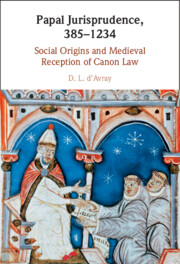
Why did bishops turn to the papacy for advice in late Antiquity? And what does the reception of these decretals reveal about the legal and religious culture of the mid-thirteenth century? This interpretative volume seeks to explain the first decretal age of late antiquity, placing the increased demand for papal jurisprudence – long before it exerted its influence through religious fear – within its social broad context. D. L. d'Avray then traces the reception of this jurisprudence through to the mid-thirteenth century, and the post-Gratian decretal age. Along the way he explores the role of Charlemagne and 'Pseudo-Isidore', which included many genuine early decretals alongside forged ones. Similarities between the Latin world c. 400 and c. 1200 thus help explain parallels between the two decretal ages. This book also analyses decretals from both ages in chapters on pagan marriages, clerics in minor orders, and episcopal elections. For both ages the relation between canon law and other religious genres is elucidated, demonstrating many fascinating parallels and connections.
This article analyses the development of the Council of Social Service for Wales during what is often called the Golden Age of the Welfare State. Recovering the neglected history of the peak organisation for voluntary social service in Wales adds to our understanding of the histories of social policy and postwar Wales. The article addresses social policy from a doubly peripheral perspective – it attends to a territorial periphery of the UK State while voluntary action can be left at the margins of Welfare State analysis. From this perspective we hope to cast new light on the historiography of the ‘British Welfare State’
Conventional historical periods – ‘classical’, ‘medieval’, ‘early modern’ etc. – help us as historians orient ourselves with respect to each other and to communicate what we do to a wider public. However, traditional periodisation is also dangerous. Giving a span of time a label tends to constrain our narratives within a set of assumptions. If we try to use the past to inform our understanding of the present, we may bring those assumptions forward, to identify or contrast with contemporary events in a way that has little to do either with the past or with the present. Terrorism is a historically and culturally contingent concept; it is modern, and it is Western. Past attitudes towards violence and who was entitled to use it were likewise very different from those that prevail in the modern West. As we write a history of terrorism, we should forgo both the use of conventional periodisation and the use of the term ‘terrorism’, even in a lowest-common-denominator sense, as a transtemporal, objective object of enquiry. This does not mean that we should jettison the word ‘terrorism’ altogether. We should rather view the word itself as having a history that embraces an evolving and shifting set of ideas, and that fits into a much older story about humanity’s views of order and disorder and its uses of violence and fear.
These concluding reflections assess how the contributors to this special issue intervene in key assumptions that shape the current field of archival studies. As the “archival turn” gains ground, forms of Euro- and state-centrism reappear in scholarship otherwise innovative in its attention to the textual remnants of the past. Here, instead, we explore the methodological stakes involved in defining both the “archive” and the historical power brokers who created and preserved a documentary record in pursuit of their varied social, cultural, economic, and political projects. The essay points to the resurgence of culturalist and civilisational indices for comparative archivistics, and follows the arguments collected in this issue to assert by contrast the often uneven and uneasy regional, administrative, and procedural definitions at work within preserved records. Identifying “mobility” as both a methodological tactic and a historical process, this conclusion presents a fluid rather than fixed textual landscape and presents an alternative frame for investigating preservationist practices.
The chapter traces the rich legacy of the romantic literature in Ireland, through consideration of the varied influences of key Irish and English writings of the later eighteenth and early nineteenth century on Irish writers of recent decades. It suggests that the reappraisal of romanticism in the 1980s and 1990s has important implications for Irish literary history, in that the plurality and inclusiveness of the ‘romantic period’ and increasing emphasis on historical contexts, locations, colonialism, and gender are especially helpful for approaching leading Irish writers of the time, such as Maria Edgeworth, Edmund Burke, Thomas Moore, Richard Brinsley Sheridan, and emerging genres such as national tales, gothic fiction, political prose, and periodical literature. Recognition of the variousness of romantic-period literature also complicates the later twentieth-century legacies, opening lines of inheritance from John Clare to Michael Longley, Maria Edgeworth to William Trevor, Raftery to Derek Mahon. The perhaps better-known engagements of Seamus Heaney with Wordsworth, Paul Muldoon with Samuel Taylor Coleridge and Robert Southey, or Ciaran Carson with John Keats are thus considered as part of the larger picture of continuing connections between the romantic period and modern Irish literature.
The introduction outlines how the book reassesses the impact of the Beatles on sixties Britain. Existing accounts have variously conceived of the Beatles as trailblazers of change, as exemplars of change or as outliers whose marginality revealed the lack of change in sixties Britain. Here the relationship between the Beatles and sixties Britain is instead conceived as one of creative tension, with the band’s divergence from societal norms provoking a full gamut of contemporary reactions: approbatory, contemptuous, ambivalent, indifferent and reformist. The book also uses different methods to study a familiar topic. It is a historical study of a subject largely studied by non-historians. Its empiricism distinguishes it from work informed by the theoretical approaches favoured by cultural critics and social scientists. It eschews the politicisation of the Beatles by writers engaged in culture wars over the sixties. It is purposely eclectic in its source materials, analytical methods and in its subject matter, which encompasses society, culture and politics. As the first book-length study of the Beatles by an academic British historian, The Beatles and Sixties Britain sets out to explain the significance of the band to twentieth-century British history, and vice versa.
Edited by
Matthew Craven, School of Oriental and African Studies, University of London,Sundhya Pahuja, University of Melbourne,Gerry Simpson, London School of Economics and Political Science
This chapter is concerned with exploring the mutually constitutive character of the international law of nuclear weapons, and the Cold War and post–Cold War environs in which that law was to be developed. In one direction it is argued that a consensual treaty-based system of law-making prevailed during the Cold War, which shifted to a system of Security Council legislation in the post-Cold War era, and that this reflected a parallel shift from a multipolar to a unipolar geopolitics. In another direction, however, it is also argued that the international law of nuclear weaponry also contributed to the production of its own political environs by both legitimating the possession of nuclear weaponry and controlling its spread.
Edited by
Matthew Craven, School of Oriental and African Studies, University of London,Sundhya Pahuja, University of Melbourne,Gerry Simpson, London School of Economics and Political Science
Edited by
Matthew Craven, School of Oriental and African Studies, University of London,Sundhya Pahuja, University of Melbourne,Gerry Simpson, London School of Economics and Political Science
The fall of the Berlin Wall in 1989 and the collapse of the Soviet Union in the years which followed brought into play a new international imaginary launched with a flurry of inaugural gestures. These included the proclamation, by US President George Bush, of a ‘New World Order’ in 1991, the publication, by UN Secretary-General Boutros Boutros-Ghali, of an Agenda for Peace in 1992,and, in the most triumphalist gesture of the three, the American political scientist Francis Fukuyama’s invocation of the end of history. Many international legal scholars, too, applauded the beginning of a new post–Cold War world, no longer dominated by two rival superpowers. It was a moment widely thought to be full of new ‘global’, if not cosmopolitan, possibilities.
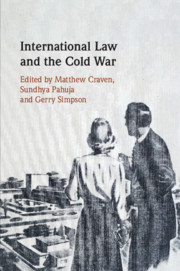
International Law and the Cold War is the first book dedicated to examining the relationship between the Cold War and International Law. The authors adopt a variety of creative approaches - in relation to events and fields such as nuclear war, environmental protection, the Suez crisis and the Lumumba assassination - in order to demonstrate the many ways in which international law acted upon the Cold War and in turn show how contemporary international law is an inheritance of the Cold War. Their innovative research traces the connections between the Cold War and contemporary legal constructions of the nation-state, the environment, the third world, and the refugee; and between law, technology, science, history, literature, art, and politics.
‘Transposing the Restoration’ explores connections between, and assesses the cumulative impact of, the three main chapters of The Restoration Transposed. It considers the book’s implications for issues and topics such as translation, the transition from a manuscript- to a print-based literary culture, the spread of English-language literary publishing outside London, the participation and presentation of women in the literary sphere, and the development of the English literary canon. It also describes and seeks to account for the differing characters of each of the literary decades from the 1660s to the 1690s. It concludes by considering how the fresh perspectives offered by The Restoration Transposed may alter perceptions of poets as various as Milton, Marvell, Dryden, Cowley and Rochester and makes the case for the transposed Restoration as offering a view of its poetry that is less narrow and elitist and more sympathetic and open to diversity than conventional accounts of the period.
Historians tend to view public health as a quintessentially modern phenomenon, enabled by the emergence of representative democracies, centralised bureaucracies and advanced biomedicine. While social, urban and religious historians have begun chipping away at the entrenched dichotomy between pre/modernity that this view implies, evidence for community prophylactics in earlier eras also emerges from a group of somewhat unexpected sources, namely military manuals. Texts composed for (and often by) army leaders in medieval Latin Europe, East Rome (Byzantium) and other premodern civilisations reflect the topicality of population-level preventative healthcare well before the nineteenth century, thereby broadening the path for historicising public health from a transregional and even global perspective. Moreover, at least throughout the Mediterranean world, military manuals also attest the enduring appeal of Hippocratic and Galenic prophylactics and how that medical tradition continued for centuries to shape the routines and material culture of vulnerable communities such as armies.
Recommend this
Email your librarian or administrator to recommend adding this to your organisation's collection.