To save content items to your account,
please confirm that you agree to abide by our usage policies.
If this is the first time you use this feature, you will be asked to authorise Cambridge Core to connect with your account.
Find out more about saving content to .
To save content items to your Kindle, first ensure no-reply@cambridge.org
is added to your Approved Personal Document E-mail List under your Personal Document Settings
on the Manage Your Content and Devices page of your Amazon account. Then enter the ‘name’ part
of your Kindle email address below.
Find out more about saving to your Kindle.
Note you can select to save to either the @free.kindle.com or @kindle.com variations.
‘@free.kindle.com’ emails are free but can only be saved to your device when it is connected to wi-fi.
‘@kindle.com’ emails can be delivered even when you are not connected to wi-fi, but note that service fees apply.
Editors-in-Chief: Professor F. Pelayo Garcia de Arquer The Institute of Photonic Sciences | Spain and Dr. Cao Thang Dinh Queen's University | Canada Cambridge Prisms: Carbon Technologies focuses on innovative and interdisciplinary research aimed at mitigating the impact of climate change by reducing carbon emissions and their environmental impact. The journal serves as a dynamic platform for scientists, engineers, and policymakers, to collaborate on advancing Carbon Capture, Usage, and Storage (CCUS) technologies. Our goal is to foster breakthroughs that contribute to advance the understanding of CCUS strategies and to enable and accelerate their implementation. Special emphasis is placed on studies and analyses that help bridge the gap between discovery, innovation, and the large-scale implementation in CCUS technologies.
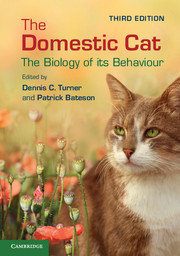
The most commonly kept domestic animal in the developed world, the cat has been a part of human life for thousands of years. Cats have been both worshipped and persecuted over this long period - either loved or hated for their enigmatic self-reliance and the subject of numerous myths and fables. Highlighting startling discoveries made over the last ten years, this new edition features contributions from experts in a wide range of fields, providing authoritative accounts of the behaviour of cats and how they interact with people. Thoroughly revised and updated to include information on the basic features of cat development and social life, the history of their relations with humans, health and welfare problems, and the breeding of cats for sale and for show. It is intended for all those, whether specialist or general reader, who love or are simply intrigued by these fascinating animals.
The first and chief point of interest in this chapter is, whether the numerous domesticated varieties of the dog have descended from a single wild species, or from several. Some authors believe that all have descended from the wolf, or from the jackal, or from an unknown and extinct species. Others again believe, and this of late has been the favourite tenet, that they have descended from several species, extinct and recent, more or less commingled together. We shall probably never be able to ascertain their origin with certainty. Palæontology does not throw much light on the question, owing, on the one hand, to the close similarity of the skulls of extinct as well as living wolves and jackals, and owing on the other hand to the great dissimilarity of the skulls of the several breeds of the domestic dogs. It seems, however, that remains have been found in the later tertiary deposits more like those of a large dog than of a wolf, which favours the belief of De Blainville that our dogs are the descendants of a single extinct species. On the other hand, some authors go so far as to assert that every chief domestic breed must have had its wild prototype.
Although the ancestors of the domestic cat (Felis silvestris catus) first appeared about 35 million years ago (MYA) during the late Eocene, the cat family or Felidae, to which all living cat species belong, emerged somewhat later during the Miocene about 10–11 MYA (Johnson & O’Brien, 1997; O’Brien et al., 2008). Morphological and molecular studies of phylogenetic relationships among living felids indicate that the 37 extant species can be divided up into 8 major phylogenetic groups or lineages: the Panthera lineage; the bay cat lineage; the leopard cat lineage; the caracal lineage; the ocelot, lynx and puma lineages; and, finally, the domestic cat or Felis lineage (Leyhausen, 1979; Collier & O’Brien, 1985; Salles, 1992; Johnson & O’Brien, 1997; O’Brien et al., 2008). The latter is believed to have diverged from the others around 6.2 MYA, and comprises four species of small cats that seem to have originated around the Mediterranean basin: the jungle cat (Felis chaus), the black-footed cat (F. nigripes), the sand cat (F. margarita) and the wildcat (F. silvestris) (O’Brien et al., 2008).
A species of Trichuris is described from domestic cats in the Bahama Islands, and identified as T. campanula. Previous descriptions of the two species of Trichuris in the domestic cat are summarised, and it is concluded that both are valid species.
A recent study from Central Europe has changed our perception of the cat's domestication history. The authors discuss how this has led to the development of an interdisciplinary project combining palaeogenetics, zooarchaeology and radiocarbon dating, with the aim of providing insight into the domestic cat's expansion beyond the Mediterranean.
Domestic cats have lived alongside human communities for thousands of years, hunting rats, mice, and other pests and serving as pets and a source of pelts and meat. Cats have received limited archaeological attention because their independence limits direct insight into human societies. An adult and juvenile cat recovered from the Emanuel Point wreck 2 (EP2) reflect what are, most likely, the earliest cats in what is now the United States. Zooarchaeological analyses of these and other archaeological cats in the Americas demonstrate that cats ranged substantially in size: some were comparable to modern house cats, and others were much smaller. Isotopic analyses of the adult cat from EP2 provides insight into early shipboard cat behavior and their diet, which appears to have focused on consumption of fish and possibly domestic meat. Cats accompanied sailors on ships where they were relied on to hunt rats and mice that were infesting ships’ holds. Interestingly, based on these isotopic results, the adult cat from EP2 does not seem to have relied heavily on rats as a source of food. These pests were unintentionally introduced to the New World, and cats would have followed, hunting both native and invasive pests.
Many previous accounts of communication between domestic cats have been largely based on a traditional ethological approach. The signals and the context in which they occur have been described and related to the kind of environment signaller and receiver can expect to find themselves in, and to the sensory capabilities of the receiver. For example, this approach explains the use of scent signals by domestic cats as products of both their acute sense of smell, which probably evolved primarily in relation to detection of food, and also their origin as territorial animals which needed to communicate with neighbours that they might rarely encounter face to face. However, the domestic cat is the product of two distinctly different phases of evolution, the first as a wild, largely solitary, predator, and the second as a commensal and then semi-domesticated social species, living in an increasingly dependent relationship with humans. There are few studies of the communicative repertoire of the ancestral species, Felis silvestris libyca, and it is now clear from the distribution of libyca DNA that many wild cats, including those from Africa and the Middle East, are, in varying proportions, hybrids between wild F. silvestris subspecies and domesticated F. s. catus (Driscoll et al., 2007). Commensalism will have brought with it new selection pressures on communication, largely intraspecific and resulting from the higher density at which these cats live, by comparison with that of their solitary ancestors.
Of all domestic animals, cats are the most capable of breeding, giving birth to offspring and raising their young without human care or intervention. In the classic example, a mother cat that has secretly gone through parturition in some obscure location reveals a litter of perfectly healthy kittens to the human family members after the kittens have been born. This romanticised view of feline motherhood has given way to the more formalised cattery operation, or the family breeder where a mother cat may give birth to her litter of kittens in the midst of an overly concerned family audience.
In this chapter, following some general information about parturition and the care of newborn, normal maternal behaviour is discussed along with comments about problems with various aspects of maternal behaviour. Problems with maternal behaviour manifest themselves primarily as either lack of proper attention to the kittens, resulting in inadequate care and nutrition, or cannibalism of the kittens. Of course, a necessary aspect of reproduction is the mating, which in this chapter is dealt with mostly in the context of intentional mating of females with selected males, in a home or cat-breeding facility.
With so many people owning cats, understanding cat behaviour in the human home is important. Cats are the largest pet population in the USA. In 2011, of 374 million pets in the USA, 86.4 million were cats. In the same year, 78.2 million were dogs (ASPCA, 2012). In 2010 in the USA more than 22 billion dollars were spent on cat food (American Pet Products Association, 2011). Most of the research on domestic cat behaviour has been obtained from studies of cats in shelters, in laboratory situations or in free-roaming (feral) situations. Veterinarians and animal behaviourists have relied on information gained from studies of these populations for information about the normal behaviour of domestic cats. Most of the interactions people have with their cats is in the home. Domestic cats rarely accompany their owners outside of their homes. According to the recent American Pet Products Manufacturers Association’s Pet Owners Survey, 3% of cat owners in the USA take their pets with them when they travel for at least two nights compared with 19% of dog owners (American Pet Products Association, 2011). In a recent repeated-measures study, cats were present with their owners 6% and dogs were present with their owners 19% of the time the owners were outside of the home (Friedmann et al., 2010). However, very little is known about cats’ behaviour in the home.
1. Three experiments were conducted on the ability of cats to utilize dietary carbohydrates. In two experiments, the digestibilities of carbohydrates were measured by the chromic oxide-marker technique using a balanced Latin-Square allocation of treatments: in the third experiment, the effect of age and diet on the activity of intestinal β-galactosidase (lactase) (EC 3.2.1.23) and β-fructofuranosidase (sucrase) (EC 3.2.1.26) of kittens was measured.
2. In Expt 1 the digestibilities of six individual carbohydrates, glucose, sucrose, lactose, dextrin, raw maize starch and wood cellulose added to a meat-based basal diet were measured.
3. In Expt 2, a similar meat-based basal diet was used and the effect of three processing methods (fine and coarse grinding, and cooking) on the apparent digestibility of the starch in maize and wheat grain was measured.
4. In Expt 3 the effects of the inclusion of either 200 g lactose or 200 g sucrose/kg in an all-meat diet and of age on the β-galactosidase and β-fructofuranosidase activities of the small intestine of weanling kittens were measured.
5. Adult cats efficiently (> 0.94) digested all six individual carbohydrates added to the diet with the exception of cellulose, which was indigestible. The digestibility coefficients of glucose, sucrose and lactose were significantly (P < 0.01) greater than that of starch. The inclusion of lactose caused diarrhoea in some cats and significantly (P < 0.01) reduced apparent digestibility of crude protein (nitrogen × 6.25) in the total ration.
6. Fine grinding significantly enhanced the digestion of starch in wheat and maize grain, but the effect was greatest for maize grain. Cooking had a similar effect to fine grinding for wheat grain, but an effect intermediate between coarse and fine grinding for maize grain.
7. Intestinal β-galactosidase activity decreased with age in kittens (71-106 d). Neither β-fructofuranosidase nor β-galactosidase activities were significantly affected by the addition of sucrose and lactose to the all-meat diet.
Play is often considered an indicator and promotor of animal welfare and may facilitate closer cat-human relationships. However, few studies have empirically investigated these associations. The current study aimed to investigate play-related factors associated with four welfare outcome measures in cats (Felis catus) including: cat quality of life; cat-guardian relationship quality; problem behaviour prevalence; and behavioural changes. An online survey was developed using demographic information, questions related to play and resources, free text sections and the following validated measures: cat quality of life (QOL), the cat owner relationship scale, and the adult playfulness trait scale. Responses were completed by 1,591 cat guardians from 55 countries. Higher cat playfulness scores and a greater number of games played were significantly associated with higher cat QOL scores while longer amounts of daily play, greater number of games, both cat and guardian initiating play and higher guardian playfulness scores were all significantly associated with higher cat-guardian relationship scores. Exclusively indoor housing was significantly associated with both higher cat QOL and higher cat-guardian relationships scores compared to cats with outdoor access. Behavioural changes associated with distress in cats were reported when play was absent. Play may be an important factor in assessing and maintaining cat welfare. Further research into the mechanisms of how play impacts welfare and cat-guardian relationships is needed.
Six veterinary practices participated in a study of cats involved in road accidents. Of 127 cats, 93 survived, of which 58 had moderate to very severe injuries. The mean period of hospitalisation was five days and the mean length of veterinary treatment was 23 days. The cost of treatment was less than £400 for 84% of cats. Owners of 51 surviving cats completed questionnaires within three to five months of the accident. The mean time it took for their cats to recover was 47 days (n = 41; range 1-150 days). Eight cats had not recovered within five months, four of which had had a limb amputated. The severity of the cats’ injuries correlated positively with the cost of treatment, length of hospitalisation and treatment, and time to recovery (rs > 0.69, P < 0.001). Behavioural changes were noted in 34 cats; 23 were described as being more nervous, going outdoors less, or being more fearful of cars, roads or going outdoors. Half of the owners treated their cat differently: 17 restricted the time their cat spent outdoors and II worried more about their cat. The effects of the accident on the owner's emotions and finances were measured using a scale from I (minimum) to 7 (maximum). Most owners registered a score of 5, 6 or 7 for effect on emotions and I, 2 or 4 for effect on finances; the scores were not correlated. Road accidents are an important cause of poor welfare in cats and their owners.
Infamous for an ambivalence that riles some and charms others, the domestic cat’s relationship with humans is now the subject of extensive zooarchaeological study. The point at which domestication took place is the subject of a debate that is complicated by the interbreeding of domestic and wild cats. The complexity of the cat’s domestication goes some way toward explaining the sparse literary and linguistic evidence for this animal in early medieval England, where they seem to have existed largely without human interference. Despite this lack, Aldhelm’s fascinating Anglo-Latin riddle, Enigma 65, Muriceps, explores the role of the mouser in vivid detail. This chapter provides a close reading of Aldhelm’s riddle, after discussing the cat’s pathway to domestication and surveying comparative evidence from early medieval sources. It argues that the semi-domesticated nature of early medieval cats shines through in Aldhelm’s poem, which employs both positive imagery of the mouser’s domestic role (faithfulness, vigilance and guardianship), and negative imagery drawn from the biblical tradition (secretiveness, snare-laying and tribal enmity). Aldhelm’s cat is both a welcome cohabiter and diabolical presence in the human household, an ambiguity that is juxtaposed with the more thoroughly domesticated dog with whom the riddle-cat refuses to cooperate.
This chapter reflects an amazing ‘success story’, the story of a predator species, the domestic cat, which has more or less conquered the world within a few thousand years – partly with the help of humans, but mostly because of its amazing flexibility. It is not a new story and therefore easy to summarise. The summary is based upon three chapters in the second edition of this book, namely Macdonald et al. (2000), Liberg et al. (2000), and Fitzgerald and Turner (2000), but of course updated with later findings. Nor is that success story without ecological consequences which continue to fire the debate between cat friends and cat foes – or at least cat lovers and conservationists. Both sides of this debate should view the evidence before making hasty judgements.
Solitary life versus group-living: a question of resource availability
The domestic cat as a species and quite possibly as an individual shows amazing flexibility in its sociality toward conspecifics. Its ancestor, the North African wildcat, F. s. libyca, was (and is) indeed a solitary, territorial species, which presumably made use of the rodent populations concentrated in and around grain storage facilities of early farming settlements (see Chapter 7). As the likely story goes, this was beneficial to the farmers and they began provisioning the ‘wild’ cats with extra food, their home ranges became concentrated – and overlapping – around these human settlements and storage facilities, representing the first step toward domestication. The Resource Dispersion Hypothesis proposes that the dispersion of resources may be such that the smallest territory providing adequate security for the primary social unit (mother and offspring) may also support additional group members (Macdonald et al., 2000).
Twenty-one cat owners from a 100 km2 area, centred on Carnforth, Lancashire, England, recorded each dead prey item delivered by their cat or cats during an 8-week period, following one of three experimental schedules, each of which required each cat to have a bell on a collar for only half of the time. The mean number of items each cat delivered to the owner was 2.9 in the 4 weeks when the cats had a bell attached, compared to 5.5 for the equivalent time when the bell was absent. The bell had no effect on the relative numbers of different prey types delivered, and there was no evidence that the cats adapted their hunting behaviour to reduce the effect of the bell over time.
In the diagnosis and treatment of behavioural disorders in multi-cat households, it is often assumed that a dominance hierarchy exists between the cats (e.g. Crowell-Davis, 2002). While such hierarchies are probably commonplace among dogs, what evidence there is to support the existence of social hierarchies in groups of domestic cats has mainly been gathered from reproductively entire animals, such as single sex laboratory colonies, and free-ranging aggregations of ferals. For example, Natoli et al. (2001) used receipt of “submissive” (defensive) behaviour to construct a weakly linear hierarchy in a group of 14 farm cats, but this did not correspond to the hierarchy derived from receipt of affiliative behaviour. We have investigated the alternative hypotheses that apparent dominance hierarchies in multi-cat households may actually be based upon territorial behaviour, or some other undetermined social system.