To save content items to your account,
please confirm that you agree to abide by our usage policies.
If this is the first time you use this feature, you will be asked to authorise Cambridge Core to connect with your account.
Find out more about saving content to .
To save content items to your Kindle, first ensure no-reply@cambridge.org
is added to your Approved Personal Document E-mail List under your Personal Document Settings
on the Manage Your Content and Devices page of your Amazon account. Then enter the ‘name’ part
of your Kindle email address below.
Find out more about saving to your Kindle.
Note you can select to save to either the @free.kindle.com or @kindle.com variations.
‘@free.kindle.com’ emails are free but can only be saved to your device when it is connected to wi-fi.
‘@kindle.com’ emails can be delivered even when you are not connected to wi-fi, but note that service fees apply.
In this book, Alessandro Pierattini offers a comprehensive study of the evolution of pre-archaic Greek temple architecture from the eleventh to mid-seventh century BCE. Demystifying the formative stages of Greek architecture, he traces how temples were transformed from unassuming shrines made of perishable materials into large stone and terracotta monuments. Grounded in archaeological evidence, the volume analyzes the design, function, construction, and aesthetic of the Greek temple. While the book's primary focus is architectural, it also draws on non-architectural material culture, ancient cult practice, and social history, which also defined the context that fostered the Greek temple's initial development. In reconstituting this early history, Pierattini also draws attention to new developments as well as legacies from previous eras. Ultimately, he reveals why the temple's pre-Archaic development is not only of interest in itself, but also a key to the origins of the Greek monumental architecture of the Archaic period.
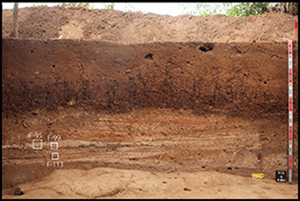
The recently formed Batagay mega-thaw slump exposes permafrost deposits to a depth of up to 92 m below ground surface and provides insight into the climate record in the region of the most severe continental climate in the Northern Hemisphere. Radiocarbon and stable isotope data were obtained to verify the age of ice wedges in the Batagay yedoma (upper Ice Complex in the local cryostratigraphy), and to deduce paleoclimate information. A millennial-scale resolution paleotemperature record from radiocarbon-dated ice wedges spans Marine Isotope Stages (MIS) 3–2. The Batagay mean January air paleo-temperature during the 44.9–42 and 30.8–27.1 cal ka BP periods was stable cold has been reconstructed to about –51 ± 3°C each.
In Mexico, archaeological heritage belongs to all members of society, according to section XXV of Article 73 of the Mexican Constitution and Article 27 of the federal law on monuments and archaeological sites. The Instituto Nacional de Antropología e Historia (INAH) was founded in 1939 as a federal government agency for the research, protection, and dissemination of archaeological heritage. Although this heritage belongs to all, stringent rules and procedures create an unequal relationship between career professionals and the diverse communities interested in the past (i.e., collectors, local museums, descendant communities). It is long due to begin practicing an inclusive archaeology that considers all the various knowledge systems (i.e., academic, technical, local, and traditional) of the communities interested in the past. Here, we describe case studies from Sonora, Mexico, to propose the implementation of several far-reaching activities with artifact collectors, Indigenous communities, researchers, archaeologists, and INAH Sonora authorities. Our pilot proposal needs to be implemented in other areas of Mexico that continue to prioritize archaeological narratives over other narratives about our past.
This introductory article foregrounds the articles in this special issue, “Professional–Collector Collaboration: Global Challenges and Solutions,” complementing the special issue “Professional–Collector Collaboration Moving beyond Debate to Best Practice,” also published in Advances in Archaeological Practice. The articles that we introduce here cover examples and case studies from European settings such as Norway, the Czech Republic, England, Wales, Finland, and Belgium—places that have been exploring how to respond to the challenge of working meaningfully with collectors and finders of archaeological artifacts, especially metal detectorists. These are joined by examples from Australia, Mexico, Uruguay, and even the United States, in the context of handling—at first glance—problematic collections originating from elsewhere. The articles are diverse in their settings and the challenges they describe, but they point to the need for participatory and democratic approaches to archaeological heritage and the different publics that engage with it.
In many locations around the world, shell radiocarbon dates underpin archaeological research. The dating of shell brings the chronological relationship between the sample and target event (e.g., hunting and food preparation) into congruence, while shells are valuable geochemical proxies for understanding past climate dynamics and environments. However, this information can be lost as the shell, composites of biopolymers and carbonate minerals (mostly calcite and or aragonite), undergo diagenetic alteration. While studies into Pleistocene-age carbonates are common in the radiocarbon literature, there has been little research into the impact of alteration on Holocene-age shells used to interpret recent societal developments. The limits of our understanding of these diagenetic changes became evident when dating Placuna placenta (naturally calcitic) and Tegillarca granosa (naturally aragonitic) shells from the site of Thach Lac in Vietnam. These shells returned ages significantly younger than associated charcoal and terrestrial bone at the site, but standard tests for secondary recrystallization (XRD and staining techniques) did not indicate any alteration. Further investigation revealed that cryptic recrystallization (i.e., of the same crystal structure) had occurred in both the calcite and aragonite shells. This finding suggests recrystallization may have an undetected impact on some shell radiocarbon dates.
The article discusses practices of cooperation between metal detectorists and professional archaeologists in Germany by exploring the approach of the regional office for historic preservation (Generaldirektion Kulturelles Erbe) in Speyer (Rheinland-Pfalz, southwest Germany). Its model is based on open access to a permit for detecting in a certain area, combined with regular meetings in order to establish knowledge circulation between volunteer and professional spheres. Relying on ethnographic fieldwork and questionnaires, the research shows that the approach creates a symmetric coproduction of knowledge, recognizing the metal detectorists as volunteer researchers producing genuine knowledge. Several theoretical aspects of knowledge circulation are analyzed with regard to their relevance for practices of knowledge production. The enactment of the boundary between public and professionals is the result of boundary work actively performed. As a consequence, this boundary should rather be seen as a fluid, hybrid zone, conceptualized as a translation zone. The concept of boundary objects points to the importance of specific elements for enabling circulation of knowledge between different spheres. Various communities of practice and their shared practices, conventions, perceptions, et cetera, influence the relationship and knowledge circulation, and these should be taken into account in coproduction processes.
Lisa Kealhofer, Santa Clara University, California,Peter Grave, University of New England, Australia,Mary M. Voigt, College of William and Mary, Virginia
The early twelfth century BCE collapse of the Hittite Empire transformed cultural landscapes across Anatolia (Sams 2011a). These changes have variously been interpreted as the disruptive result of incoming groups, drought, local responses to a volatile political environment, either by themselves or in combination (Genz 2011; Kaniewski et al. 2015; Voigt 2011). In some regions, sites were abandoned or destroyed, while in others community organization was substantially altered. Gordion was occupied continuously through this transition, but the Early Iron Age (EIA YHSS 7) community’s material culture and social organization is marked by profound changes across a variety of spheres (i.e. ceramics, foodways, and house and storage structures).
Lisa Kealhofer, Santa Clara University, California,Peter Grave, University of New England, Australia,Mary M. Voigt, College of William and Mary, Virginia
Archaeologists have long grappled with understanding the nature of transformations in human societies. Some of these transformations are seen as “revolutionary,” including the development of tools, the creation of imagery, the domestication of plants and animals, and the rise of urban and state-level societies. While the complexity and diversity of these reconfigurations has become more apparent with every new study, social group restructuring is crucial to each. Cultural transformations may share characteristics, but the organization and workings of social groups appear specific to each threshold of change. From this perspective, we argue that fundamental societal transformations are more intimately entangled with innovations in group formation – new modes of kin definition, religious groupings, political organizations and manipulation of ancient social media – than driven by technological innovation.
Lisa Kealhofer, Santa Clara University, California,Peter Grave, University of New England, Australia,Mary M. Voigt, College of William and Mary, Virginia
For over a millennium (1400–330 BCE), the inhabitants of Gordion repeatedly created novel social and political identities. The formation of the Iron Age Phrygian polity produced some of the most striking of these in the aftermath of the Late Bronze Age (LBA) Hittite collapse. Subsequently, identities were reshaped through Lydian, then Persian entanglements. Under each of these political regimes, local communities experimented with new and distinctive patterns of political and social formation under regime-specific economic strategies.
Lisa Kealhofer, Santa Clara University, California,Peter Grave, University of New England, Australia,Mary M. Voigt, College of William and Mary, Virginia
In this chapter we review and contextualize the ceramic assemblages from Gordion sampled for this study. Over the course of more than 50 years of excavation, different teams with diverse sampling and curation strategies and rationales collected archaeological ceramics from this site. These varying practices have directly impacted the character of our sampling regime. To clarify the similarities and difference between the assemblages sampled, we begin with a short overview of excavations and artifact curation at Gordion. We outline how and what criteria we used to sample each of the curated ceramic assemblages. One of our goals was to define the local resources available to potters by comparing the geochemistry of ceramics to the geochemistry of potential local resources, distributed over the widely varying geomorphological and geological landscape that surrounds the site. This chapter therefore also outlines our sediment sampling strategies. The final section of this chapter highlights the methodological issues inherent in both the sample and in sampling (sample size relationships and bias), and the means we used to redress these issues.
Lisa Kealhofer, Santa Clara University, California,Peter Grave, University of New England, Australia,Mary M. Voigt, College of William and Mary, Virginia
Even when viewed at a distance of almost 3,000 years, the political and social upheavals of first millennium BCE Gordion are striking. The rise of Lydian influence across central Anatolia in the late MP period transformed local communities at Gordion, changing daily domestic practices and introducing new ways of enacting power. This transformation, commencing in the late seventh century BCE, was well underway at the time of the Persian conquest in the mid sixth century BCE. Evidence of this military attack is still visible in the siege works built against the Lower Town fortification system and the burnt remains of the Küçük Höyük mudbrick fortress. While widespread, the impact of Persian power and organizational structures across Anatolia was treated as largely ephemeral until recently (Dusinberre 2013; Khatchadourian 2012). The impacts of a Persian administrative presence were substantial, however, not only as disruptors of the local political order, but also as stimulants for new opportunities of group formation that superseded previous social, economic and political entanglements.
Lisa Kealhofer, Santa Clara University, California,Peter Grave, University of New England, Australia,Mary M. Voigt, College of William and Mary, Virginia
One of the most fundamental steps in answering questions about societies in the past is linking interpretative or theoretical issues to the data. In this chapter we explain how we use the Gordion archaeological ceramic assemblage to help understand the operation of groups and communities in the past. While we focus on quantitative approaches to ceramic compositional data and clustering protocols, we also make use of multiple lines of evidence, such as “legacy” ceramic data and contextual evidence. Together we view these through the lens of daily practices of producing, distributing and consuming goods, using them to inform and guide our reconstruction of groups and group dynamics at Gordion over time.
Lisa Kealhofer, Santa Clara University, California,Peter Grave, University of New England, Australia,Mary M. Voigt, College of William and Mary, Virginia
Late Bronze Age Gordion, while well west of the Hittite political core, nonetheless seems to have been incorporated into its social and political sphere (Glatz 2011; Gunter 1991). Beginning in the Middle Bronze Age (MBA), Hittite influence enveloped agricultural communities across central Anatolia. Hittite texts document the nature of this relationship with provincial towns used as centers for collecting and redistributing goods, including agricultural land and products, as well as managing military armament (Imparati 2002). This undoubtedly created new tensions for local groups caught between their established social and economic relationships and those imposed by the Hittites. Hittite texts also hint at a complex negotiation between local power structures, interest groups and the state, the terms of which likely also created opportunities for local factions that could apparently levy “duties” for specific infractions. In other instances, central administrators directed local communities and their leaders to actively resist corrupt oversight, such as the potential for excess resource collection by local Hittite officials (Imparati 2002:100).
Lisa Kealhofer, Santa Clara University, California,Peter Grave, University of New England, Australia,Mary M. Voigt, College of William and Mary, Virginia
From the ninth to the seventh century BCE, Phrygia was one of multiple emerging polities across Anatolia. To the east, mid ninth century BCE Urartian rulers extended their power into northern Mesopotamia (Inomata and Coben 2006). To the west, along the Aegean coast, Greek colonists established new cities and broadened their influence south and east along the Mediterranean coast (Greaves 2011). In central Anatolia, Phrygia became the dominant political force (Fig. 7.1).
Lisa Kealhofer, Santa Clara University, California,Peter Grave, University of New England, Australia,Mary M. Voigt, College of William and Mary, Virginia