To save content items to your account,
please confirm that you agree to abide by our usage policies.
If this is the first time you use this feature, you will be asked to authorise Cambridge Core to connect with your account.
Find out more about saving content to .
To save content items to your Kindle, first ensure no-reply@cambridge.org
is added to your Approved Personal Document E-mail List under your Personal Document Settings
on the Manage Your Content and Devices page of your Amazon account. Then enter the ‘name’ part
of your Kindle email address below.
Find out more about saving to your Kindle.
Note you can select to save to either the @free.kindle.com or @kindle.com variations.
‘@free.kindle.com’ emails are free but can only be saved to your device when it is connected to wi-fi.
‘@kindle.com’ emails can be delivered even when you are not connected to wi-fi, but note that service fees apply.
Based on a broad literature review of journal and book publications, governmental archives, and annals, this study comprehensively examines the special contribution of Yunnan, China, to understanding East Asian catarrhines (colobines, macaques), as well as hominoids, gibbons, hominins, and modern ethnic groups since the Later Miocene or Early Pliocene. It spatially demonstrates their relationship, particularly that between primates and archaic and modern humans. The results indicate that a specific region in Yunnan, joining with the southeast Qinghai–Tibet Plateau, the end of the eastern margin of the Himalayas, and the Hengduan Mountains (SQPMH), is globally distinctive in promoting catarrhine dispersion, radiation, speciation, and evolution in East and Southeast Asia. This area forms the gateway between West, East and Southeast. Six major archaeological sites in Yunnan (Yuanmou, Jiangchuan, Tangzigou, Xianrendong, Xiaodong, and Maludong) share the same environments and habitats with primates, indicating a strong tendency for coexistence. Yunnan also offered an exclusive refugium for plants, animals, and humans during the glaciation so that it maintains the largest numbers of ethnic groups (26) and primate species (21 of 25 species) in China. Although primates inspired significant contributions to arts, culture, social life, and medical research for humans, as in other parts of China, they have suffered greatly in recent Chinese history, particularly since the second half of the last century, resulting in the extirpation of two gibbon species in the province.
Keywords
East Asia, Yunnan, Qinghai Tibet Plateau, Mts. Hengduan, Refugium, Homo, Primates, Dispersion, Catarrhine Evolution
Chapter 8 examines how millennia of accrued technological know-how, experimentation and curiosity enabled humanity to develop the first metallurgy, exploring the founding of important trade networks. The key role of symbolic communication networking is discussed as an influencing factor in the emergence of writing as a breakthough that finally enabled ideas to transcend time.
Chapter 13 chapter synthesizes the reasoning developed throughout the book, discussing the important role played by human prehistory in understanding the challenges facing modern-day humans in a globalized world of rapidly developing technologies in an increasingly virtual existence.
Chapter 9 discusses climate change, past, present and future: What is the real role of humanity in global warming and how do actual climatic trends differ from those of the past? Using key archeological sites with long stratigraphic records assists in providing a better understanding these phenomena.
Phallic imagery occurred throughout the Roman world and is most commonly found on small portable items such as amulets and pendants, and on buildings and structures. This paper details three Romano-British instances of phallic carvings found on millstones and one on a rotary quern. It assesses the style and positioning of the carvings in relation to the functional operation of the stones, reviews their contexts of recovery geographically and chronologically and considers the likely symbolism and meaning of the carvings.
Understanding how a culture classifies and assigns meaning to nature can provide key insight into that culture. The ancient Maya used images of monkeys in many ways. This study tests whether individual species of monkeys can be identified in Maya imagery and, if so, whether the Maya used images of different species in unique and separate ways or associated with different “human” activities. We identified nine features that could discriminate between the three genera found in the Maya area (Alouatta, Ateles, and Cebus) and scored 106 primate images from Maya pottery. Most images were identifiable as Ateles (65%) with 9% identifiable as Alouatta, a few tentatively identified as Cebus, and 22% unidentified generic monkeys. Ateles were associated more with performance, dancing, and cacao handling, while Alouatta were depicted more in scribal activities. Results indicate that the Maya distinguished between the genera on symbolic levels, associating them with different behaviors and activities.
Nonhuman primates in the Andes region of South America have been excavated in burial contexts and are commonly depicted in ceramic art. Monkey images in Moche iconography are well-known but few systematic analyses have been conducted to approximate their role and meaning in sociopolitical and ritual activities. This chapter investigates variation in nonhuman primate depictions from the Moche culture to determine the elite use of monkey images for their symbolic value and ritual significance in the arid desert north coast region of present-day Peru. By examining their shared features, their association with key Amazonian plant species and their use in legitimizing authority, I contextualize Moche monkey depictions as key agents of alterity because of their nonlocal origin. I argue that the association of nonhuman primates with headdresses, serving vessels, and funerary rituals indicate that monkeys were perceived as nonlocal affines in Moche society that wielded considerable power in political and ceremonial practices. In Moche iconography, monkeys were not simply aesthetic additives but formed part of a selected group of nonhuman beings with social agency that derived from their nonlocal, Amazonian origin and their relationship to potent ritual substances. Monkeys, resembling their human relatives, were recognized to have ancestral roles that legitimized authority for elites involved in ceremonial activities related to sacrifice, fertility, and renewal.
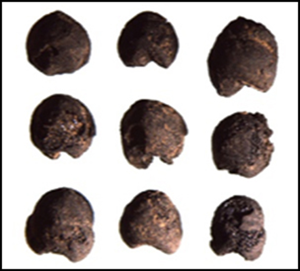
Among the various materials recovered from archaeological excavations in Brazil, zooarchaeological remains have been the focus of studies on biodiversity, sustainability and relations between humans and nonhumans in the past, from the Pleistocene to the Holocene. In this chapter we present samples of primate cranial bones recovered in archaeological excavations at the Furna do Estrago site, a granitic rock shelter located in the city of Brejo da Madre de Deus, state of Pernambuco, in the Northeast region of Brazil. One sample with anthropic modifications (cutting, perforation, polishing), has been identified as Sapajus libidinosus; another sample with marks similar to the previous one has morphological characteristics that point more broadly to (nonhuman) Primates. These findings allow a reflection on biocultural aspects of the relations between humans and nonhumans, particularly the primates of the New World.
Keywords:
Zooarchaeology, Archaeoprimatology, Furna do Estrago archaeological site, Pernambuco, Northeast, Brazil
Sucking lice are highly host-specific ectoparasites, particularly on primates with most lice species occurring only on a single species of host. Lice are found on prosimians, New World monkeys, Old World monkeys, and apes. The genus Pediculus is found naturally on humans (Homo sapiens), bonobos and chimpanzees (Pan), howler monkeys (Alouatta), spider monkeys (Ateles), and capuchin monkeys (Cebus). This chapter concentrates mainly on the presence of Pediculus spp. in howler monkeys to provide information on the potential louse host switch between humans and Neotropical primates. Although studies on lice in New World monkeys are very scarce and outdated, after a thorough review we found P. mjobergi reports for three species of howlers: Alouatta caraya, Alouatta guariba, and Alouatta belzebul. Genetic and paleontological evidence suggest that an interchange of genetic material between humans and howler lice occurred during encounters for example for subsistence or pets, probably when modern humans moved out of Africa and entered the Americas, and that P. mjobergi, may be an evolutionary lineage of P. humanus.
Keywords:
Lice, Pediculus, Alouatta, Host-switch, Peopling of the Americas, New World primates
The scarcity of attestations to the presence of monkeys in Mesopotamia in general, and during the third millennium BCE in particular, is due to the fact that they were not native to Mesopotamia but brought from the Indus Valley (Harappan culture) or western-central Asia. These monkeys have been identified as the rhesus macaque of northern India or western-central Asia, although other monkeys from the India subcontient might have been known during the third millennium BCE. The first references to monkeys in Mesopotamia during the third millennium BCE are found in artistic representations from the Early Dynastic period (c. 2900–2340 BCE) while the earliest mentions in the written sources are documented in the Ur III period (c. 2100–2000 BCE). In both sources, art and texts, monkeys are depicted as having a ludic character and were kept mainly as pets for entertainment. The monkey was therefore used in the written sources to ridicule the enemies that attacked Sumer, who in the third millennium BCE came fundamentally from the eastern mountains (Zagros), initiating a long tradition of the word “monkey” as a humorous or derogative qualification in the history that has survived to the present day.
Chapter 12 applies what we have learned from prehistory to explain why religions exist and how they emerged and persisted into the present day even while their precepts are clearly contrary to all that we have learned from science. Looking at the present human challenges of warfare and terrorism from an evolutionary standpoint helps readers to better understand and deal with the problems of our modern globalized world.
South Africa is richly endowed with rock art, with three specific rock art traditions having been identified. This chapter is based on one of those rock art traditions, most specifically, the Bushmen rock art. There are many motifs made by Bushmen, ranging from animals, human figures, to schematic images. For the purpose of this chapter, I focus on the representation of primates in the rock art made by these peoples. Chacma baboons (Papio ursinus), as the other primates represented in the rock art, are not found in large quantities. Even in locations where they are relatively well represented, their numbers are still much lower than other animals that were incorporated into rock art imagery. Furthermore, I address three other aspects. First, to provide evidence that shows that some of the baboon features were incorporated into human figures to produce what are known as therianthropic images, that is, half-human and half-animal images. Second, to explore how the representation and significance of baboons have been understood by scholars over the years. Third, to examine their geographical distribution in southern African rock art.
Keywords:
Primates, Baboons, Therianthropes, Rock Art Traditions, Shaman, Bushmen
While various primates may have originally roamed in the formally lush prehistoric landscape of Egypt, by the Old Kingdom period, baboons and other monkeys were not native to Egypt proper and only available through foreign import from further south. Yet monkeys remained a recurrent feature in the iconography of this and later periods. A motivation of great religious significance was likely behind the baboon’s continual importation. Of a more secular nature, however, are reliefs from both royal and non-royal tombs where they are inserted into traditionally human scenes, exhibiting their own natural behavior, or imitating human actions, often rather humorously. This study examines the type of primate behaviors observed by the Egyptians and recorded on the walls of their tombs for eternity.
Key words:
Ancient Egypt, Old Kingdom, Baboon, Monkey, Primate behavior, Iconography
Archaeoprimatology – a term originally coined by one of the editors – explores the interface between humans and nonhuman primates (hereafter referred to as ‘primates’) in antiquity. Hence, archaeoprimatology embraces, both theoretically and methodologically, the disciplines of archaeology and primatology. Archaeoprimatological research is still relatively limited despite its significant implications that range from the art history realm of past iconographic identification of primates to a better grasp of current primate conservation issues. Archaeoprimatology is a discipline that offers multiple perspectives to understand the roots of our perception and apprehension of our own taxonomic group, the order Primates. The edited volume in your hands –the first fully devoted to this discipline – is thus intended to serve as an effort to promote and expand archaeoprimatological studies.