To save content items to your account,
please confirm that you agree to abide by our usage policies.
If this is the first time you use this feature, you will be asked to authorise Cambridge Core to connect with your account.
Find out more about saving content to .
To save content items to your Kindle, first ensure no-reply@cambridge.org
is added to your Approved Personal Document E-mail List under your Personal Document Settings
on the Manage Your Content and Devices page of your Amazon account. Then enter the ‘name’ part
of your Kindle email address below.
Find out more about saving to your Kindle.
Note you can select to save to either the @free.kindle.com or @kindle.com variations.
‘@free.kindle.com’ emails are free but can only be saved to your device when it is connected to wi-fi.
‘@kindle.com’ emails can be delivered even when you are not connected to wi-fi, but note that service fees apply.
Heathlands are unique cultural landscapes that once existed across vast stretches of northern Europe. Their deep-time persistence has formed an intrinsic part of economic and cultural practices. Such a complex interaction requires interdisciplinary approaches, including archaeology, across multiple regions to fully grasp all its aspects. The authors of this article review how research has been conducted in prehistoric heathlands across six nations in north-western Europe and outline the heaths’ general characteristics. They discuss the major issues in that research, namely recurring narratives derived from history, an overall absence of consideration of the cultural aspects of heathlands, and a paucity of cross-regional initiatives. They suggest a series of theoretical and methodological approaches to improve this situation across expanded geographical and temporal scales.
This article presents the preliminary results of the joint Kurdish-Italian Faida Archaeological Project (KIFAP) conducted by the Duhok Directorate of Antiquities and the University of Udine at the Assyrian Faida canal and rock art complex in the Kurdistan Region of Iraq. Investigation of this extraordinary and seriously endangered archaeological site was launched in 2019 and has led to the exploration of an 8.6 km-long irrigation canal cut into the limestone bedrock of the Chiya Daka hill range in the outskirts of the village of Faida, south of Duhok. Ten monumental sculpted rock panels carved along the canal's eastern bank were brought to light, representing an Assyrian ruler depicted at both ends of each panel, framing the cult statues of seven deities standing on pedestals shaped like striding animals. This article discusses the canal's role in the wider context of the Northern Assyrian Irrigation System and the function of the Assyrian hydraulic networks as economic infrastructures with transformative effects on the landscape and staple food production of the empire's core. The Faida bas-reliefs are examined from an archaeological and art historical perspective, and hypotheses are proposed about their religious and ideological meaning, as well as their dating and the identity of the king or kings who commissioned them.
Ancient fingerprints preserved in clay artefacts can provide demographic information about the people who handled and manufactured them, leaving their marks as an accidental record of a moment’s interaction with material culture. The information extracted from these ancient impressions can shed light on the composition of communities of practice engaged in pottery manufacture. A key component of the process is a comparator dataset of fingerprints reflecting as closely as possible the population being studied. This paper describes the creation of a bespoke reference collection of modern data, the establishment of an interpretive framework for prehistoric fingerprints, and its application to assemblages of Iron Age briquetage from coastal salterns in eastern England. The results demonstrate that briquetage manufacture was constrained by age and sex.
The Fragmenta membranea manuscript fragment collection at the National Library of Finland has proved challenging to date using only traditional paleography. Therefore, radiocarbon dates can contribute to the understanding of these fragments by offering a parallel natural scientific timeline for the parchment the manuscripts are written on. In this study, we apply our previously developed method for radiocarbon dating medieval manuscripts made of parchment. In total 35 datings were made from 14 separate assemblages of manuscripts, being the first systematic wide-scale application of radiocarbon dating to a collection of medieval manuscripts in order to improve their chronological proxy. Additionally, due to the fragmentary and sometimes poor condition of the manuscript fragments of Fragmenta membranea analyzed in this study, we used Fourier-transform infrared spectroscopy (FTIR) to evaluate the quality of the collagen and the presence of contaminants in the fragments affecting the radiocarbon dates. We report out radiocarbon dating results and FTIR screenings for each sample and for each manuscript assemblage, and discuss the applicability of our method in further studies of applying radiocarbon dating on objects of cultural historical interest and value. The results indicate an essential role of high-quality samples and multiple measurements to interpret the radiocarbon dating results.
Radiocarbon (14C) in natural samples undergoes changes due to variations in atmospheric CO2 resulting from anthropogenic activities. To analyze the variation of the 14C ratio in atmospheric CO2, deciduous tree leaves were collected in Gyeongju, a popular tourist city in South Korea. Leaf samples were collected from Prunus subg. Cerasus trees at five different sampling points throughout the city over 3 years (2018, 2020, and 2021). The 14C data of the samples were categorized into three groups (downtown, rural, and tourist sites) and analyzed for variations among the different years. The 14C ratio at downtown sites was stable after 2018, the rural site ratio increased between 2018 and 2020 and then decreased between 2020 and 2021, and the tourist site ratio increased after 2018. We theorize that the increased 14C ratio at the tourist site was caused by a decrease in tourism after 2018.
Similar to the other forms of cultural heritage, Indigenous oral traditions are collected and held often by outsiders to the community. There are a number of instruments addressing this problem, but none of them provide complete control over such works. This article will focus on the possibility and instances of copyright being used to control oral traditions, both by outsiders and the Indigenous communities. The article will first provide an overview of the applicable legal areas (cultural property law, Indigenous rights, and intellectual property rights), and then it will assess different stages in the treatment of oral traditions. It will discuss the copyright implications for not only the traditions themselves but also their documented versions, subsequent copies, adaptations, and new works in order to provide a full picture of the relationship between control and copyright.
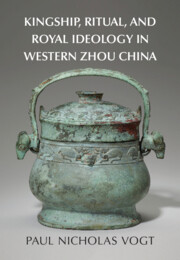
In accounts of Chinese history, the Western Zhou period has been lionized as a golden age of ritual, when kings created the ceremonies that underlay the traditions of imperial governance. In this book, Paul Nicholas Vogt rediscovers their roots in the vagaries of Western Zhou royal geopolitics through an investigation of inscriptions on bronze vessels, the best contemporary source for this period. He shows how the kings of the Western Zhou adapted ritual to create and retain power, while introducing changes that affected later remembrances of Zhou royal ritual and that shaped the tradition of statecraft throughout Chinese history. Using ritual and social theory to explain Western Zhou history, Vogt traces how the traditions of pre-modern China were born, how a ruling dynasty establishes and holds on to power, how religion and politics can support and restrain each other, and how ancient peoples made, used, and assigned meaning to art and artifacts.
Chapter 4, “Ritual Assemblies and the Geopolitics of Zhou Expansion” acknowledges that the early Zhou kings conducted several major, state-level events that combined individual ritual techniques into narrative sequences depicting various potential ways of relating to their political project. This chapter examines how the royal house deployed such events as part of an integrative strategy of ritual suited to the geopolitical environment of the early Western Zhou period.
The article critically examines interpretations of Old World ferrous metallurgical developments with reference to their consequences for Arctic Fennoscandian iron research. The traditional paradigm of technological innovations recurrently links the emergence of iron technology to increasing social complexity and a sedentary agricultural lifestyle, typically downplaying ‘peripheral’ areas such as Arctic Fennoscandia and its hunter-gatherer communities. Even in postcolonial research of recent years, the archaeometallurgical record of Arctic Fennoscandia is interpreted and organized within the traditional frameworks on the time, course, and cultural context of the introduction of iron technology in Europe, where Arctic Fennoscandia is not considered to have any noteworthy role. However, current archaeological research with new data in Arctic Fennoscandia disputes prevailing ideas in European iron research and shows substantial evidence that iron technology was an integrated part of hunter-gatherer subsistence already during the Early Iron Age (c. 200 bc). Archaeometallurgical analyses reveal advanced knowledge in all the operational sequences of iron technology, including bloomery steel production and the mastering of advanced smithing techniques. Therefore, we urge dispensing with traditional ideas and call for an increased interest in the underlying mechanisms for the transfer of iron.
Chapter 3, “Recognition, Reward, and Patronage under the Zhou Kings” offers a deep analysis of three ritual techniques that provided a framework for soliciting and maintaining support through the distribution of rewards and prestige. It shows how changes in these ritual manifestations of patronage reframed the ideology of membership in the Zhou state, deemphasizing personal allegiance to the Zhou king as individual warrior in favor of a vision of service to the royal house qua state in all its aspects.
En este artículo discutimos las prácticas y representaciones culturales de los pueblos indígenas de Patagonia continental e insular (Tierra del Fuego) en relación con los piojos, confrontando registros históricos y etnográficos de los siglos dieciocho al veinte. El consumo de piojos de la cabeza fue una práctica habitual y cotidiana entre los grupos indígenas del sur de Sudamérica, quienes los consideraban un verdadero manjar. Hombres, mujeres, niñas y niños participaban de esta actividad colectiva que a la vez era atravesada por la afectividad, consumiendo lo que ellos mismos conseguían en las pesquisas. El cambio continuo de campamento, el despiojado, el tipo de vestimenta, el uso de pinturas repelentes, aceite de foca y peines eran sus métodos de control de las pediculosis. Se argumenta que el proceso de expansión colonial de los estados republicanos de Argentina y Chile, a fines del siglo diecinueve, habría forzado la modificación de estas prácticas culturales. Las fuentes históricas y etnográficas reflejan, además, las tensiones y contradicciones entre las percepciones y connotaciones negativas de los foráneos y la significancia que tenían los piojos de la cabeza para las poblaciones indígenas.
The Conclusion to the work summarizes the new perspectives on Zhou ritual that emerge from this analysis. Western Zhou royal ritual, it argues, offers a case study of how ritual continues to shape ideas of self and belonging long after its performance. The book thus stands as an argument for the indispensable role of material-cultural theory in ritual studies.
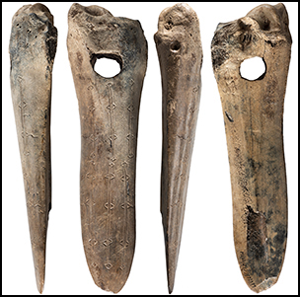
During the northern European Mesolithic, new types of objects were ornamented with different geometric motifs. Many examples, however, are stray finds and their dating is poorly understood. The authors present new AMS radiocarbon dates for ornamented artefacts from Pomerania that contribute to an absolute chronology of Mesolithic art and allow for new consideration of connections between cultural groups in the western Baltic region. A baton, featuring an anthropomorphic figure, dates to the end of the Boreal period; three other objects date to the early Atlantic period, revealing a combination of regional and local innovations. The results demonstrate the value of absolute dating of stray finds for refining knowledge of wider cultural trends.
Chapter 1, “The Politics of Shang Ritual under the Zhou” explores how the early Zhou repurposed ancestral-ritual techniques of Shang provenance to support their quest for legitimacy and lend focus to their efforts at building a new, shared identity.
Quantifying the marine radiocarbon reservoir effect, offsets (ΔR), and ΔR variability over time is critical to improving dating estimates of marine samples while also providing a proxy of water mass dynamics. In the northeastern Pacific, where no high-resolution time series of ΔR has yet been established, we sampled radiocarbon (14C) from exactly dated growth increments in a multicentennial chronology of the long-lived bivalve, Pacific geoduck (Paneopea generosa) at the Tree Nob site, coastal British Columbia, Canada. Samples were taken at approximately decadal time intervals from 1725 CE to 1920 CE and indicate average ΔR values of 256 ± 22 years (1σ) consistent with existing discrete estimates. Temporal variability in ΔR is small relative to analogous Atlantic records except for an unusually old-water event, 1802–1812. The correlation between ΔR and sea surface temperature (SST) reconstructed from geoduck increment width is weakly significant (r2 = .29, p = .03), indicating warm water is generally old, when the 1802–1812 interval is excluded. This interval contains the oldest (–2.1σ) anomaly, and that is coincident with the coldest (–2.7σ) anomalies of the temperature reconstruction. An additional 32 14C values spanning 1952–1980 were detrended using a northeastern Pacific bomb pulse curve. Significant positive correlations were identified between the detrended 14C data and annual El Niño Southern Oscillation (ENSO) and summer SST such that cooler conditions are associated with older water. Thus, 14C is generally relatively stable with weak, potentially inconsistent associations to climate variables, but capable of infrequent excursions as illustrated by the unusually cold, old-water 1802–1812 interval.