Refine search
Actions for selected content:
179500 results in Earth and Environmental Sciences
Decline of the plastochrone interval in a Zostera marina meadow: 18 years of data
-
- Journal:
- Journal of the Marine Biological Association of the United Kingdom / Volume 105 / 2025
- Published online by Cambridge University Press:
- 30 May 2025, e54
-
- Article
- Export citation
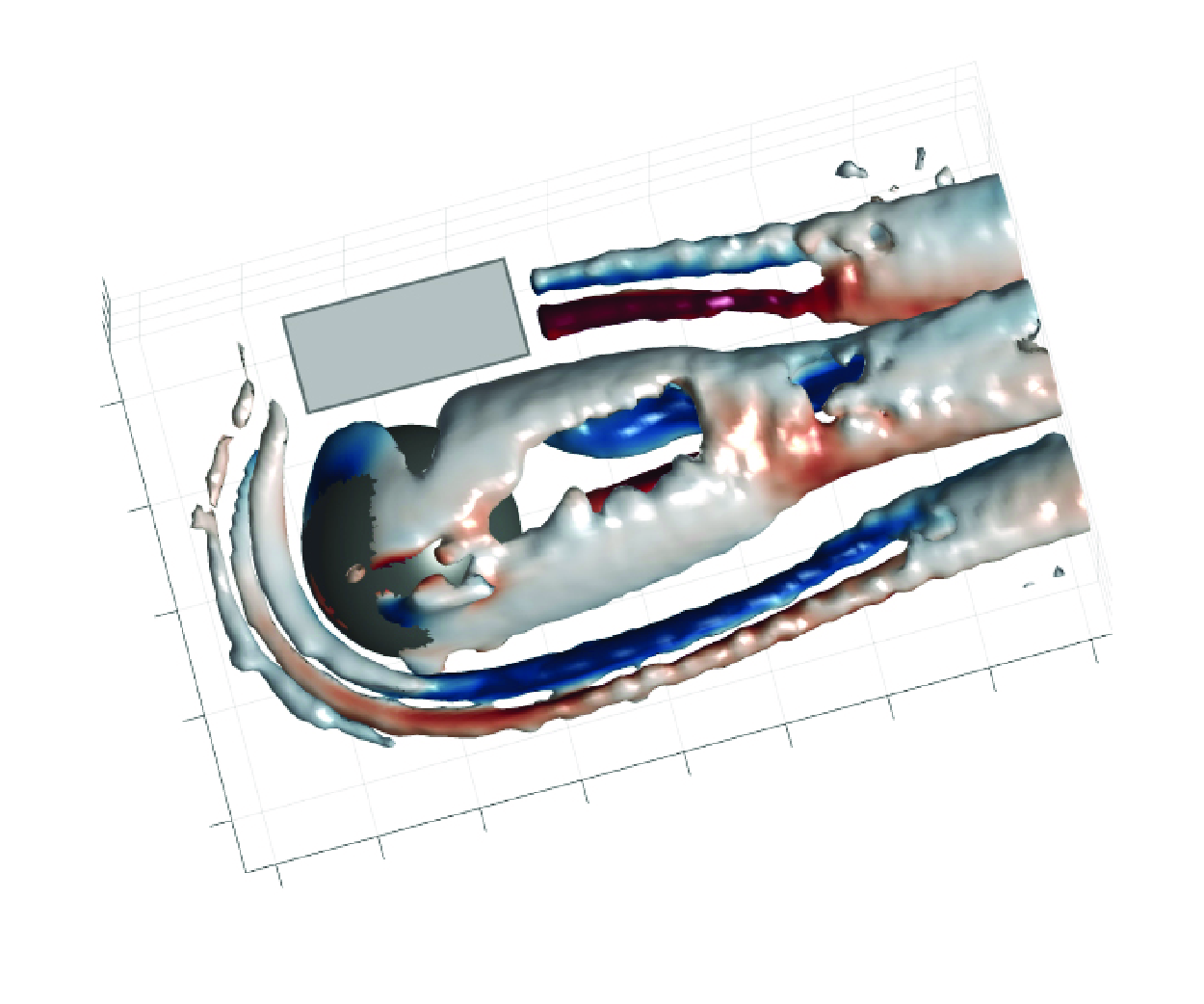
The near-wake vortex dynamics of a wall-mounted hemisphere measured with tomographic particle image velocimetry
-
- Journal:
- Journal of Fluid Mechanics / Volume 1012 / 10 June 2025
- Published online by Cambridge University Press:
- 30 May 2025, A7
-
- Article
- Export citation
1 - Rock-Forming Minerals
-
- Book:
- Atlas of Minerals and Igneous and Metamorphic Rocks in Thin-Section
- Published online:
- 05 May 2025
- Print publication:
- 29 May 2025, pp 1-156
-
- Chapter
-
- You have access
- Export citation

Revisiting the theory of van Driest: a general scaling law for the skin-friction coefficient of high-speed turbulent boundary layers
-
- Journal:
- Journal of Fluid Mechanics / Volume 1012 / 10 June 2025
- Published online by Cambridge University Press:
- 29 May 2025, R3
-
- Article
-
- You have access
- Open access
- HTML
- Export citation
-
The skin-friction coefficient is a dimensionless quantity defined by the wall shear stress exerted on an object moving in a fluid, and it decreases as the Reynolds number increases for wall-bounded turbulent flows over a flat plate. In this work, a novel transformation, based on physical and asymptotic analyses, is proposed to map the skin-friction relation of high-speed turbulent boundary layers (TBLs) for air described by the ideal gas law to the incompressible skin-friction relation. Through this proposed approach, it has been confirmed theoretically that the transformed skin-friction coefficient $C_{f,i}$, and the transformed momentum-thickness Reynolds number $Re_{\theta ,i}$ for compressible TBLs with and without heat transfer, follow a general scaling law that aligns precisely with the incompressible skin-friction scaling law, expressed as $ (2/C_{f,i} )^{1/2}\propto \ln Re_{\theta ,i}$. Furthermore, the reliability of the skin-friction scaling law is validated by compressible TBLs with free-stream Mach number ranging from $0.5$ to $14$, friction Reynolds number ranging from $100$ to $2400$, and the wall-to-recovery temperature ratio ranging from $0.15$ to $1.9$. In all of these data, $ (2/C_{f,i} )^{1/2}$ and $\ln Re_{\theta ,i}$ based on the present theory collapse to the incompressible relation, with a squared Pearson correlation coefficient reaching an impressive value $0.99$, significantly exceeding $0.85$ and $0.86$ based on the established van Driest II and the Spalding–Chi transformations, respectively.


Applications
-
- Book:
- Atlas of Minerals and Igneous and Metamorphic Rocks in Thin-Section
- Published online:
- 05 May 2025
- Print publication:
- 29 May 2025, pp x-x
-
- Chapter
- Export citation
Information Boxes
-
- Book:
- Atlas of Minerals and Igneous and Metamorphic Rocks in Thin-Section
- Published online:
- 05 May 2025
- Print publication:
- 29 May 2025, pp ix-ix
-
- Chapter
- Export citation
Frontmatter
-
- Book:
- Atlas of Minerals and Igneous and Metamorphic Rocks in Thin-Section
- Published online:
- 05 May 2025
- Print publication:
- 29 May 2025, pp i-iv
-
- Chapter
- Export citation
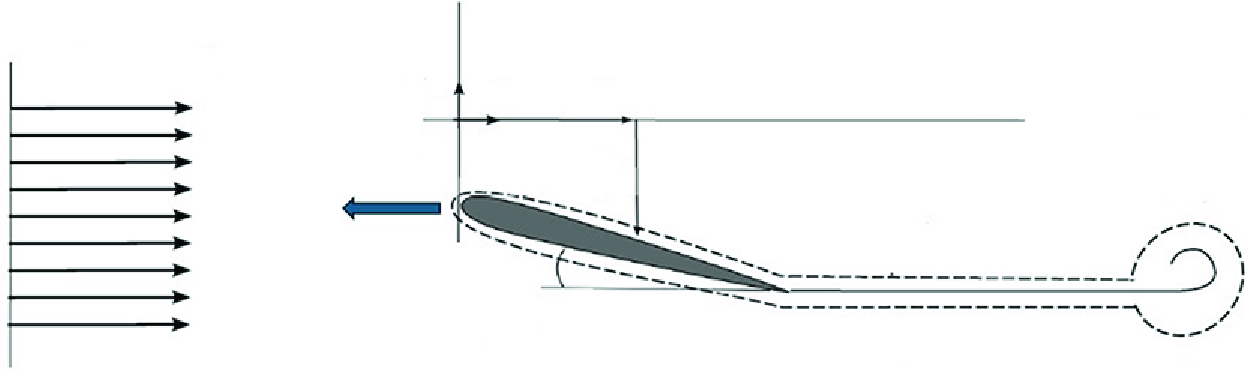
A note on the thrust of airfoils
-
- Journal:
- Journal of Fluid Mechanics / Volume 1012 / 10 June 2025
- Published online by Cambridge University Press:
- 29 May 2025, A6
-
- Article
-
- You have access
- Open access
- HTML
- Export citation
Preface
-
- Book:
- Atlas of Minerals and Igneous and Metamorphic Rocks in Thin-Section
- Published online:
- 05 May 2025
- Print publication:
- 29 May 2025, pp xi-xi
-
- Chapter
- Export citation
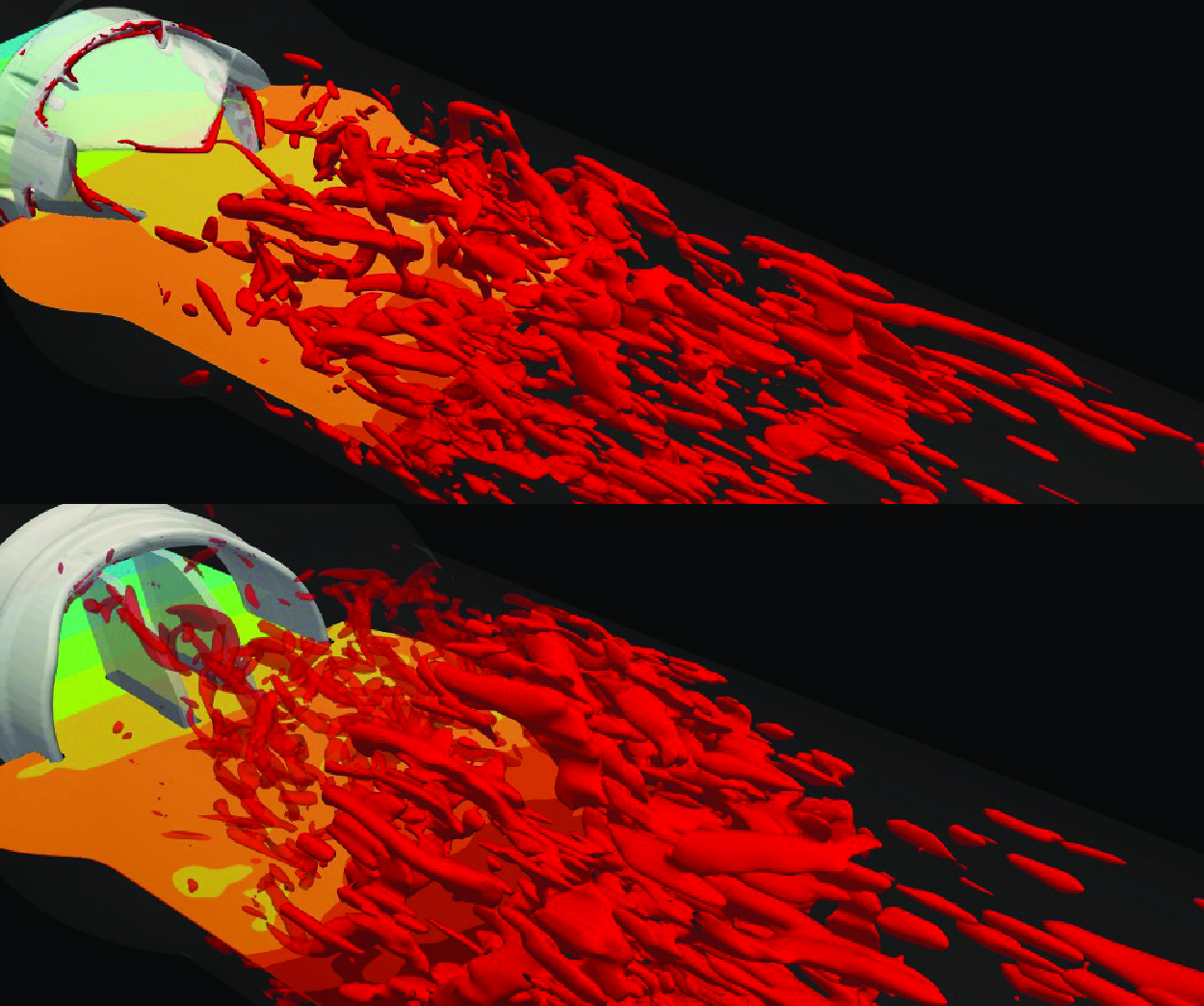
Closure dynamics of aortic mechanical heart valves versus bioprosthetic heart valves
-
- Journal:
- Journal of Fluid Mechanics / Volume 1012 / 10 June 2025
- Published online by Cambridge University Press:
- 29 May 2025, A3
-
- Article
-
- You have access
- Open access
- HTML
- Export citation
Acknowledgments
-
- Book:
- Atlas of Minerals and Igneous and Metamorphic Rocks in Thin-Section
- Published online:
- 05 May 2025
- Print publication:
- 29 May 2025, pp xii-xii
-
- Chapter
- Export citation
2 - Igneous Rocks
-
- Book:
- Atlas of Minerals and Igneous and Metamorphic Rocks in Thin-Section
- Published online:
- 05 May 2025
- Print publication:
- 29 May 2025, pp 157-292
-
- Chapter
- Export citation
Index
-
- Book:
- Atlas of Minerals and Igneous and Metamorphic Rocks in Thin-Section
- Published online:
- 05 May 2025
- Print publication:
- 29 May 2025, pp 391-400
-
- Chapter
- Export citation
Contents
-
- Book:
- Atlas of Minerals and Igneous and Metamorphic Rocks in Thin-Section
- Published online:
- 05 May 2025
- Print publication:
- 29 May 2025, pp v-viii
-
- Chapter
- Export citation
FLM volume 1011 Cover and Front matter
-
- Journal:
- Journal of Fluid Mechanics / Volume 1011 / 25 May 2025
- Published online by Cambridge University Press:
- 29 May 2025, p. f1
-
- Article
-
- You have access
- Export citation
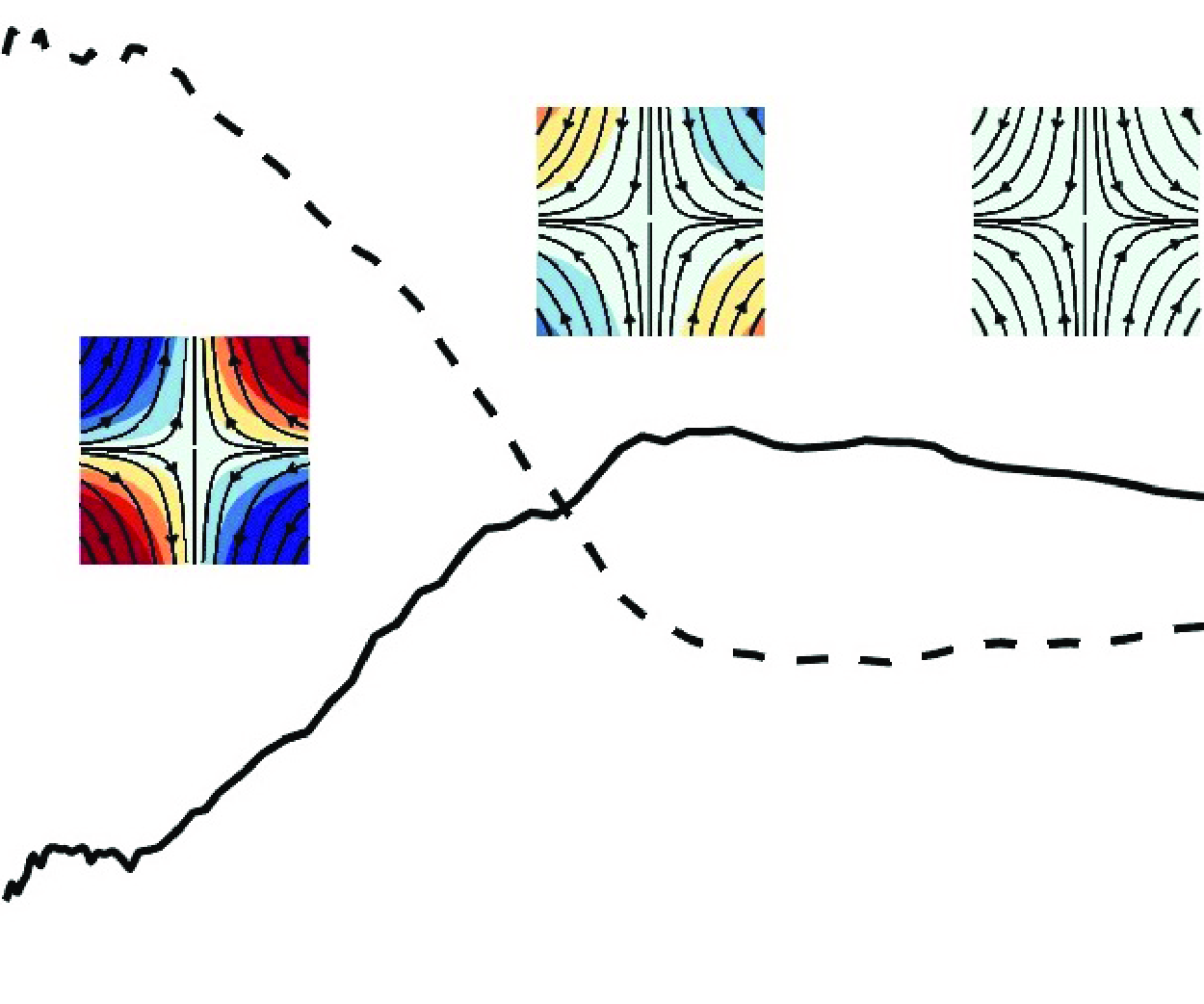
Measurements of turbulent decay in a von Kármán flow at high Reynolds numbers
-
- Journal:
- Journal of Fluid Mechanics / Volume 1012 / 10 June 2025
- Published online by Cambridge University Press:
- 29 May 2025, R4
-
- Article
-
- You have access
- Open access
- HTML
- Export citation
-
We present the measurements of the decay of stationary turbulence at Reynolds numbers based on the Taylor microscale $Re_{\lambda }=493, 599, 689$ produced in a large-scale von Kármán flow using stereoscopic particle image velocimetry. First, steady-state conditions were established, after which the impellers were simultaneously and abruptly stopped, and the turbulent decay was measured over 10–20 impeller rotation periods. A total of 258 decay experiments were performed. The temporal evolution of the ensemble-averaged turbulent kinetic energy (TKE) showed excellent agreement over all $Re_{\lambda }$ and exhibited two distinct phases: a short, initial transition phase where the TKE remained almost constant due to the inertia of the flow and lasted approximately $0.4$ impeller rotations, followed by a classical power-law decay. To extract the decay exponent $n$, a curve-fitting function based on a one-dimensional energy spectrum was used, and successfully captured the entire measured decay process. A value $n=1.62$ was obtained based on ensemble-averaged TKE. However, different decay exponents were found for individual velocity components: $n=1.38$ for the axial component consistent with various reports in the literature and Loitsiansky’s prediction ( $n=1.43$), and $n=1.99$ for the radial and circumferential components indicating saturation/confinement effects. Similarly, the longitudinal integral length scale in the axial direction grew as $L\propto t^{2/7}$, whereas it remained nearly constant in the radial direction. Finally, the evolution of the ensemble-averaged velocity gradients showed that after the impellers were stopped, the mean flow pattern persisted for a short time before undergoing a large-scale reversal before the onset of the turbulent decay.


3 - Metamorphic Rocks
-
- Book:
- Atlas of Minerals and Igneous and Metamorphic Rocks in Thin-Section
- Published online:
- 05 May 2025
- Print publication:
- 29 May 2025, pp 293-390
-
- Chapter
- Export citation

Scalar transport across the interface between a random sphere pack and a turbulent flow
-
- Journal:
- Journal of Fluid Mechanics / Volume 1012 / 10 June 2025
- Published online by Cambridge University Press:
- 28 May 2025, A4
-
- Article
-
- You have access
- Open access
- HTML
- Export citation
-
The transport of a passive scalar at unity Schmidt number in a turbulent flow over a random sphere pack is investigated by direct numerical simulation. A bed-normal scalar flux is introduced by prescribed scalar concentration values at the bottom and top domain boundaries, whereas sphere surfaces are impermeable to scalar fluxes. We analyse eight different cases characterised by friction Reynolds numbers $Re_\tau \in [150, 500]$ and permeability Reynolds numbers $Re_K \in [0.4, 2.8]$ at flow depth-to-sphere diameter ratios of $h/D \in \{ 3, 5, 10 \}$. The dimensionless roughness heights lie within $k_s^+ \in [20,200]$. The free-flow region is dominated by turbulent scalar transport and the effective diffusivity scales with flow depth and friction velocity. Near the interface, dispersive scalar transport and molecular diffusion gain importance, while the normalised near-interface effective diffusivity is approximately proportional to $Re_K^2$. Even without a macroscopic bed topography, local hotspots of dispersive scalar transport are observed (‘chimneys’), which are linked to strong spatial variations in the time-averaged scalar concentration field. The form-induced production of temporal scalar fluctuations, however, goes along with a homogenisation of those spatial variations of the scalar concentration field due to turbulent fluid motion. Accordingly, form-induced production determines the interaction of turbulent and dispersive scalar transport at the interface. With increasing $Re_K$, momentum from the free-flow region entrains deeper into the sediment bed, such that the form-induced production intensifies and peaks at lower positions. As a result, the transition from dispersive to turbulent scalar transport is observed deeper inside the sphere pack.


Motion of a rigid sphere penetrating a deep pool
-
- Journal:
- Journal of Fluid Mechanics / Volume 1012 / 10 June 2025
- Published online by Cambridge University Press:
- 28 May 2025, A5
-
- Article
-
- You have access
- Open access
- HTML
- Export citation
A unified framework for mean temperature analysis in compressible turbulent channel flows
-
- Journal:
- Journal of Fluid Mechanics / Volume 1012 / 10 June 2025
- Published online by Cambridge University Press:
- 28 May 2025, R2
-
- Article
- Export citation
