Refine search
Actions for selected content:
179500 results in Earth and Environmental Sciences
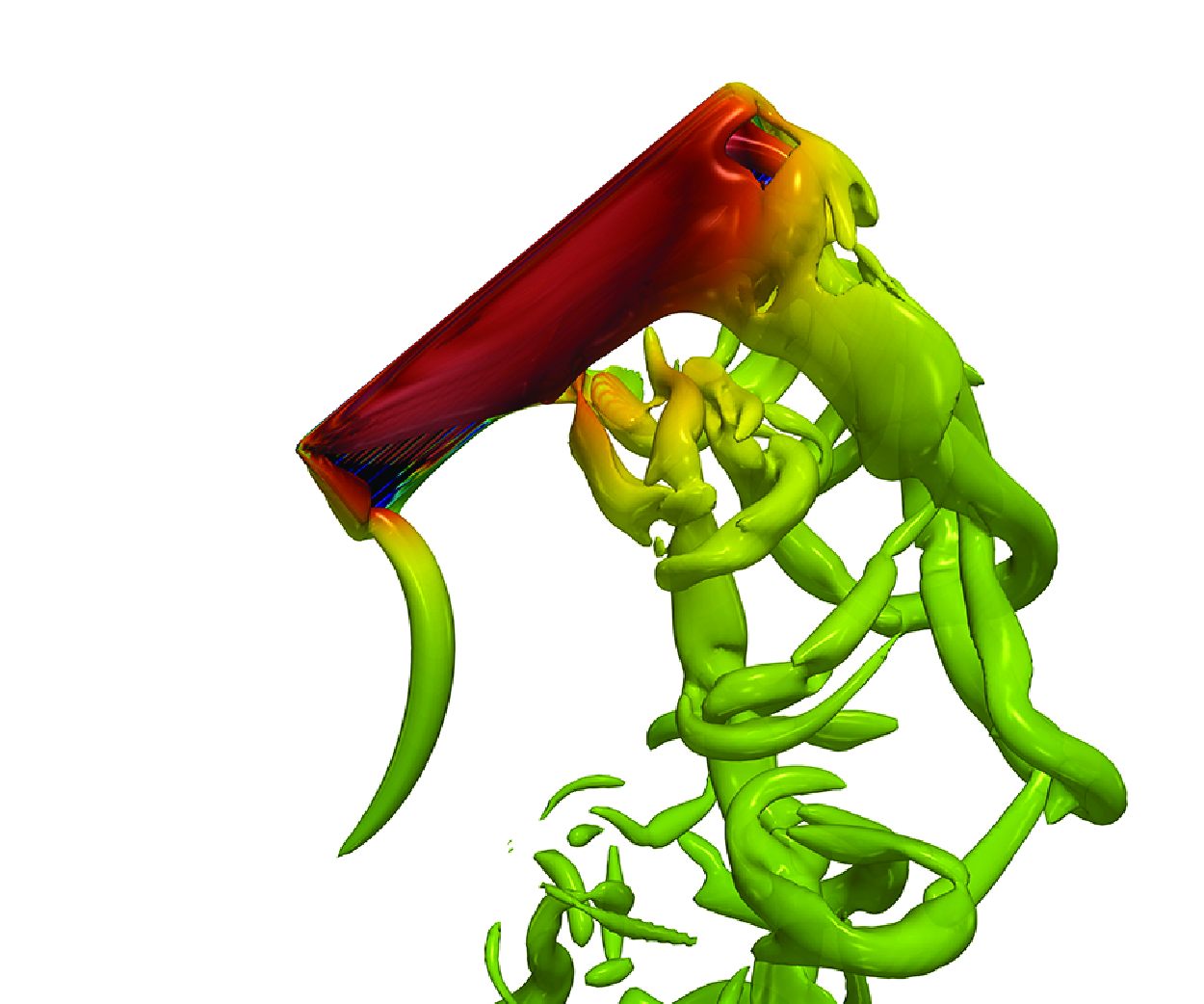
Modal force partitioning – a method for determining the aerodynamic loads for decomposed flow modes with application to aeroacoustic noise
-
- Journal:
- Journal of Fluid Mechanics / Volume 1013 / 25 June 2025
- Published online by Cambridge University Press:
- 11 June 2025, A7
-
- Article
-
- You have access
- Open access
- HTML
- Export citation
-
Aerodynamic loads play a central role in many fluid dynamics applications, and we present a method for identifying the structures (or modes) in a flow that make dominant contributions to the time-varying aerodynamic loads in a flow. The method results from the combination of the force partitioning method (Menon & Mittal, 2021, J. Fluid Mech., vol. 907, A37) and modal decomposition techniques such as Reynolds decomposition, triple decomposition and proper orthogonal decomposition, and is applied here to three distinct flows – two-dimensional flows past a circular cylinder and an aerofoil, and the three-dimensional flow over a revolving rectangular wing. We show that the force partitioning method applied to modal decomposition of velocity fields results in complex, and difficult to interpret inter-modal interactions. We therefore propose and apply modal decomposition directly to the $Q$-field associated with these flows. The variable $Q$ is a nonlinear observable that is typically used to identify vortices in a flow, and we find that the direct decomposition of $Q$ leads to results that are more amenable to interpretation. We also demonstrate that this modal force partitioning can be extended to provide insights into the far-field aeroacoustic loading noise of these flows.


On the dynamics and interactions of coherent magnetic dipolar structures in a magnetohydrodynamic rotating shallow water model
-
- Journal:
- Journal of Fluid Mechanics / Volume 1013 / 25 June 2025
- Published online by Cambridge University Press:
- 11 June 2025, A8
-
- Article
- Export citation
-
In this study, we explore the evolution of instabilities in magneto-quasi-geostrophic (MQG) modons on the $f$-plane using a magnetohydrodynamic rotating shallow water model. The numerical experiments have been conducted using a recently proposed second-order flux-globalisation-based path-conservative central-upwind scheme. Our focus is on the evolution and interactions of three key configurations: singular, regular and hollow MQG modons, which represent cases where the magnetic field is confined within the separatrix, evenly distributed inside and outside the separatrix and localised outside the separatrix, respectively. The singular MQG modon emerges as the most stable configuration, demonstrating the greatest resilience to destabilising forces. A notable observation is its transition from a quadrupolar to a tripolar magnetic field structure before reverting to a quadrupole adjusted magnetic modon, accompanied by a clockwise rotation of the system. In terms of stability, singular modons are the most stable ones, while hollow modons are the least stable. As instabilities develop, southward or northward displacements become significantly more pronounced than eastward or westward movements, primarily due to the Coriolis force. Among the configurations, the hollow (singular) modons experience the biggest (smallest) displacements. Additionally, we investigate modon collisions and highlight three scenarios: interactions between cyclonic and anticyclonic components that form a composite modon with meridional bifurcation; collisions of cyclonic vortices that produce a tripolar structure with counterclockwise rotation; and collisions between anticyclonic components that result in a stable, quasi-stationary tripolar configuration. The resulting magnetic poles exhibit a checkered pattern, with their amplitude decreasing with increasing distance from the central vortex.

Coevolutionary alternation as an ecological cause for stasis
-
- Journal:
- Paleobiology / Volume 51 / Issue 4 / November 2025
- Published online by Cambridge University Press:
- 11 June 2025, pp. 710-718
-
- Article
-
- You have access
- Open access
- HTML
- Export citation
Stalagmite-based rare earth elements geochemistry from southwestern China and its implications for paleoenvironment
-
- Journal:
- Quaternary Research / Volume 127 / September 2025
- Published online by Cambridge University Press:
- 11 June 2025, pp. 28-43
-
- Article
- Export citation
Viscous flow through high-permeability channels in a layered porous medium
-
- Journal:
- Journal of Fluid Mechanics / Volume 1013 / 25 June 2025
- Published online by Cambridge University Press:
- 11 June 2025, A1
-
- Article
- Export citation
-
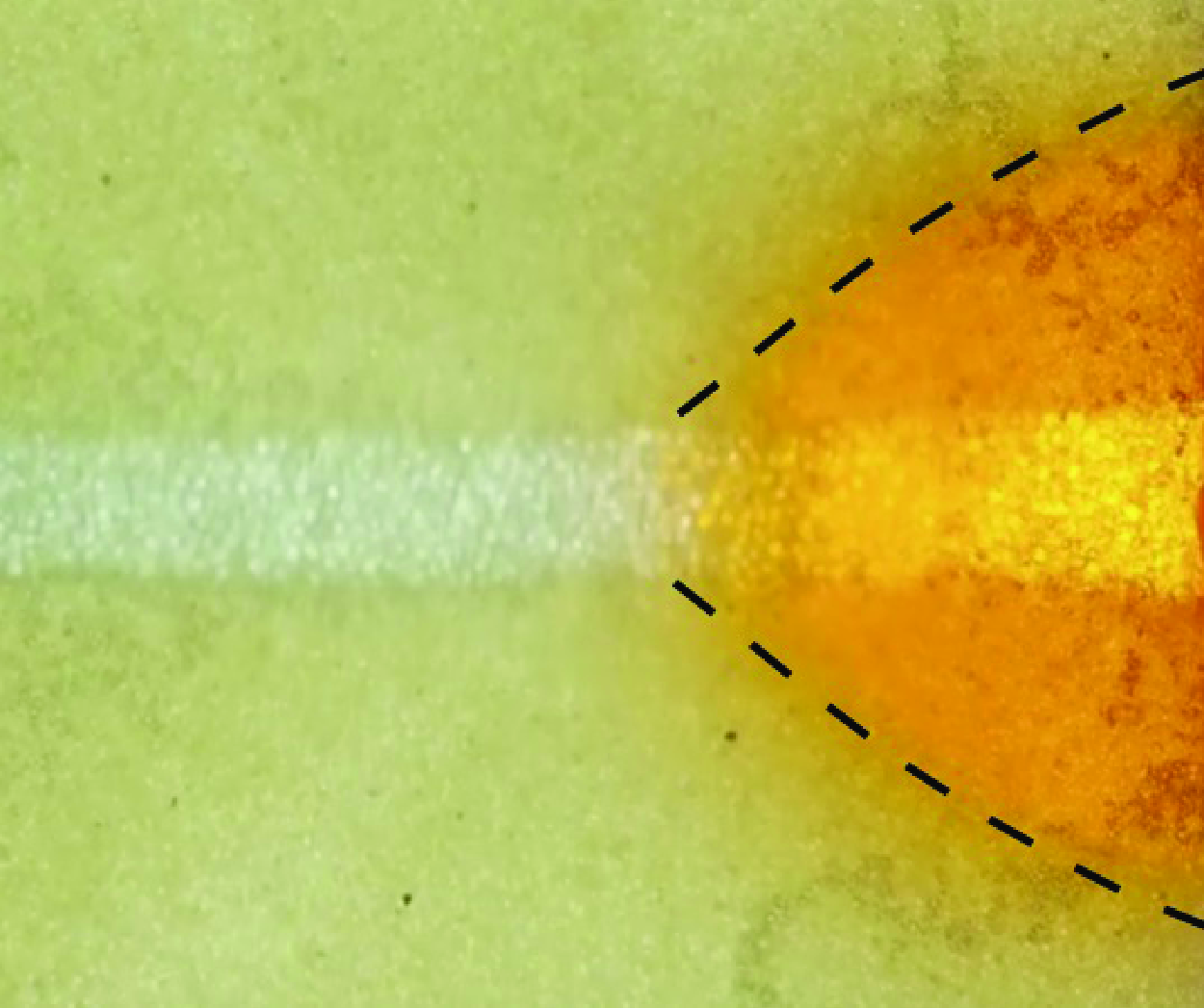
Viscous flow through high-permeability channels occurs in many environmental and industrial applications, including carbon sequestration, groundwater flow and enhanced oil recovery. In this work, we study the displacement of a less-viscous fluid by a more-viscous fluid in a layered porous medium in a rectilinear configuration, where two low-permeability layers sandwich a higher-permeability layer. We derive a theoretical model that is validated using corroborative laboratory experiments, when the influence of the density difference is negligible. We find that the location of the propagating front increases with time according to a power-law form $x_f \propto t^{1/2}$, while the fluid–fluid interface exhibits a self-similar shape, when the motion of the displaced fluid is negligible in an unconfined porous medium. In the experimental set-up, distinct permeability layers were constructed using various sizes of spherical glass beads. The working fluids comprised fresh water as the less-viscous ambient fluid, and a glycerine–water mixture as the more-viscous injecting fluid. Our experimental measurement show a better match with the theory for the experiments performed at low Reynolds numbers and with permeable boundaries in the far field.

Cold-loving microorganisms in Antarctic glaciers: a review of South Shetland archipelago glaciers
- Part of
-
- Journal:
- Antarctic Science / Volume 37 / Issue 4 / August 2025
- Published online by Cambridge University Press:
- 10 June 2025, pp. 253-264
-
- Article
-
- You have access
- Open access
- HTML
- Export citation

International Financial Institutions and Sustainable Development
- Lawmaking and Accountability
-
- Published online:
- 09 June 2025
- Print publication:
- 26 June 2025
The effect of shear-thinning on the scalings and small-scale structures of turbulence
-
- Journal:
- Journal of Fluid Mechanics / Volume 1012 / 10 June 2025
- Published online by Cambridge University Press:
- 09 June 2025, R5
-
- Article
-
- You have access
- Open access
- HTML
- Export citation
-
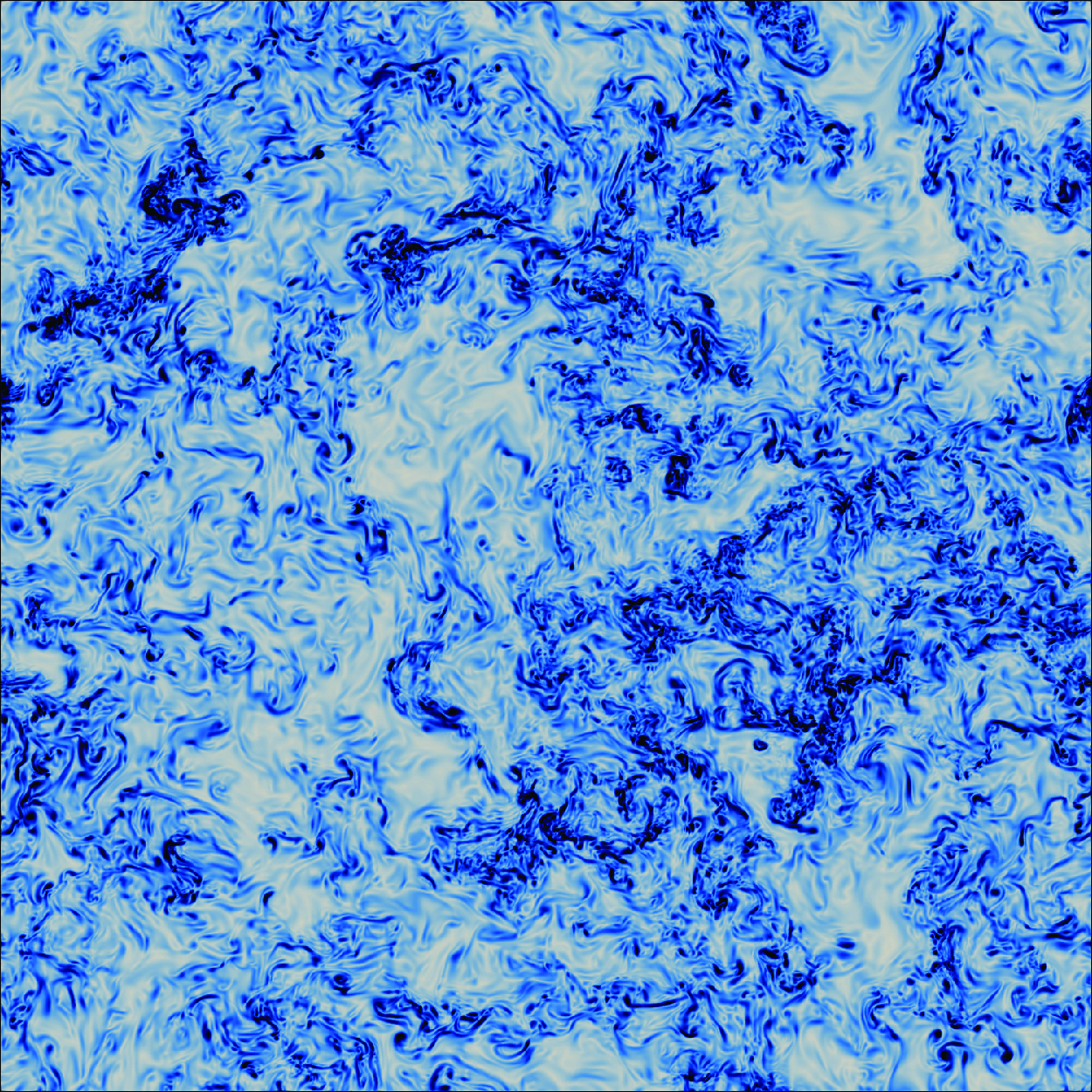
We study the homogeneous isotropic turbulence of a shear-thinning fluid modelled by the Carreau model, and show how the variable viscosity affects the multiscale behaviour of the turbulent flow. We show that Kolmogorov theory can be extended to such non-Newtonian fluids, provided that the correct choice of average is taken when defining the mean Kolmogorov scale and dissipation rate, to properly capture the effect of the variable viscosity. Thus the classical phenomenology à la Kolmogorov can be observed in the inertial range of scale, with the energy spectra decaying as $k^{-5/3}$, with $k$ being the wavenumber, and the third-order structure function obeying the $4/5$ law. The changing viscosity instead strongly alters the small scale of turbulence, leading to an enhanced intermittent behaviour of the velocity field.


A nonlinear Schrödinger equation for capillary waves on arbitrary depth with constant vorticity
-
- Journal:
- Journal of Fluid Mechanics / Volume 1012 / 10 June 2025
- Published online by Cambridge University Press:
- 09 June 2025, A28
-
- Article
- Export citation
-
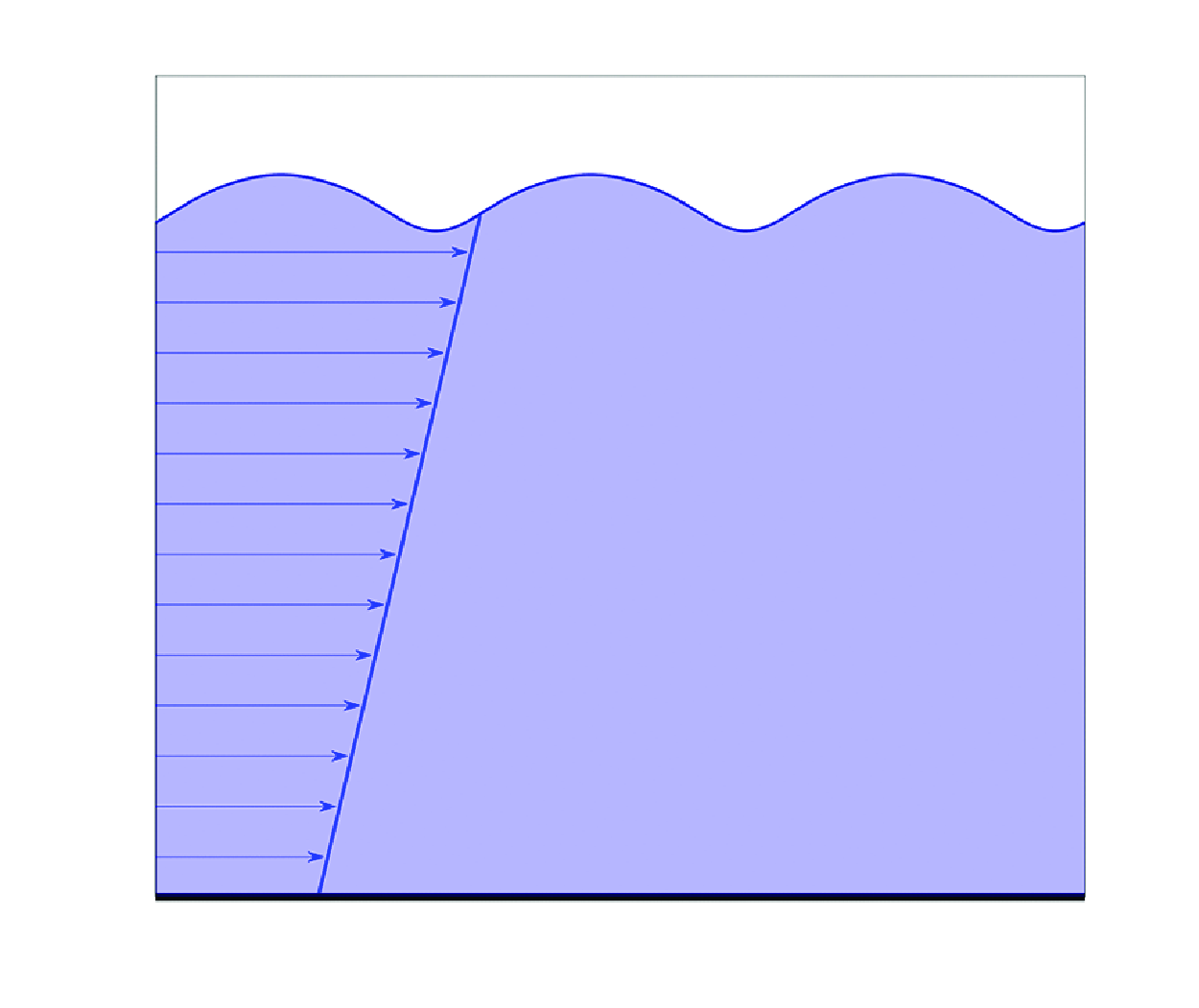
A nonlinear Schrödinger equation for pure capillary waves propagating at the free surface of a vertically sheared current has been used to study the stability and bifurcation of capillary Stokes waves on arbitrary depth. A linear stability analysis of weakly nonlinear capillary Stokes waves on arbitrary depth has shown that (i) the growth rate of modulational instability increases as the vorticity decreases whatever the dispersive parameter $kh$, where $k$ is the carrier wavenumber and $h$ the depth; (ii) the growth rate is significantly amplified for shallow water depths; and (iii) the instability bandwidth widens as the vorticity decreases. Particular attention has been paid to damping due to viscosity and forcing effects on modulational instability. In addition, a linear stability analysis to transverse perturbations in deep water has been carried out, demonstrating that the dominant modulational instability is two-dimensional whatever the vorticity. Near the minimum of linear phase velocity in deep water, we have shown that generalised capillary solitary waves bifurcate from linear capillary Stokes waves when the vorticity is positive. Moreover, we have shown that the envelope of pure capillary waves in deep water is unstable to transverse perturbations. Consequently, deep-water generalised capillary solitary waves are expected to be unstable to transverse perturbations.


Characterising Görtler vortices in supersonic turbulent flows over concave surfaces
-
- Journal:
- Journal of Fluid Mechanics / Volume 1012 / 10 June 2025
- Published online by Cambridge University Press:
- 09 June 2025, A29
-
- Article
-
- You have access
- Open access
- HTML
- Export citation
-
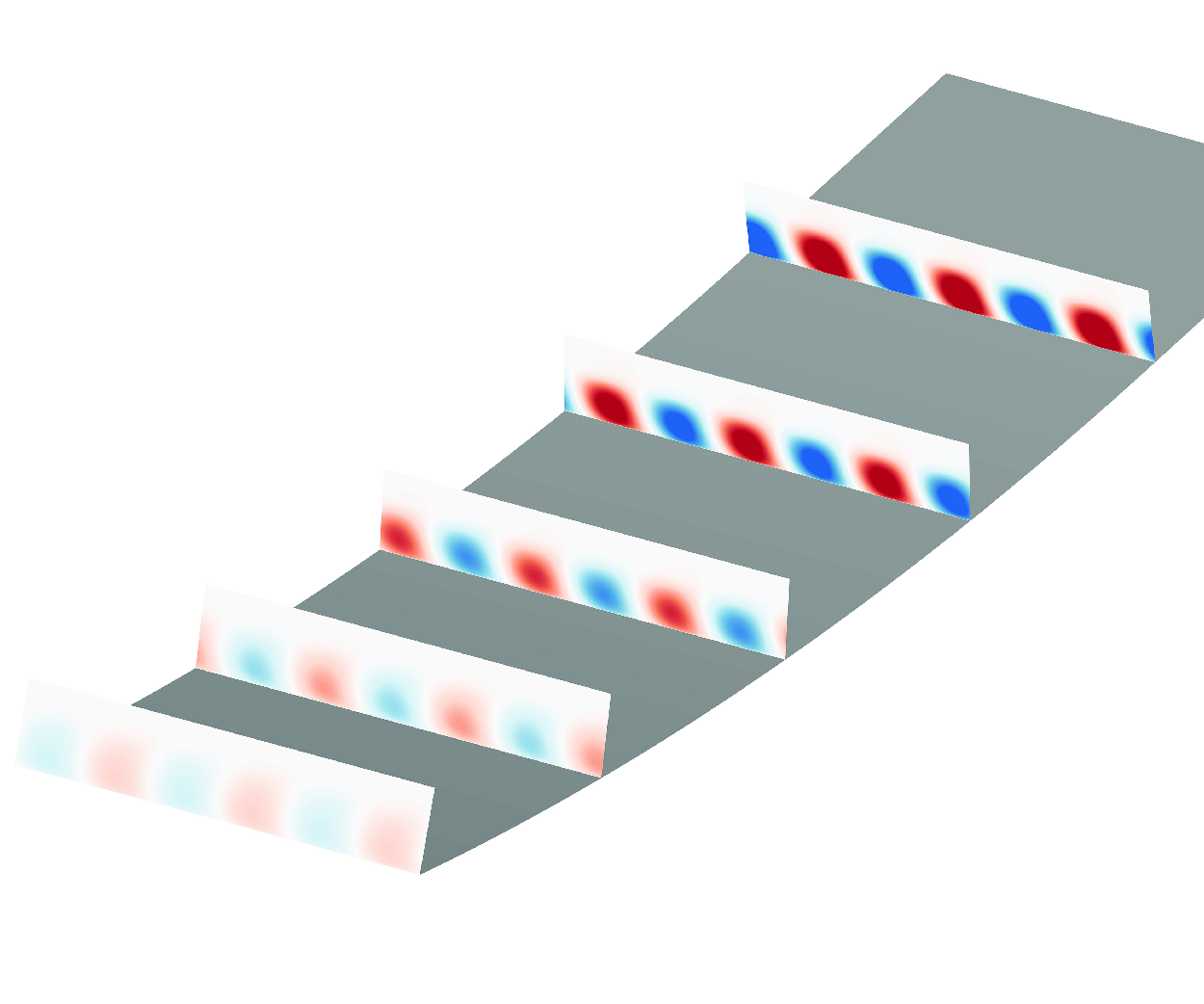
Görtler vortices induced by concave curvature in supersonic turbulent flows are investigated using resolvent analysis and large-eddy simulations at Mach 2.95 and Reynolds number $ Re_{\delta }=63\,500$ based on the boundary-layer thickness $ \delta$. Resolvent analysis reveals that the most amplified coherent structures manifest as streamwise counter-rotating vortices with optimal spanwise wavelength $ 2.4\delta$ at cut-off frequency $f\delta /{u}_{\infty } =0.036$, where $ {u}_{\infty }$ is the freestream velocity. The leading spectral proper orthogonal decomposition modes with spanwise wavelength approximately $ 2\delta$ align well with the predicted coherent structures from resolvent analysis at $f\delta /{u}_{\infty } =0.036$. These predicted and extracted coherent structures are identified as Görtler vortices, driven by the Görtler instability. The preferential spanwise scale of the Görtler vortices is further examined under varying geometric and freestream parameters. The optimal spanwise wavelength is insensitive to the total turning angle beyond a critical value, but sensitive to the concave curvature $ K$ at the same turning angle. A limit spanwise wavelength $ 1.96\delta$, corresponding to an infinite concave curvature as $ K\rightarrow \infty$, is identified and validated. Increasing the freestream Mach number or decreasing the ratio of wall temperature to freestream temperature reduces the optimal wavelength normalised by $ \delta$, while variations in freestream Reynolds number have negligible impact. Additionally, a modified definition of the turbulent Görtler number $ G_{T}$ based on the peak eddy viscosity in boundary layers is proposed and employed to assess the occurrence of Görtler instability.


Coherent oscillations and acoustic waves in a supersonic cylinder wake
-
- Journal:
- Journal of Fluid Mechanics / Volume 1012 / 10 June 2025
- Published online by Cambridge University Press:
- 09 June 2025, A27
-
- Article
-
- You have access
- Open access
- HTML
- Export citation
Simulating flow in fractured porous media with spatially varying fracture statistics using a non-local kernel-based model
-
- Journal:
- Journal of Fluid Mechanics / Volume 1012 / 10 June 2025
- Published online by Cambridge University Press:
- 09 June 2025, A25
-
- Article
-
- You have access
- Open access
- HTML
- Export citation
The stability of stratified horizontal flows of carbon dioxide at supercritical pressures
-
- Journal:
- Journal of Fluid Mechanics / Volume 1012 / 10 June 2025
- Published online by Cambridge University Press:
- 09 June 2025, A17
-
- Article
-
- You have access
- Open access
- HTML
- Export citation
-
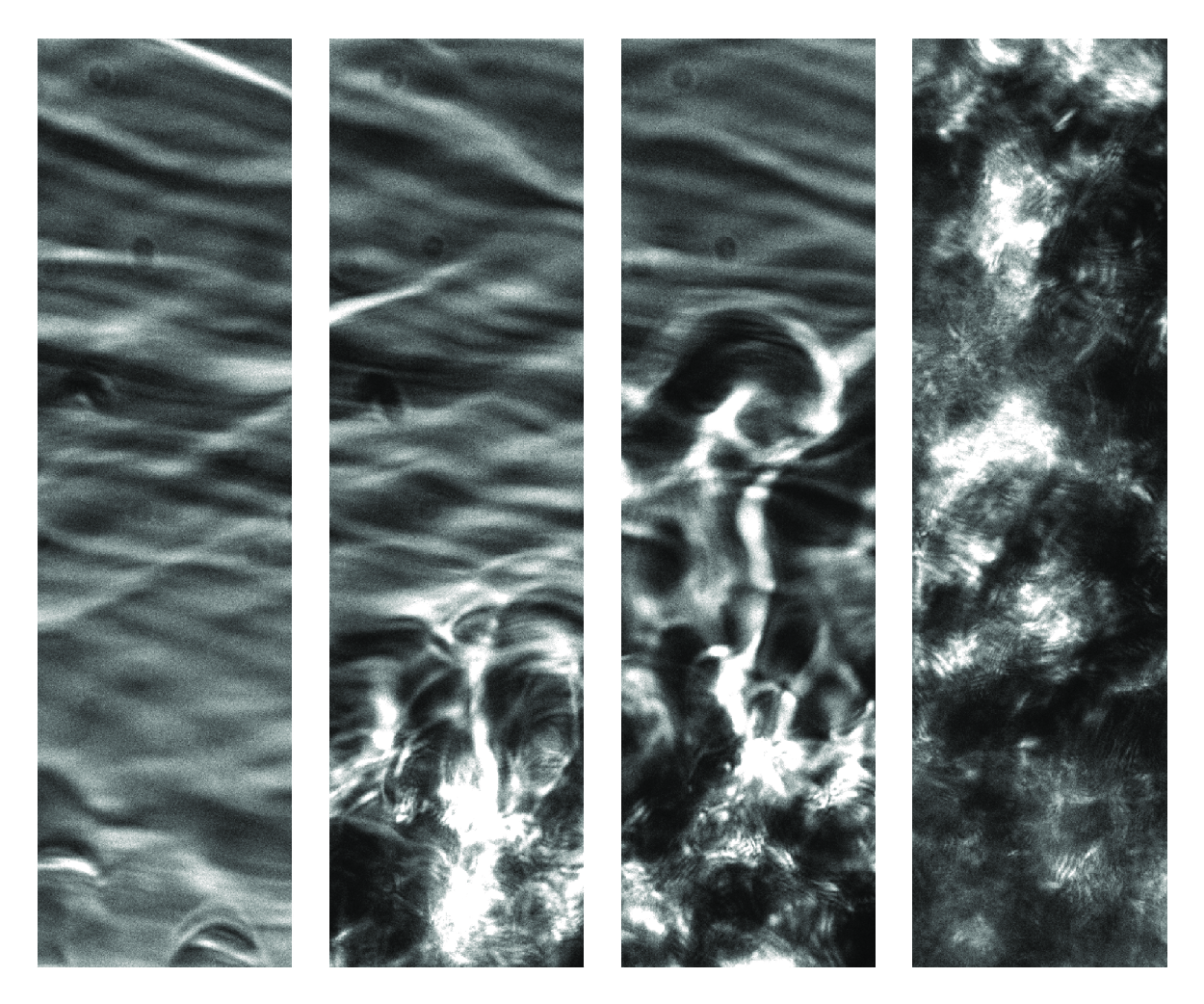
Fluids at supercritical pressures exhibit large variations in density near the pseudo-critical line, such that buoyancy plays a crucial role in their fluid dynamics. Here, we experimentally investigate heat transfer and turbulence in horizontal hydrodynamically developed channel flows of carbon dioxide at $88.5$ bar and $32.6\,^{\circ }\rm C$, heated at either the top or bottom surface to induce a strong vertical density gradient. In order to visualise the flow and evaluate its heat transfer, shadowgraphy is used concurrently with surface temperature measurements. With moderate heating, the flow is found to strongly stratify for both heating configurations, with bulk Richardson numbers $Ri$ reaching up to 100. When the carbon dioxide is heated from the bottom upwards, the resulting unstably stratified flow is found to be dominated by the increasingly prevalent secondary motion of thermal plumes, enhancing vertical mixing and progressively improving heat transfer compared with a neutrally buoyant setting. Conversely, stable stratification, induced by heating from the top, suppresses the vertical motion, leading to deteriorated heat transfer that becomes invariant to the Reynolds number. The optical results provide novel insights into the complex dynamics of the directionally dependent heat transfer in the near-pseudo-critical region. These insights contribute to the reliable design of heat exchangers with highly property-variant fluids, which are critical for the decarbonisation of power and industrial heat. However, the results also highlight the need for further progress in the development of experimental techniques to generate reliable reference data for a broader range of non-ideal supercritical conditions.


Optimal kinematics for energy harvesting using favourable wake–foil interactions in tandem oscillating hydrofoils
-
- Journal:
- Journal of Fluid Mechanics / Volume 1012 / 10 June 2025
- Published online by Cambridge University Press:
- 09 June 2025, A23
-
- Article
-
- You have access
- Open access
- HTML
- Export citation
-
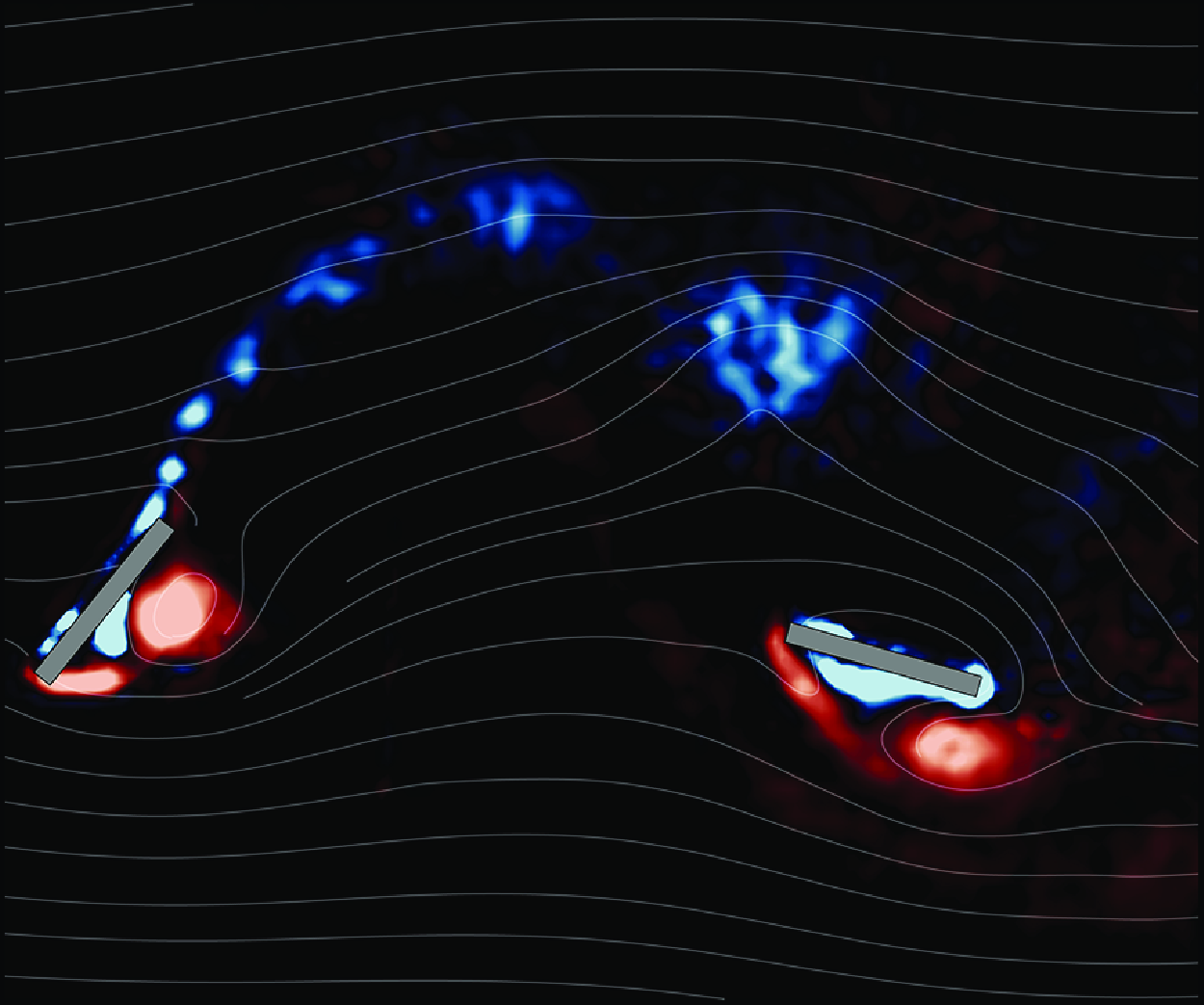
The energy-harvesting performance of two oscillating hydrofoil turbines in tandem configuration is experimentally studied at a $Re$ of $20\,000$ to determine the array’s optimal kinematics. By characterising interactions between the leading foil’s wake and the trailing foil, the kinematic configuration required to maximise array power extraction is identified. This is done by prescribing leading-foil kinematics that produce specific wake regimes, identified by the maximum effective angle of attack, $\alpha _{T/4}$, parameter. The kinematics of the trailing foil are varied significantly from those of the leading foil, with heave and pitch amplitudes of $0.6c\lt h_{0,{\textit{tr}}}\lt 1.8c$ and $65^{\circ} \lt \theta _{0,{\textit{tr}}}\lt 75^{\circ}$, and inter-foil phase of $-110^{\circ} \lt \psi _{1-2}\lt 180^{\circ}$. Configurations with reduced frequencies of $0.11$ and $0.12$, and foil separations of $4c$ and $6c$ are tested within each wake regime. The power extracted by each foil over an oscillation cycle is measured through force and torque measurements. Wake–foil interactions that improve trailing foil performance are analysed with time-resolved particle image velocimetry. Constructive and destructive wake–foil interactions are compared, showing that trailing-foil performance improves by either avoiding wake vortices or interacting directly with them. By interacting with the primary wake vortex, the latter configuration sees no power loss during the cycle. System power from the two foils is found to be maximised when the leading foil operates at an intermediate $\alpha _{T/4}$ range, and when the trailing foil avoids wake vortices. This optimal array configuration sees both foils operating with different kinematics compared with the optimal kinematics of a single oscillating foil.


Large deformation of elastic capsules under uniaxial extensional flow
-
- Journal:
- Journal of Fluid Mechanics / Volume 1012 / 10 June 2025
- Published online by Cambridge University Press:
- 09 June 2025, A12
-
- Article
-
- You have access
- Open access
- HTML
- Export citation
-
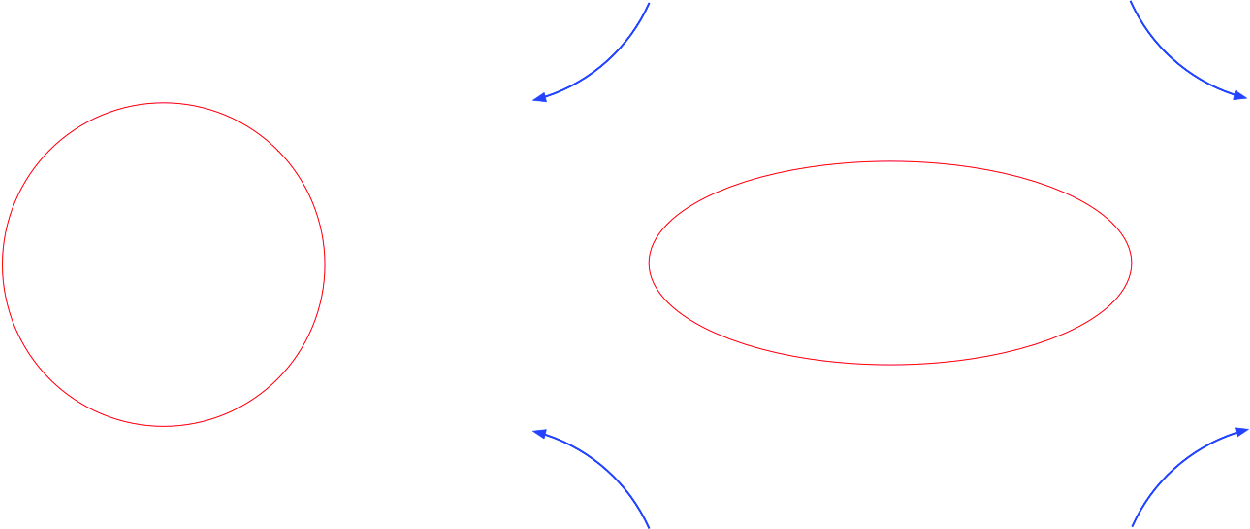
A spherical capsule (radius $R$) is suspended in a viscous liquid (viscosity $\mu$) and exposed to a uniaxial extensional flow of strain rate $E$. The elasticity of the membrane surrounding the capsule is described by the Skalak constitutive law, expressed in terms of a surface shear modulus $G$ and an area dilatation modulus $K$. Dimensional arguments imply that the slenderness $\epsilon$ of the deformed capsule depends only upon $K/G$ and the elastic capillary number ${Ca}=\mu R E/G$. We address the coupled flow–deformation problem in the limit of strong flow, ${Ca}\gg 1$, where large deformation allows for the use of approximation methods in the limit $\epsilon \ll 1$. The key conceptual challenge, encountered at the very formulation of the problem, is in describing the Lagrangian mapping from the spherical reference state in a manner compatible with hydrodynamic slender-body formulation. Scaling analysis reveals that $\epsilon$ is proportional to ${Ca}^{-2/3}$, with the hydrodynamic problem introducing a dependence of the proportionality prefactor upon $\ln \epsilon$. Going beyond scaling arguments, we employ asymptotic methods to obtain a reduced formulation, consisting of a differential equation governing a mapping field and an integral equation governing the axial tension distribution. The leading-order deformation is independent of the ratio $K/G$; in particular, we find the approximation $\epsilon ^{2/3} {Ca}\approx 0.2753\ln (2/\epsilon ^2)$ for the relation between $\epsilon$ and $Ca$. A scaling analysis for the neo-Hookean constitutive law reveals the impossibility of a steady slender shape, in agreement with existing numerical simulations. More generally, the present asymptotic paradigm allows us to rigorously discriminate between strain-softening and strain-hardening models.


Dynamics of the polycrisis: temporal trends, spatial distribution, and co-occurrences of national shocks (1970–2019)
- Part of
-
- Journal:
- Global Sustainability / Volume 8 / 2025
- Published online by Cambridge University Press:
- 09 June 2025, e24
-
- Article
-
- You have access
- Open access
- HTML
- Export citation
A modelling framework for jet penetration into soft gels – ERRATUM
-
- Journal:
- Journal of Fluid Mechanics / Volume 1012 / 10 June 2025
- Published online by Cambridge University Press:
- 09 June 2025, E2
-
- Article
-
- You have access
- Open access
- HTML
- Export citation

Rebel Governance in the Age of Climate Change
-
- Published online:
- 06 June 2025
- Print publication:
- 03 July 2025
-
- Element
-
- You have access
- Open access
- HTML
- Export citation

Killing the Trade
- Strategies to End the Illegal Wildlife Trade and Make Conservation Pay
-
- Published by:
- Agenda Publishing
- Published online:
- 05 June 2025
- Print publication:
- 27 February 2025
Thermoelectrical power plant influence on environmental radiocarbon level in the Govora industrial area
-
- Journal:
- Radiocarbon / Volume 67 / Issue 4 / August 2025
- Published online by Cambridge University Press:
- 05 June 2025, pp. 719-726
- Print publication:
- August 2025
-
- Article
-
- You have access
- Open access
- HTML
- Export citation
