Refine search
Actions for selected content:
178636 results in Earth and Environmental Sciences
Towards a high-resolution sea-ice model: exploring the potential of modelling ice floe fracture with the peridynamic method
- Part of
-
- Journal:
- Annals of Glaciology / Volume 66 / 2025
- Published online by Cambridge University Press:
- 21 November 2024, e2
-
- Article
-
- You have access
- Open access
- HTML
- Export citation
Index
-
- Book:
- Security in Sustainable Energy Transitions
- Published online:
- 23 November 2024
- Print publication:
- 21 November 2024, pp 211-215
-
- Chapter
-
- You have access
- Open access
- HTML
- Export citation
3 - Energy Security and Geopolitics of Energy Transition
- from Part I - Theoretical and Literature-Based Foundations
-
- Book:
- Security in Sustainable Energy Transitions
- Published online:
- 23 November 2024
- Print publication:
- 21 November 2024, pp 35-51
-
- Chapter
-
- You have access
- Open access
- HTML
- Export citation
References
-
- Book:
- Security in Sustainable Energy Transitions
- Published online:
- 23 November 2024
- Print publication:
- 21 November 2024, pp 187-210
-
- Chapter
-
- You have access
- Open access
- HTML
- Export citation
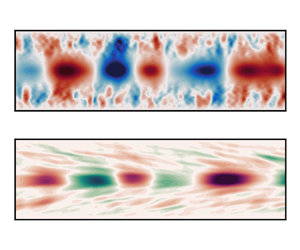
Linear dynamics in turbulent stratified plane Poiseuille flow
-
- Journal:
- Journal of Fluid Mechanics / Volume 999 / 25 November 2024
- Published online by Cambridge University Press:
- 21 November 2024, A104
-
- Article
-
- You have access
- Open access
- HTML
- Export citation
1 - Overview of Catastrophe Risks
- from Part I - Basics of CAT Modelling
-
- Book:
- Introduction to Catastrophe Risk Modelling
- Published online:
- 08 November 2024
- Print publication:
- 21 November 2024, pp 3-59
-
- Chapter
- Export citation

Classifications and scaling of generic shaped, steady and unsteady water bells formed by a jet impinging onto a vial
-
- Journal:
- Journal of Fluid Mechanics / Volume 999 / 25 November 2024
- Published online by Cambridge University Press:
- 21 November 2024, A96
-
- Article
-
- You have access
- Open access
- HTML
- Export citation
-
We present the results of a combined experimental and theoretical investigation of different fluid sheet structures formed during the impingement of a laminar liquid jet on a vial, with a slightly larger diameter than the jet and filled with the same liquid. The present set-up produces all diverse fluid sheet structures, unlike previous experiments that required a deflector disk resulting in no-slip and no-penetration boundary conditions. The water sheet structures are classified into four regimes; regime I: pre-sheet; regime II: puffing, characterized by the periodic formation and destruction of the upward-rising water sheet, an interesting observation not reported earlier; regime III, steady upward, inverted umbrella-like sheet structures; and regime IV, the formation of downward, umbrella-like sheet structures, which can be either open or closed, classically referred to as ‘water bells’. The water sheet structures observed are governed by the non-dimensional parameters: the ratio of vial diameter to the jet diameter at impact ( $X$), the capillary number ( $Ca$), the Weber number ( $We$) and the Froude number ( $Fr$). The parametric spaces $X-Ca$, $X-We$ and $X-Fr$ exhibit the demarcation of the four regimes. A semi-empirical expression for the ejection angle of the liquid sheet, primarily responsible for different shapes, is derived in a control volume that provides a theoretical basis for the identified regime diagrams. The puffing water bells in regime II are found to be quasi-steady as the experimental trajectories are in good agreement with the steady-state theory. The rise time of puffing water bells that determines the puffing frequency has been modelled.


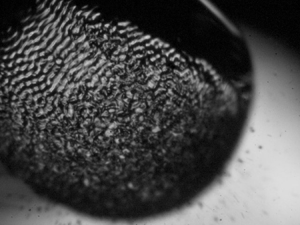
Atomisation of an acoustically levitated droplet: experimental observations of myriad complex phenomena
-
- Journal:
- Journal of Fluid Mechanics / Volume 999 / 25 November 2024
- Published online by Cambridge University Press:
- 21 November 2024, A89
-
- Article
-
- You have access
- Open access
- HTML
- Export citation
Abbreviations and Symbols
-
- Book:
- Introduction to Catastrophe Risk Modelling
- Published online:
- 08 November 2024
- Print publication:
- 21 November 2024, pp xxiii-xxvi
-
- Chapter
- Export citation
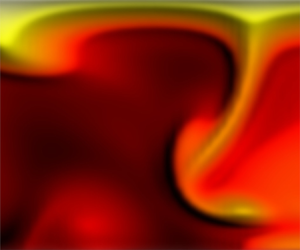
Upper bound of heat flux in an anelastic model for Rayleigh–Bénard convection
-
- Journal:
- Journal of Fluid Mechanics / Volume 999 / 25 November 2024
- Published online by Cambridge University Press:
- 21 November 2024, A94
-
- Article
-
- You have access
- Open access
- HTML
- Export citation
-
Bounds on heat transfer have been the subject of previous studies concerning convection in the Boussinesq approximation: in the Rayleigh–Bénard configuration, the first result obtained by Howard (J. Fluid Mech., vol. 17, issue 3, 1963, pp. 405–432) states that the dimensionless heat flux $\textit {Nu}$ carried out by convection is such that $\textit {Nu} < (3/64 \ Ra)^{1/2}$ for large values of the Rayleigh number $Ra$, independently of the Prandtl number $Pr$. This is still the best-known upper bound, only with the prefactor improved to $\textit {Nu} -1 < 0.02634 \ Ra^{1/2}$ by Plasting & Kerswell (J. Fluid Mech., vol. 477, 2003, pp. 363–379). In the present paper, this result is extended to compressible convection. An upper bound is obtained for the anelastic liquid approximation, which is similar to an anelastic model used in astrophysics based on a turbulent diffusivity for entropy. The anelastic bound is still scaling as $Ra^{1/2}$, independently of $Pr$, but depends on the dissipation number $\mathcal {D}$ and on the equation of state. For monatomic gases and large Rayleigh numbers, the bound is $\textit {Nu} < 25.8\, Ra^{{1}/{2}} / (1-\mathcal {D}/2 )^{{5}/{2}}$.


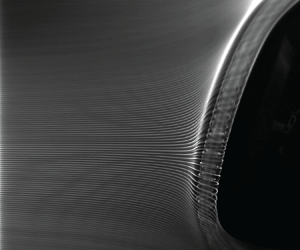
Flows over a spinning disc at incidence
-
- Journal:
- Journal of Fluid Mechanics / Volume 999 / 25 November 2024
- Published online by Cambridge University Press:
- 21 November 2024, A95
-
- Article
-
- You have access
- Open access
- HTML
- Export citation
-
Flows over a disc are studied in a wind tunnel over incidence angles between $0^\circ \text { and }36^\circ$, a Reynolds number of $2.7 \times 10^4$ and rotational speed ratios of $0\unicode{x2013}10$. Smoke-wire visualization, particle image velocimetry and hot-film anemometry are employed. Two vortex shedding modes originating from the upstream surface of the disc are observed. The first is dominant at incidence angles up to ${\sim }21^\circ$. Beyond $21^\circ$, the second mode dominates. It appears as a soliton on the vortices and has a shedding frequency nearly twice that of the first at the highest incidence angle. The Strouhal number monotonically increases with incidence angle from approximately 0.2 to 0.4. Spectral analysis of the hot-film measurements confirms the findings from flow visualization experiments. Flows over the spinning disc generally mimic the stationary disc flows; however, centrifugal forces lead to cross-stream instability features that may be attributed to spiral wave instabilities intrinsic to the boundary layers in rotating flows. Velocity measurements are used to construct streamline patterns to compare with the smoke streaklines. The unsteadiness of the flows results in large variances. Mean strain rates are extracted from velocity data, where the fixed disc case at normal incidence compares well with theoretical predictions. The unsteady boundary layer thickness over the fixed disc, however, is approximately twice that predicted by theory for steady flow, stemming from the dominance of large unsteady vortices. Limited comparisons are made of the Strouhal numbers from experiments and numerical calculations in the literature.


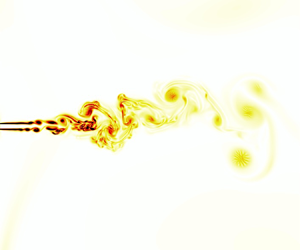
The 2.5-dimensional turbulence in shear-thinning jets
-
- Journal:
- Journal of Fluid Mechanics / Volume 999 / 25 November 2024
- Published online by Cambridge University Press:
- 21 November 2024, A102
-
- Article
-
- You have access
- Open access
- HTML
- Export citation
Contents
-
- Book:
- Security in Sustainable Energy Transitions
- Published online:
- 23 November 2024
- Print publication:
- 21 November 2024, pp v-viii
-
- Chapter
-
- You have access
- Open access
- HTML
- Export citation
2 - Understanding Security in the Context of Sustainability Transitions
- from Part I - Theoretical and Literature-Based Foundations
-
- Book:
- Security in Sustainable Energy Transitions
- Published online:
- 23 November 2024
- Print publication:
- 21 November 2024, pp 17-34
-
- Chapter
-
- You have access
- Open access
- HTML
- Export citation
Part III - CAT Risk Management
-
- Book:
- Introduction to Catastrophe Risk Modelling
- Published online:
- 08 November 2024
- Print publication:
- 21 November 2024, pp 233-275
-
- Chapter
- Export citation
Bibliography
-
- Book:
- Vulnerable Earth
- Published online:
- 30 April 2024
- Print publication:
- 21 November 2024, pp 249-275
-
- Chapter
- Export citation
Do atmospheric rivers trigger tabular iceberg calving?
-
- Journal:
- Journal of Glaciology / Volume 71 / 2025
- Published online by Cambridge University Press:
- 21 November 2024, e8
-
- Article
-
- You have access
- Open access
- HTML
- Export citation
Preface
-
- Book:
- Introduction to Catastrophe Risk Modelling
- Published online:
- 08 November 2024
- Print publication:
- 21 November 2024, pp xix-xxi
-
- Chapter
- Export citation
Part I - Basics of CAT Modelling
-
- Book:
- Introduction to Catastrophe Risk Modelling
- Published online:
- 08 November 2024
- Print publication:
- 21 November 2024, pp 1-158
-
- Chapter
- Export citation
1 - Introduction
-
- Book:
- Security in Sustainable Energy Transitions
- Published online:
- 23 November 2024
- Print publication:
- 21 November 2024, pp 1-14
-
- Chapter
-
- You have access
- Open access
- HTML
- Export citation
