Refine search
Actions for selected content:
178636 results in Earth and Environmental Sciences
Part II - Advanced CAT Modelling
-
- Book:
- Introduction to Catastrophe Risk Modelling
- Published online:
- 08 November 2024
- Print publication:
- 21 November 2024, pp 159-232
-
- Chapter
- Export citation
4 - Dynamic Hazard Modelling
- from Part II - Advanced CAT Modelling
-
- Book:
- Introduction to Catastrophe Risk Modelling
- Published online:
- 08 November 2024
- Print publication:
- 21 November 2024, pp 161-192
-
- Chapter
- Export citation
1 - Introduction: The Literature of Climate Crisis
-
- Book:
- Vulnerable Earth
- Published online:
- 30 April 2024
- Print publication:
- 21 November 2024, pp 1-20
-
- Chapter
- Export citation
Part III - Conclusions
-
- Book:
- Security in Sustainable Energy Transitions
- Published online:
- 23 November 2024
- Print publication:
- 21 November 2024, pp 163-186
-
- Chapter
-
- You have access
- Open access
- HTML
- Export citation
Copyright page
-
- Book:
- Introduction to Catastrophe Risk Modelling
- Published online:
- 08 November 2024
- Print publication:
- 21 November 2024, pp iv-iv
-
- Chapter
- Export citation
Index
-
- Book:
- Vulnerable Earth
- Published online:
- 30 April 2024
- Print publication:
- 21 November 2024, pp 276-295
-
- Chapter
- Export citation
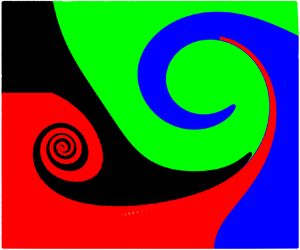
Formation and development of the stopping vortex ring in starting jets
-
- Journal:
- Journal of Fluid Mechanics / Volume 999 / 25 November 2024
- Published online by Cambridge University Press:
- 21 November 2024, A85
-
- Article
- Export citation
-
The formation mechanism for the stopping vortex ring (SVR) and its effects on the development of starting jets have been systematically investigated. The radial inward flow near the nozzle exit, arising from the pressure difference caused by the deceleration of starting jets, is considered to be the main contributing factor to the formation of the SVR. The formation process can generally be divided into (i) the rapid accumulation stage ( $t_d^*\leq 1$) and (ii) the development stage ( $t_d^*>1$), where $t_d^*$ is the formation time defined by the duration of the deceleration stage. For starting jets with different $(L/D)_d$, the final circulation value and circulation growth rate of the SVR can be scaled by $[(L/D)_d]^{-0.5}$ and $[(L/D)_d]^{-1.5}$, respectively. Here $(L/D)_d$ represents the stroke ratio during the deceleration stage. Analysing the temporal evolution of fluid parcels in the vicinity of the nozzle exit reveals that SVR entrains fluid from both inside and outside of the nozzle. Additionally, the influence of the SVR on the leading vortex ring and the trailing jet has been examined, with particular attention to its effects on the propulsive performance of the starting jet. The SVR affects the profiles of axial velocity and gauge pressure at the nozzle exit, thereby enhancing the generation of total thrust during the deceleration stage. Analysis has shown that depending on the deceleration rate, SVR can enhance the average velocity thrust by at least $10\,\%$ and compensate for up to a $60\,\%$ reduction in pressure thrust due to deceleration.


Preface
-
- Book:
- Vulnerable Earth
- Published online:
- 30 April 2024
- Print publication:
- 21 November 2024, pp ix-x
-
- Chapter
- Export citation
Figures
-
- Book:
- Introduction to Catastrophe Risk Modelling
- Published online:
- 08 November 2024
- Print publication:
- 21 November 2024, pp xii-xiv
-
- Chapter
- Export citation
Foreword
-
- Book:
- Introduction to Catastrophe Risk Modelling
- Published online:
- 08 November 2024
- Print publication:
- 21 November 2024, pp xvii-xviii
-
- Chapter
- Export citation
Frontmatter
-
- Book:
- Vulnerable Earth
- Published online:
- 30 April 2024
- Print publication:
- 21 November 2024, pp i-iv
-
- Chapter
- Export citation
Preface
-
- Book:
- Security in Sustainable Energy Transitions
- Published online:
- 23 November 2024
- Print publication:
- 21 November 2024, pp ix-x
-
- Chapter
-
- You have access
- Open access
- HTML
- Export citation
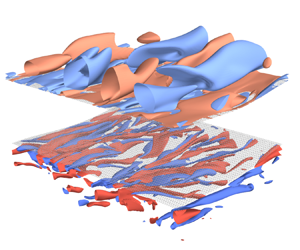
Dynamics of turbulence production by attenuating interfacial gravity waves observed in air–water coupled wave-resolving simulation
-
- Journal:
- Journal of Fluid Mechanics / Volume 999 / 25 November 2024
- Published online by Cambridge University Press:
- 21 November 2024, A97
-
- Article
- Export citation
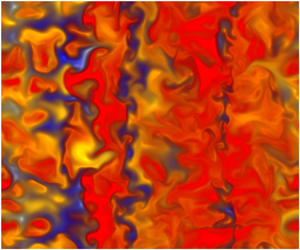
Direct numerical simulations of three-component Rayleigh–Taylor mixing and an improved model for multicomponent reacting mixtures
-
- Journal:
- Journal of Fluid Mechanics / Volume 999 / 25 November 2024
- Published online by Cambridge University Press:
- 21 November 2024, A88
-
- Article
-
- You have access
- Open access
- HTML
- Export citation

Preferential orientation of small floaters drifting in water waves
-
- Journal:
- Journal of Fluid Mechanics / Volume 999 / 25 November 2024
- Published online by Cambridge University Press:
- 21 November 2024, A92
-
- Article
- Export citation
-
Elongated floaters drifting in propagating water waves slowly rotate towards a preferential orientation with respect to the direction of incidence. In this paper we study this phenomenon in the small floater limit $k L_x < 1$, with $k$ the wavenumber and $L_x$ the floater length. Experiments show that short and heavy floaters tend to align longitudinally, along the direction of wave propagation, whereas longer and lighter floaters align transversely, parallel to the wave crests and troughs. We show that this preferential orientation can be modelled using an inviscid Froude–Krylov model, ignoring diffraction effects. Asymptotic theory, in the double limit of a small wave slope and small floater, suggests that preferential orientation is essentially controlled by the non-dimensional number $F = k L_x^2 / \bar {h}$, with $\bar {h}$ the equilibrium submersion depth. Theory predicts the longitudinal-transverse transition for homogeneous parallelepipeds at the critical value $F_c = 60$, in fair agreement with the experiments that locate $F_c = 50 \pm 15$. Using a simplified model for a thin floater, we elucidate the physical mechanisms that control the preferential orientation. The longitudinal equilibrium for $F< F_c$ originates from a slight asymmetry between the buoyancy torque induced by the wave crests, that favours the longitudinal orientation, and that induced by the wave troughs, that favours the transverse orientation. The transverse equilibrium for $F>F_c$ arises from the variation of the submersion depth along the long axis of the floaters, which significantly increases the torque in the trough positions, when the tips are more submersed.


Reviews
-
- Book:
- Introduction to Catastrophe Risk Modelling
- Published online:
- 08 November 2024
- Print publication:
- 21 November 2024, pp ii-ii
-
- Chapter
- Export citation
Copyright page
-
- Book:
- Security in Sustainable Energy Transitions
- Published online:
- 23 November 2024
- Print publication:
- 21 November 2024, pp iv-iv
-
- Chapter
-
- You have access
- Open access
- HTML
- Export citation
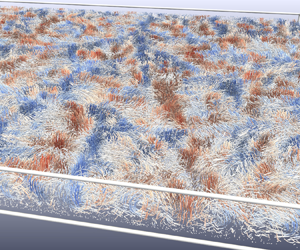
On Lagrangian properties of turbulent Rayleigh–Bénard convection
-
- Journal:
- Journal of Fluid Mechanics / Volume 999 / 25 November 2024
- Published online by Cambridge University Press:
- 21 November 2024, A90
-
- Article
-
- You have access
- Open access
- HTML
- Export citation
-
We report on Lagrangian statistics of turbulent Rayleigh–Bénard convection under very different conditions. For this, we conducted particle tracking experiments in a $H=1.1$-m-high cylinder of aspect ratio $\varGamma =1$ filled with air (Pr = 0.7), as well as in two rectangular cells of heights $H=0.02$ m ( $\varGamma =16$) and $H=0.04$ m ( $\varGamma =8$) filled with water (Pr = 7.0), covering Rayleigh numbers in the range $10^6\le {\textit {Ra}}\le 1.6\times 10^9$. Using the Shake-The-Box algorithm, we have tracked up to 500 000 neutrally buoyant particles over several hundred free-fall times for each set of control parameters. We find the Reynolds number to scale at small Ra (large Pr) as $ {\textit{Re}} \propto {\textit{Ra}}^{0.6}$. Further, the averaged horizontal particle displacement is found to be universal and exhibits a ballistic regime at small times and a diffusive regime at larger times, for sufficiently large $\varGamma$. The diffusive regime occurs for time lags larger than $\tau _{co}$, which is the time scale related to the decay of the velocity autocorrelation. Compensated as $\tau _{co} {\textit {Pr}}^{-0.3}$, this time scale is universal and rather independent of $ {\textit {Ra}}$ and $\varGamma$. We have also investigated the Lagrangian velocity structure function $S^2_i(\tau )$, which is dominated by viscous effects for times smaller than the Kolmogorov time $\tau _\eta$ and hence $S^2_i\propto \tau ^2$. For larger times we find a novel scaling for the different components with exponents smaller than what is expected in the inertial range of homogeneous isotropic turbulence without buoyancy. Studying particle-pair dispersion, we find a Batchelor scaling ( ${\propto }\,t^2$) on small time scales, diffusive scaling ( ${\propto }\,t$) on large time scales and Richardson-like scaling ( ${\propto }\,t^3$) for intermediate time scales.


Plates
-
- Book:
- Introduction to Catastrophe Risk Modelling
- Published online:
- 08 November 2024
- Print publication:
- 21 November 2024, pp xi-xi
-
- Chapter
- Export citation
3 - Extinction: After/Lives
-
- Book:
- Vulnerable Earth
- Published online:
- 30 April 2024
- Print publication:
- 21 November 2024, pp 68-120
-
- Chapter
- Export citation
