Refine search
Actions for selected content:
212700 results in Engineering

Experimental study of the convection in a thin cylindrical gas layer with imposed bottom and top fluxes and imposed side temperature
-
- Journal:
- Journal of Fluid Mechanics / Volume 1006 / 10 March 2025
- Published online by Cambridge University Press:
- 11 March 2025, A22
-
- Article
- Export citation

A study of turbulent flow over patchy roughness
-
- Journal:
- Journal of Fluid Mechanics / Volume 1006 / 10 March 2025
- Published online by Cambridge University Press:
- 11 March 2025, A28
-
- Article
-
- You have access
- Open access
- HTML
- Export citation
-
Direct numerical simulations in periodic plane channels are used to study turbulent flow over ‘patches’ of roughness distributed on otherwise smooth walls. Circular patches as well as those resembling natural bio-fouling roughness are considered. Roughnesses within the patches are statistically similar and formed by random distribution of roughness elements of truncated cone shape. The two main studied parameters are the characteristic length scale of the patches $\varLambda _P$ and roughness area coverage ratio (CR). To provide a reference, simulations of homogeneous roughness (i.e. with 100 % CR) are performed at different roughness element densities translated into different values of frontal solidity. Results show that when $\varLambda _P$ is of the order of channel half-height $\delta$, the global friction coefficient $C_f$ of patchy roughness is scattered around that of homogeneous roughness with similar ‘mean’ frontal solidity. As $\varLambda _P/\delta$ grows, asymptotic convergence towards an equilibrium value is identified. Considering the present data, a normalised $C_f$ can be satisfactorily correlated by $\varLambda _P/\delta$; the normalisation includes $C_f$ for a homogeneous roughness similar to the patch roughness at two limiting cases. This points towards the possibility to develop a universal heterogeneous roughness correlation based on a knowledge of existing homogeneous roughness correlations. Furthermore, local and global flow statistics are studied, which among others, indicate formation of secondary motions for regular patch arrangement at $\varLambda _P\approx \delta$ with implications on the outer layer similarity of global mean velocity and Reynolds stress profiles.


Natural language access point to digital metal–organic polyhedra chemistry in The World Avatar
- Part of
-
- Journal:
- Data-Centric Engineering / Volume 6 / 2025
- Published online by Cambridge University Press:
- 11 March 2025, e22
-
- Article
-
- You have access
- Open access
- HTML
- Export citation
Crystal structure of flumethasone, C22H28F2O5
-
- Journal:
- Powder Diffraction / Volume 40 / Issue 2 / June 2025
- Published online by Cambridge University Press:
- 11 March 2025, pp. 128-133
-
- Article
-
- You have access
- Open access
- HTML
- Export citation

Fundamentals of Digital Communication Systems
-
- Published online:
- 10 March 2025
- Print publication:
- 23 January 2025
-
- Textbook
- Export citation
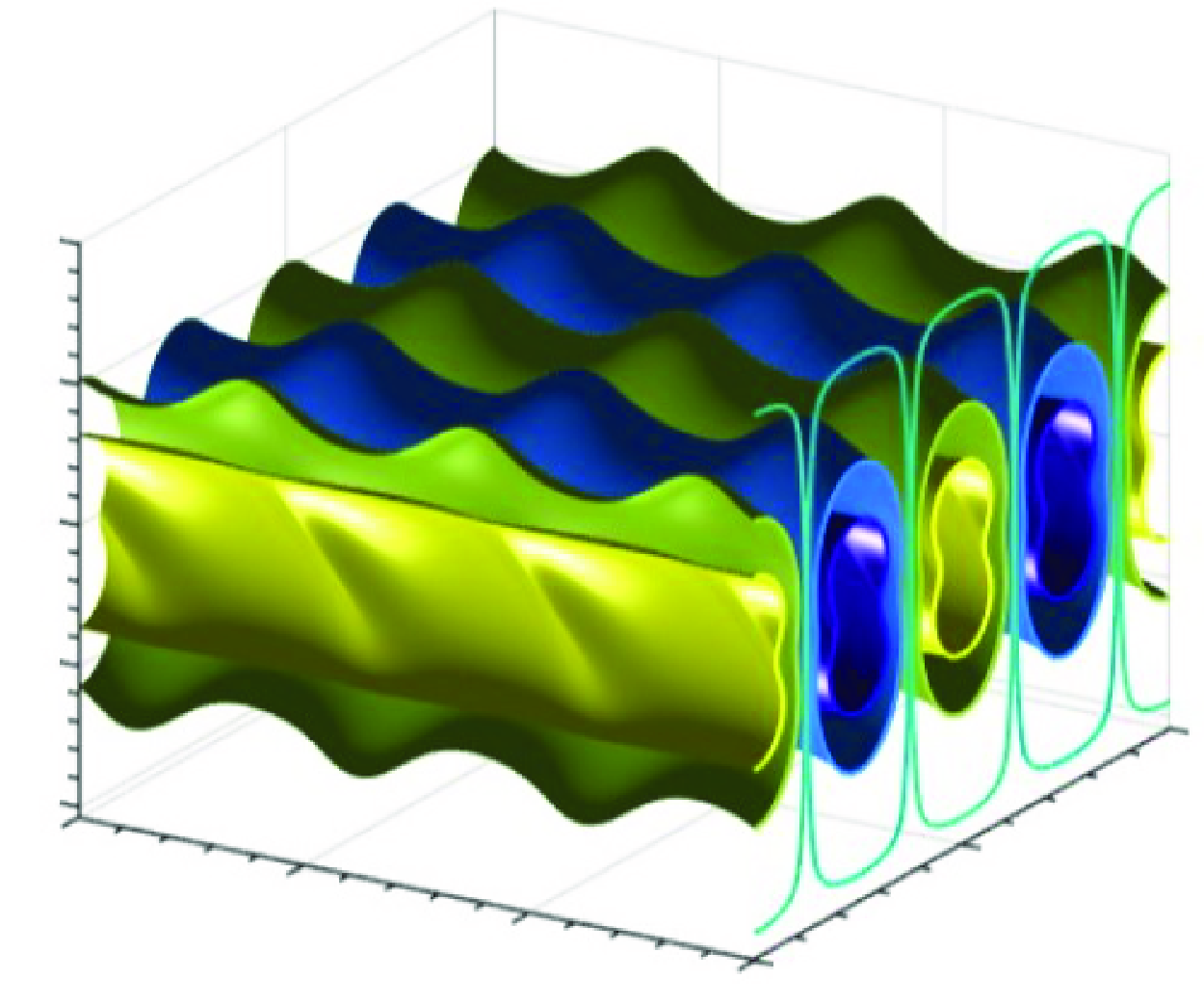
A class of instabilities induced by surface vibrations
-
- Journal:
- Journal of Fluid Mechanics / Volume 1006 / 10 March 2025
- Published online by Cambridge University Press:
- 10 March 2025, A25
-
- Article
-
- You have access
- Open access
- HTML
- Export citation
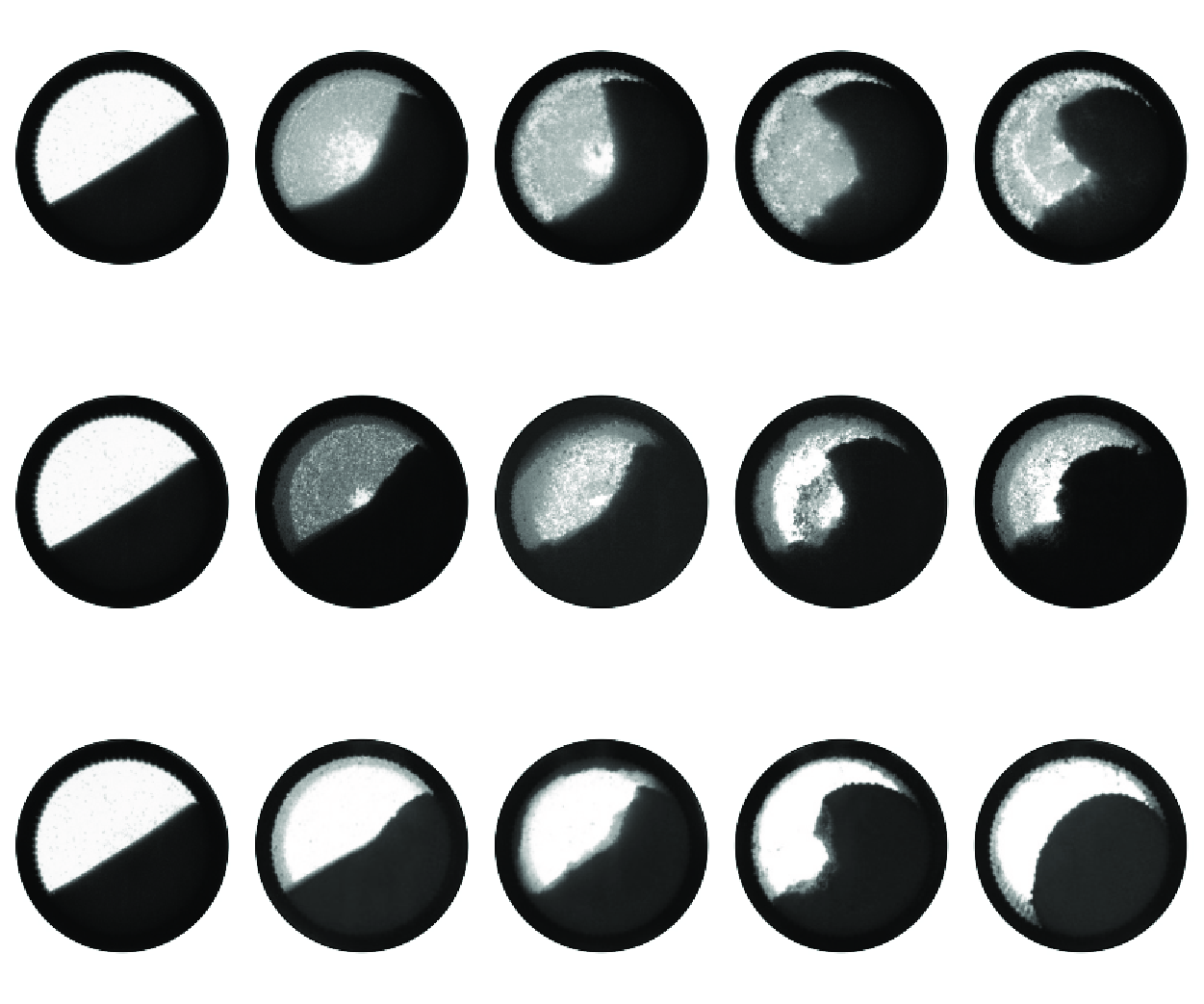
Cohesive granular material in a rotating drum: flow regimes and size effects
-
- Journal:
- Journal of Fluid Mechanics / Volume 1006 / 10 March 2025
- Published online by Cambridge University Press:
- 10 March 2025, A24
-
- Article
-
- You have access
- Open access
- HTML
- Export citation
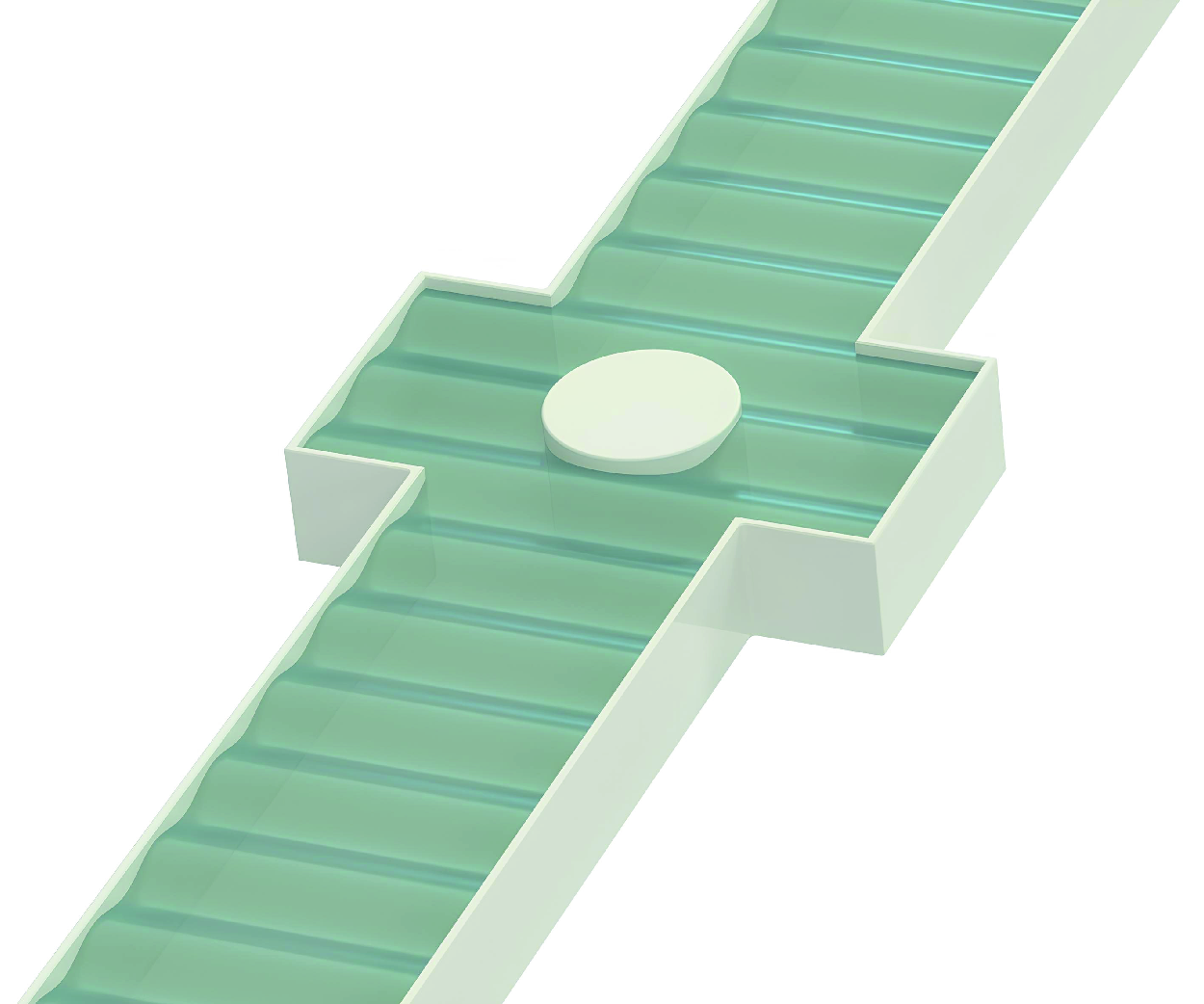
Cloaking waveguide defects at low frequencies using local wall deformations
-
- Journal:
- Journal of Fluid Mechanics / Volume 1006 / 10 March 2025
- Published online by Cambridge University Press:
- 10 March 2025, A26
-
- Article
-
- You have access
- Open access
- HTML
- Export citation
Hydrogen-air lean premixed turbulent highly swirled flames stabilisation: experimental demonstration and mechanistic-kinematic description
-
- Journal:
- The Aeronautical Journal / Volume 129 / Issue 1336 / June 2025
- Published online by Cambridge University Press:
- 10 March 2025, pp. 1421-1444
-
- Article
-
- You have access
- Open access
- HTML
- Export citation
Deconvolutional treatment about sample transparency aberration interfered by opaque and translucent sample holders in Bragg–Brentano geometry
-
- Journal:
- Powder Diffraction / Volume 40 / Issue 2 / June 2025
- Published online by Cambridge University Press:
- 10 March 2025, pp. 105-113
-
- Article
-
- You have access
- Open access
- HTML
- Export citation
Transit passenger-oriented optimisation of arrival aircraft sequencing – CORRIGENDUM
-
- Journal:
- The Aeronautical Journal , First View
- Published online by Cambridge University Press:
- 10 March 2025, pp. 1-5
-
- Article
-
- You have access
- HTML
- Export citation
EuMC 2023 Special Issue
-
- Journal:
- International Journal of Microwave and Wireless Technologies / Volume 17 / Issue 2 / March 2025
- Published online by Cambridge University Press:
- 10 March 2025, pp. 213-214
-
- Article
-
- You have access
- HTML
- Export citation
Uncertainty quantification in tree structure and polynomial regression algorithms toward material indices prediction
-
- Journal:
- Data-Centric Engineering / Volume 6 / 2025
- Published online by Cambridge University Press:
- 10 March 2025, e20
-
- Article
-
- You have access
- Open access
- HTML
- Export citation
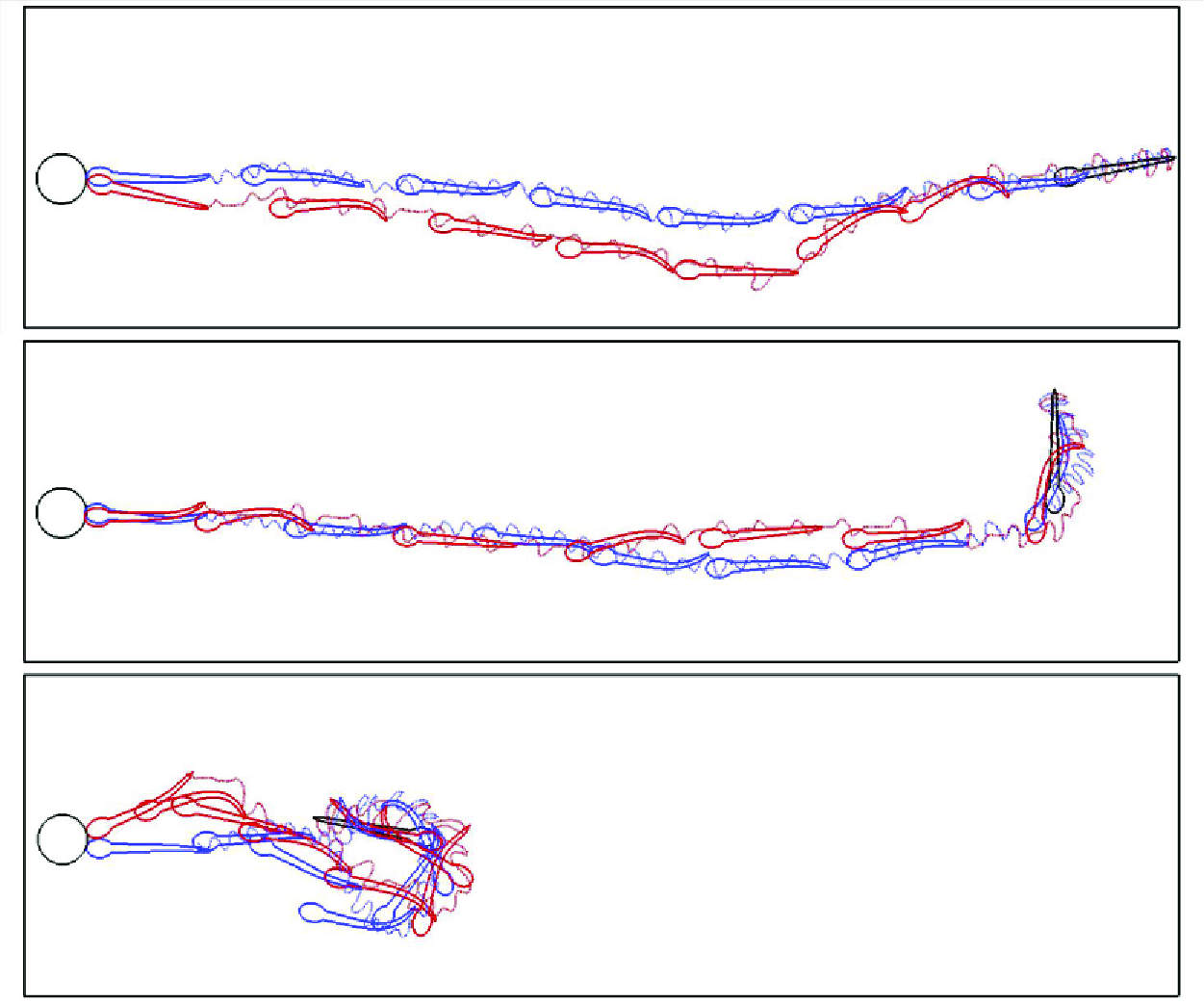
Intermittent swimmers optimize energy expenditure with flick-to-flick motor control
-
- Journal:
- Journal of Fluid Mechanics / Volume 1006 / 10 March 2025
- Published online by Cambridge University Press:
- 10 March 2025, A27
-
- Article
- Export citation

Intrinsic compressibility effects in near-wall turbulence
-
- Journal:
- Journal of Fluid Mechanics / Volume 1006 / 10 March 2025
- Published online by Cambridge University Press:
- 07 March 2025, A14
-
- Article
-
- You have access
- Open access
- HTML
- Export citation

Wall turbulence perturbed by a bump with organized small-scale roughness: coherent structure dynamics
-
- Journal:
- Journal of Fluid Mechanics / Volume 1006 / 10 March 2025
- Published online by Cambridge University Press:
- 07 March 2025, A6
-
- Article
-
- You have access
- Open access
- HTML
- Export citation

Turbulence in a channel with a patchy submerged canopy: the impact of spatial configuration
-
- Journal:
- Journal of Fluid Mechanics / Volume 1006 / 10 March 2025
- Published online by Cambridge University Press:
- 07 March 2025, A15
-
- Article
- Export citation
-
This study investigates how the spatial configuration of submerged three-dimensional patches of vegetation impacts turbulence. Laboratory experiments were conducted in a channel with submerged patches of model vegetation configured with different patch area densities ( $\phi _{p}$), representing the bed area fraction occupied by patches, ranging from 0.13 to 0.78, and different spatial patterns transitioning from two dimensional (channel-spanning patches) to three dimensional (laterally unconfined patches). These configurations produced a range of flow regimes within the canopy, from wake interference flow to skimming flow. At low area density ( $\phi _{p}\lt0.5$), turbulence within the canopy increased with increasing $\phi _{p}$ regardless of spatial configuration, while at high area density ( $\phi _{p}\gt0.5$), the relationship between turbulence and $\phi _{p}$ depended on the spatial configuration of the patches. For the same patch area density, the configuration with smaller lateral gaps generated stronger turbulence within the canopy. The relative contributions of wake and shear production also varied with the spatial configuration of the patches. At low area densities, wake production dominated over shear production, while at high area densities, shear production was more dominant due to an enhanced shear layer at the top of the canopy and reduced mean velocity within the canopy. A new predictive model for the channel-averaged turbulent kinetic energy (TKE) was developed as a function of channel-averaged velocity, canopy geometry, and patch area density, which showed good agreement with the measured TKE.


Reinforcement-learning-based control of turbulent channel flows at high Reynolds numbers
-
- Journal:
- Journal of Fluid Mechanics / Volume 1006 / 10 March 2025
- Published online by Cambridge University Press:
- 07 March 2025, A12
-
- Article
-
- You have access
- Open access
- HTML
- Export citation
-
Deep reinforcement learning (DRL) is employed to develop control strategies for drag reduction in direct numerical simulations of turbulent channel flows at high Reynolds numbers. The DRL agent uses near-wall streamwise velocity fluctuations as input to modulate wall blowing and suction velocities. These DRL-based strategies achieve significant drag reduction, with maximum rates $35.6\,\%$ at $Re_{\tau }\thickapprox 180$, $30.4\,\%$ at $Re_{\tau }\thickapprox 550$, and $27.7\,\%$ at $Re_{\tau }\thickapprox 1000$, outperforming traditional opposition control methods. An expanded range of wall actions further enhances drag reduction, although effectiveness decreases at higher Reynolds numbers. The DRL models elevate the virtual wall through blowing and suction, aiding in drag reduction. However, at higher Reynolds numbers, the amplitude modulation of large-scale structures significantly increases the residual Reynolds stress on the virtual wall, diminishing the drag reduction. Analysis of budget equations provides a systematic understanding of the underlying drag reduction dynamics. The DRL models reduce skin friction by inhibiting the redistribution of wall-normal turbulent kinetic energy. This further suppresses the wall-normal velocity fluctuations, reducing the production of Reynolds stress, thereby decreasing skin friction. This study showcases the successful application of DRL in turbulence control at high Reynolds numbers, and elucidates the nonlinear control mechanisms underlying the observed drag reduction.


How turbulence increases the bubble–particle collision rate
-
- Journal:
- Journal of Fluid Mechanics / Volume 1006 / 10 March 2025
- Published online by Cambridge University Press:
- 07 March 2025, A19
-
- Article
-
- You have access
- Open access
- HTML
- Export citation

Channel Codes
- Classical and Modern
-
- Published online:
- 06 March 2025
- Print publication:
- 21 November 2024
-
- Textbook
- Export citation
