To save content items to your account,
please confirm that you agree to abide by our usage policies.
If this is the first time you use this feature, you will be asked to authorise Cambridge Core to connect with your account.
Find out more about saving content to .
To save content items to your Kindle, first ensure no-reply@cambridge.org
is added to your Approved Personal Document E-mail List under your Personal Document Settings
on the Manage Your Content and Devices page of your Amazon account. Then enter the ‘name’ part
of your Kindle email address below.
Find out more about saving to your Kindle.
Note you can select to save to either the @free.kindle.com or @kindle.com variations.
‘@free.kindle.com’ emails are free but can only be saved to your device when it is connected to wi-fi.
‘@kindle.com’ emails can be delivered even when you are not connected to wi-fi, but note that service fees apply.
Eye gaze tracking is increasingly popular due to improved technology and availability. In the domain of assistive device control, however, eye gaze tracking is often used in discrete ways (e.g., activating buttons on a screen), and does not harness the full potential of the gaze signal. In this article, we present a method for collecting both reactionary and controlled eye gaze signals, via screen-based tasks designed to isolate various types of eye movements. The resulting data allows us to build an individualized characterization for eye gaze interface use. Results from a study conducted with participants with motor impairments are presented, offering insights into maximizing the potential of eye gaze for assistive device control. Importantly, we demonstrate the potential for incorporating direct continuous eye gaze inputs into gaze-based interface designs; generally seen as intractable due to the ‘Midas touch’ problem of differentiating between gaze movements for perception versus for interface operation. Our key insight is to make use of an individualized measure of smooth pursuit characteristics to differentiate between gaze for control and gaze for environment scanning. We also present results relating to gaze-based metrics for mental workload and show the potential for the concurrent use of eye gaze for control input as well as assessing a user’s mental workload both offline and in real-time. These findings might inform the development of continuous control paradigms using eye gaze, as well as the use of eye tracking as the sole input modality to systems that share control between human-generated and autonomy-generated inputs.
This letter presents an improved analytical model for analyzing probe-fed microstrip antennas loaded by metallic vias with lumped terminations. The proposed formulation is based on the resonant cavity model and enables efficient analysis of such perturbed radiators for various types of terminations. The model is validated through the analysis of two antennas: one operating in a TM00 mode and the other with four capacitive terminations to produce circular polarization. Moreover, a reconfigurable RHCP/LHCP antenna based on the patch with capacitive terminations has been manufactured and tested, showing a broadside axial ratio below 0.5 dB at 1.575 GHz.
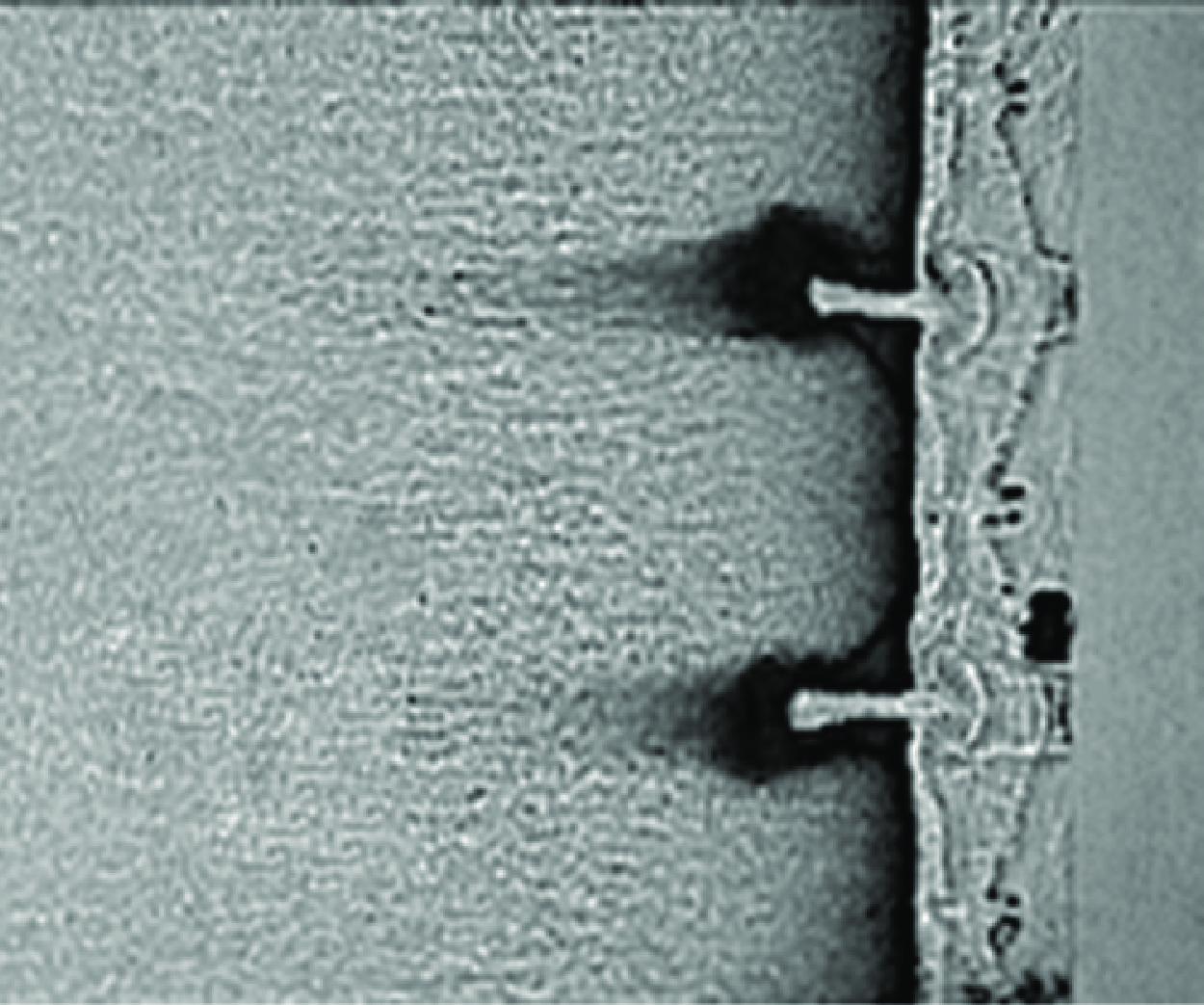
We report the first shock-tube experiments on Richtmyer–Meshkov instability at a single-mode light–heavy interface accelerated by a strong shock wave with Mach number higher than 3.0. Under the proximity effect of the transmitted shock and its induced secondary compression effect, the interface profile is markedly different from that in weakly compressible flows. For the first time, the validity of the compressible linear theory and the failure of the impulsive model in predicting the linear amplitude evolution in highly compressible flows are verified through experiments. Existing nonlinear and modal models fail to accurately describe the perturbation evolution, as they do not account for the shock proximity and secondary compression effects on interface evolution. The shock proximity effect manifests mainly in the early stages when the transmitted shock remains close to the interface, while the effect of secondary compression manifests primarily at the period when interactions of transverse shocks occur at the bubble tips. Based on these findings, we propose an empirical model capable of predicting the bubble evolution in highly compressible flows.
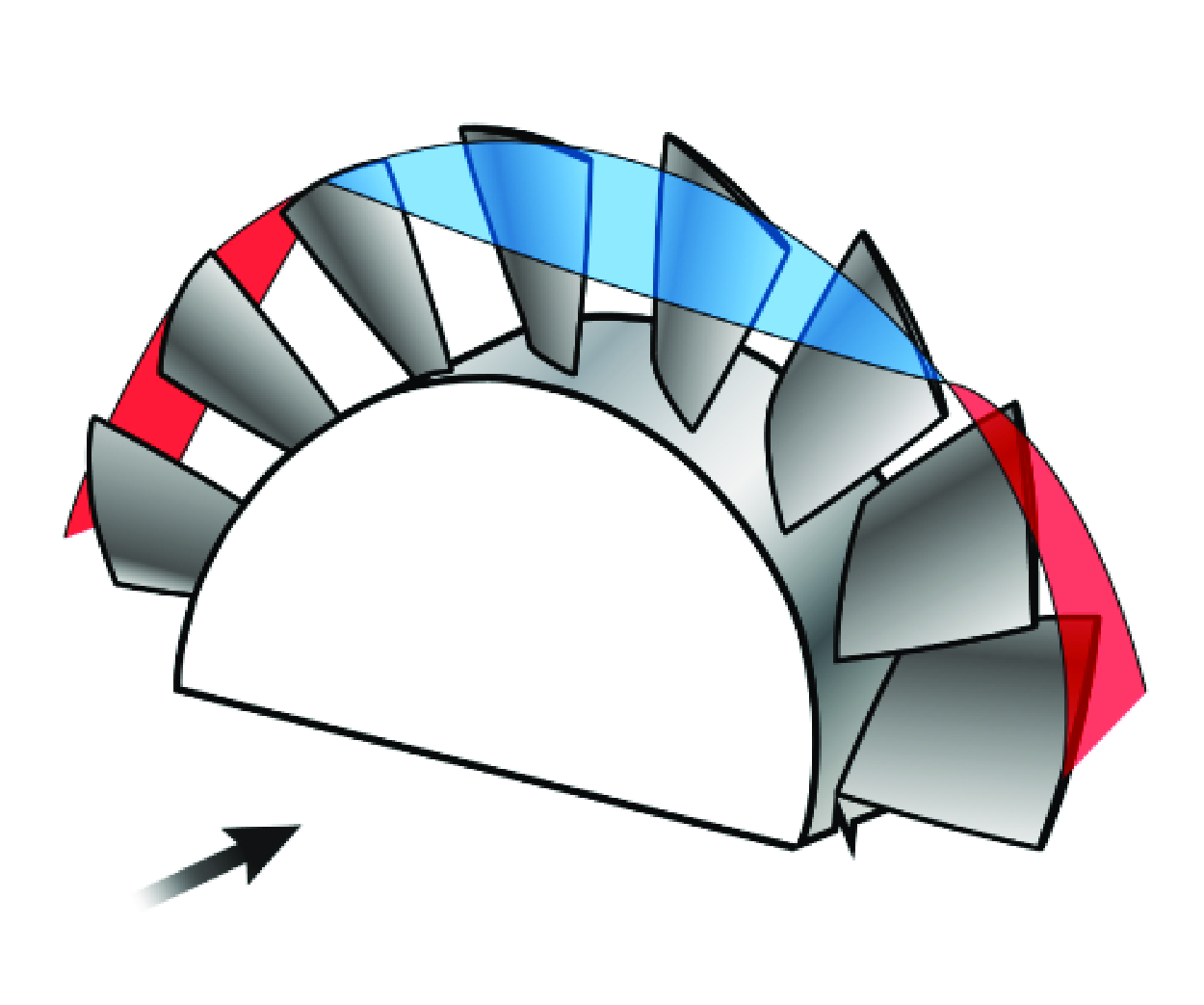
Acoustic resonances in cascade structures may cause structural damage and instability problems in aero-engines and other industrial plants; thus, developing corresponding prediction methods is important. However, works published in the open literature mostly focus on the special case of the stationary Parker modes and provide little knowledge into the rotating resonances in annular cascades, especially in the presence of non-zero background mean flows. This paper develops a three-dimensional semi-analytic model to study the acoustic resonances in an annular cascade in the presence of axial mean flow. The model applies an unsteady cascade response based on the three-dimensional lifting surface method to construct a matrix equation. Characteristic frequencies are solved in the complex domain by numerically searching for singular points. Both the oscillation frequency and the growth rate of the three-dimensional resonance modes are theoretically calculated for the first time under non-zero mean flow conditions. The results reveal an organised distribution with varying inter-blade phase angle and show obvious change with the background flow speed. It is found that the unsteady vortex shedding from the trailing edges of the cascade is a key factor influencing the dissipation rate of the resonance modes. In addition, the important effects of acoustic scattering by the cascade during resonances are examined, which qualitatively corroborate some previous experimental observations.
This article presents a bioinspired pneumatic soft actuator designed to mimic the flexo-extension movement of the human finger, with a particular focus on stiffness modulation through granular jamming. Three-chamber geometries – honeycomb, rectangular, and half-round – were evaluated to optimize curvature performance, utilizing Mold Star 15 Slow elastomer for actuator fabrication. Granular jamming, both passive and active, was implemented within the inextensible layer using chia and quinoa grains to enhance stiffness modulation. Experimental results revealed that the honeycomb geometry most closely aligned with the natural index finger trajectory. Stiffness evaluations demonstrated a range of 0–0.47 N/mm/° for quinoa and 0–0.9 N/mm/° for chia. The actuator’s force output increased by 16% for quinoa and 71% for chia compared to the nonjammed configuration. This enhanced performance is particularly beneficial for applications such as hand rehabilitation, where adaptive stiffness and force modulation are critical. Granular jamming, especially with active chia, provided superior adaptability for tasks requiring variable stiffness and resistance, making it a promising candidate for wearable robotic applications in rehabilitation.
The antenna characterization from planar near-field (NF) measurements is generally realized by using the classical NF to far-field transform technique of plane wave expansion (PWE). This approach imposes strong constraints on NF sampling. To overcome these limitations, an equivalent model of the antenna under test (AUT) is created based on a distribution of infinitesimal dipoles. A reduced-order model (ROM) of the problem is constructed to obtain a decomposition basis defining the radiated field. The powerful ability of the ROM in determining the number of points needed for accurate NF measurements is demonstrated. Also, efficient non-conventional sampling strategies are applied to the case of planar NF measurements and the influence of these distributions on the reduction of the number of samples is studied. The global analysis of our approach on simulated and measured NF data shows that only 20% of the total number of points are needed with respect to the classical PWE technique to achieve an accurate characterization.
This paper presents a multibeam dielectric rod antenna for mm-wave wireless power transfer (WPT) applications. The proposed solution utilizes its unique multibeam setup which allows the generation of adjustable beams simultaneously, without the need for an additional beamforming network. To enhance the compactness of the system, each Rexolite rod is fed through an annular slot etched on a Rogers RO4003. The generated beams are steered toward the desired directions by adjustment in the configuration of these rods. The final configuration consists of five rods that were fabricated and measured. In this configuration, a beam coverage between $-30^{\circ}$ and 30∘ can be obtained, while in the frequency of interest, a gain value above $12\,\mathrm{dBi}$ is achieved. With its adjustable configuration, the proposed solution can be adapted to different operating scenarios. Moreover, the low cost and flexibility of the solution make it a promising candidate for Radio Frequency Wireless Power Transfer (RF-WPT) Internet of things applications.
This work presents the design of a wide-band frequency-selective surface (FSS) with its analysis for the performance enhancement of a microstrip antenna. To demonstrate the concept, a dual-band microstrip antenna is also designed and combined with the proposed FSS to investigate its advantages and performance enhancement capabilities. The proposed FSS is designed for a frequency range of 3.5–6.5 GHz, whereas the designed antenna operates in dual frequency bands of 3.5 and 5 GHz. The combined effect of the antenna and FSS is investigated at 5 GHz for improving the gain of the antenna from 2.8 to 3.2 dBi. The outcome of the measured performance validates that the proposed surface has potential capability for enhancing the gain of an antenna for 5G, WLAN, and Wi-Fi communication.
Multipath components (MPCs) are both the challenge and the resources to exploit in high-frequency wireless communication, especially in environments with complex reflections. On the one hand, late-arriving MPCs cause inter-symbol interferences in digital communication. On the other hand, techniques such as multiple-input multiple-output and rake receivers have been widely applied to utilize the information carried in the math-path components. To this end, identifying and clustering MPCs is the foundation for tackling the challenges and boosting the utilization of reliable and correct information. Past research focuses either on extracting the path information or on clustering the extracted components. In this paper, we propose a complete workflow that performs identification as well as clustering of MPCs. We extend our previous work in clustering algorithms to indoor propagation measurements of three different frequency bands, as well as multiple transmitter–receiver locations. We verify that the fast attenuation of terahertz-band signals results in clear separations of peaks in measurements, which in turn facilitates the identification and clustering solutions. The ease of application highlights the wide-applying potential of high-frequency communication.
The study of transport phenomena is an essential part of chemical engineering, as well as other disciplines concerned with material transformations such as biomedical engineering, microfluidics, reactor design and metallurgy. Material transformations require the motion of constituents relative to each other, the transfer of heat across materials and fluid flow. This lucid textbook introduces the student to the fundamentals and applications of transport phenomena in a single volume and explains how the outcomes of transformation processes depend on fluid flow and heat/mass transfer. It demonstrates the progression from physical concepts to the mathematical formulation, followed by the solution techniques for predicting outcomes in industrial applications. The ordering of the topics, gradual build-up of complexity and easy to read language make it a vital resource for anyone looking for an introduction to the domain. It also provides a foundation for advanced courses in fluid mechanics, multiphase flows and turbulence.
Solid Mechanics, as compared to Mechanics of Materials or Strength of Materials, is generally considered to be a higher-level course. It is usually taught in higher semesters to senior undergraduate students. However, there is no suitable textbook on this subject. The book is primarily aimed at this group of students and the text is an attempt to bridge the gap between complex formulations in the theory of elasticity and elementary strength of materials in a simplified manner. The book is intended to present the basics of Solid Mechanics in a simple and concise manner to the initial learners. A large number of solved problems on each topic have been included to illustrate the text materials. Because of the simpler approach adopted in solving difficult problems, the book will be useful for all student groups who wish to learn the basic solid mechanics without much difficulty.
This study introduces a novel method for gait analysis using a single inertial measurement unit placed on the sacrum. This method is valid not only on level ground but also on incline and decline conditions. The method leverages the “crackle” function, the third derivative of the sacral resultant acceleration, to identify right and left gait events. This approach is particularly effective in capturing the initial peak in acceleration data during foot impact with the ground, often overlooked by other methods. The study aimed to demonstrate the method’s accuracy in identifying the right- and left-side impacts during level ground, incline, and decline runs across a range of speeds. Additionally, the algorithm was applied in outdoor running scenarios, where it performed very well, further validating its robustness and reliability. The results are compared with other existing methods to highlight the effectiveness of this approach.
The Mamyshev oscillator (MO) is well-known for its high modulation depth, which provides an excellent platform for achieving both high average power and short pulse durations. However, this characteristic typically limits the high-repetition-rate pulse generation. Herein, we construct an MO that achieves a gigahertz (GHz) repetition rate through harmonic mode-locking. The laser can reach up to the 93rd order, which corresponds to the repetition rate of 1.6 GHz. The maximum achieved output average power is 3 W at a repetition rate of 1.2 GHz (69th order), with the corresponding pulse duration compressed to 51 fs. To our knowledge, this is the first time that the GHz repetition rate in an MO has been obtained simultaneously with the recorded average power and pulse duration.
The room-temperature X-ray powder diffraction data for bosentan monohydrate, an API used in the treatment of pulmonary arterial hypertension, is presented. Bosentan monohydrate is monoclinic, P21/c (No. 14), with unit cell parameters a = 12.4520(7) Å, b = 15.110(1) Å, c = 15.0849(9) Å, β = 95.119(5)°, V = 2827.0(3) Å3, Z = 4. All the diffraction maxima recorded were indexed and are consistent with the P21/c space group. The crystal structure of this material corresponds to the phase associated with Cambridge Structural Database entry NEQHEY, which was determined at 123 K. The successful Rietveld refinement, carried out with TOPAS-Academic, showed the single-phase nature of the material and the good quality of the data. A comprehensive analysis of intra- and intermolecular interactions corroborates that the structure is dominated by extensive hydrogen bonding, accompanied by C▬H⋯π and π⋯π interactions. Hirshfeld surface analysis and fingerprint plots indicate that the most important interactions are H⋯H and O⋯H/H⋯O in bosentan and the water molecule and C⋯H/H⋯C interactions in bosentan.
Evolution of solitary waves and an undular bore intruding through an abrupt transition from a wide basin into a narrow channel with opposing current is investigated. The laboratory experiments are performed in a wave tank that is crafted to achieve a steady and symmetrical shallow-water jet in the basin. The channel has a breadth comparable to the wave lengths, and the flow has Froude number approximately 0.1. The opposing current amplifies and slows the incoming waves on the jet in the basin, but the propagation speed is faster than the local Doppler effect of the current due to the influence of the wave propagating in the flank of the jet. At the channel mouth, the wave amplitude is enhanced due to the waveform altered by the current in the basin, although the amplification in the upstream channel is similar with and without the current. The longer incident waves have greater amplification into the channel. The leading wave of the undular bore is impacted by the opposing flow and transition similarly to the solitary waves. In contrast, the subsequent waves of the undular bore have a complex phase interference on the jet that causes disconnection in the lateral wave formation across the breadth of the jet. At the transition, the subsequent waves exhibit greater amplification than the leading one due to accumulated wave energy at the channel mouth. The intrusion of the undular bore against the current further enhances a rise in mean water level in the channel.
Stochastic generators are essential to produce synthetic realizations that preserve target statistical properties. We propose GenFormer, a stochastic generator for spatio-temporal multivariate stochastic processes. It is constructed using a Transformer-based deep learning model that learns a mapping between a Markov state sequence and time series values. The synthetic data generated by the GenFormer model preserve the target marginal distributions and approximately capture other desired statistical properties even in challenging applications involving a large number of spatial locations and a long simulation horizon. The GenFormer model is applied to simulate synthetic wind speed data at various stations in Florida to calculate exceedance probabilities for risk management.
The crystal structure of diroximel fumarate has been solved and refined using synchrotron X-ray powder diffraction data, and optimized using density functional theory techniques. Diroximel fumarate crystallizes in space group P-1 (#2) with a = 6.12496(15), b = 8.16516(18), c = 12.7375(6) Å, α = 85.8174(21), β = 81.1434(12), γ = 71.1303(3)°, V = 595.414(23) Å3, and Z = 2 at 298 K. The crystal structure consists of interleaved double layers of hook-shaped molecules parallel to the ab-plane. The side chains form the inner portion of the layers, and the rings comprise the outer surfaces. There are no classical hydrogen bonds in the structure, but 9 C▬H⋯O hydrogen bonds contribute to the crystal energy. The powder pattern has been submitted to ICDD for inclusion in the Powder Diffraction File™ (PDF®).
Based on a 4f system, a 0° reflector and a single laser diode side-pump amplifier, a new amplifier is designed to compensate the spherical aberration of the amplified laser generated by a single laser diode side-pump amplifier and enhance the power of the amplified laser. Furthermore, the role of the 4f system in the passive spherical aberration compensation and its effect on the amplified laser are discussed in detail. The results indicate that the amplification efficiency is enhanced by incorporating a 4f system in a double-pass amplifier and placing a 0° reflector only at the focal point of the single-pass amplified laser. This method also effectively uses the heat from the gain medium (neodymium-doped yttrium aluminium garnet) of the amplifier to compensate the spherical aberration of the amplified laser.