Refine search
Actions for selected content:
212964 results in Engineering
Damage localisation using disparate damage states via domain adaptation
-
- Journal:
- Data-Centric Engineering / Volume 5 / 2024
- Published online by Cambridge University Press:
- 02 February 2024, e3
-
- Article
-
- You have access
- Open access
- HTML
- Export citation
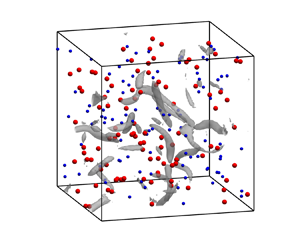
Effects of electrostatic interaction on clustering and collision of bidispersed inertial particles in homogeneous and isotropic turbulence
-
- Journal:
- Journal of Fluid Mechanics / Volume 980 / 10 February 2024
- Published online by Cambridge University Press:
- 02 February 2024, A29
-
- Article
-
- You have access
- Open access
- HTML
- Export citation
-
In sandstorms and thunderclouds, turbulence-induced collisions between solid particles and ice crystals lead to inevitable triboelectrification. The charge segregation is usually size dependent, with small particles charged negatively and large particles charged positively. In this work, we perform numerical simulations to study the influence of charge segregation on the dynamics of bidispersed inertial particles in turbulence. Direct numerical simulations of homogeneous isotropic turbulence are performed with the Taylor Reynolds number ${Re}_{\lambda }=147.5$, while particles are subjected to both electrostatic interactions and fluid drag, with Stokes numbers of 1 and 10 for small and large particles, respectively. Coulomb repulsion/attraction is shown to effectively inhibit/enhance particle clustering within a short range. Besides, the mean relative velocity between same-size particles is found to rise as the particle charge increases because of the exclusion of low-velocity pairs, while the relative velocity between different-size particles is almost unaffected, emphasizing the dominant roles of differential inertia. The mean Coulomb-turbulence parameter, ${Ct}_0$, is then defined to characterize the competition between the Coulomb potential energy and the mean relative kinetic energy. In addition, a model is proposed to quantify the rate at which charged particles approach each other and to capture the transition of the particle relative motion from the turbulence-dominated regime to the electrostatic-dominated regime. Finally, the probability distribution function of the approach rate between particle pairs is examined, and its dependence on the Coulomb force is further discussed using the extended Coulomb-turbulence parameter.


Low-cost solutions for mobile passive radar based on multichannel DPCA and NULA configurations
-
- Journal:
- International Journal of Microwave and Wireless Technologies / Volume 16 / Issue 5 / June 2024
- Published online by Cambridge University Press:
- 02 February 2024, pp. 796-811
-
- Article
-
- You have access
- Open access
- HTML
- Export citation

On the non-uniqueness of the kernel of the Zakharov equation in intermediate and shallow water: the connection with the Davey–Stewartson equation
-
- Journal:
- Journal of Fluid Mechanics / Volume 980 / 10 February 2024
- Published online by Cambridge University Press:
- 02 February 2024, A32
-
- Article
-
- You have access
- Open access
- HTML
- Export citation
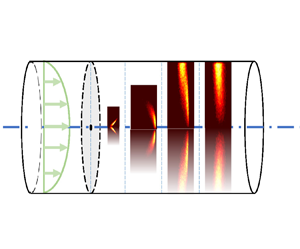
Streamwise dispersion of soluble matter in solvent flowing through a tube
-
- Journal:
- Journal of Fluid Mechanics / Volume 980 / 10 February 2024
- Published online by Cambridge University Press:
- 02 February 2024, A33
-
- Article
- Export citation

The Truth About Energy
- Our Fossil-Fuel Addiction and the Transition to Renewables
-
- Published online:
- 01 February 2024
- Print publication:
- 08 February 2024
Appendix D - Solutions to Exercises
- from Part IV - Appendices
-
- Book:
- State Estimation for Robotics
- Published online:
- 11 January 2024
- Print publication:
- 01 February 2024, pp 484-500
-
- Chapter
- Export citation
Finite-time attitude tracking control of stratospheric airship in the presence of multiple disturbances
-
- Journal:
- The Aeronautical Journal / Volume 128 / Issue 1327 / September 2024
- Published online by Cambridge University Press:
- 01 February 2024, pp. 2126-2147
-
- Article
- Export citation
3 - Linear-Gaussian Estimation
- from Part I - Estimation Machinery
-
- Book:
- State Estimation for Robotics
- Published online:
- 11 January 2024
- Print publication:
- 01 February 2024, pp 40-96
-
- Chapter
- Export citation
Appendix B - Rotation and Pose Extras
- from Part IV - Appendices
-
- Book:
- State Estimation for Robotics
- Published online:
- 11 January 2024
- Print publication:
- 01 February 2024, pp 458-470
-
- Chapter
- Export citation
7 - Primer on Three-Dimensional Geometry
- from Part II - Three-Dimensional Machinery
-
- Book:
- State Estimation for Robotics
- Published online:
- 11 January 2024
- Print publication:
- 01 February 2024, pp 217-255
-
- Chapter
- Export citation
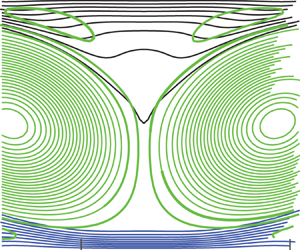
Converging material with two bulges
-
- Journal:
- Journal of Fluid Mechanics / Volume 980 / 10 February 2024
- Published online by Cambridge University Press:
- 01 February 2024, A26
-
- Article
-
- You have access
- Open access
- HTML
- Export citation
Modeling and optimization of a relativistic magnetron with transparent cathode and $\textrm{TE}_{11}$ output mode
-
- Journal:
- International Journal of Microwave and Wireless Technologies / Volume 16 / Issue 10 / December 2024
- Published online by Cambridge University Press:
- 01 February 2024, pp. 1641-1648
-
- Article
-
- You have access
- Open access
- HTML
- Export citation
-
This paper outlines the results of particle-in-cell simulations of a relativistic magnetron with six cavities and a transparent cathode configuration. Excitation of the π mode in the interaction region was attained, which in turn led to $\textrm{TE}_{11}$ mode emission of microwaves to the waveguide. This mode transformation was achieved with a non-symmetric diffraction output, consisting of four large and two small tapered cavities. Simulations were performed with a voltage across the anode-cathode gap varying from 164 to 356 kV, and axial magnetic field strengths between 0.24 and 0.34 T. Maximum efficiency of 37% was obtained with a peak output power of 590 MW, having a voltage of 261 kV and a magnetic field of 0.30 T. Furthermore, a frequency of 2.57 GHz and a rise time of microwaves at the waveguide of 15 ns were demonstrated. The electron leakage current was shown to decrease from ∼10 $\%$ to less than $1\%$ when employing a longer interaction region, while still exhibiting good performance. Additionally, we show that there is an optimal range of voltages given a magnetic field, for which π mode excitation with high efficiency is attained.


Part I - Estimation Machinery
-
- Book:
- State Estimation for Robotics
- Published online:
- 11 January 2024
- Print publication:
- 01 February 2024, pp 7-8
-
- Chapter
- Export citation
11 - Continuous-Time Estimation
- from Part III - Applications
-
- Book:
- State Estimation for Robotics
- Published online:
- 11 January 2024
- Print publication:
- 01 February 2024, pp 418-432
-
- Chapter
- Export citation
Acronyms and Abbreviations
-
- Book:
- State Estimation for Robotics
- Published online:
- 11 January 2024
- Print publication:
- 01 February 2024, pp xiii-xiv
-
- Chapter
- Export citation
Preface for the First Edition
-
- Book:
- State Estimation for Robotics
- Published online:
- 11 January 2024
- Print publication:
- 01 February 2024, pp ix-x
-
- Chapter
- Export citation
4 - Nonlinear Non-Gaussian Estimation
- from Part I - Estimation Machinery
-
- Book:
- State Estimation for Robotics
- Published online:
- 11 January 2024
- Print publication:
- 01 February 2024, pp 97-156
-
- Chapter
- Export citation
8 - Matrix Lie Groups
- from Part II - Three-Dimensional Machinery
-
- Book:
- State Estimation for Robotics
- Published online:
- 11 January 2024
- Print publication:
- 01 February 2024, pp 256-344
-
- Chapter
- Export citation
5 - Handling Nonidealities in Estimation
- from Part I - Estimation Machinery
-
- Book:
- State Estimation for Robotics
- Published online:
- 11 January 2024
- Print publication:
- 01 February 2024, pp 157-181
-
- Chapter
- Export citation
